
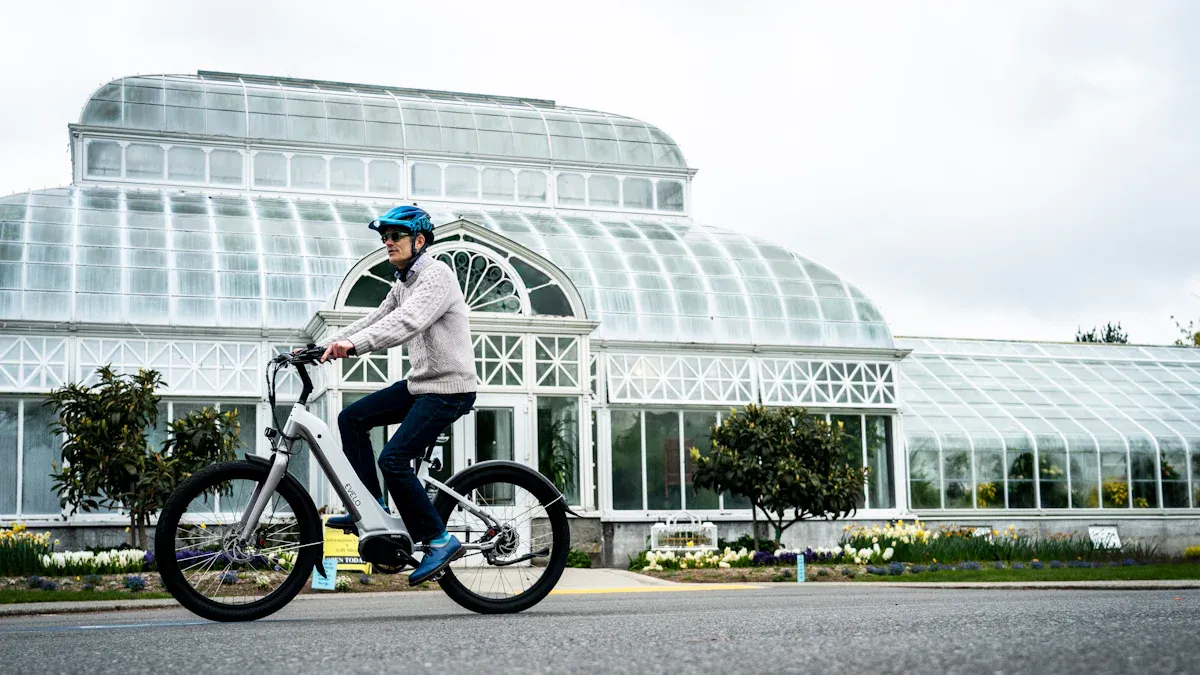
Cities are growing, and traffic is increasing. Many people are looking for flexible and sustainable ways to get around. Why is the folding e-bike experiencing a boom in urban areas right now? Modern technology meets everyday practicality and environmental awareness here. This combination makes the folding e-bike an innovative solution for the challenges of city traffic.
Key findings
Folding e-bikes are compact and easily foldable, which facilitates transport on buses, trains, and in small spaces.
Electric assistance makes riding comfortable and stress-free, even over longer distances and on inclines.
Folding e-bikes help reduce car traffic, thereby improving air quality and quality of life in cities.
Modern technology such as GPS, apps, and smart safety features increase comfort and safety while riding.
Sharing models and good infrastructure promote the use of folding e-bikes and support sustainable mobility.
Relevance in urban areas
Challenges
Cities are facing major challenges in the field of mobility. Traffic is constantly growing. Many roads are congested. Traffic jams are part of everyday life. Public transport often reaches its capacity limits. The search for parking spaces costs time and nerves. Air pollution and noise impair quality of life. Many people feel stressed by dense traffic. Commuters, in particular, lose valuable time every day.
Cities need new solutions to make mobility more efficient and environmentally friendly.
Flexible solutions
A folding e-bike offers a flexible answer to these problems. It can be easily folded up and transported. Users can take the bike with them on the bus or train. This makes switching between different modes of transport effortless. This saves time and reduces stress. Anyone traveling with a folding e-bike finds a spot faster – even in narrow streets or crowded trains.
Commuters benefit from the quick adaptation to changing traffic conditions.
Students and professionals reach their destination without a long search for a parking space.
Families use the bike for short daily trips.
The folding e-bike supports sustainable mobility. It helps to reduce car traffic and improve air quality. Cities gain quality of life when more people switch to flexible and eco-friendly means of transport.
Folding e-bike development
Technical innovation
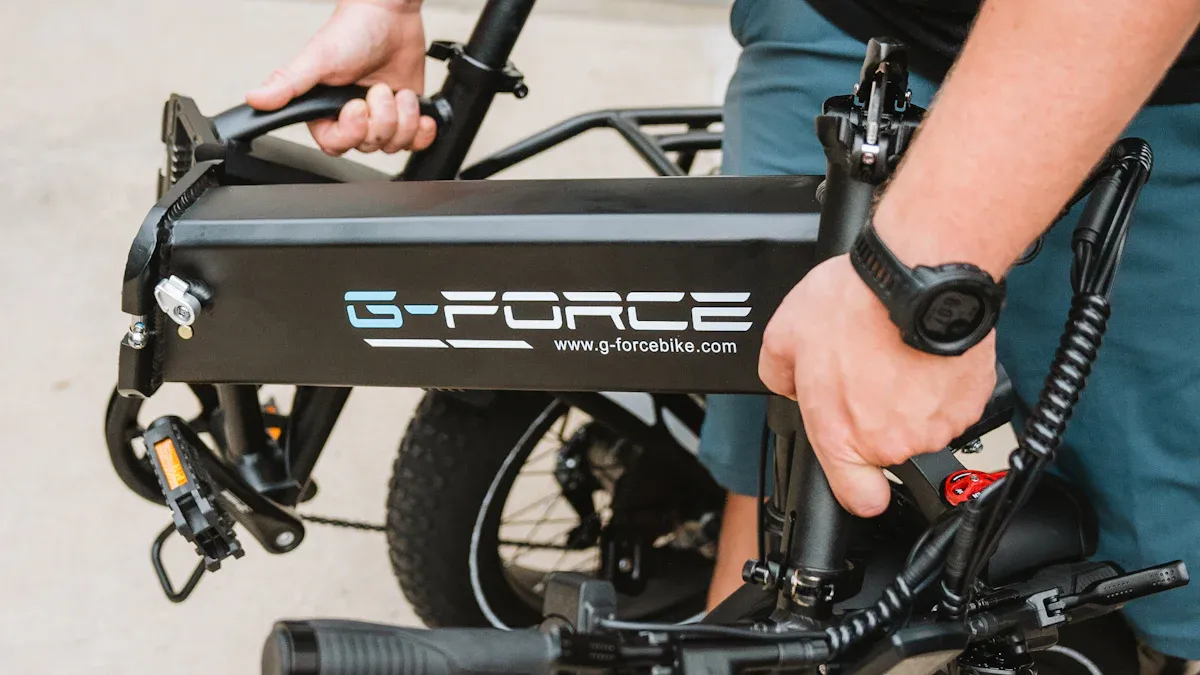
The development of modern folding e-bikes has fundamentally changed urban mobility over the last ten years. Manufacturers are focusing on compact designs and innovative frame geometries that make folding and transporting significantly easier. Particularly noteworthy is the integration of powerful electric motors and modern battery technology. Models like the HappyRun HR-2006 or the Ford MoDe:Flex show how technology and everyday utility merge.
Compact folding e-bikes with small wheels offer high flexibility in city traffic.
Advanced e-drives enable strong performance despite the small construction.
Optimized folding mechanisms lower the barrier to entry and encourage everyday use.
Smart features like GPS tracking and app control increase safety and comfort.
Innovation |
Description |
Benefits for folding e-bikes |
|---|---|---|
Supports up to 25 km/h |
Efficient, quiet ride, more comfort |
|
Lithium-ion battery (36V, 10Ah) |
High capacity, removable |
Range up to 60 km, easy charging |
Aluminum frame |
Light and stable |
Easy transport, robust and durable |
Fast folding mechanism |
Fold in a few seconds |
Ideal for commuters and urban use |
These innovations make the folding e-bike a versatile everyday companion. Users benefit from high range, easy handling, and smart safety features.
Social change
The target groups for folding e-bikes have expanded significantly in recent years. Commuters use the bike to switch flexibly between different modes of transport. Campers and sailors appreciate the compact design, which requires little storage space. Students and families are also discovering the advantages for short trips in the city.
Folding e-bikes promote a sustainable lifestyle and support the transport revolution in urban centers.
The increasing demand shows that more and more people value environmentally friendly, flexible, and comfortable mobility. Modern folding e-bikes combine technology, design, and everyday practicality, thus adapting to the needs of a mobile society.
Folding e-bike advantages
Compactness
A folding e-bike is characterized by its compact design. Users can fold the bicycle to about half its size in just a few seconds. As a result, it fits easily into buses and trains without taking up much space. Many transport companies treat the folded bike like a piece of luggage. This facilitates transport on local public transport and prevents space problems. The folding e-bike is also easily stowed in small apartments or offices. The small size and low weight make it easy to carry in stairwells or store in the trunk. These characteristics offer a major advantage, especially for commuters and city dwellers.
Compact e-bikes allow for flexible mobility, even when living or working space is limited.
Environmental friendliness
A folding e-bike actively contributes to the reduction of emissions in urban traffic. Studies show that shared e-bikes in many cities significantly reduce greenhouse gas emissions per passenger kilometer. The following table provides an overview of the net greenhouse gas savings in various cities:
City |
Net greenhouse gas savings of shared e-bikes (g CO2 equivalents per passenger kilometer) |
|---|---|
Melbourne |
-13.7 |
Seattle |
-15.2 |
Düsseldorf |
-20.4 |
Paris |
-15.4 |
Berlin |
+13.0 (emissions are rising) |
The chart illustrates the differences between the cities:
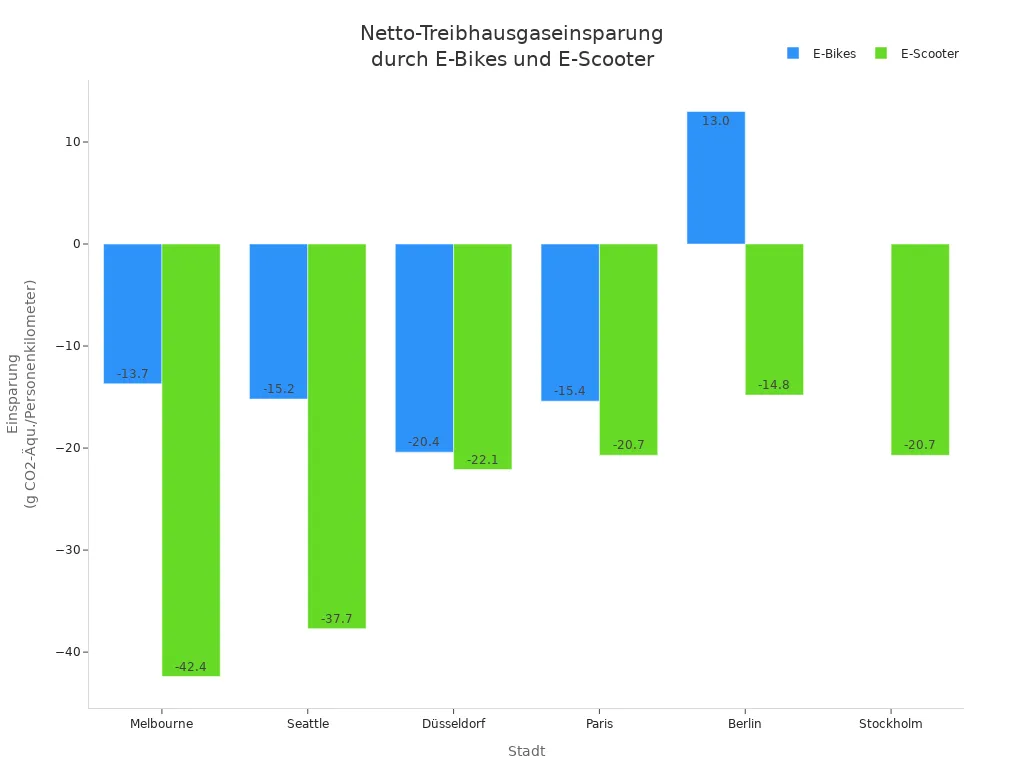
The savings depend on which means of transport are replaced by the folding e-bike. Emissions decrease significantly, especially when users choose the e-bike over a car. In most cities, air quality improves when more people switch to e-bikes. The service life of the vehicles and sustainable production also play an important role. Cities benefit from less noise, cleaner air, and a higher quality of life.
Folding e-bikes offer a healthy, sustainable, and cost-effective alternative to cars, thus easing inner-city traffic.
Multimodality
The folding e-bike makes it easier to combine different modes of transport in everyday life. Users benefit from several advantages:
The bicycle can be folded up quickly and transported easily in a bus, train, or car.
The low weight allows for effortless carrying, for example in stairwells or when switching vehicles.
The compact design ensures that the bike fits into small rooms, the trunk, or under the desk.
Electric assistance helps to overcome longer distances or inclines without much effort.
High-quality folding mechanisms with safety locks offer stability and simple handling.
These characteristics make the folding e-bike an ideal companion for commuters, students, and anyone who wants to switch flexibly between different means of transport. The use of buses, trains, and bicycles can thus be optimally combined. Cities benefit from fewer traffic jams, fewer parking problems, and better air quality.
Integration into the city

Sharing models
Many cities are relying on sharing models to promote the use of e-bikes. Providers make bicycles available at central locations. Users can rent them via an app and drop them off at another station. The system is simple and fast. Business commuters and tourists, in particular, benefit from this. They do not need to own a bike and remain flexible. Sharing models help to ease traffic and protect the environment. Munich is a prime example of how successful such offers can be. The number of users there increases every year.
Smart technology
Smart technology significantly improves the riding experience. Many e-bikes are equipped with GPS trackers. Users can find their bike again quickly. Anti-theft protection is increased by digital locks. Modern apps display the battery level and the next charging station. Some models even offer automatic error diagnosis. Sensors measure the environment and adjust the motor power accordingly. This technology makes riding safer and more comfortable. Cities benefit from data that helps to better guide traffic flows.
Infrastructure
Good infrastructure is crucial for the success of e-bikes in the city. Various measures support their use:
Dedicated cycle paths ensure more safety in road traffic.
Bicycle parking spaces offer secure storage options.
Public transport allows taking e-bikes along, which increases flexibility.
Funding programs such as “Clean Air and Traffic” or “Climate Protection through Cycling” support the expansion of cycle paths and electromobility.
Legal regulations, such as helmet laws and speed limits, protect riders.
Integration into local public transport makes it easier to switch between different modes of transport.
Cities that invest in this infrastructure promote sustainable mobility and increase the quality of life of their residents.
Future and trends
New designs
Current developments in the field of folding e-bikes show a clear focus on innovative materials and smart functions. Manufacturers are increasingly relying on:
Light and robust materials such as carbon and aluminum, which reduce weight and increase stability.
Elegant, functional designs that combine everyday utility and aesthetics.
Integration of smart features like GPS, Bluetooth, and sensors for more comfort and safety.
Improved folding mechanisms, such as the FIDLOCK PINCLIP system, which simplifies handling.
Environmentally friendly and award-winning models like the FLYER Upstreet TR:CF or the Uproc SL:X, which have received Design & Innovation Awards.
These trends reflect the increasing demand for sustainable, practical, and smart mobility. Brands like DYU, Bird, and Storck Bicycle regularly launch new models that make everyday life in the city easier.
Connectivity
Digital connectivity is increasingly shaping the use of modern e-bikes. Systems like the Avinox by DJI combine the motor, bicycle, and smartphone into one unit. Users control their bike via a touchscreen display and wireless Bluetooth control elements. The corresponding app enables individual settings, GPS tracking, and security features like password protection and digital keys. This connectivity increases ease of use, improves safety, and allows for personalized adjustment of the bike. The integration of digital technologies makes cycling in the city more efficient and safer.
Framework conditions
Political and social framework conditions significantly influence the future of urban mobility. Cities and municipalities are promoting the expansion of cycle paths and investing in sustainable infrastructure. Funding programs support the purchase of modern e-bikes. Legal requirements such as helmet laws and speed limits ensure more safety in road traffic.
Framework condition |
Impact on urban mobility |
|---|---|
Expansion of cycle paths |
Increases safety and comfort |
Funding programs |
Facilitates the purchase of modern bikes |
Legal requirements |
Protects riders and other road users |
The combination of new designs, smart connectivity, and supportive framework conditions drives the transport revolution in cities and creates livable urban spaces.
Folding e-bikes are changing urban mobility sustainably. They offer practical solutions for many everyday problems:
Users can take their bike on buses and trains for free, bridging the last mile.
The folding mechanism facilitates transport for commuters and vacationers.
Comfortable equipment and ergonomic design ensure safety and riding pleasure.
Removable batteries and low-maintenance systems increase flexibility.
These innovations make cities more livable. Everyone can try out new ways of getting around and consciously shape their own mobility.
FAQ
How long does the battery of a folding e-bike last?
The battery life depends on the model and usage. Many folding e-bikes reach 40 to 60 kilometers on a single charge. Manufacturers provide precise figures. Regular charging and proper care extend the service life.
Is a folding e-bike suitable for the daily commute?
A folding e-bike is very well suited for commuters. It can easily be taken on buses and trains. Electric assistance makes longer distances easier. Many users report significant time savings in city traffic.
How safe are folding e-bikes in road traffic?
Manufacturers equip modern folding e-bikes with lighting systems, reflectors, and disc brakes. The compact design offers stability. Riders should always wear a helmet and follow traffic rules.
What maintenance does a folding e-bike require?
Regular maintenance includes checking brakes, tires, and the battery. Many models have low-maintenance components. A specialist dealer can perform inspections. Good care increases service life and safety.