
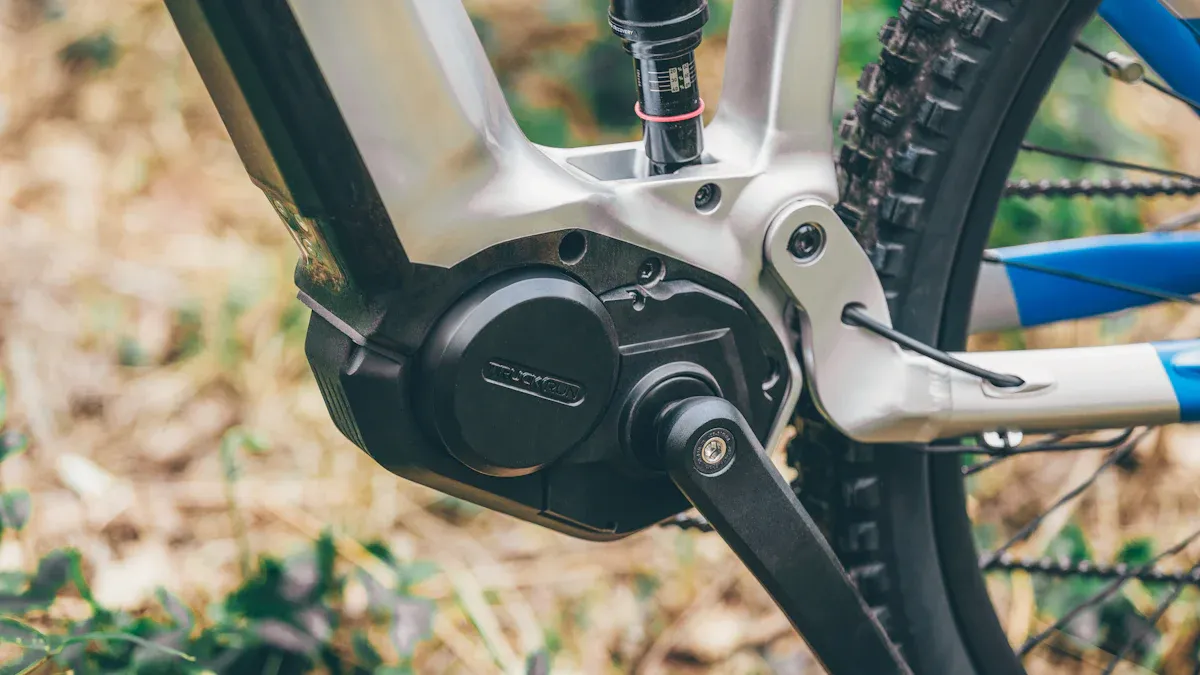
Bosch e-bike batteries have changed significantly in recent years. New cell chemistry and designs allow for capacities ranging from 400 to 750 Wh. A high energy density provides more range without unnecessarily increasing weight. Integrating the battery into the bike improves handling and makes it easier to use. Modular systems like the DualBattery system or the PowerMore Range Extender demonstrate how flexible modern batteries are today.
Key Insights
Bosch eBike batteries have evolved from externally mounted PowerPack models to sleek PowerTube batteries integrated into the frame.
Modern batteries offer higher capacity and range while being lighter and providing better protection against dirt and weather.
The Bosch Smart System enables smart features like app-based updates and theft protection for greater comfort and security.
The DualBattery system allows for the combination of two batteries for particularly long rides and flexible use.
Regular maintenance, correct storage, and the use of original chargers extend the life and performance of the batteries.
The evolution of Bosch e-bike batteries
PowerPack – The Beginning
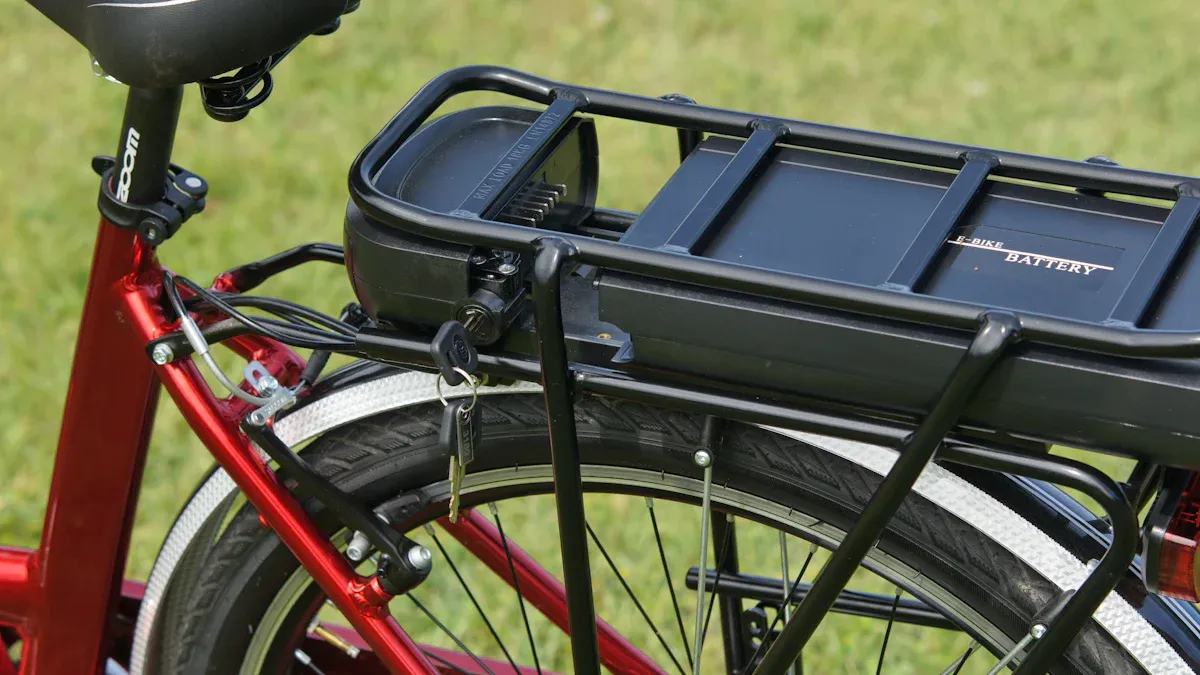
The history of Bosch e-bike batteries begins with the PowerPack models. These batteries were mounted externally on the frame or the luggage rack. The first variants, such as the PowerPack 400, offered about 400 Wh of capacity. Later, the PowerPack 500 with 500 Wh followed. These batteries were easily accessible and simple to replace. They were particularly suitable for everyday bicycles and city bikes.
Series |
Model |
Mounting Type |
Capacity (Wh) |
Features |
|---|---|---|---|---|
PowerPack |
PowerPack 400 |
Frame/Rack |
approx. 400 Wh |
External mounting, early models |
PowerPack |
PowerPack 500 |
Rack |
approx. 500 Wh |
Higher range, externally mounted |
PowerPack batteries were robust and provided a solid range. They defined the early years of e-bike development and made electric cycling accessible to many people.
PowerTube – Integration
With the introduction of PowerTube batteries, the design of Bosch e-bike batteries changed fundamentally. The PowerTube models are fully integrated into the frame. This provides a sleek and modern look. The battery is better protected against dirt and rain. Manufacturers can choose between two size variants: long and narrow or wide and flat. This allows for more freedom in bicycle frame design.
The integration of PowerTube batteries allows for an elegant appearance and provides optimal protection for the battery.
The PowerTube series offers various capacities:
PowerTube 500: approx. 500 Wh
PowerTube 625: approx. 625 Wh
PowerTube 800: approx. 800 Wh
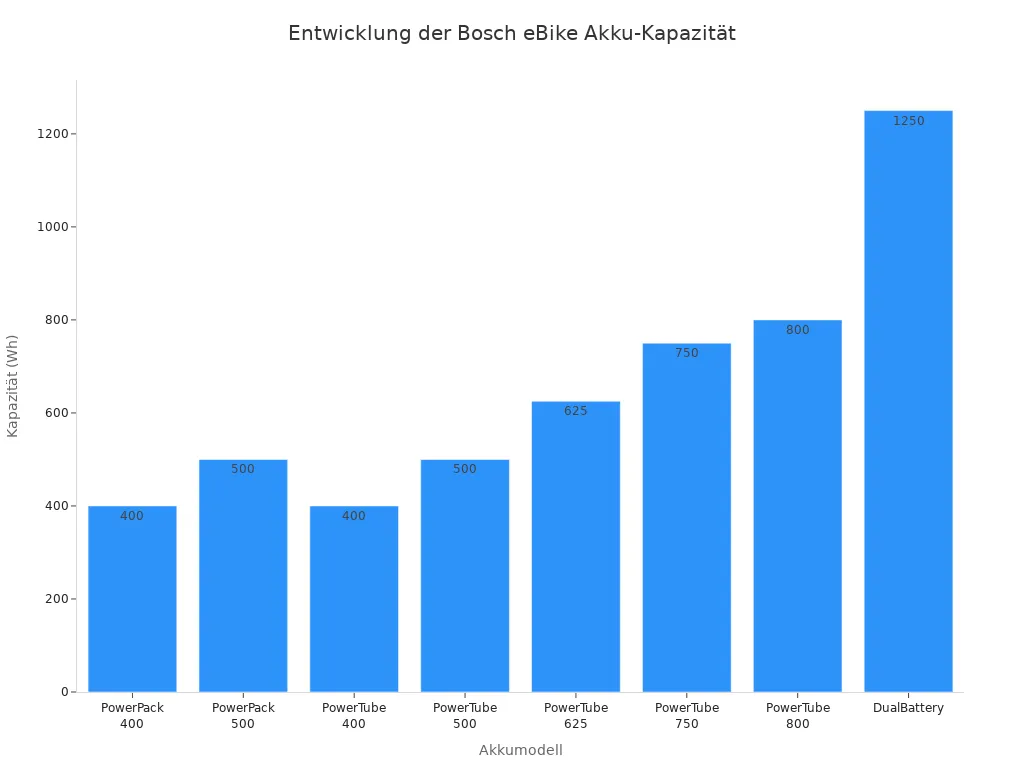
The PowerTube 750 has been part of the Bosch Smart System since 2022. It uses a new system logic and is not compatible with older batteries. The Smart System allows updates via the eBike Flow App and offers better connectivity. Previous models like the PowerTube 625 only work with older systems and require a specialist dealer for updates.
New models and innovations
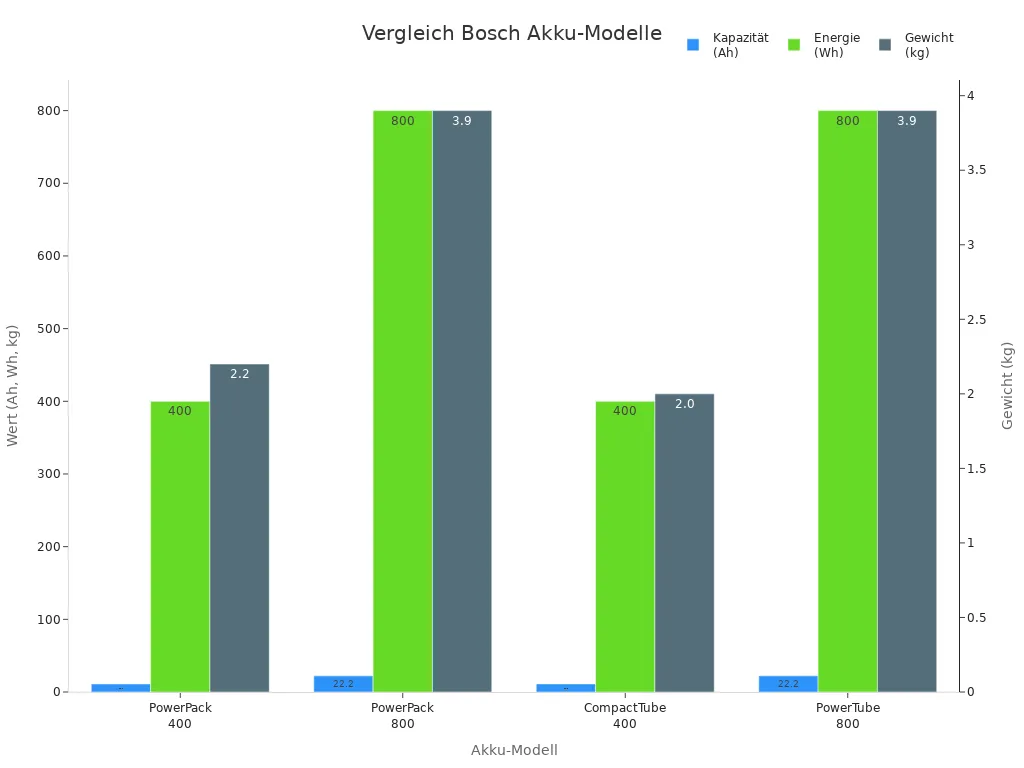
In recent years, Bosch has introduced many new models and innovations. These include the PowerTube 800 and the PowerPack 800 Frame. Both offer a capacity of 800 Wh and are part of the Smart System. They weigh about 3.9 kg and fit into the same battery mount, despite having different thicknesses. This facilitates replacement and gives manufacturers more flexibility.
Battery Model |
Capacity (Ah) |
Energy (Wh) |
Weight (kg) |
Design / Mounting Type |
Charging Time (100%) |
Features vs. Previous Models |
|---|---|---|---|---|---|---|
PowerPack 400 |
11.1 |
400 |
2.2 |
Frame or rack |
3.5 hrs |
Flexible mounting, lighter frame battery |
PowerPack 800 |
22.2 |
800 |
3.9 |
Frame battery |
6.9 hrs |
Significantly higher capacity, heavier |
CompactTube 400 |
11.1 |
approx. 400 |
approx. 2.0 |
Fully integrated into frame |
3.5 hrs |
More compact, lighter, for light e-bikes |
PowerTube 800 |
22.2 |
approx. 800 |
approx. 3.9 |
Fully integrated into frame (horiz./vert.) |
6.9 hrs |
Integrated design, high capacity |
Bosch uses more powerful 2170 cells in new batteries. These cells offer more energy in the same space, increasing range and efficiency. The CompactTube 400 is particularly light and compact, making it suitable for sporty and design-oriented e-bikes.
The DualBattery system allows for the combination of two batteries, enabling users to reach up to 1250 Wh. This is ideal for long tours or cargo bikes. New services like the Battery Guide and Battery Check assist with safe handling and maintenance.
Bosch e-bike batteries have evolved significantly in recent years. Today, they offer more capacity, better integration, and more flexibility than ever before.
Technology and Capacity
Range and Performance
The technology behind Bosch e-bike batteries has greatly improved in recent years. Bosch uses modern lithium-ion cells that offer high energy density, meaning the batteries store more energy without becoming heavier. The new PowerTube models use 21700 cells, which reduce weight while increasing capacity.
The first batteries were heavy and unwieldy.
The PowerTube 800 weighs about 3,950 grams, about 400 grams less than the PowerTube 750.
The PowerTube 600 weighs 3,080 grams, making it nearly 900 grams lighter than the 800 model.
Despite higher capacity, the new batteries are lighter than their predecessors.
An e-bike's range depends on several factors. Higher capacity in watt-hours (Wh) provides longer distances. Bosch offers batteries from 400 to 800 Wh. A battery with 500 Wh often enables 130 to 200 kilometers of range. However, actual range also depends on weight, riding style, and tire pressure.
Capacity (Wh) |
Impact on Range and Handling |
|
|---|---|---|
Rack Battery |
400 - 500 |
Easily removable, shorter range, higher center of gravity |
Frame Battery |
up to 725 |
Better weight distribution, longer range |
Intube/PowerTube Battery |
up to 750 |
Integrated, low center of gravity, greatest range |
Dual Battery System |
up to 1250 |
For very long distances, e.g., cargo bikes or tours |
Tip: Checking tire pressure regularly and riding smoothly can significantly increase your range.
Charging times and service
Battery charging time depends on capacity. A PowerTube 750 takes about 6 to 7 hours for a full charge with the standard charger. Smaller batteries charge faster. Bosch recommends not letting the battery drain completely, but rather recharging it more frequently, which preserves the cells and extends service life.
Bosch offers many services to keep batteries long-lasting:
Regular updates for the motor, battery, and display improve safety.
Maintenance of the drive system approximately every 1,000 kilometers.
Battery tests and inspections ensure proper function.
Repairs and servicing are handled by a certified workshop.
Batteries should be protected from moisture and stored in a warm place during cold weather.
Only use the original charger.
Note: Old or damaged batteries should not be disposed of in household waste; they must be professionally recycled.
Everyday Life and Usage
Handling and Installation
Handling modern Bosch e-bike batteries is simple and convenient. Many batteries can be removed and reinserted in just a few steps, making it easy to charge at home or on the go. New PowerTube models disappear almost invisibly into the frame. Users benefit from a clean design and better protection against dirt and water. For city and trekking bikes, PowerPack batteries sitting on the frame or luggage rack are suitable. Those with sporty e-bikes often use the sleek PowerTube batteries.
Tip: A clean battery slot ensures a long lifespan and prevents contact problems.
Compatibility and Flexibility
Bosch places great value on compatibility and flexibility. In the Bosch Smart System, PowerPack and PowerTube batteries are compatible with each other. Users can upgrade to larger batteries if the frame allows. The system offers various capacities for different purposes, such as trekking tours or e-mountain bikes. The following table shows the main battery types and their features:
Battery Type |
Position |
Compatibility / Features |
Capacities (Wh) |
|---|---|---|---|
PowerPack Rack |
Rack |
For city and trekking bikes, easy removal |
300, 400, 500 |
PowerPack |
Frame (down tube) |
Most common design, compatible in Smart System |
300-500, 545, 725 |
PowerTube |
Integrated into frame |
For sporty bikes, compatible in Smart System |
400, 500, 625, 725 |
DualBattery |
Two batteries combined |
Up to 1250 Wh, not retrofittable |
Up to 1250 |
The modular system facilitates adaptation to different needs. Bosch recommends always using original batteries and chargers to avoid damage.
Safety and Maintenance
Safety is Bosch’s top priority. The batteries feature a battery management system that monitors temperature and switches off the battery if it overheats. Each cell is encased in flame-retardant plastic. An integrated fuse protects against short circuits. Separators prevent heat from transferring from one cell to another. In an emergency, gas can be released in a controlled manner without endangering other cells. Bosch rigorously tests all batteries and subjects them to testing beyond the legal requirements.
For maintenance, Bosch recommends having the battery checked by a specialist dealer approximately every 2,000 kilometers or at least once a year. The dealer reads the error memory and generates a service report. This regular inspection secures the warranty and ensures a long service life.
Note: The eBike Flow app offers additional protection. Starting in the summer of 2025, the digital “Battery Lock” will protect the battery from theft by locking it automatically.
Bosch’s e-bike batteries have evolved from simple PowerPack models into modern, integrated systems. Today, users benefit from more range, faster charging, and smart features such as theft protection and app control. Bosch focuses on sustainable materials and intelligent connectivity. Future batteries will become even more powerful and environmentally friendly through new cell chemistries, improved charging speeds, and IoT integration.
Bosch’s innovations improve the riding experience and make e-bikes safer and more comfortable.
FAQ
How long does a Bosch eBike battery last?
A Bosch eBike battery usually achieves 500 to 1,000 full charging cycles. Many users ride with them for five years or longer. The service life depends on care, temperature, and usage.
Can you leave a Bosch battery outside in winter?
Bosch recommends storing the battery indoors in cold weather. Temperatures below 0 °C can reduce performance. A warm storage location protects the cells and extends their service life.
How do you properly maintain a Bosch eBike battery?
Charge the battery regularly
Protect from moisture
Do not fully discharge
Use the original charger
These tips help to maintain capacity.
Are all Bosch batteries compatible with each other?
Not all Bosch batteries fit every system. The smart system requires special batteries. Before purchasing, users should check whether the battery is compatible with their own e-bike.
How do you recognize a defective battery?
A defective battery often shows error messages on the display. The range drops suddenly. Bosch recommends having the battery checked by a specialist dealer if problems occur.