
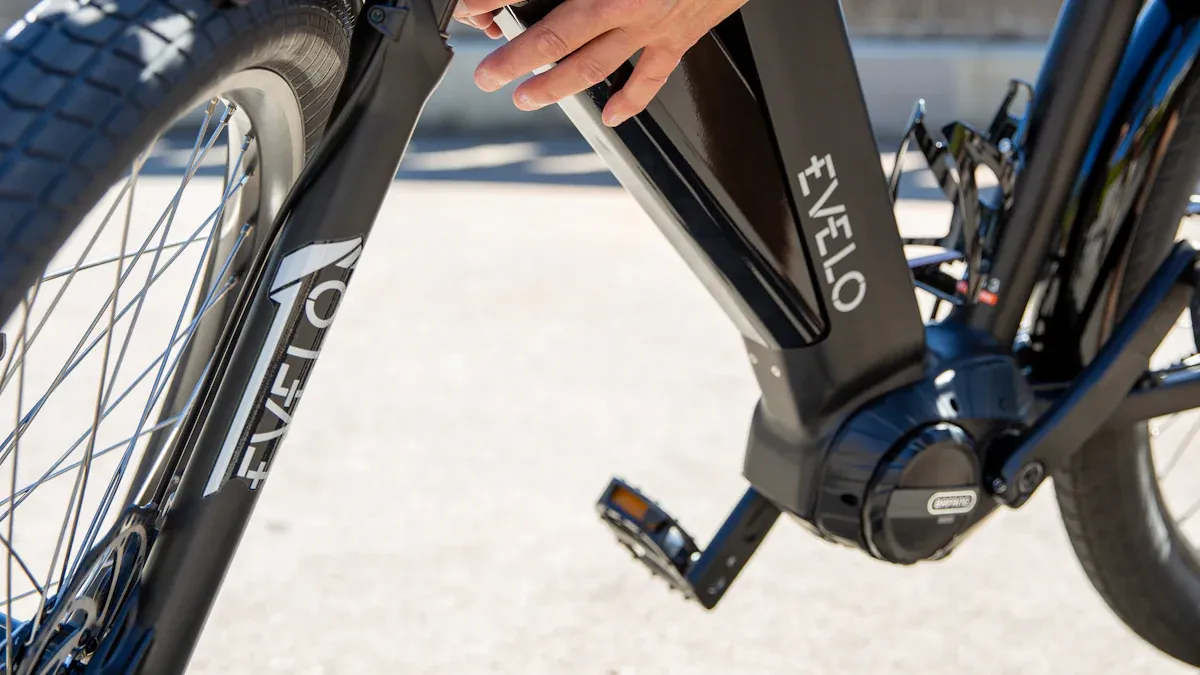
Choosing the right motor for your e-bike has a significant impact on your riding experience. The right electric bike motor provides optimal comfort, efficient assistance, and an enjoyable ride. The motor determines not only the power but also the overall character of the bike.
“An SUV e-bike should offer good handling, combining safety, comfort, and riding enjoyment. This includes steering, tire grip, braking performance, and how it handles luggage. Suspension, the chassis, riding position, noise level, and cockpit ergonomics also play a role. The motor is a key factor in shaping the overall character of the bike.”
In addition, modern e-bikes with smart systems make the riding experience safer and more efficient. The motor is the centerpiece, precisely controlling pedal assistance in conjunction with a sensor and controller. Without these components, an e-bike would be no more than an ordinary bicycle.
Key Takeaways
The motor affects how well the bike rides. Hub motors are good for city riding. Mid-drive motors are better for challenging routes.
Check the motor’s power and torque. A motor with 85 Nm provides plenty of help on steep hills.
The battery determines how far you can ride. A 500 Wh battery can cover 50 to 100 kilometers, depending on the assistance level.
Maintain the motor to help it last longer. Clean it regularly and have it checked once a year.
Compare models and brands to find a good deal. Quality motors last longer and cost less to maintain.
Types of E-Bike Motors
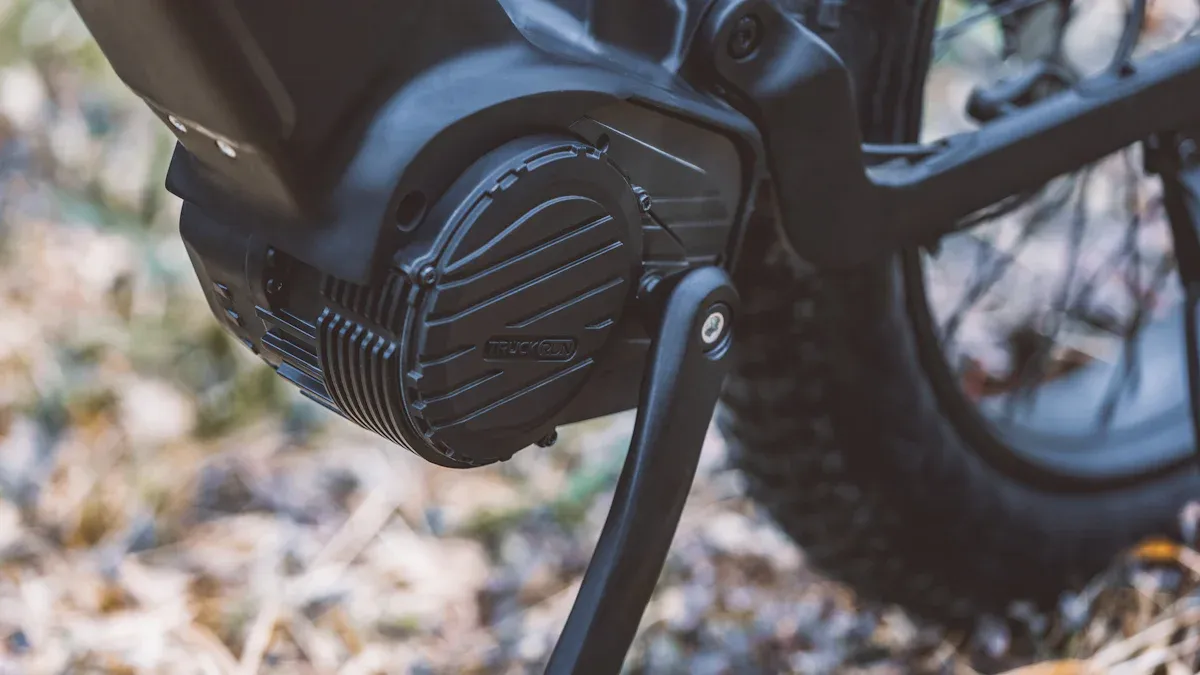
Hub Motors: Front and Rear Drive
Hub motors are among the most commonly used motors on e-bikes. They are located in either the front or rear wheel and offer different advantages.
Front hub motors: These motors are lightweight and easy to install. They are especially suited to city riding, as they provide a smooth ride. However, users report that the shift in weight toward the front can make the ride feel unfamiliar. One example is the Bafang H400 front hub motor, which, with a torque of 30 newton meters, is better suited to flat routes.
Rear hub motors: These motors are more powerful and offer a sportier ride. They distribute weight better and provide a more stable ride. Many riders prefer rear motors because they deliver power more directly to the rear wheel.
Tip: If you’re looking for a sporty riding experience, a rear hub motor is the better choice. A front hub motor is sufficient for city riding and short trips.
Mid-Drive Motors: Advantages and Uses
Mid-drive motors are positioned centrally in the bike frame, directly above the bottom bracket. This design offers numerous advantages:
Advantage |
Description |
|---|---|
Central positioning |
The motor provides optimal weight distribution and a low center of gravity. |
Improved control |
The central position increases stability and safety, especially on uneven terrain. |
High efficiency |
Mid-drive motors use the bike’s gears, which increases energy efficiency. |
Natural ride feel |
Power is transmitted directly to the chain, resulting in a smooth riding experience. |
Easy maintenance |
Repairs are often straightforward because the motor is easy to access. |
Mid-drive motors are especially suited to e-bikes used on hilly terrain or for long rides. They provide consistent assistance and are compatible with all types of gears.
Note: If you’re looking for an e-bike for challenging routes, a mid-drive motor is the ideal choice. It combines efficiency with a natural ride feel.
Comparing Motor Types
The choice between hub motors and mid-drive motors depends on your individual needs. The following table shows the key differences:
Motor type |
Efficiency at different speeds |
Cadence range |
Torque characteristics |
|---|---|---|---|
Hub motor |
Variable, independent of cadence |
Consistently powerful, delivered directly to the wheel |
|
Mid-drive motor |
Efficient at low speeds |
70–90 rpm |
Depends on the gearing; may have gaps in torque delivery |
Weight distribution also affects handling:
Hub motors, particularly rear motors, result in a rear-heavy weight distribution.
Mid-drive motors provide a balanced, central weight distribution, improving control.
Bottom line: Hub motors are ideal for city riding and flat routes. Mid-drive motors offer clear advantages for challenging rides and off-road cycling.
How E-Bike Motors Work
Basic Principles of an Electric Bike Motor
An e-bike motor is the heart of your bike. It works with the control electronics and battery to provide optimal assistance. The control electronics precisely regulate the motor’s output, taking parameters such as torque and cadence into account.
There are different types of drive systems, each with its own characteristics. Rear-wheel motors deliver power directly, while mid-drive motors provide better balance thanks to their central position. Front-wheel motors, on the other hand, are lightweight and well suited to city riding.
Tip: Choose the motor that best suits your riding style. A mid-drive motor is ideal for sporty riders, while city riders may benefit from a front-wheel motor.
Power and Torque
The power of an e-bike motor is measured in watts. It indicates how much energy the motor can provide. A powerful motor, such as a 600-watt model, is especially well suited to steep climbs or challenging routes.
Torque, measured in newton meters (Nm), determines the force the motor transfers to the pedals. A motor with 85 Nm provides strong assistance, especially at low speeds or on hilly terrain.
Feature |
Value |
|---|---|
Max. drive torque |
85 Nm |
Max. power |
600 W |
Max. assistance level |
340% |
Motor weight |
approx. 2.9 kg |
Assistance modes |
Sport, eMTB, Eco, Tour, Tour+, Auto |
Assistance Levels and What They Mean
E-bike motors offer different assistance levels that you can choose according to your needs. These range from Eco for energy-efficient riding to Sport or eMTB for maximum assistance.
Your choice of assistance level affects not only performance but also your battery range. In Eco mode, you can cover longer distances, while Sport mode is ideal for steep climbs.
Note: Use the assistance levels wisely to maximize battery life and get the most out of your e-bike.
Power and Selection Criteria
Weight and Size
The weight and size of an e-bike motor directly affect your bike’s handling and ride characteristics. A lightweight motor makes maneuvering easier, especially in the city or on narrow paths. Heavier motors, on the other hand, often offer more power, making them suitable for challenging routes or steep climbs.
Battery capacity and weight: Battery capacity is measured in watt-hours (Wh). It affects not only range but also the e-bike’s overall weight. A high-capacity battery weighs more but offers longer riding time.
Weight distribution: The motor’s position plays a key role. A mid-drive motor provides central balance, while a rear motor shifts the weight toward the back.
Tip: If you’re looking for a lightweight, nimble e-bike, choose a motor with a low weight. For longer rides or hilly routes, a more powerful motor makes sense, even if it is heavier.
Intended Use: City, Off-Road, or Touring
Your riding style and where you plan to ride determine which motor is best for you. Different terrains place different demands on the motor.
City riding: A lightweight, compact motor is ideal for city riding. A front hub motor or a small mid-drive motor provides enough assistance for short trips and flat terrain.
Off-road: On uneven terrain or steep climbs, you need a powerful motor with high torque. A mid-drive motor with 85 Nm of torque is an excellent choice for mountain bikes.
Touring: For long rides, a highly efficient motor with a long range is essential. A mid-drive motor paired with a high-capacity battery provides the assistance you need.
Note: Before buying, consider where you’ll primarily use your e-bike. A motor suited to city riding may not be powerful enough off-road.
Battery Capacity and Range
Battery capacity is one of the most important factors when choosing an e-bike. It determines how far you can ride on a single charge. Capacity is measured in watt-hours (Wh). A 500 Wh battery offers a range of around 50 to 100 kilometers, depending on the assistance level and terrain.
Range and power: The theoretical range depends on the battery capacity and the motor’s electrical power. A powerful motor uses more energy, reducing the range.
Energy density: The battery’s energy density affects its efficiency. High-quality batteries store more energy while weighing less.
Charging time: Charging time varies depending on the battery capacity and charger. A 500 Wh battery generally takes 4 to 6 hours to fully charge.
Feature |
Description |
|---|---|
Battery capacity |
Affects range and is measured in watt-hours (Wh). |
Energy density |
Determines efficiency and the capacity-to-weight ratio. |
Charging time |
Indicates how long the battery takes to fully charge. |
Tip: Choose a battery that suits your riding style. A small battery is sufficient for short trips. For long rides, look for a high-capacity battery.
Value for Money
Value for money plays a key role when choosing an e-bike motor. You want to make sure you’re getting the best combination of quality, performance, and durability for your money. But how can you properly assess a motor’s value? Here are some important factors to consider:
Power and efficiency
A high-quality motor should not only be powerful but also operate efficiently. An efficient motor uses less energy and extends your e-bike’s range. Make sure the motor offers enough torque to meet your needs without putting unnecessary strain on the battery.Durability and maintenance costs
A low-cost motor may seem appealing at first, but long-term costs can be higher. High-quality motors require less maintenance and last longer. Consider whether it’s worth investing a little more to minimize repair costs.Brands and warranties
Well-known brands often offer reliable products and comprehensive warranties. These warranties protect you from unexpected costs and give you peace of mind with your purchase. Check the warranty terms and the manufacturer’s customer service.Additional features
Some motors offer additional features such as smart control systems or integrated sensors. These can increase the price but also improve comfort and ease of use. Consider whether these extras matter to you.
Criterion |
What to look for |
|---|---|
Power |
Does the motor’s power suit your riding style and needs? |
Efficiency |
How efficiently does the motor use the battery’s energy? |
Maintenance costs |
Are spare parts readily available and affordable? |
Warranty |
Does the manufacturer offer a warranty that covers repair costs? |
Additional features |
Are there features that could improve your riding experience? |
Tip: Compare different models and consider not only the price but also the long-term benefits. A slightly more expensive motor may pay off through lower maintenance costs and a longer lifespan.
Good value for money means finding a motor that meets your needs without breaking your budget. Remember that the motor is the heart of your e-bike. A high-quality electric bike motor provides a better riding experience and saves you money in the long run.
Recommendations by intended use
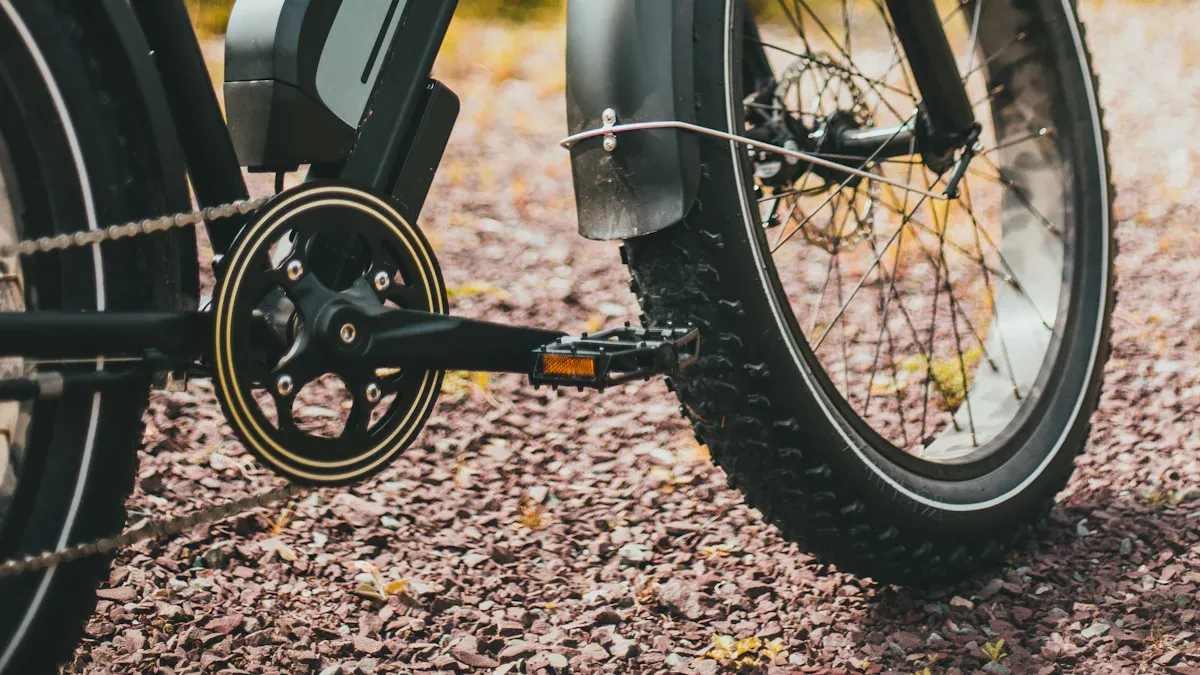
Motors for urban commuting
Lightweight, compact motors are ideal for urban commuting. They provide enough assistance for short distances and flat terrain. Front hub motors are particularly popular for their ease of use and low cost. They are an excellent choice for commuters who travel short distances every day.
For distances of up to 7.5 kilometers, e-bikes are the fastest mode of transport in urban areas.
50% of all car journeys are shorter than 5 kilometers. This represents significant potential for switching to e-bikes.
Year |
E-bike sales (millions) |
Share of total fleet made up by e-bikes (millions) |
|---|---|---|
4 |
11 |
Tip: If you’re looking for an e-bike for urban commuting, look for a low weight and easy operation. A front hub motor or a small mid-drive motor is the best choice here.
Motors for touring cyclists
Touring cyclists need reliable motors that provide consistent assistance, even over long distances and on varied terrain. Mid-drive motors such as the Bosch Performance CX have proven particularly efficient and robust in long-term tests.
Torque of 65 Nm delivers powerful assistance.
At 3.2 kg, the e-bike remains light and nimble.
High efficiency and adaptability to different riding conditions make these motors ideal for touring.
Manufacturers such as Bosch regularly emphasize the reliability of their motors. Even with intensive use, problems are rare.
Note: For long tours, choose a mid-drive motor with high efficiency and a powerful battery. This will allow you to handle even demanding routes with ease.
Mountain bike and off-road motors
In off-road conditions, powerful motors with high torque are essential. They provide the assistance you need on steep climbs and uneven terrain. Models such as the Specialized Turbo Levo and the SCOR 4060 Z ST stand out for their range and ride quality.
Test criterion |
Result |
|---|---|
Range |
SCOR 4060 Z ST: 98 km per charge, Specialized S-Works Turbo Levo: 70 km per charge |
Assistance factor |
Stevens and SCOR score highly (3.3) on climbs |
Ride quality |
Specialized Turbo Levo receives the best ratings for acceleration, handling, and comfort |
Mountain bike professionals praise the Specialized Turbo Levo for its high-quality components.
SCOR, Giant, and Stevens also deliver excellent off-road performance.
Tip: Choose a motor with at least 85 Nm of torque to tackle challenging off-road trails. Also look for a robust design and long range.
Motors for adventure and extreme conditions
If you’re embarking on extreme adventures, you need a motor that won’t let you down. Whether you’re riding in freezing temperatures, on sandy desert trails, or on steep mountain routes, your e-bike motor needs to be robust, powerful, and reliable. Here are the key features a motor should have for extreme conditions:
High power and torque: A motor with at least 85 Nm of torque is essential. It provides the power you need to tackle steep climbs and challenging terrain.
Weather resistance: Make sure the motor is protected against water, dust, and extreme temperatures. Models with an IP rating of IP65 or higher are ideal.
Efficient cooling: On long rides in hot climates, a well-cooled motor prevents overheating and loss of power.
Long battery life: A powerful, high-capacity battery (e.g., 750 Wh) ensures you won’t suddenly be left without assistance on long adventures.
Tip: Choose a motor specifically designed for off-road and adventure riding. Brands such as Bosch, Shimano, and Yamaha offer models tested for extreme conditions.
Motor model |
Torque |
Features |
|---|---|---|
Bosch Performance Line CX |
85 Nm |
High efficiency, suitable for steep climbs |
Shimano EP8 |
85 Nm |
Lightweight, robust, ideal for long tours |
Yamaha PW-X3 |
85 Nm |
Compact, weather-resistant, powerful |
With a motor like this, you can embark on any adventure. Whether you’re riding through snow, mud, or sand, your e-bike will remain a reliable companion. Remember to maintain your e-bike regularly to extend the motor’s lifespan. That way, you can explore the world on two wheels without compromise.
Care and maintenance
Regular maintenance
Regular maintenance of your e-bike motor is essential to extend its lifespan and prevent damage. Wear and tear is the most common cause of defects, followed by technical problems. Studies show that wear and tear accounts for about 33 percent of damage, while technical defects account for around 22 percent.
To keep your motor in optimal condition, take the following steps:
Cleaning: Keep the motor clean and dry to protect seals and other sensitive parts.
Inspection: Regularly check for visible damage or wear.
Professional servicing: Have the motor checked at a specialist workshop at least once a year.
Battery care: Monitor the battery’s condition, as it directly affects motor performance.
Software updates: Update your motor’s software to benefit from performance improvements.
Tip: Plan your maintenance in advance, especially before longer tours or intensive use. This will help you avoid unpleasant surprises.
Common problems and solutions
E-bike motors can occasionally cause problems. The most common issues and their solutions are:
Bike computer: Make sure the onboard computer is properly seated in its mount.
Sensors: Check the sensors for dirt or malfunctions. Clean them if necessary.
Battery: Check the battery contacts and recharge it fully on a regular basis.
Motor tuning: Avoid unauthorized modifications, as they can affect the warranty and functionality.
Wiring: Check the cable connections for damage or loose plugs.
Electric motor: If you notice unusual noises or a loss of power, contact a specialist workshop.
Note: Many problems can be avoided with simple checks and proper care. Take time to inspect your e-bike regularly.
Tips for extending service life
With proper care, you can significantly extend the service life of your e-bike motor. Here are some practical tips:
Avoid extreme weather conditions such as heavy rain or snow, as they can put strain on the motor.
Store your e-bike in a dry, sheltered place to prevent corrosion.
Ride proactively and avoid unnecessary strain, such as sudden starts or braking.
Use the assistance levels mindfully to avoid overloading the motor.
Follow the maintenance intervals and have the motor inspected regularly.
Tip: Good care pays off. Your motor will remain powerful for longer, and you’ll save on repair costs in the long run.
Comparing motors
Market leaders and popular models
Choosing the right motor often depends on the brand. Some manufacturers dominate the market thanks to their quality and innovation. Bosch eBike Systems leads in Germany with an impressive 70% market share. Shimano and Brose follow with 12% and 6%, respectively.
Manufacturer |
Market share in Germany |
Notes |
|---|---|---|
Bosch eBike Systems |
70% |
Market leader in Germany, high quality and close collaboration with manufacturers |
Shimano |
12% |
Strong in the sports segment, established worldwide |
Brose |
6% |
A significant supplier, but with a smaller market share in Germany |
The picture is different in Europe. Bosch remains strong in Central Europe, while Bafang leads in Asia. Shimano stands out worldwide for its sport-oriented models.
Manufacturer |
Market share in Europe |
Notes |
|---|---|---|
Bosch eBike Systems |
Lower than in Germany |
Dominant in Central Europe, popular with European brands |
Bafang |
Strong in Asia |
Leader in Asia, with no competition in the region |
Shimano |
Established worldwide |
Focused on sporty, performance-oriented e-bikes |
Advantages and disadvantages of different brands
Your choice of brand affects your riding experience. Bosch motors are particularly popular and are used by renowned manufacturers such as Riese & Müller and Cannondale. Stiftung Warentest points out that inexpensive e-bikes with rear hub motors have drawbacks in terms of handling, while mid-drive models perform better.
-
Rear hub motor:
Advantages: Good traction, easy to install.
Disadvantages: Requires stronger brakes; battery pack can create an imbalance.
-
Mid-drive motor:
Advantages: Optimal weight distribution, good traction.
Disadvantages: Requires a special bike frame; compatibility issues with gear systems.
Bosch motors offer a wide range of options for different needs. They are efficient and durable, making them the preferred choice of many manufacturers.
Price comparison
E-bike motor prices vary considerably. Bosch motors are among the more expensive options, but offer excellent value for money. Cheaper rear hub motor models are affordable, but have some performance drawbacks.
A high-quality mid-drive motor often costs more, but delivers better efficiency and riding comfort. Shimano offers sporty models at moderate prices, while Brose and Bafang are affordable alternatives for beginners.
Tip: Compare prices across brands and consider the long-term benefits. An expensive motor may pay off through lower maintenance costs and better performance.
Choosing the right motor for your e-bike is essential. Different types, such as hub motors and mid-drive motors, offer specific advantages. Performance depends on factors such as torque and battery capacity. Regular maintenance extends your motor’s lifespan and ensures a reliable riding experience.
E-bikes combine traditional cycling with assistance from an electric motor. They promote health, are environmentally friendly, and offer flexibility in everyday life. Think about how you plan to use your e-bike. A powerful motor with a long range is suitable for touring, while a lightweight motor is ideal for the city.
Tip: Analyze your needs and choose the right electric bike motor. This way, you can enjoy maximum comfort and efficiency.
FAQ
What is the difference between a hub motor and a mid-drive motor?
A hub motor is located in the wheel, while a mid-drive motor is mounted centrally at the bottom bracket. Hub motors are suitable for flat routes, while mid-drive motors are better for hilly terrain. A mid-drive motor offers better weight distribution and a more natural riding experience.
How much torque do I need for my e-bike?
It depends on how you plan to use it. For city riding, 40–50 Nm is sufficient. For steep climbs or off-road routes, you should choose at least 70–85 Nm. Higher torque provides more power and assistance.
How do I properly maintain my e-bike motor?
Keep the motor clean and dry. Avoid pressure washers, as they can damage the seals. Check the cable connections regularly and have the motor serviced annually at a specialist workshop. This will help it maintain its performance for longer.
How does battery capacity affect range?
Battery capacity, measured in watt-hours (Wh), determines how far you can ride. A 500 Wh battery provides a range of 50–100 kilometers, depending on the assistance level, terrain, and riding style. Choose a capacity that suits your needs.
Can I tune my e-bike motor?
Tuning an e-bike motor is not recommended. It can void the warranty and shorten the motor’s lifespan. It also violates traffic regulations. Instead, make the most of the available assistance levels.