
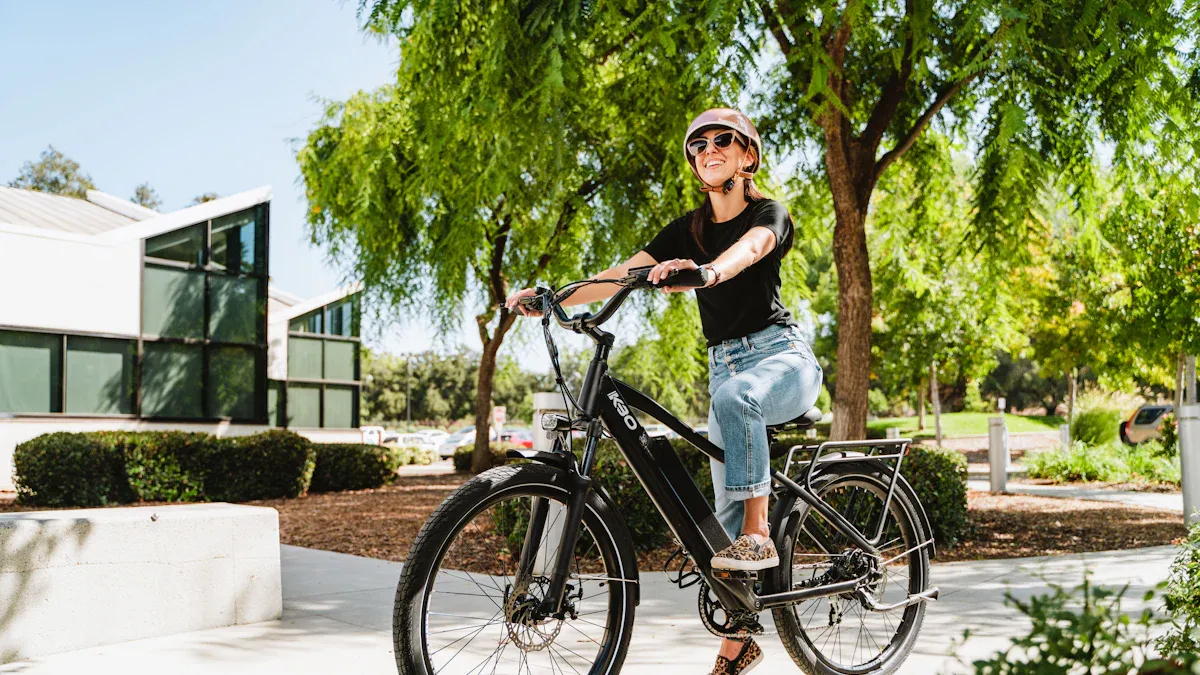
An e-bike differs from conventional bicycles by its electric drive. It assists you when pedaling and makes riding easier, especially on long distances or climbs. In 2023, for the first time in Germany, more e-bikes (53%) were sold than classic bicycles. This shows how much they dominate the market.
E-bikes offer a sustainable solution for urban traffic. They produce fewer CO₂ emissions than cars and reduce air pollution. With a stock of 11 million e-bikes in Germany by the end of 2023, it is clear that they play a growing role in mobility.
🚲 Tip: An electric bike is not only environmentally friendly, but also cost-effective to operate – ideal for everyday life and leisure!
Key Insights
E-bikes help you pedal. This makes long rides easier.
They are good for the environment. They produce less CO₂ than cars.
Choose an e-bike that suits your everyday life. Do you need a city, mountain, or cargo bike?
Maintain your e-bike regularly. Check the brakes, tires, and battery. This keeps it safe and working well.
Ride your e-bike to work or shopping. This saves time and protects the environment.
Basics for Beginners

What is an electric bike?
An electric bike is a bicycle equipped with an electric drive. This drive assists you when pedaling and makes riding easier, especially on climbs or longer distances. There are different types of e-bikes, including pedelecs, S-pedelecs, and fully motorized e-bikes. Pedelecs are the most common variant. They assist you up to a speed of 25 km/h, while S-pedelecs can reach up to 45 km/h. Fully motorized e-bikes, on the other hand, can also ride without pedaling.
💡 Tip: If you are new to the world of e-bikes, start with a pedelec. It offers a good balance between assistance and control.
How does an electric bike work?
The operation of an electric bike is based on modern technology. Several components work together to offer you a pleasant riding experience:
Sensors: These measure how much force you apply to the pedals. Based on this data, the assistance is adjusted.
Controller: It regulates the motor drive and ensures that the assistance is seamless.
Battery: The battery is the energy source of the e-bike. Its capacity determines how far you can ride. Advances in battery technology have significantly improved the range and performance of modern e-bikes.
Motor: The motor provides the actual assistance. It can be located either on the front wheel, rear wheel, or in the middle of the bicycle.
This technology makes riding not only easier, but also more efficient. You can cover longer distances without overexerting yourself.
Benefits of electric bikes: Sustainability, Health, Flexibility
E-bikes offer numerous benefits that make them an attractive choice for many people. Here are the most important:
-
Sustainability: E-bikes are more environmentally friendly than cars. They produce fewer emissions and contribute to reducing air pollution.
Means of transport
Emissions
E-bikes
Cars
Higher emissions
Electric buses
Benchmark
Health: Regular riding with an e-bike can improve your health. Studies show that it can reduce the risk of a heart attack by 40 percent. Even if you have health limitations, you can benefit from the positive effects on your cardiovascular system.
Flexibility: With an e-bike, you are flexible on the go. You can use it for commuting, shopping, or leisure activities. It is a practical alternative to public transportation or the car.
🚲 Note: E-bikes are not only suitable for sporty riders. They also offer people with limited mobility a way to stay active.
Tips for Beginners
Choosing the right electric bike: City, Mountain, Cargo Bikes
The choice of the right electric bike depends on your lifestyle and your needs. There are different types that were developed for different purposes:
City e-bikes: Ideal for the daily commute or short rides in the city. They offer an upright sitting position, comfort, and often a rack for shopping.
Mountain e-bikes (e-MTBs): Perfect for adventures in nature. These models are robust, have strong suspension, and are suitable for rough terrain.
Cargo e-bikes: The best choice if you want to transport heavy loads. They are especially popular with families and delivery services.
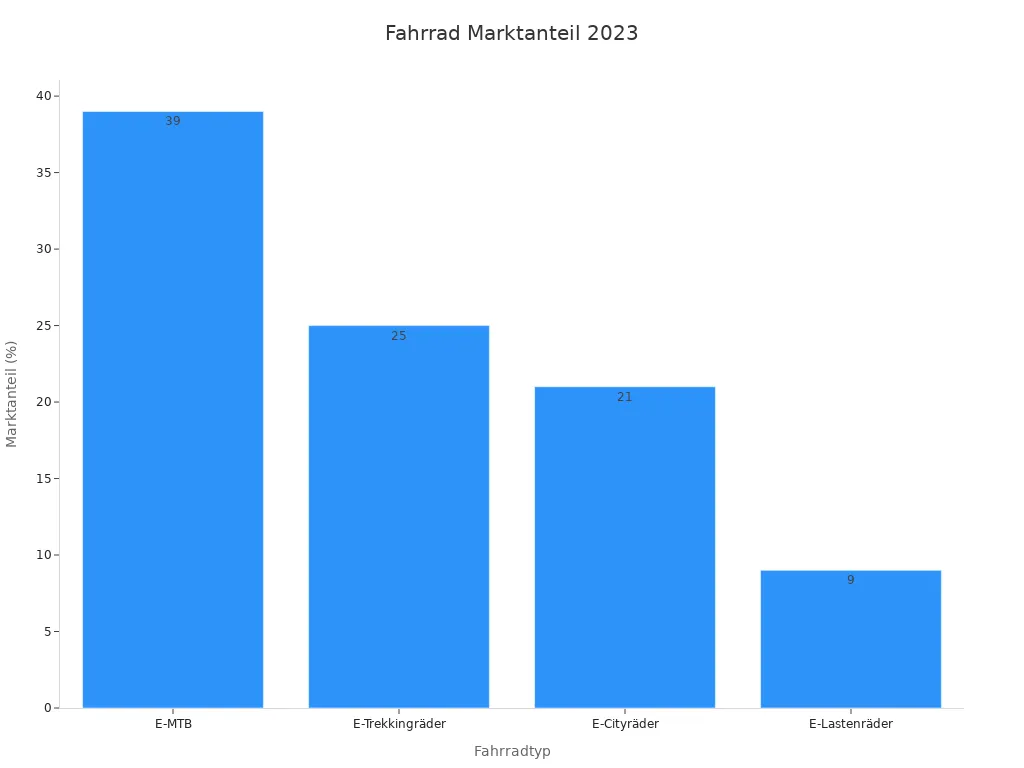
The market shares of the different types show how different the preferences of users are:
Bicycle type |
Market share 2023 |
Sales figures 2023 |
Growth (%) |
|---|---|---|---|
e-MTB |
39% |
- |
- |
e-trekking bikes |
25% |
- |
- |
e-city bikes |
21% |
- |
- |
e-cargo bikes |
9% |
189,000 |
14.5% |
💡 Tip: Think before buying how and where you want to use your electric bike. This way you find the model that best suits you.
Safety rules and legal regulations
When riding an electric bike, you must follow certain rules to be safe on the road. In Germany, the following regulations apply:
Helmet requirement: For pedelecs, there is no helmet requirement, but wearing a helmet is strongly recommended. For S-pedelecs, a helmet is legally required.
Traffic rules: Electric bikes may use bike paths if they are appropriately marked. S-pedelecs, however, must use the road.
Minimum age: There is no age restriction for pedelecs. S-pedelecs may only be ridden from the age of 16.
Insurance requirement: S-pedelecs require an insurance plate, while pedelecs are exempt.
🚲 Note: Inform yourself about the local regulations before your first ride. This way you avoid fines and stay safe on the road.
First steps: Charging, care, and maintenance
An electric bike requires regular care to maintain its performance. Here are the most important steps:
Charge the battery: Charge the battery after every ride to extend its lifespan. Avoid extreme temperatures, as they can impair performance.
Cleaning: Clean your e-bike regularly with a damp cloth. Avoid pressure washers, as they can damage the electronics.
Maintenance: Regularly check the brakes, tires, and chain. A well-maintained e-bike is safer and more efficient.
Software updates: Many modern electric bikes have software that needs to be updated. Keep the firmware up to date to achieve the best performance.
🔧 Tip: Schedule regular inspections with a specialist dealer. This way you can ensure that your e-bike always stays in top condition.
Advanced tips for pros
Optimizing performance: Battery life and riding technique
The battery life of your e-bike depends on several factors. With the right technique, you can maximize the range of your battery. Larger batteries offer longer rides and more flexibility. They allow you to take detours more relaxed and discover new routes. The Bosch Performance Line motor has proven to be particularly efficient. It consumes only 10.56 Wh/km compared to 15.84 Wh/km for the Shimano EP8. This efficiency extends the range and saves energy.
💡 Tip: Plan your tours according to the battery capacity. Even smaller batteries often last until you want to take a break.
Your riding technique also influences the battery performance. Ride steadily and avoid frequent starting and braking. Use the assistance levels of your electric bike sensibly. A lower level saves energy and trains your fitness at the same time.
Customization and accessories for specific needs
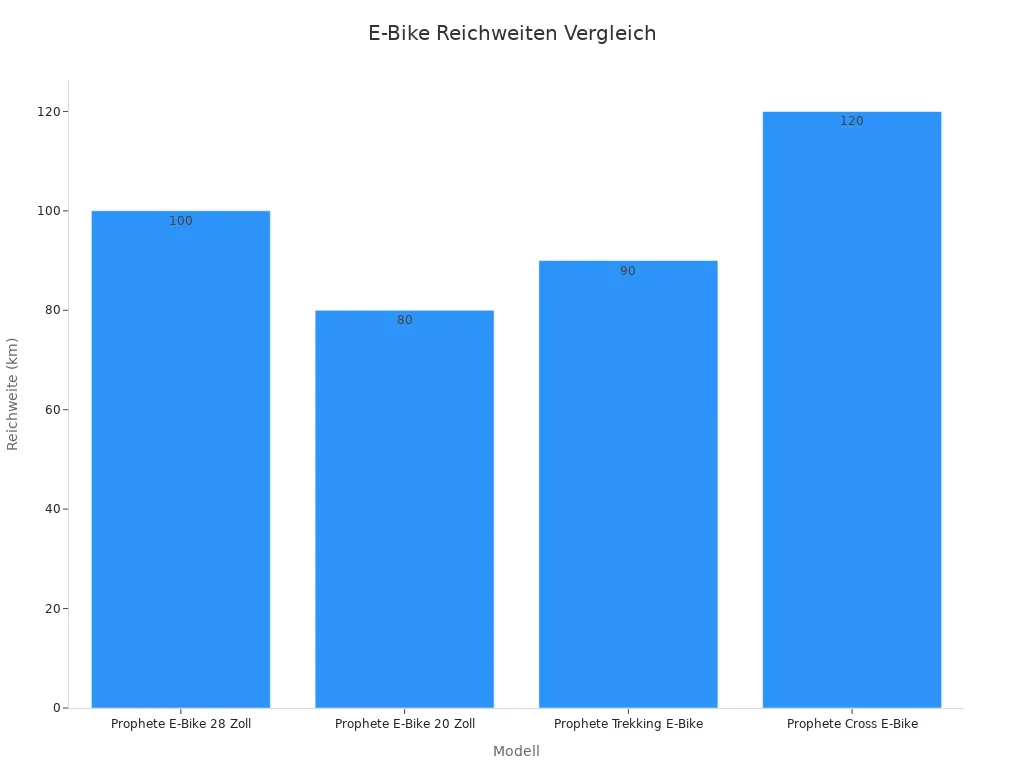
Choosing the right accessories makes your e-bike experience even better. Different models offer different ranges and charging times. Here is an overview:
Model |
Charging time (hours) |
|
|---|---|---|
Prophete E-Bike 28 inch |
4-6 |
100 |
Prophete Cross E-Bike |
6-8 |
120 |
Additionally, you can customize your e-bike with accessories such as racks, child seats, or special tires. These options increase comfort and adapt your e-bike to your individual needs.
Maintenance and troubleshooting
Regular maintenance keeps your e-bike in top condition. The most common problems occur with the battery, motor, and brakes. Individual battery cells can fail, which impairs performance. Motors tend to overheat or have communication errors. Brakes wear out faster due to higher speeds.
🔧 Tip: Regularly check the brakes and the battery. A specialist dealer can help you with more complex problems.
A well-maintained electric bike offers you not only safety, but also a longer lifespan. Keep the software of your e-bike up to date to ensure the best performance.
Future of electric bikes: Trends and innovations until 2025
Technological developments: Batteries, motors, software
The technology behind e-bikes is developing rapidly. Manufacturers are continuously working to improve performance and efficiency. Especially in the areas of batteries, motors, and software, there are exciting advances:
Category |
Details |
|---|---|
Battery technologies |
More powerful batteries enable longer ranges and faster charging times. |
Motors |
Sensors detect the pedaling force and precisely adjust the motor assistance. |
Software |
Smart technologies such as smartphone apps offer you more control and personalized settings. |
These innovations make e-bikes not only more powerful, but also more user-friendly. You can customize your e-bike individually and use it more efficiently.
Sustainability and environmental friendliness
E-bikes are an environmentally friendly alternative to cars. They produce significantly fewer CO₂ emissions and contribute to reducing air pollution. Especially Speed Pedelecs offer great potential to replace car rides:
37% of car rides could be replaced by Speed Pedelecs.
19% of car kilometers could be saved by using e-bikes.
The production of a speed pedelec generates only 350 kg of CO₂, while a battery-electric mid-range car produces between 11,000 and 14,000 kg of CO₂.
With an e-bike, you are making an active contribution to climate protection and sustainable mobility.
Integration into urban traffic
E-bikes play an increasingly important role in city traffic. They offer a flexible and space-saving alternative to cars. Studies show that the market share of e-bikes will remain stable through 2025, despite challenges:
Year |
Sales figures |
E-bike market share |
Forecast for 2025 |
|---|---|---|---|
2024 |
53 % |
Stability and optimism, first signs of improvement in spring 2025 |
The integration of e-bikes into urban traffic is supported by the expansion of bike lanes and charging stations. This allows you to get around the city faster and more environmentally friendly.
🚲 Tip: Use your e-bike for your commute or short errands. You save time and protect the environment.
E-bikes offer an environmentally friendly and flexible mobility solution. They replace up to 37% of car trips and reduce car mileage by 19%. With only 350 kg of CO₂ emissions during the production of an S-Pedelec compared to 11,000–14,000 kg for cars, they are significantly more sustainable.
Year |
Notes |
|
|---|---|---|
2024 |
Stability despite declines |
Optimism for normalization |
2025 |
Tense market situation |
Hope for improvement in spring |
2026 |
Expected normalization |
Long-term stability of demand |
The future of e-bikes remains promising. Advances in technology and infrastructure will further strengthen their role in urban traffic. 🚲
FAQ
❓ How far can I ride an e-bike?
The range depends on the battery, terrain, and your riding style. On average, you can ride between 50 and 150 kilometers on a fully charged battery. Use a low assistance level to maximize the range.
❓ Do I need to service my e-bike regularly?
Yes, regular maintenance is important. Check the brakes, tires, and chain every few weeks. Charge the battery correctly and keep the software up to date. Schedule an inspection with a specialist dealer at least once a year.
❓ Can I ride an e-bike in the rain?
Yes, e-bikes are weather-resistant and can be ridden in the rain. However, avoid deep puddles, as water could enter the electronics. Dry your e-bike after the ride to prevent rust.
❓ How long does an e-bike battery last?
A battery generally lasts 500 to 1,000 charge cycles. This corresponds to approximately 3 to 5 years, depending on usage. Do not let the battery discharge completely and avoid extreme temperatures to extend its lifespan.
❓ Do I need insurance for my e-bike?
You do not need insurance for pedelecs. S-Pedelecs, on the other hand, require a license plate and liability insurance. Find out about the legal regulations in your country to stay safe on the road.
🚲 Tip: Read your e-bike's user manual to get all the important information on care and use.