
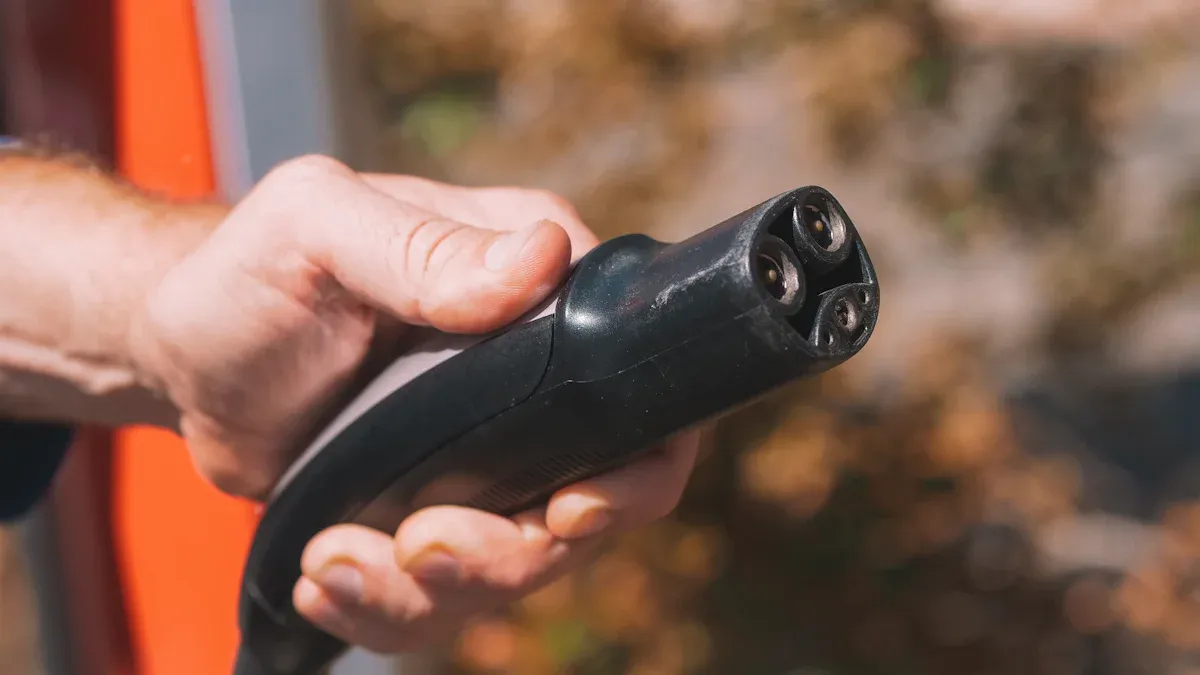
E-bike charging stations play a crucial role in sustainable mobility. They promote the use of environmentally friendly modes of transport and make your everyday life easier. With a comprehensive infrastructure, you save time as you can conveniently charge your e-bike on the go at an e-bike charging station. Many stations use solar panels to provide green energy. This makes using them not only practical but also eco-friendly. An app that displays all available e-bike charging stations helps you with planning and improves your efficiency. Often, the charging stations are free of charge, which further increases their appeal.
Key Findings
E-bike charging stations are located in places like cities and along bike paths. They assist with charging and make e-bike travel easier.
Apps like 'Fahrrad.de' show you nearby charging stations. They provide info on availability, charging time, and reviews for better planning.
Charge your e-bike at locations like cafés or tourist attractions. This allows you to use the waiting time and relax.
Fast-charging stations are good for short breaks. Regular charging stations are better for longer stops. Mobile chargers are practical and flexible.
Check if your battery is compatible with the charging station. Take good care of your battery so it lasts longer and performs better.
Locations of E-Bike Charging Stations
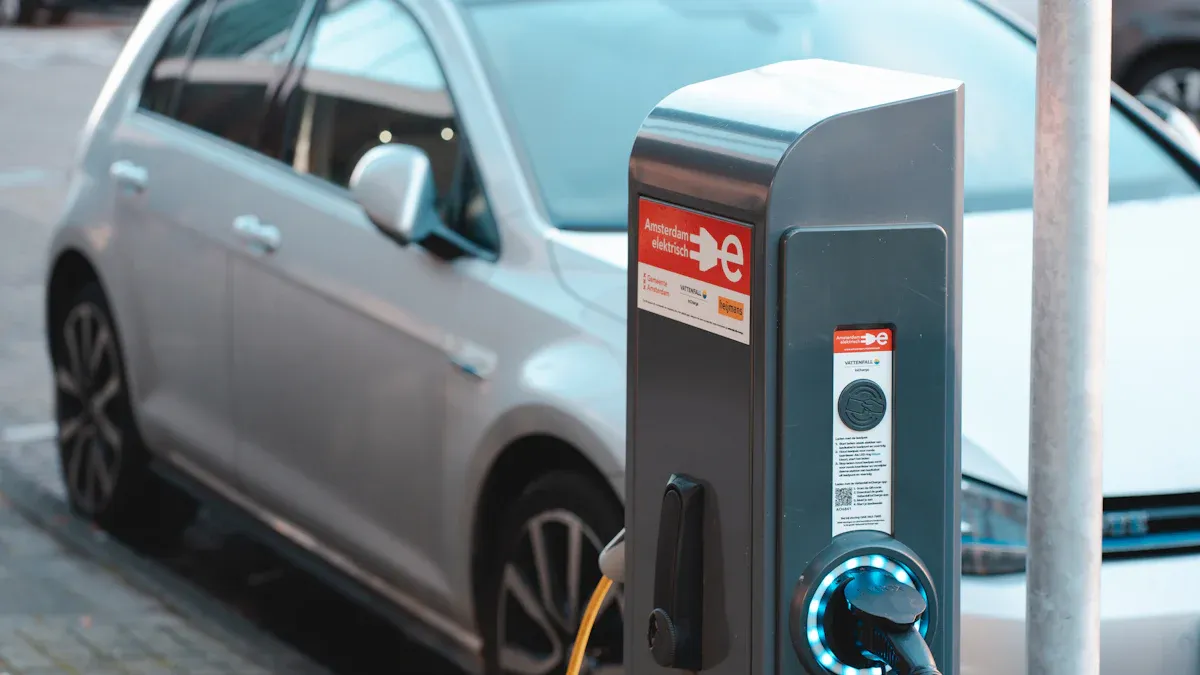
Typical locations: cities, bike paths, and tourist spots
You can find e-bike charging stations in many strategic locations. In cities, they are often located near town halls, museums, or restaurants. These locations offer you not only the opportunity to charge your e-bike but also a pleasant way to wait. Charging stations are also widely available on popular bike paths and in tourist regions such as the Alps or along the Danube. They facilitate longer tours and promote e-bike tourism. The variety ranges from simple bike racks with power outlets to multifunctional charging columns tailored to different needs.
Using apps like 'Fahrrad.de' to find locations
Finding a suitable e-bike charging station is made significantly easier by apps like 'Fahrrad.de'. These apps show you not only the nearest charging stations but also important details like availability, charging times, and additional services. You can plan the route to a station directly and thus save time. Some apps even offer reviews from other users so you can make the best choice. With these digital helpers, charging your e-bike on the go becomes stress-free and efficient.
Tip: Download the app before your tour and test it to get familiar with its functions.
Tips for planning charging stops on longer tours
Good planning is crucial when you go on a longer tour with your e-bike. Think ahead about how far your battery will take you and plan charging stops at suitable locations. Use maps or apps to find charging stations along your route. Choose locations that also allow you to take a break, such as cafés or sights. This way, you can make productive use of the charging time. Make sure the stations are compatible with your battery to avoid unpleasant surprises.
Note: Do not always charge your battery to 100%, as this can help extend its lifespan.
Types of E-Bike Charging Stations
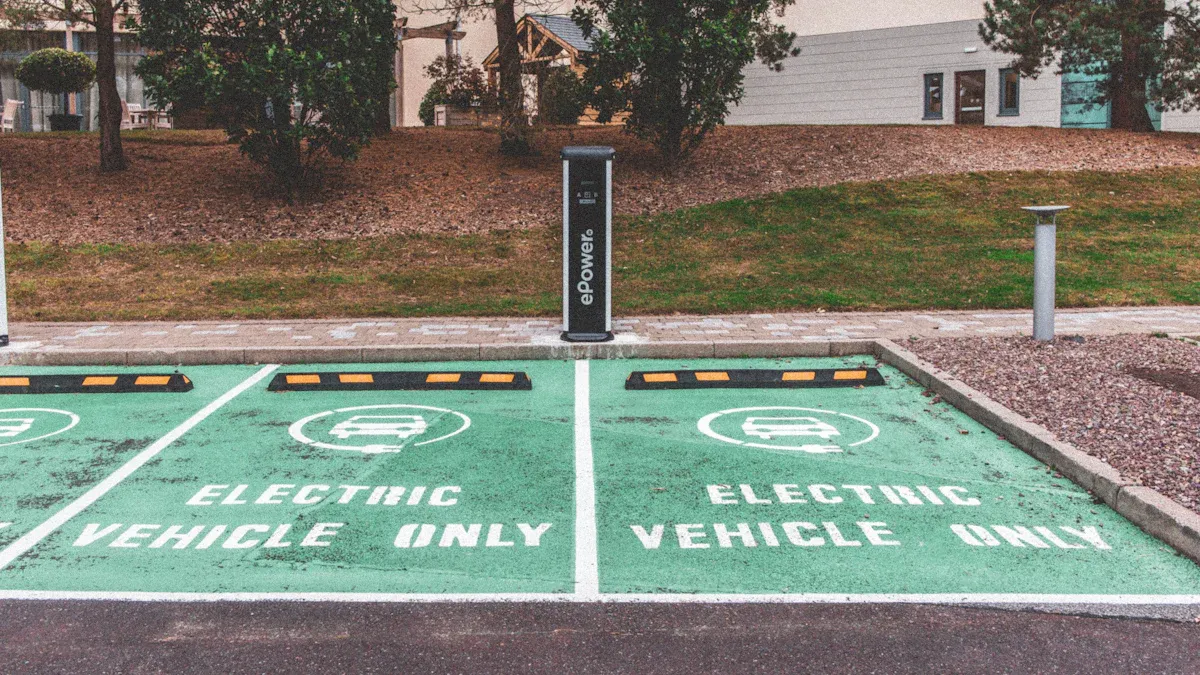
Fast-charging stations: benefits and use cases
Fast-charging stations are ideal if you want to get your e-bike ready for use again in a short amount of time. These stations offer you the ability to charge the battery in less than an hour. They are a valuable addition, especially on busy bike paths or in urban areas. You can use them to extend spontaneous tours or to quickly top up energy during a stopover. Fast-charging stations often use modern technologies that optimize the charging process and protect the battery's lifespan.
Note: Fast-charging stations are particularly useful for e-bike riders who are traveling for work or have tight schedules.
Standard charging stations: most common variant
Standard charging stations are the most widely used option. You can find them in many public places such as train stations, shopping centers, or cafés. These stations offer a reliable way to charge your e-bike while you take care of other activities. The charging time is usually several hours, making them ideal for longer breaks. Many of these stations are equipped with universal connections so that they are compatible with most battery types.
Tip: Plan your tour so that you use standard charging stations in places that allow you to have a pleasant wait, such as restaurants or parks.
Mobile chargers: flexibility on the go
Mobile chargers offer you maximum freedom when charging your e-bike. You can take them anywhere and charge the battery independently of fixed charging stations. These devices are compact and lightweight, making them particularly practical for longer tours. You can use them in your car or even with solar panels to increase the range of your e-bike.
Benefit |
Description |
|---|---|
Allows charging the battery on the go, which expands usage in various environments. |
|
Compactness |
Mobile chargers are lighter and more compact than standard chargers, making them easier to carry. |
Versatile use |
Can be used in cars or with solar panels, which increases the e-bike's range. |
Independence from charging infrastructure |
Can be used without 230V charging stations, e.g., via 12-volt sockets. |
Mobile chargers are particularly useful if you want to explore remote areas where no e-bike charging station is available. They expand your options and make you independent of the existing infrastructure.
Bike racks with power outlets and lockers for batteries
Bike racks with integrated power outlets and lockers offer you a practical and secure way to charge your e-bike. These charging stations combine functionality with security and are particularly suitable for public places such as train stations, shopping centers, or tourist attractions.
Benefits of these bike racks
Security for your battery: You can store the battery in a lockable compartment while it is charging. This protects it from theft and weather conditions.
Convenient use: The power outlets are located directly at the bike rack. You don't have to awkwardly move your e-bike to plug it in.
Space-saving: These bike racks require little space and can be installed in many locations.
Flexibility: Many models offer universal connections that are compatible with most e-bike batteries.
Tip: Check before use whether your charging cable is long enough to reach the power outlet comfortably.
How to make optimal use of these bike racks
Find a suitable location: Use apps or maps to find bike racks with power outlets near you.
Secure your e-bike: Lock your bike to the rack to protect it from theft.
Store the battery securely: Place the battery in the locker and lock it.
Monitor the charging time: Plan your activities so that you can retrieve the battery in time.
-->
Technical details
Feature |
Description |
|---|---|
Material |
Robust materials like steel or aluminum for durability. |
Locking mechanism |
Electronic or mechanical locks for maximum security. |
Connections |
Universal sockets that are compatible with most e-bike chargers. |
Weather resistance |
Protection against rain and moisture to keep the electronics safe. |
Bike racks with power outlets and lockers are an ideal solution for commuters and tourists. They offer you comfort and security while you charge your e-bike. With these racks, you can make your everyday life more efficient while protecting the environment.
Note: Some models offer additional features such as USB ports or solar panels. Find out about the features in advance.
Benefits of E-Bike Charging Stations
Time savings through efficient charging
With a well-planned infrastructure, you can save valuable time. E-bike charging stations are designed to enable fast and uncomplicated charging. Fast-charging stations shorten the charging time significantly, allowing you to continue your tour without long interruptions. Standard charging stations offer you the option of charging your e-bike during a break, for example, while eating lunch or visiting a landmark.
Tip: Plan your stops in places that offer a pleasant wait. This makes optimal use of the charging time.
Eco-friendliness through sustainable energy sources
Many e-bike charging stations rely on renewable energy like solar or wind power. This makes them an eco-friendly alternative that reduces CO₂ emissions. When you charge your e-bike at such a station, you are actively contributing to sustainability. Especially in tourist regions, these green charging stations promote environmental protection and make sustainable mobility more attractive.
Benefit |
Description |
|---|---|
Renewable energy |
Use of solar or wind power for electricity generation. |
CO₂ reduction |
Reduction of the ecological footprint through sustainable energy sources. |
Promoting sustainability |
Support for eco-friendly technologies and infrastructure. |
User-friendliness and ease of operation
E-bike charging stations are designed so that you can use them easily. Operation is intuitive and requires no technical knowledge. Many stations offer you clear instructions and universal connections that are compatible with most battery types. Some models have additional features like lockers that protect your battery during the charging process.
Note: Check before use whether the station is compatible with your battery. This avoids unnecessary delays.
The user-friendliness of these stations makes them an ideal solution for commuters and tourists. You can charge your e-bike conveniently and securely without having to worry about complicated technology.
Promoting e-bike tourism and regional appeal
E-bike charging stations play an important role in promoting tourism. They make regions more attractive to cyclists and support sustainable mobility. When you are out on your e-bike, you can plan longer routes and discover new places thanks to the charging stations.
Benefits for tourism
Increased visitor numbers: Regions with well-developed charging stations attract more e-bike riders.
Longer stays: With the ability to charge your e-bike, you stay longer in a region and explore it more thoroughly.
Economic benefits: Local shops, restaurants, and hotels benefit from the additional visitors.
Tip: Plan your tour so that you visit local sights and cafés along the route. This supports the regional economy and makes your trip more varied.
Examples of successful regions
Some regions in Germany have already shown how e-bike charging stations can promote tourism:
Region |
Special feature |
|---|---|
Lake Constance |
Dense infrastructure along bike paths and many tourist attractions. |
Black Forest |
Combination of charging stations and picturesque landscapes. |
Alpine regions |
Charging stations at mountain huts and viewpoints for longer tours. |
These examples show how important a good infrastructure is for success in e-bike tourism.
How you benefit
With a well-planned route, you can fully exploit the benefits of this infrastructure. Charge your e-bike at strategic points and enjoy the surroundings. Many charging stations are located in places with beautiful views or cultural highlights.
Note: Inform yourself in advance about the availability of charging stations in the region you want to visit. This makes planning easier and ensures a stress-free trip.
E-bike charging stations make travel not only more eco-friendly but also more comfortable. They promote tourism and strengthen the appeal of regions. Take advantage of these options to discover new places while protecting the environment.
Practical tips for usage
Compatibility of charging stations with different battery types
Not all e-bike batteries are compatible with every charging station. You should ensure that your battery is compatible with the charging station to avoid damage. Lithium-ion batteries are the most frequently used battery types and work without issues with most charging stations. Conventional power outlets are also an option, however, third-party chargers can damage your battery.
Battery type |
Compatibility with charging stations |
Charger recommendation |
|---|---|---|
Lithium-ion batteries |
Yes |
Original charger recommended |
Conventional power outlets |
Yes |
Third-party units can be harmful |
An example of a universal charger is the Lion Charger. It delivers a maximum of 4 amps, whereas some batteries only support 3 amps. ONgineer offers a wide selection of charging cables that give you additional flexibility.
Tip: Before use, check the technical requirements of your battery to ensure optimal charging performance.
Battery maintenance for a longer lifespan
Proper care of your battery extends its life and improves efficiency. Store it in a dry environment and protect it from direct sunlight. The ideal temperature is between 12° and 20°. Keep the charge level between 30 and 60 percent when you are not using the battery.
Aspect |
Recommendation |
|---|---|
Storage |
In a dry environment, protect from sunlight |
Optimal temperature |
Between 12° and 20° |
Ideal charge level |
30 to 60 percent |
Charging time PowerPack 300 |
2.5 hours for a full charge |
Charging time PowerPack 400 |
3.5 hours for a full charge |
Charging time PowerPack 500 |
4.5 hours for a full charge |
Note: Avoid extreme temperatures, as they can impair the performance of your battery.
Planning charging times and intervals
Good planning of charging times makes your trip more efficient. Do not always fully charge your battery, as this shortens its lifespan. Plan your stops in places that allow you to take a break, such as cafes or tourist attractions. Use fast-charging stations for short charging times and standard charging stations for longer breaks.
Short charging times: Fast-charging stations are ideal for spontaneous stops.
Longer charging times: Standard charging stations are suitable for breaks of several hours.
Partial charging: Keep the charge level between 30 and 80 percent to maximize lifespan.
Tip: Plan your route in advance and take your battery's range into account. This will help you avoid unexpected interruptions.
Safety aspects: Use illuminated and highly visible locations
The safety of your e-bike and battery should always be a top priority when using charging stations. Illuminated and highly visible locations offer you crucial advantages. They not only increase the security of your bicycle but also your personal sense of safety.
Well-lit areas and busy places act as a deterrent to potential thieves. People avoid committing crimes in clearly visible zones. If you park your e-bike at such a charging station, you significantly reduce the risk of theft or vandalism. Especially at dusk or night, you should ensure that the charging station is well-lit.
Advantages of illuminated and visible locations:
Busy places offer better protection against theft, as the presence of people discourages potential thieves.
Well-lit areas increase visibility and safety, as thieves are reluctant to operate in well-lit zones where they can be easily observed.
Tip: Choose charging stations located near cafes, restaurants, or other public facilities. These places are often well-lit and have high foot traffic.
Additionally, you should always secure your e-bike with a high-quality lock. Combine a U-lock with a chain lock to maximize security. Some charging stations also offer lockers for your battery. Use this option to protect your battery from theft while it is charging.
Choosing the right location for charging your e-bike is crucial. Look for highly visible and illuminated places to park your e-bike safely. With these measures, you can charge in a relaxed manner and continue your tour worry-free.
E-bike charging stations offer you numerous advantages. They make charging on the go easier, promote sustainable mobility, and make regions more attractive to cyclists. With a growing infrastructure, you can plan longer tours while simultaneously protecting the environment. The different types of charging stations, such as fast-charging stations or mobile chargers, offer you flexibility and comfort.
The future of e-bike infrastructure looks promising. City administrations are planning smart traffic light controls and more parking spaces for two-wheelers. Separate lanes for fast e-bikes are being discussed. Forecasts show an annual market growth of 15–20%. By 2029, revenue of 6.38 billion euros is expected.
Year |
Revenue forecast (in bn €) |
|---|---|
2025 |
6.02 |
2029 |
6.38 |
CAGR |
1.48% (2025-2029) |
Take advantage of the opportunities that e-bike charging stations offer you and become part of a sustainable mobility revolution. With innovative technologies like PV systems, the infrastructure is becoming even more environmentally friendly and efficient.
FAQ
1. 🛠️ How do I find the right e-bike charging station?
Use apps like 'Fahrrad.de' or maps to find charging stations near you. Pay attention to details such as compatibility, charging time, and location. Plan your route in advance to save time.
Tip: Test the app before your tour to familiarize yourself with the features.
2. ⚡ Can I charge my e-bike at any power outlet?
Yes, you can charge your e-bike at a standard power outlet. However, always use the original charger to avoid damage to the battery. Charging times may be longer than at specialized charging stations.
Note: Check the technical requirements of your battery before charging.
3. 🌞 Are all charging stations environmentally friendly?
Not all charging stations use renewable energy. However, many modern stations rely on solar or wind power. Find out about the station's energy source in advance to choose sustainable options.
4. 🔒 How do I protect my e-bike while charging?
Secure your bicycle with a high-quality lock. Use charging stations with lockers for the battery. Choose well-lit and busy places to avoid theft.
Tip: Combine a U-lock with a chain lock for maximum security.
5. 🚴♂️ Can I charge my e-bike on long tours?
Yes, plan charging stops at strategic locations such as cafes or sights. Use mobile chargers for flexibility in remote areas. Apps will help you find charging stations along your route.
Note: Keep the charge level between 30 and 80 percent to maximize the battery's lifespan.