
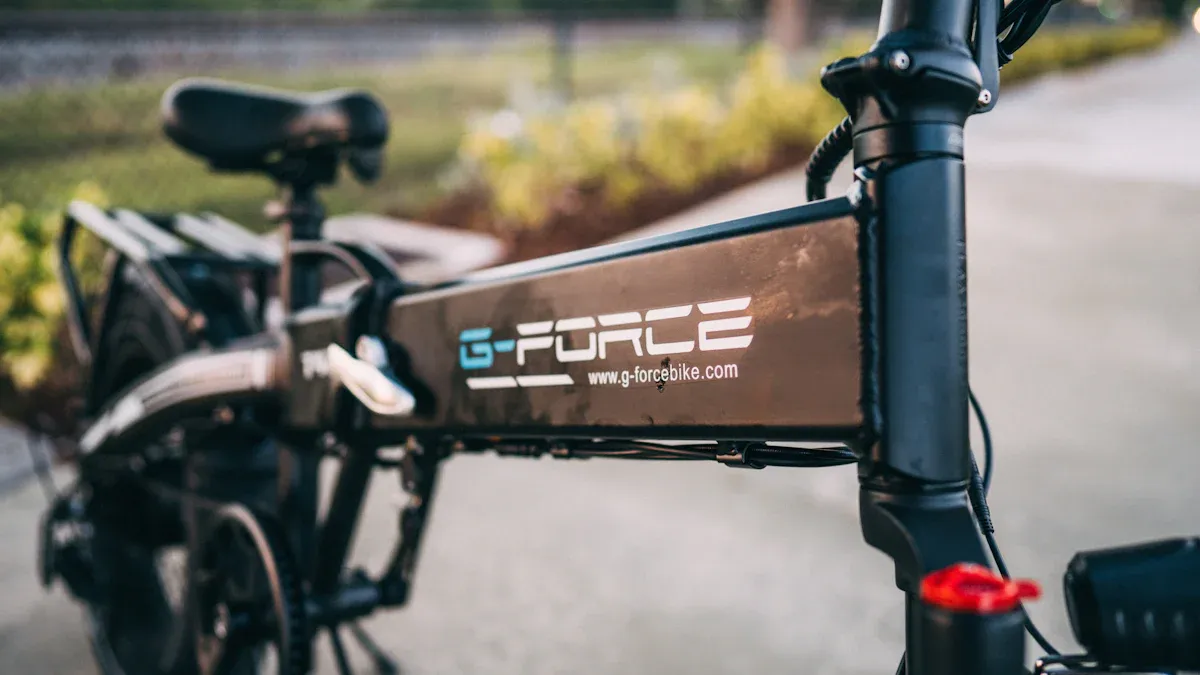
You are looking for a bike that will reliably accompany you on long journeys. An e-trekking bike offers you high levels of comfort thanks to its ergonomic frame and good suspension. The range is impressive, as larger batteries and powerful motors enable longer tours. Many people in Germany choose e-trekking bikes because they are perfectly suited for steep climbs and extended rides. Modern features ensure that you remain flexible in everyday life and can experience new adventures.
Key Findings
E-trekking bikes offer high comfort through ergonomic frames and good suspension. This ensures a pleasant riding experience on long distances.
The range of modern e-trekking bikes is between 70 and 120 kilometers per battery charge. A large battery allows for longer tours without frequent recharging.
E-trekking bikes are versatile. They are suitable for everyday use, commuting to work, and relaxing weekend excursions.
Choose a model with a powerful motor and high battery capacity. This will help you handle steep climbs and long distances effortlessly.
Regular maintenance is important for the longevity of your e-trekking bike. Check the chain, brakes, and tires at least once a year.
e-trekking bike benefits
Comfort
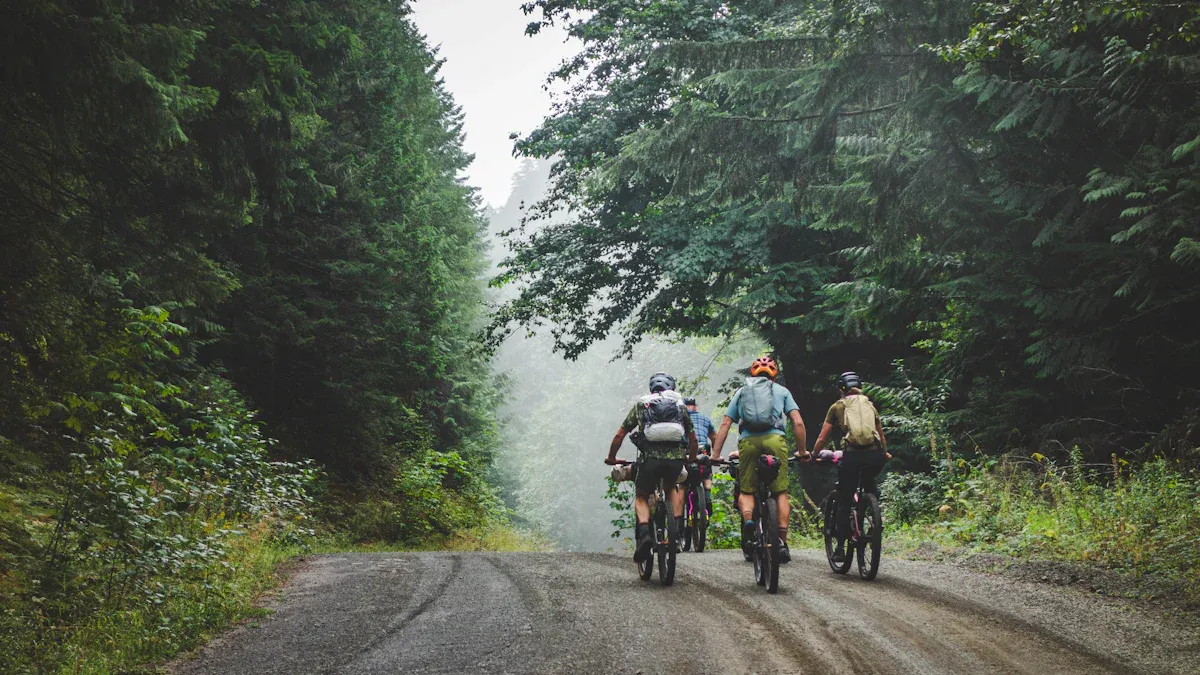
You feel the difference immediately when you sit on an e-trekking bike. Manufacturers rely on various frame shapes to ensure you are comfortable and safe while riding:
Diamond frame: Stability for fast rides.
Trapeze frame: Sporty yet comfortable.
Step-through (comfort) frame: Easy mounting, especially pleasant for longer tours.
Many models offer an ergonomic seating position. This relieves your back and shoulders. The suspension plays a major role in your riding comfort. Take a look at the following table to compare the most important suspension systems:
E-Trekking bike |
Suspension system |
Impact on riding comfort |
|---|---|---|
Stevens Pedelecs |
Air suspension forks |
Vibrations and bumps are reduced, allowing for a more relaxed ride on bumpy paths. |
ZEMO Interlink System |
Four-link suspension |
High damping comfort; the ride remains smooth even with a lot of luggage. |
Haibike Trekking |
Suspension fork |
Less fatigue on long distances, more fun while riding. |
Tip: Choose a model with an adjustable suspension fork if you often ride on different surfaces.
Range
With an e-trekking bike, you can reach destinations that would be difficult to reach with a normal bicycle. The range of modern models is usually between 70 and 120 kilometers per battery charge. So, you can easily plan longer tours. The actual range depends on several factors:
Battery capacity (e.g., 500 Wh or more)
Your riding style and the selected support level
The weight of you and your bike
The route: Many elevation changes require more energy
Efficiency of the motor
Temperature, wind, and surface
Factor |
Description |
|---|---|
Battery capacity |
More watt-hours mean more range. |
Motor efficiency |
An efficient motor saves energy. |
Weight |
The lighter you and your bike are, the further you can go. |
Riding style |
In Eco mode, the battery lasts longer than in Turbo mode. |
Elevation changes |
Inclines cost more energy. |
Temperature |
Cold or heat affect battery performance. |
Note: If you frequently ride long distances, carrying a spare battery in your luggage is worth it.
Suitability for everyday use
An e-trekking bike is a reliable companion in everyday life. You can use it to commute to work, run errands, or go on a tour at the weekend. The equipment is designed for versatility:
Mudguards keep you dry when it rains.
Luggage racks provide space for bags and backpacks.
Lighting systems ensure safety in the dark.
Wide tires give you stability on various surfaces.
Many models have mid-drive motors from Bosch or Shimano. You can adjust the support level on the display. This makes the bike flexible for city, countryside, and light off-road paths. Compared to e-mountain bikes, an e-trekking bike offers a more comfortable and practical ride. You benefit from a good mix of comfort and functionality.
Note: E-trekking bikes are ideal for long tours, commutes, and relaxing excursions. They are suitable for paved roads, bike paths, and even gravel roads.
Features
Motor
With an e-trekking bike, you benefit from a powerful motor. Most manufacturers rely on mid-drive motors, which are located directly at the bottom bracket. This design ensures optimal power transmission. You feel the support immediately when you pedal. The mid-drive motor provides a pleasant riding experience and saves power because the force is applied directly to the crank.
The average motor power is 250 watts. This complies with the legal requirements for pedelecs. The motors differ in torque. For an e-trekking bike, values between 40 and 60 Newton-meters are ideal. This allows you to master steep climbs and long distances without much effort.
E-bike type |
Optimal Newton-meters |
|---|---|
E-City bike |
40–50 Nm |
E-Trekking bike |
40–60 Nm |
E-Mountain bike |
60–80 Nm |
Tip: Choose a motor with higher torque if you often ride on mountainous routes.
Battery
The battery is the heart of your e-trekking bike. You can choose between different capacities. Most models offer batteries with 400 to 750 watt-hours. This gives you a maximum range of 80 to 130 kilometers. For particularly long tours, there are batteries with up to 1250 watt-hours.
Battery capacity (Wh) |
Maximum range (km) |
|---|---|
400 - 750 |
80 - 130 |
800 - 1250 |
for longer tours |
A full charge takes between 1.5 and 5 hours, depending on the model.
1.5 hours
up to 5 hours
Lithium-ion batteries are the most common. They offer a good combination of performance, weight, and lifespan. You can charge them many hundreds of times. Lithium-polymer batteries are lighter and provide more energy, but they cost more. Nickel-metal hydride batteries are heavier and less powerful, but they last longer.
Note: A spare battery in your luggage increases your flexibility on long tours.
Frame
The frame determines the handling and stability of your e-trekking bike. You will find various materials, each offering its own advantages.
Material |
Characteristics |
|---|---|
Steel |
Durable, stable, pleasant riding characteristics, heavier, reliable for long tours. |
Aluminum |
Light, relatively cheap, stiffer than steel, less comfortable on long distances. |
Carbon |
Extremely light, can be specifically engineered for certain riding characteristics. |
Titanium |
Light, extremely stable, rust-proof, smooth ride, combines advantages of steel and aluminum. |
Steel: Robust durability and stability.
Aluminum: Light and cost-effective, ideal for beginners.
Carbon: Light and performance-oriented.
Titanium: High-quality, combines the advantages of steel and aluminum.
The frame geometry influences your comfort and the riding characteristics:
A higher handlebar height ensures an upright seating position and more comfort.
A lower handlebar height gives you more control on steep terrain.
The length of the chainstays determines how agile and traction-strong your bike is.
Tip: Try out different frame shapes to find the best seating position for you.
Suspension
The suspension makes your e-trekking bike comfortable on uneven paths. You can choose between different systems:
Suspension forks on the front wheel
Full-suspension frames
Suspension seat posts
Suspension stems
Wider tires
Suspension forks on the front wheel are particularly popular. They dampen shocks and vibrations when you are on gravel or forest paths. Full-suspension frames offer maximum comfort but are heavier and more expensive. A suspension seat post relieves your back on long distances. Suspension stems improve handling and control. Wider tires provide additional damping and more grip.
Note: The right suspension increases riding fun and protects your joints on long tours.
Technologies
Controls
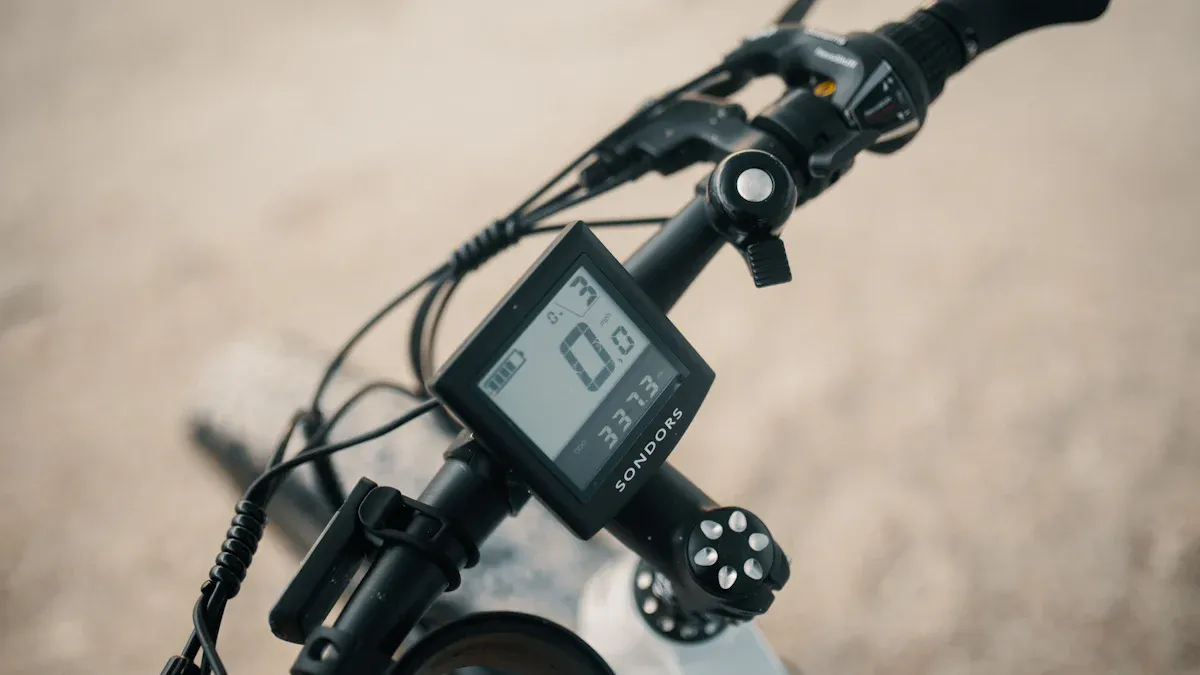
You control your e-trekking bike easily via a central display on the handlebars. The display shows you speed, battery level, and the selected support level. Many models offer large, easy-to-read displays. You can change the support level with the push of a button. Modern systems react quickly to your inputs. Some displays can even connect to your smartphone. This way, you always have navigation and fitness data in view.
Tip: A color display helps you easily recognize important information even in sunlight.
Smart Features
Many e-trekking bikes have smart functions that make your life easier. You will often find integrated GPS modules. With these, you can plan your route and orient yourself while on the go. Some models offer theft protection via an app. You can lock your bike using your smartphone or track its location. Automatic lights adapt to the environment. USB ports on the display charge your phone while you ride. Use Bluetooth to connect fitness trackers or heart rate monitors.
Smart feature |
Benefit for you |
|---|---|
GPS navigation |
Always find the right path |
App control |
Change settings via mobile phone |
Theft protection |
More security |
USB charging function |
Charge your phone on the go |
Maintenance
Maintaining your e-trekking bike is important so that you can enjoy it for a long time. Experts recommend checking your bike at least once a year or every 1,000 to 1,500 kilometers. Trekking bikes often have derailleur gears. These require regular care because they wear out faster. You should clean and oil the chain. This makes maintenance somewhat more demanding than with city e-bikes, which usually have hub gears. These are low-maintenance and can be shifted while stationary.
Derailleur gears: More maintenance required, typical for sporty trekking bikes.
Hub gears: Less maintenance, mostly found on city e-bikes.
Note: With a little practice, you can perform many maintenance tasks yourself. This keeps your bike reliable and safe.
Comparison
E-MTB
You want to explore demanding terrain. An e-mountain bike (e-MTB) offers you many advantages if you are often off paved roads. The motors are particularly powerful and provide you with plenty of torque for steep climbs. The range is often higher because the batteries are larger and the motors work efficiently.
You benefit from dropper seatposts, which make mounting and dismounting easier for you.
The frames are robust and the suspensions are strong so that you ride safely and comfortably.
The brakes are designed for high loads and provide you with safety.
In comparison, an e-trekking bike offers you a more comfortable seating position and a good balance between performance and comfort. For long rides on mixed surfaces, the trekking bike is more suitable because it is less sporty and more flexible.
Gravel
You love speed and sporty riding. A gravel e-bike is light and fast. The tires roll well on gravel and asphalt.
E-trekking bikes offer you more comfort and a higher range.
Gravel e-bikes are sporty and have less equipment for long tours.
You get fewer mudguards and luggage racks on gravel bikes.
The seating position is sportier, but less comfortable on long distances.
If you are planning long tours, you will benefit from the versatility and comfort of an e-trekking bike. The electric assistance helps you especially in hilly terrain. You can master various terrains and activities.
SUV
You are looking for a bike for the city and light terrain. SUV e-bikes combine a sporty design with everyday practicality.
E-trekking bikes are more agile and practical in the city.
You get an upright and comfortable seating position for long tours.
The equipment with a luggage rack, lights, and mudguards makes the trekking bike ideal for touring riders.
E-trekking bikes offer high load capacity for luggage and are robust and reliable.
In contrast, SUV e-bikes are sportier and better suited for light terrain. For long distances and paved roads, the e-trekking bike remains the better choice.
Selection
Purchase criteria
You want to buy an e-trekking bike. You should pay attention to important features. Motor power plays a major role. Powerful motors help you on long distances and steep climbs. The battery capacity determines how far you can ride. A large battery takes you further without constant recharging. The frame shape influences your comfort. An ergonomic frame ensures a pleasant posture. The suspension protects you from bumps on uneven paths. High-quality brakes provide you with safety on every ride. Practical accessories such as luggage racks and mudguards make your bike suitable for everyday use.
Tip: Think about how you want to use the bike. For daily commutes, you need different equipment than for long tours.
Test ride
You should always take a test ride before you decide. Many people choose the local bike shop. According to surveys, 70% of respondents opt for the local retailer. The test ride helps you find the right model. You feel immediately whether the bike suits you. Advice in the shop supports you in making your choice. You can test and compare different models. The right seating position and the ride feel are important for long distances.
You get a better feel for comfort and handling.
The consultation helps you to clarify technical questions.
You can try out different frame shapes.
Tip: Take your time for the test ride. Test the bike on different surfaces.
Equipment
The equipment determines how well your e-trekking bike is suited for long distances. Many riders want certain features:
Equipment feature |
Description |
|---|---|
Stronger motors for maximum performance on long distances. |
|
Large battery capacities |
High battery capacity for longer rides without frequent charging. |
Comfortable suspension |
Suspension forks ensure more comfort on uneven terrain. |
High-quality brakes |
Reliable brakes for safety and control. |
Practical accessories |
Luggage racks and mudguards for additional comfort and functionality. |
You benefit from further equipment features:
Suspension fork for more comfort on uneven terrain
Comfortable saddle for longer rides
Durable bicycle tires for increased longevity
Innovative shifting systems for better handling
High safety standards for all riding conditions
Note: Choose a bike with a lightweight construction and high riding comfort. This way, you enjoy every tour and stay flexible.
Trends
Innovations
You will experience many exciting innovations with e-trekking bikes. Manufacturers are focusing on modern drive systems that offer you more performance and efficiency. The Bosch Performance Line motors are among the best-known innovations. They ensure a powerful and pleasant riding experience. Battery technologies are constantly evolving. With the CompactPowerTube and the PowerMore 250, you can ride longer distances without having to recharge often.
Improved motors for more efficiency and performance
Innovative batteries with greater range
Integrated lighting systems for more safety
Ergonomic designs for comfortable riding
New frame shapes and seating positions make long tours more pleasant. You benefit from bikes that are versatile and offer you an optimal riding experience.
Sustainability
With an e-trekking bike, you contribute to environmental friendliness. Compared to cars, you cause fewer emissions and less particulate matter. Many manufacturers pay attention to sustainable production. They use lithium-ion batteries that contain fewer heavy metals. High-quality e-bikes and batteries last longer. This reduces resource consumption and protects the environment.
Batteries with a longer service life reduce waste
German manufacturers rely on sustainable materials
Pedelec riders help to reduce CO2 emissions
The production of batteries remains a challenge. The extraction of raw materials and recycling put a strain on the environment. You can help by maintaining your bike and using it for a long time.
Future
You can look forward to many new developments. Manufacturers are working on even lighter frames and stronger batteries. Smart features like GPS and theft protection will be further improved. Networking with apps and fitness trackers is growing. In the future, you will experience e-trekking bikes that are even more sustainable and comfortable.
Tip: Stay curious and inform yourself regularly about new technologies. This way, you will always find the right bike for your adventures.
With e-trekking bikes, you benefit from high range, stable frames, and powerful motors. The ergonomic equipment ensures comfort on long distances. Modern models offer you reliable technology and practical features. The following tips and trends will help you find the right bike:
New hybrid models combine comfort and sportiness.
Sustainability and bikepacking influence the selection.
Possibility |
Advantage for you |
|---|---|
Long battery life |
More freedom on tours |
Good lighting systems |
Safety in the dark |
High load capacity |
Easy transport of luggage |
With a modern e-trekking bike, you discover new paths and reach your goals with ease. 🚲
FAQ
How long does an e-trekking bike battery last?
You can expect about 500 to 1,000 charging cycles with a modern battery. The service life depends on maintenance and usage. Charge the battery regularly and avoid extreme temperatures.
Tip: Store the battery at room temperature to extend its service life.
Do I need to maintain the e-trekking bike regularly?
You should maintain your bike at least once a year. Check the chain, brakes, and tires. A well-maintained gear system ensures better performance and safety.
Maintenance part |
Recommended check |
|---|---|
Chain |
Monthly |
Brakes |
Monthly |
Tires |
Before every ride |
Can I also ride the e-trekking bike without a motor?
You can use the bike like a normal bicycle. The motor only assists you when you switch it on. Without the motor, you have to pedal yourself, but the bike still rides reliably.
What clothing is suitable for long tours?
You benefit from breathable clothing. A rain jacket protects you in bad weather. Cycling shorts with padding increase comfort. Reflective elements ensure more safety.
🚴♂️ Choose comfortable shoes and gloves for longer rides.