
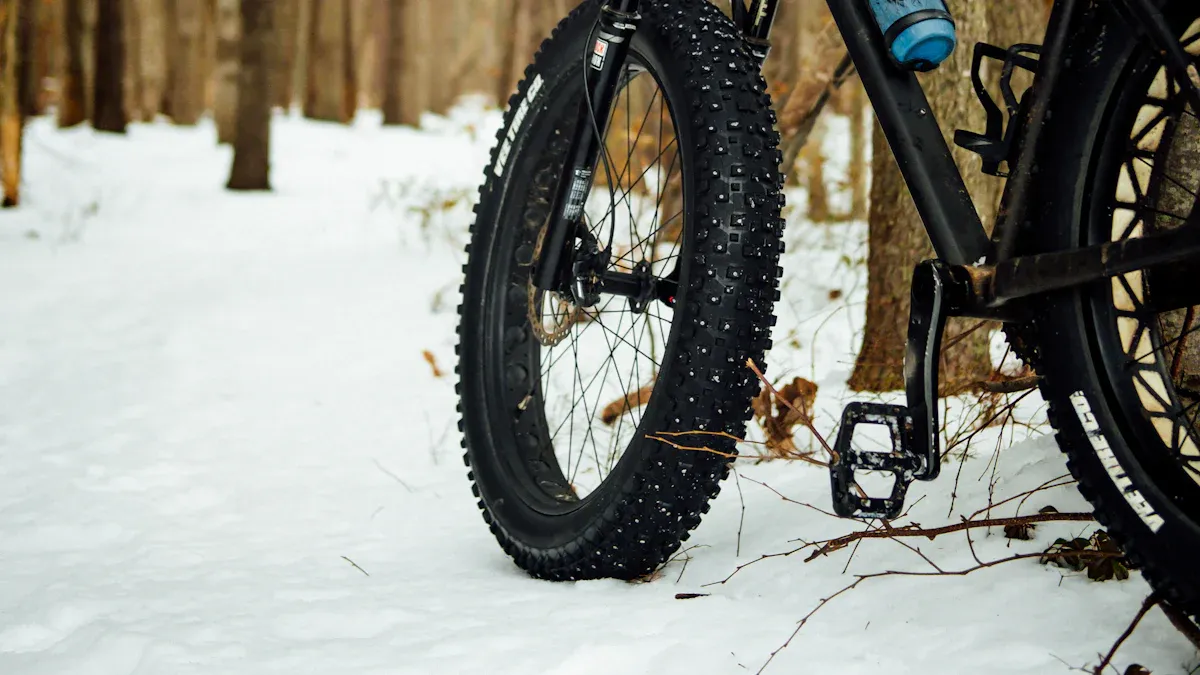
With an e-fatbike, you will experience entirely new possibilities in winter and off the beaten track. The wide, electrified tires offer you more stability and secure grip, even on snow, mud, or sand. More and more people are discovering this fun of cycling: 2.1 million e-bikes were sold in Germany in 2023, and e-bikes overtook traditional bicycles for the first time.
Wide tires ensure a firm hold
The e-drive makes steep inclines and long distances easier
This allows you to reach places that were previously hardly accessible.
Key insights
E-fatbikes offer better grip on snow, mud, and sand thanks to wide tires. This helps you stay safely on track.
The electric drive makes riding on steep terrain and over long distances easier. You can reach places that are difficult to access with other bicycles.
With an e-fatbike, you can also transport heavy loads. The robust aluminum frame ensures stability and durability.
The wide tires act as shock absorbers and increase riding comfort on uneven paths, allowing you to enjoy a smooth ride.
E-fatbikes are versatile. They are suitable for leisure, sport, and even for transporting goods in the city.
What is an e-fatbike?
Technology
An e-fatbike is a bicycle with particularly wide tires and an electric motor. You can recognize it immediately by the tires, which are often between 4.0 and 4.8 inches wide. These tires give you plenty of grip on loose ground such as snow, sand, or mud. The motor assists you while pedaling and helps you master even steep climbs.
Here you can see the most important technical features in comparison to conventional e-bikes:
Feature |
E-Fatbike |
Conventional E-Bike |
|---|---|---|
Tire width |
4.0" to 4.8" |
Standard width |
Load capacity |
High load capacity (e.g., 220 kg) |
Lower load capacity |
Stability |
High center of gravity for stability |
Standard stability |
Frame material |
Aluminum for durability |
Varies, often less robust |
Motor power |
250 watts |
Varies, often less powerful |
Range |
56 - 128 km depending on assistance |
Varies, often less range |
Area of use |
Terrain and cargo transport |
Predominantly urban |
With an e-fatbike, you can also transport heavy loads safely. The frame is usually made of aluminum and can withstand a lot. The motor power is often 250 watts. You can travel between 56 and 128 kilometers, depending on the assistance level.
Tip: The wide tires ensure a smooth ride and protect you from sinking into the snow.
Differences from other bikes
An e-fatbike differs significantly from classic mountain bikes and normal e-bikes. You will notice the difference primarily in weight, motor power, and tire width.
Criterion |
E-Fatbikes |
Classic Mountain Bikes |
|---|---|---|
Weight |
Generally heavier |
Lighter |
Motor power |
Higher, powerful motors |
Lower |
Tire width |
Wider (3.8 to 5.05 inches) |
Narrower (2.0 to 2.5 inches) |
You must also observe legal regulations. Pedelecs, i.e., e-bikes with assistance up to 25 km/h and a maximum of 250 watts, are considered bicycles. They do not require insurance. E-bikes that move without pedaling are considered motor vehicles and require registration.
Pedelecs only assist you while pedaling.
E-bikes can move even without pedal input.
There is no helmet requirement for pedelecs, but there is for fast e-bikes.
With an e-fatbike, you are flexible and can explore many paths that are difficult to access with other bikes.
Advantages in winter
Grip and traction
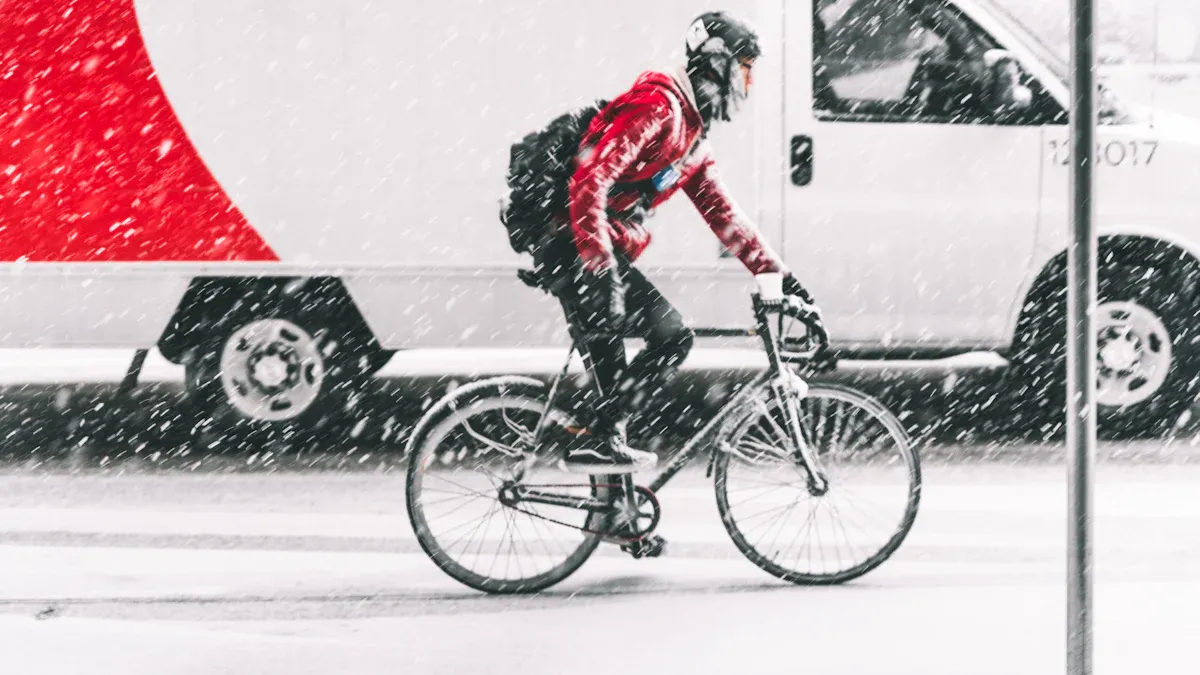
With an e-fatbike, you can master winter like never before. The wide tires prevent you from sinking into snow or mud. They offer you a firm hold, even when the surface is slippery. The e-drive assists you when riding through soft snow or up steep inclines. This keeps you moving, even when other bikes get stuck.
Wide tires prevent sinking into the snow and offer better grip.
The e-drive makes riding in difficult conditions easier, especially on steep climbs and in soft snow.
Extra-wide studded tires provide more traction on deeply snow-covered paths.
With low air pressure (0.2 to 0.8 bar), you get additional grip and stability.
The wide tires give you more control and help you hold your line.
Fat tires offer excellent grip at low air pressure on snow, sand, and mud.
E-fatbikes are often called snow bikes because they are made for difficult conditions.
The wide tires enable riding on unpaved paths and in muddy conditions.
Wide tires prevent sinking into the mud and increase riding comfort.
Compared to conventional mountain bikes, fat bikes with a tire width of 4 inches or more offer significantly more grip.
You feel the difference immediately when riding an e-fatbike on snow-covered or muddy paths. Conventional mountain bikes often reach their limits here. With an e-fatbike, you have a clear advantage and can ride safely and with fun, even in winter.
Stability and comfort
An e-fatbike offers you not only more grip but also more stability and comfort. The oversized tires act as natural shock absorbers. They reduce vibrations and make riding on uneven or icy paths more pleasant. The wide contact surface distributes your weight better, so you stay safely on track even on snow and ice.
Advantage |
Description |
|---|---|
Wide tires |
Provide better grip and comfort on snow and ice. |
Low tire pressure |
Increases performance on extreme terrain like snow and ice. |
Maintenance and riding technique |
Important for safe riding in winter conditions. |
Oversized tires |
Offer better stability and traction on snow. |
Natural shock absorbers |
Reduce vibrations and increase comfort on uneven surfaces. |
Weight distribution |
Wide tires distribute weight better and offer support on snow. |
Many users report that they travel much more comfortably in winter with an e-fatbike than with other e-bikes. The wide tires and low air pressure ensure a smooth ride. You roll confidently over the snow cover without getting stuck. Even when conventional electric mountain bikes give up, you keep going with the e-fatbike.
E-fatbikes offer higher riding comfort in winter thanks to their wide tires and reduced tire pressure.
They enable better progress on snow and ice.
The wide tires ensure more grip and stability.
E-fatbikes roll confidently over the snow cover and prevent sinking.
They offer grip almost everywhere due to the low air pressure of 0.2 to 0.8 bar.
E-fatbikes are particularly effective when conventional e-MTBs reach their limits in the snow.
They offer a traction advantage that increases riding safety and fun on snow-covered trails.
Note that the range of your e-fatbike may be lower in winter. Cold reduces battery performance. In winter, you often achieve 25 to 50 percent less range than in summer.
Season |
Range (%) |
|---|---|
Winter |
-25% to -50% |
Summer |
0% |
Take extra good care of your e-fatbike in winter. Clean it regularly after riding on salted roads. Protect the chain and aluminum parts with special products. Check the brakes and gears monthly. Store the battery at room temperature and keep it charged to 60-80% during long breaks.
With these tips, you will enjoy all the benefits of your e-fatbike even in winter and remain safe on the road.
E-fatbike on terrain
Off-road capabilities
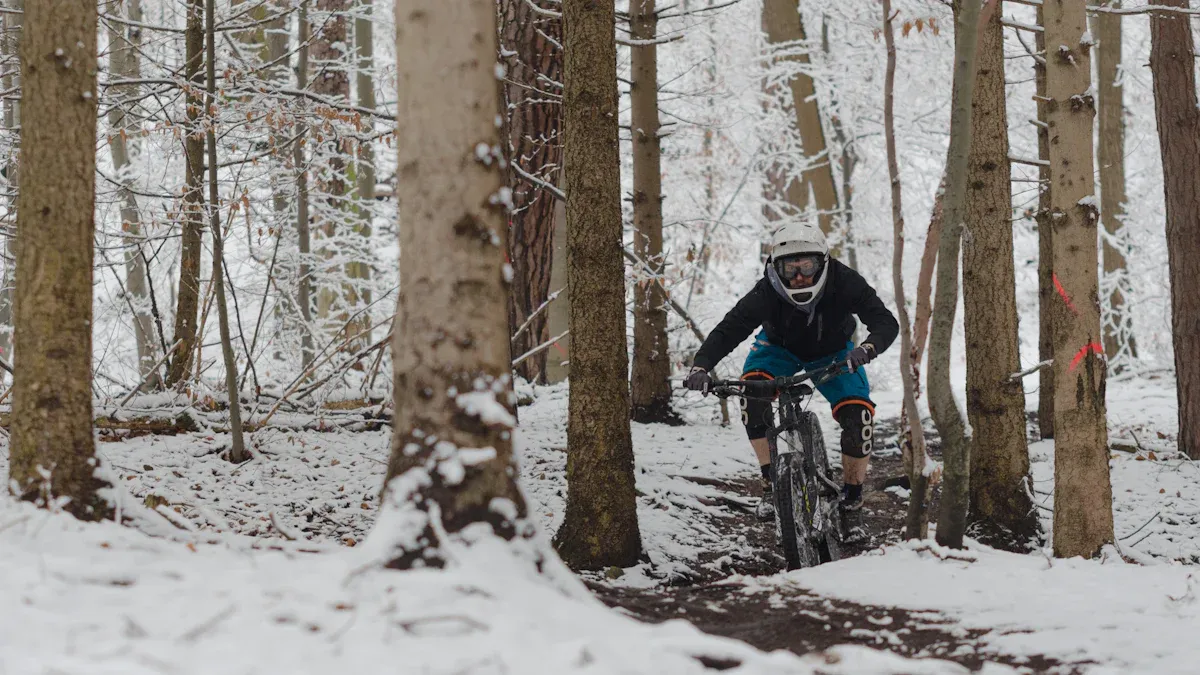
With an e-fatbike, you can discover the world off paved roads. The wide tires and the powerful motor help you master difficult terrain. You can ride safely on unpaved paths, through mud, over snow, and even through sand. These types of terrain are particularly well-suited for your adventure:
Unpaved paths
Mud
Snow
Sand
The wide tires offer stability and dampen shocks. You feel fewer vibrations, even when the ground is uneven. Modern suspension systems provide additional comfort. A light, robust frame gives you safety on rough terrain. Many models feature specially adapted frames that provide space for wide tires and guarantee high rigidity.
Feature |
Description |
|---|---|
Wide tires |
Fat tires offer improved stability, traction, and comfort, especially off-road. |
Advanced suspension |
Advanced suspension systems ensure smoother handling and better control. |
Light frame |
Robust frame constructions made of high-quality materials ensure stability on rough terrain. |
Frame adaptation |
Specially adapted frames offer enough space for wide tires and high rigidity. |
Damping by tires |
Low tire pressure and wide tires absorb shocks and improve damping. |
Compared to conventional mountain bikes, you benefit from many advantages. The following table shows you the most important differences:
Feature |
E-Fatbikes |
Conventional Mountain Bikes |
|---|---|---|
Off-road capability |
Superior off-road capability on various terrains |
Limited off-road capability |
Assistance |
Electric motor makes riding on difficult terrain easier |
No electric assistance |
Tires |
Wide tires offer stability and damping |
Narrower tires, less stability |
Effort |
Less physical effort |
Higher physical effort required
Range
Dependent on physical fitness and terrain
The electric motor supports your pedaling. You will find it easier to conquer steep climbs and rough terrain. Mid-drive motors offer a pleasant riding experience, especially in hilly terrain. Rear hub motors provide dynamic handling and are easy to retrofit.
Tip: Reduce the tire pressure when riding on loose ground. This will give you even more grip and comfort.
Riding Technique
Riding an e-fatbike off-road places special demands on your technique. The higher weight makes maneuvering more challenging. The wide tires sometimes float on deep mud, which makes control more difficult. On very technical terrain, the e-fatbike is less agile than a classic mountain bike.
Here you will find important tips for beginners and advanced riders:
Always keep your weight centered over the bike, especially on descents.
Use the electric assist specifically to master steep sections.
Adjust your speed to the terrain. On loose ground, slow, controlled riding helps.
Reduce tire pressure for more traction on sand or snow.
Practice braking with both brakes, as the higher weight causes longer braking distances.
In tight corners, you should actively steer the bike with your body.
Note that the additional weight of the motor and battery affects agility on tight trails. However, you benefit from the electric assistance, which makes riding in steep terrain easier. Traditional mountain bikes utilize natural riding dynamics better, but with some practice, you will master even demanding routes with an e-fatbike.
Note: Ride with foresight and adjust your technique to the terrain. This will give you more control and safety.
With these tips and some practice, you will enjoy the full potential of your e-fatbike – whether on sand, snow, or rocky trails.
Models and Trends
Current Models
You can find a large selection of e-fatbikes on the market today. Many manufacturers offer models for different requirements. Brands like Lankeleisi, Haibike, Cube, or Specialized are particularly popular. They rely on high-quality components and modern technology.
The price range is very wide. You can get entry-level models from as low as 1,500 euros. You will pay from about 1,000 euros for a decent fatbike. Top models cost up to 5,000 euros. Full-suspension versions or bikes with titanium frames are often over 6,000 euros.
Model Type |
Price Range |
|---|---|
Basic e-fatbikes |
from 1,500 EUR |
Decent fatbikes |
from 1,000 EUR |
Top models |
up to 5,000 EUR |
Full-suspension e-fatbikes |
over 6,000 EUR |
Models with titanium frames |
over 6,000 EUR |
Tip: Think about how you want to use your bike before buying. This will help you find the right model for your needs.
Areas of Application
With an e-fatbike, you are flexible. Many use it for leisure, sports, commuting, or adventure. Delivery services use e-fatbikes for transporting packages in the city. Farmers transport tools and crops with them. Outdoor enthusiasts take equipment into remote areas.
Area of Application |
Description |
|---|---|
Cargo transport |
Delivery services use e-fatbikes for packages in the city. |
Agriculture |
Farmers transport tools and harvested goods. |
Leisure activities |
Outdoor enthusiasts reach remote locations with equipment. |
Many commuters report that models like the Lankeleisi MG600 Plus are reliable and safe. You benefit from a powerful battery, long range, and a comfortable saddle. The riding experience remains pleasant and safe even in city traffic.
Adventure athletes praise the versatility. You can ride safely over mud, sand, snow, or rocky paths with wide tires. The electric motor helps you master longer tours. The suspension ensures comfort, even when the terrain becomes difficult.
Note: E-fatbikes are suitable for many regions and purposes. You can use them in everyday life, for work, or for adventures.
With an e-fatbike, you discover new paths in winter and on varied terrain. You benefit from more grip, comfort, and flexibility. There are many possibilities, especially for adventurers, commuters, and outdoor enthusiasts. The industry expects strong growth and looks optimistically toward the future. The following table shows important trends:
Forecast |
Description |
|---|---|
E-bike growth |
E-bikes dominate the market and offer new mobility options. |
Model variety |
Many models and modern designs increase attractiveness. |
Market share |
Electric bicycles make up 53% of the market. |
Take the leap and discover for yourself how versatilely e-fatbikes can change your everyday life and sports! 🚴
FAQ
How do you maintain your e-fatbike in winter?
You should clean your e-fatbike after every ride. Remove salt and dirt with water. Dry the bike well. Check the chain regularly and lubricate it. Store the battery at room temperature.
How far can you go on one battery charge in winter?
Range decreases in winter. You will often reach only 50 to 75 percent of the summer range. The cold stresses the battery. Plan your tours shorter and recharge the battery in good time.
Tip: Keep the battery warm, for example in a bag, to get more range.
Do you need special tires for snow?
Most e-fatbikes already have wide tires with a coarse tread. These tires offer good grip on snow. You can lower the air pressure to get even more traction.
Can you also use an e-fatbike in everyday life?
Yes, you can use an e-fatbike for commuting, shopping, or excursions. The wide tires offer comfort and safety, even on poor roads.
How heavy is an e-fatbike?
An e-fatbike usually weighs between 25 and 35 kilograms. The weight depends on the model and equipment. The motor helps you while riding, so you hardly feel the extra weight.