
Choosing the right e-bike directly affects your satisfaction and riding experience. More and more people are opting for e-bikes because they offer an eco-friendly and practical alternative to cars. Did you know that 24.7% of Germans already own an e-bike? City e-bikes are particularly popular, preferred by 37.3% of buyers. E-cargo bikes are also growing rapidly in popularity because they make everyday life easier and save money. As demand increases, so does the variety of models. That's why it's important to find an e-bike that perfectly suits your needs.
Key Takeaways
Choose an e-bike that suits your daily routine. City e-bikes are great for urban areas. Trekking and mountain e-bikes are better for adventures.
Check the battery capacity. A larger battery lasts longer and needs to be charged less often.
Try out different e-bikes. This will help you find one that's comfortable and right for you.
Keep your budget in mind. More expensive e-bikes often last longer and are better quality.
Maintain your e-bike regularly. This makes it safer and keeps it in good condition for longer.
E-Bike Types
City E-Bikes
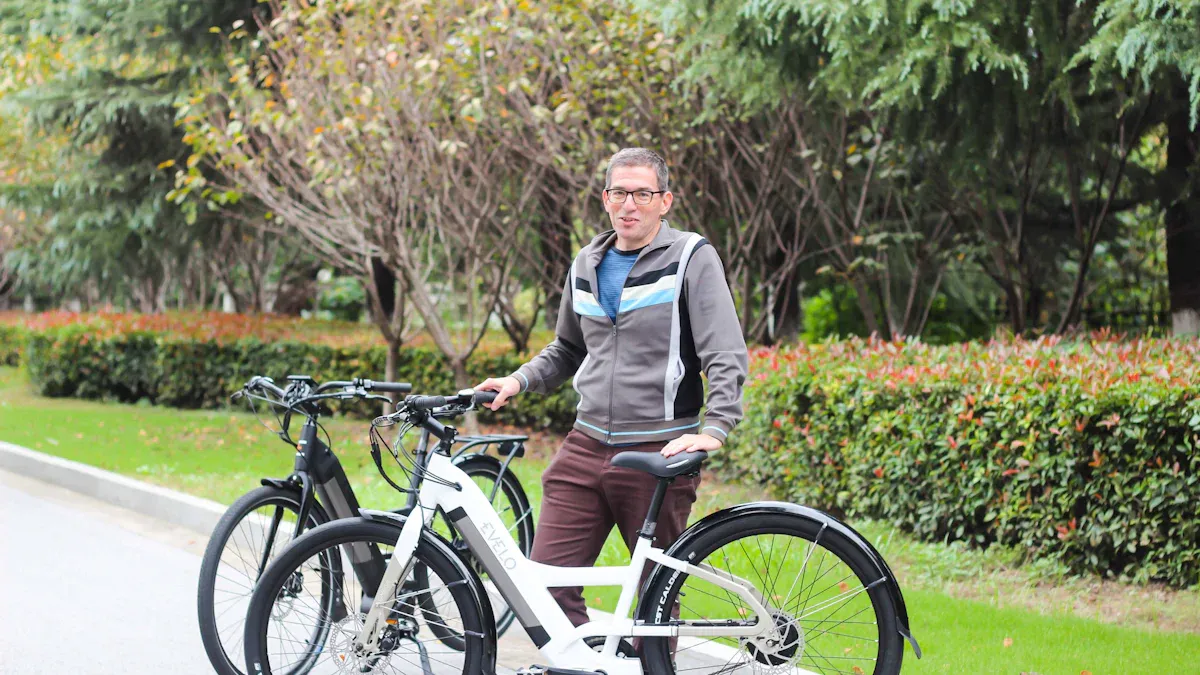
City e-bikes are the perfect choice for urban life. They offer comfort, ease of use, and an eco-friendly alternative to cars. They're ideal for short trips, such as commuting to work or going shopping. Range and motor power vary by model. Some of the most popular models and their specifications are shown in the table below:
Model |
Motor torque (Nm) |
Battery capacity (Wh) |
|
|---|---|---|---|
Velo de Ville |
39 |
55 |
400 |
Riese & Müller |
44 |
55 |
400 |
Kalkhoff |
78 |
75 |
625 |
Stevens |
76 |
75 |
625 |
Canyon |
76 |
75 |
625 |
With a 21% market share, city e-bikes are among the most popular e-bikes in Germany. They're especially suited to people who value convenience and efficiency.
Tip: When choosing a city e-bike, pay attention to the battery capacity, as it directly affects the range.
Trekking E-Bikes
Trekking e-bikes are true all-rounders. They're suitable for everyday use as well as longer tours. With a 25% market share, they're the second most popular e-bikes in Germany. Their versatility makes them ideal for adventure seekers who want to ride on both paved roads and unpaved trails.
Some advantages of trekking e-bikes:
Different drive systems, such as mid-drive and rear-hub motors, offer flexibility for a range of needs.
Long range makes it possible to ride further without frequent recharging.
Powerful motors also assist you on challenging terrain.
Note: If you enjoy riding longer distances, choose a model with a higher battery capacity and more powerful motor.
Mountain E-Bikes
Mountain e-bikes are designed for challenging off-road rides. With a 39% market share, they're the most popular e-bikes in Germany. These bikes feature sturdy frames, powerful motors, and specialized suspension systems optimized for steep climbs and technical descents.
Tests have shown that mountain e-bikes perform excellently on a variety of surfaces, from grippy to slippery. They handle steep climbs, technical sections, and even jumps with ease.
Tip: Mountain e-bikes are ideal if you enjoy riding off-road and want a bike that remains reliable even in extreme conditions.
Cargo E-Bikes
Cargo e-bikes, also known as e-cargo bikes, are the perfect solution for transporting heavy loads or multiple people. They offer an eco-friendly alternative to cars and are especially popular in urban areas. With a sturdy frame and high load capacity, you can easily transport groceries, children, or even bulky items.
Some advantages of cargo e-bikes:
They reduce reliance on cars and lower transportation costs.
Electric assistance makes riding easier, even with a full load.
Many models offer a range of up to 100 km, making them ideal for longer trips.
Cargo e-bikes are available in different designs, including two- and three-wheeled models. Three-wheeled versions offer extra stability, while two-wheeled models are more maneuverable. Some manufacturers incorporate innovative features such as weatherproof covers or modular cargo boxes.
Tip: Before buying, consider what kind of loads you want to transport. Choose a model with sufficient carrying capacity and an appropriate battery capacity.
Folding E-Bikes
Folding e-bikes are the ideal choice for commuters and city dwellers. They fold easily and can be stored on public transit or in small apartments. These e-bikes are especially practical for short trips and carrying small loads.
Folding e-bikes have grown significantly in popularity in recent years. After the pandemic, around 3 million rentals were recorded by the end of 2023. In total, users covered 5.4 million kilometers and saved 1,132 tonnes of CO2.
Year |
Number of users |
Kilometers |
CO2 saved |
|---|---|---|---|
2023 |
800,000/year |
5.4 million |
1,132 t |
Some advantages of folding e-bikes:
They solve parking problems and save space.
They're eco-friendly and quiet.
They're perfect for everyday use in the city.
Folding e-bikes combine mobility and flexibility. Many models feature lightweight aluminum or carbon frames, making them easier to carry. Some manufacturers even offer models with integrated carrying handles or especially compact folding mechanisms.
Note: When buying a folding e-bike, pay attention to its weight and folding mechanism. A lightweight model that's easy to use can make everyday life much easier.
Features and Technical Specifications
Motor Positions
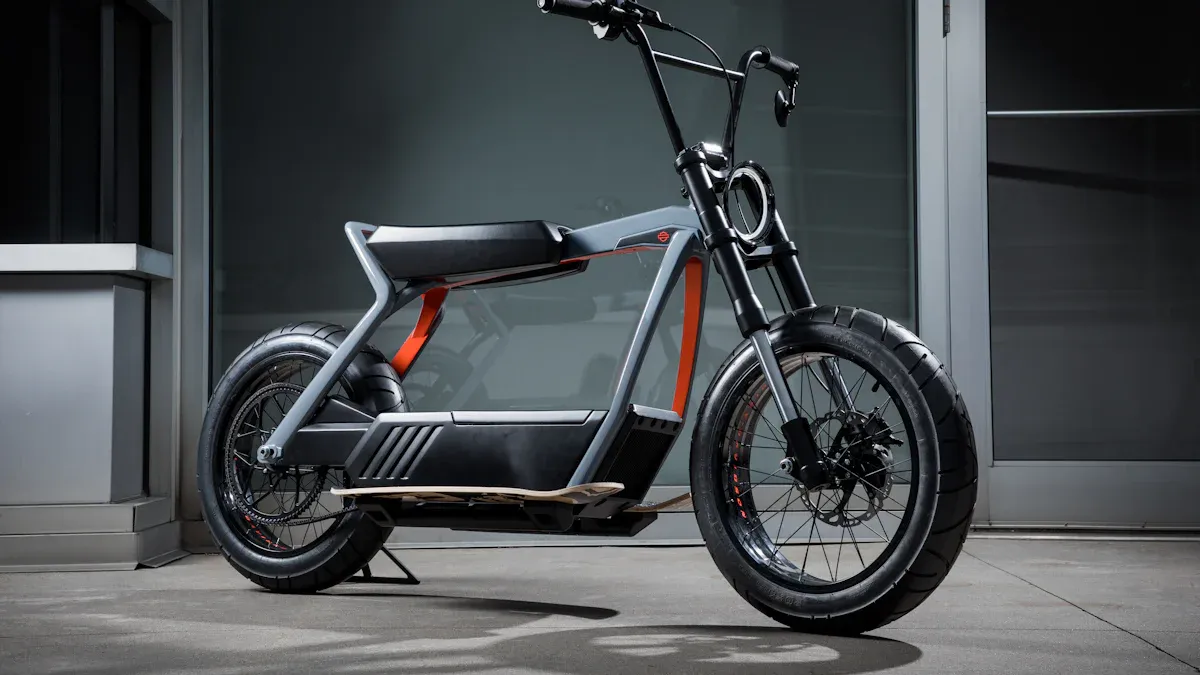
The position of the motor has a significant impact on how your e-bike rides. There are three main types: front, mid-drive, and rear-hub motors.
Front motors: These are located at the front wheel. They're suited to flat routes and offer a smooth ride.
Mid-drive motors: These are mounted at the bottom bracket and provide optimal weight distribution. They offer natural assistance and are suitable for challenging terrain.
Rear motors: These are located at the rear wheel. They deliver power directly and are especially suited to sporty riders.
Note: If you're looking for a versatile e-bike, choose a model with a mid-drive motor. It offers the best balance of power and stability.
Battery Capacity
Battery capacity determines how far you can ride your e-bike. Modern batteries offer capacities of over 800 watt-hours. Some models, such as S-pedelecs and cargo e-bikes, even feature dual-battery systems with up to 1,000 watt-hours.
E-bike model |
Rated capacity (Ah) |
System voltage (V) |
Actual capacity (Wh) |
|---|---|---|---|
Example 1 |
5.8 |
36 |
|
Example 2 |
5.8 |
36 |
420 |
Example 3 |
5.8 |
36 |
210 |
Choosing the right battery capacity depends on your riding style and routes. For long tours, a high-capacity battery is recommended.
Tip: Make sure the battery is easy to remove. This makes charging and maintenance easier.
Assist Modes
Your e-bike's assist modes affect both range and energy efficiency. Most models offer several modes, such as Eco, Tour, Sport, and Turbo.
Influencing factor |
Description |
|---|---|
Battery capacity |
|
Motor assistance |
The level of assistance you choose affects range and energy efficiency. |
Rider input |
The rider's contribution has a direct impact on energy savings. |
Eco mode saves energy and extends your range. Turbo mode provides maximum assistance but uses more battery power.
Note: Choose the assist mode based on the route and the range you want. This lets you make the most of your e-bike's performance.
Brakes
An e-bike's brakes play a crucial role in your safety. They need to work reliably, especially at higher speeds or on downhill rides. Unfortunately, tests have shown that many models have weaknesses in this area. ADAC and Stiftung Warentest examined several e-bikes in stress tests. The tests simulated real-world conditions, such as steep descents and sudden braking. The results were alarming:
Frames or handlebars on five bikes broke under stress.
Three models were downgraded due to inadequate braking performance.
To avoid accidents, look for high-quality disc brakes. They provide better stopping power and work reliably even in wet conditions.
Tip: Test your e-bike's brakes before you buy it. Make sure they respond reliably and effectively, even when braking suddenly.
Frame Materials
The frame material affects your e-bike's weight, stability, and comfort. Aluminum is the most commonly used material because it's lightweight and durable. Carbon frames are even lighter but more expensive. Steel frames offer high stability but are heavier.
A comparison of the weights of different models shows significant differences:
E-bike model |
Total weight (kg) |
Permissible total weight (kg) |
Weight allowance for rider (kg) |
|---|---|---|---|
Haibike Trekking 9 |
26 |
130 |
79 |
Kalkhoff Endeavour |
- |
170 |
- |
The average weight of e-bikes has decreased in recent years. While the average was 27.1 kg the previous year, it is currently 25.6 kg. The lightest model tested weighs just 13.1 kg, while the heaviest tips the scales at 58 kg.
Note: Choose a frame material that suits your riding style. A lightweight frame is an advantage for long tours, while stability is more important for cargo e-bikes.
Additional Features
Modern e-bikes offer numerous additional features that can enhance your riding experience. Lighting systems with daytime running lights increase your visibility in traffic. Some models have integrated GPS systems to help you navigate. Anti-theft systems such as GPS trackers or frame locks are also useful additions.
Another practical feature is the ability to fit accessories such as luggage racks or child seats. Many e-bikes also offer smart features that can be controlled via an app. For example, you can monitor the battery level or adjust the assistance modes.
Tip: Consider which features are important for your daily life. Additional functions can increase the price, but often offer real added value.
Choosing the Right E-Bike
Intended Use
Intended use is one of the most important factors when choosing an e-bike. Consider where and how you plan to use your e-bike most of the time. Different models are optimized for different purposes:
E-Bike Type |
Intended Use |
|---|---|
City e-bike |
Ideal for city rides, daily commutes, and short errands around town. |
Trekking e-bike |
An all-rounder for a variety of uses, especially hilly and challenging terrain. |
Mountain e-bike |
For off-road adventures, suitable for hilly landscapes and trails. |
Folding e-bikes |
Lightweight and compact, perfect for vacations and short trips on flat or gently hilly terrain. |
For example, if you ride around town, a city e-bike with a moderate range and comfortable design is a good choice. For longer tours or off-road adventures, consider a trekking or mountain e-bike. Pay attention to battery range, motor power, and frame material. These features affect how well the e-bike suits your riding style and routes.
Tip: Choose a model that meets your daily needs. An e-bike optimized for your intended use will bring you more enjoyment in the long run.
Budget
Your budget plays a key role in choosing the right e-bike. Prices vary widely depending on the equipment, quality, and additional features. Here are the main cost factors to consider:
Cost Type |
Description |
|---|---|
Purchase price |
The purchase price of the e-bike, which is the initial financial outlay. |
Ongoing costs |
Includes inspections, maintenance, charging, and insurance, which are recurring expenses. |
Charging costs |
Vary depending on battery capacity and electricity prices, typically 10 to 30 cents per charge. |
Maintenance costs |
Regular checks and care of components such as brakes and tires are necessary. |
A high-quality e-bike may require a larger initial investment, but it often offers greater durability and better performance. Tests have shown that models offering good value for money are often found in the mid-price range. If you plan to use your e-bike every day, investing in a durable model is worthwhile.
Note: In addition to the purchase price, factor in ongoing costs. A cheaper model can end up costing more in the long run if maintenance and repairs are needed more often.
Comfort and Ergonomics
Comfort and ergonomics have a significant impact on your riding experience. An ergonomically designed e-bike provides a comfortable riding position and reduces strain on your body. This is especially important on longer rides.
User reviews show that many people praise the comfort on short rides, but report problems such as chafing or inadequate ergonomics on longer rides:
User Experience |
Rating |
|---|---|
Most users praise the comfort on short rides |
Positive |
Chafing on longer rides |
Negative |
Ergonomics described as less than ideal |
Negative |
Look for adjustable handlebars and saddles so you can adapt the riding position to your height. High-quality suspension systems and ergonomic grips can also improve comfort. Try out different models to find the e-bike that best suits your needs.
Tip: A test ride is essential. It lets you check an e-bike's ergonomics and comfort before deciding to buy.
Test Ride
A test ride is an essential step before deciding on an e-bike. It gives you the opportunity to test the ride feel, ergonomics, and performance of the model. Many retailers offer free test rides, which you should definitely take advantage of.
During the test ride, pay attention to the following:
Comfort: Does the riding position feel comfortable? Are the handlebars and saddle adjusted to suit your height?
Motor power: Test the different assistance modes. Does the motor respond quickly and smoothly?
Brakes: Try the brakes in different situations. They should be reliable and powerful.
Handling: How stable does the e-bike feel? Is it easy to steer and control?
Tip: Plan a test ride on different surfaces, such as asphalt, cobblestones, or gravel. This will help you make sure the e-bike meets your needs.
A test ride helps you identify potential weaknesses in a model early on. It also gives you confidence that you are making the right choice. Take your time and try several models to find the perfect e-bike for you.
Additional Requirements
Beyond the basic functions, you may have individual requirements that your e-bike should meet. Consider which additional features are important for your daily life.
Here are some examples of common requirements:
Transportation options: Do you need a luggage rack or a trailer hitch? These are especially handy for shopping or transporting children.
Lighting: Look for a high-quality lighting system that keeps you safe even in poor light conditions.
Anti-theft protection: Models with integrated locks or GPS trackers offer extra protection against theft.
Weather resistance: If you want to use your e-bike in all weather conditions, choose a model with weather-resistant components.
Some e-bikes also offer smart features, such as app connectivity. This lets you monitor the battery level, plan routes, or even activate anti-theft protection.
Note: Make a list of your personal requirements before choosing a model. This will help ensure that your e-bike is a perfect fit for your lifestyle.
Care and Maintenance
Cleaning and Inspection
Regularly cleaning and inspecting your e-bike is essential for extending its lifespan and maintaining its performance. Dirt such as mud or dust can affect how components function and lead to premature wear.
Clean your e-bike after every ride with a soft cloth and lukewarm water. Avoid pressure washers, as they can damage delicate parts.
Regularly check the chain, gears, and brakes for wear. Clean, well-lubricated parts ensure smooth power transfer and improve safety.
Check the tires for damage or foreign objects. An inspection helps identify potential safety risks early.
Tip: Thorough maintenance saves money in the long run by preventing major damage. A well-maintained e-bike also retains its value and will fetch a higher resale price.
Battery Care
The battery is the heart of your e-bike. Proper care extends its lifespan and preserves its performance. Modern lithium-ion batteries are robust, but require a few precautions:
Charge the battery regularly, even if you are not using the e-bike. Lithium-ion batteries slowly discharge on their own.
Avoid fully discharging the battery or constantly charging it to 100%. Partial charges between 30% and 80% are ideal for maximizing its lifespan.
Store the battery at 30% to 50% charge and at room temperature. Extreme temperatures can cause damage.
Note: Gentle charging habits increase the number of charging cycles and save you money on replacement batteries in the long run.
Brake and Chain Maintenance
The brakes and chain are heavily used components of your e-bike. Regular maintenance is essential for your safety and a comfortable riding experience.
Check the brakes for wear and proper function. High-quality disc brakes provide reliable stopping power, even in wet conditions.
Clean the chain regularly and apply a suitable lubricant. A well-maintained chain ensures a smooth ride and reduces energy loss.
Have your e-bike inspected at a specialist workshop at least once a year. The cost of an inspection varies depending on its scope and the workshop, but it is a worthwhile investment.
Tip: Don't neglect maintenance. Small measures such as tightening the brakes or lubricating the chain can prevent more extensive repairs.
Software Updates
Software updates play a key role in your e-bike's performance and safety. Manufacturers regularly release updates to improve functionality and fix potential issues. You shouldn't ignore these updates, as they can optimize your riding experience.
Why are software updates important?
Improved performance: Updates can optimize motor control, resulting in smoother and more efficient assistance.
Increased security: Updates fix software vulnerabilities to protect your e-bike from potential attacks.
New features: Some updates add new features, such as expanded assistance modes or improved connectivity.
Tip: Check regularly for available updates. Many manufacturers offer apps that notify you when new versions are available.
How do you install software updates?
Installing updates is often easy. Most modern e-bikes have a Bluetooth or USB interface. Follow these steps:
Download the manufacturer's app to your smartphone.
Connect your e-bike to the app via Bluetooth or USB.
Follow the instructions in the app to download and install the update.
Some models require a visit to a specialist workshop for major updates. This is particularly true of more complex systems.
Note: Do not interrupt the update process. An interrupted update can damage the software.
Conclusion
Software updates keep your e-bike up to date. They improve performance, increase safety, and often offer new features. Schedule regular checks to ensure your e-bike is always working at its best. An up-to-date system provides a better riding experience and extends your e-bike's lifespan.
Choosing the right e-bike is essential to your riding experience. A suitable model not only increases your comfort, but also your efficiency and enjoyment of riding.
Tip: Try out different models and consider your individual needs. A test ride will help you make the best decision.
A well-chosen e-bike offers long-term benefits. It saves time, protects the environment, and improves your quality of life. Invest in a model that is perfect for you and enjoy the freedom an e-bike offers. 🚴♂️
FAQ
What is the average lifespan of an e-bike battery?
An e-bike battery typically lasts 3 to 5 years. This depends on how often you use it, how well you care for it, and how frequently you charge it. You can extend its lifespan with proper care, such as avoiding deep discharges and extreme temperatures.
Tip: Charge the battery regularly and store it at room temperature.
How far can I travel on a single battery charge?
Range varies depending on the model, battery capacity, and assistance mode. On average, you can travel between 50 and 150 kilometers on a single charge. Factors such as terrain, weather, and your riding style also affect the range.
Note: Choose Eco mode for maximum range.
Do I need to insure my e-bike?
Insurance is not always mandatory, but it is recommended. Especially for expensive models, theft or liability insurance protects you against financial losses. For S-pedelecs that travel faster than 25 km/h, liability insurance is required by law.
Tip: Ask your insurer about suitable plans.
Can I ride an e-bike in the rain?
Yes, most e-bikes are weather-resistant and can be ridden in the rain. Make sure sensitive parts such as the battery and electronics are well sealed. After your ride, clean and dry your e-bike to prevent corrosion.
Note: Avoid deep puddles to prevent damage to the electronics.
How often should I have my e-bike serviced?
An annual inspection at a specialist workshop is recommended. If you use your e-bike intensively, for example for a daily commute, you should have it checked more often. Regular maintenance extends its lifespan and ensures a safe riding experience.
Tip: Schedule maintenance before peak season to avoid long wait times.