
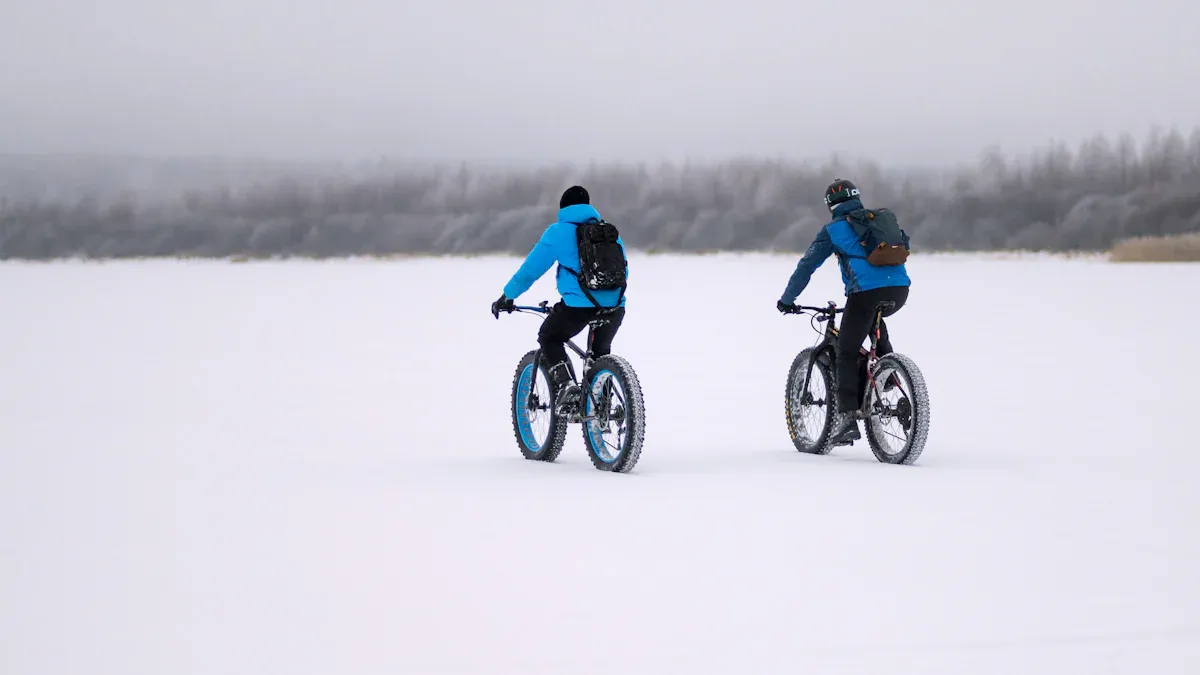
An e-bike in winter offers you a great way to stay mobile while enjoying the fresh air. Even at temperatures as low as minus 10 degrees Celsius, modern e-bikes function reliably. Thanks to technical innovations and a wide variety of models, you can optimally adapt your e-bike to winter conditions. Physical activity in the fresh air not only boosts your mood but also promotes the production of happiness hormones. As long as the weather is not extreme, nothing stands in the way of a safe and pleasant ride. With the right tips, you can master every challenge.
Key Takeaways
Winter tires provide better grip on snow and ice. They make riding safer and are essential.
Bright front and rear lights are very important. They help you to be seen better and avoid fines.
Store batteries at room temperature. This helps them last longer and function better in winter.
Wear multiple layers of clothing to stay warm. Wear warm base layers and waterproof jackets.
Clean and maintain your e-bike frequently. This protects against rust and makes the parts more durable.
Preparing Your E-Bike for Winter
Winter Tires and Tire Pressure
Advantages of Winter Tires and Studded Tires
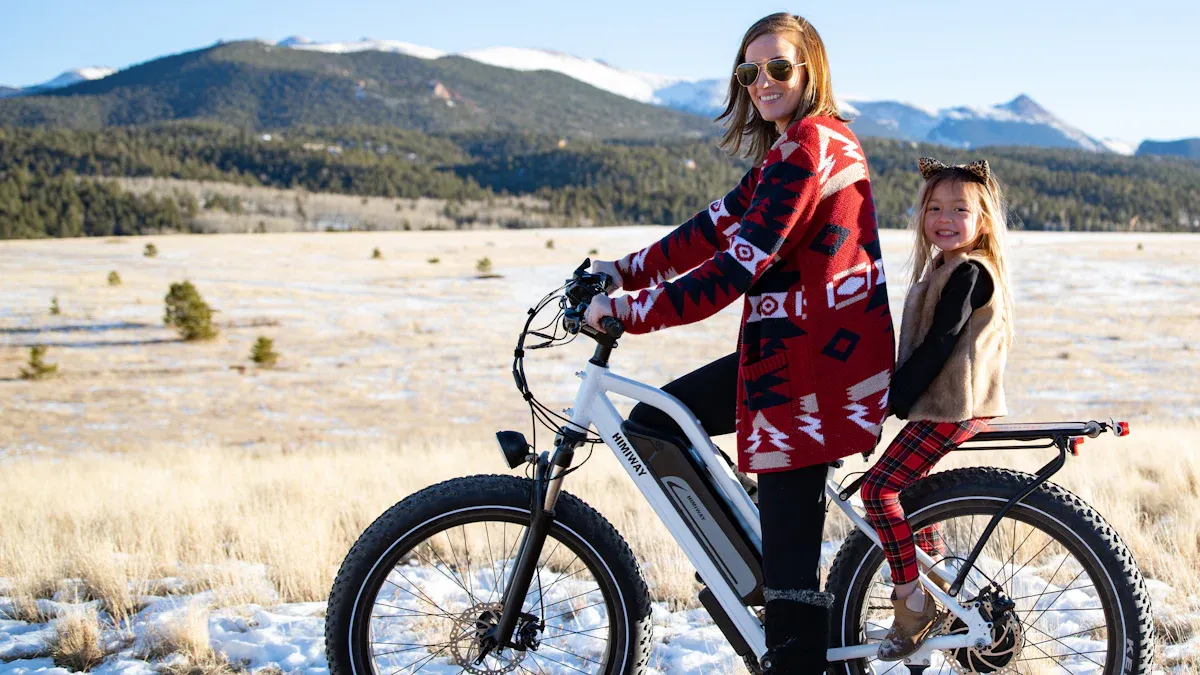
Winter tires are specially developed for cold and slippery conditions. They offer you better traction on snow and ice. Studded tires are particularly ideal if you frequently ride on icy roads. The small metal studs grip the smooth surface and prevent slipping. According to statistics, winter tires significantly increase safety as they are specially optimized for slippery surfaces.
Aspect |
Description |
|---|---|
Winter tires |
Higher traction and safety, especially on snow and ice. |
Studded tires |
Secure grip on icy surfaces, though higher wear on dry roads. |
Reduced tire pressure for better grip
Slightly reducing tire pressure can increase the contact patch of the tires. This gives you more grip on slippery surfaces. However, be careful not to lower the pressure too much, as this increases rolling resistance and causes the tires to wear out faster. Check the tire pressure regularly, as cold temperatures cause air to escape faster.
Brakes and Lighting
Brake maintenance for optimal performance
In winter, functional brakes are especially important. Disc brakes provide shorter stopping distances in wet and icy conditions. Check the brake pads and brake fluid regularly. A complete check of your e-bike before winter ensures that all components are functioning perfectly.
Powerful lighting for dark winter days
Days are shorter in winter, and good lighting is crucial. A strong front light helps you detect obstacles early. Rear lights ensure that you are seen by other road users. Efficient lighting not only increases your safety but also protects you from fines, which can be imposed for inadequate lighting.
Category |
Details |
|---|---|
Brakes |
Disc brakes offer shorter stopping distances in adverse conditions. |
Lighting system |
Flawless lighting is crucial for better detection of hazard spots. |
Battery care in winter
Optimal storage temperature and partial charging
Your e-bike battery is particularly sensitive to cold. Store it at room temperature, ideally between 10°C and 25°C. Only charge the battery once it has reached room temperature to avoid damage. Partial charging between 30% and 60% extends the battery's lifespan.
Using neoprene covers for protection
Neoprene covers protect the battery from extreme cold. These covers insulate the battery and keep it warm for longer. This keeps your e-bike's performance stable in winter. Simple measures like this can significantly improve the longevity and efficiency of your battery.
Tip: Remove the battery after every ride and store it indoors to protect it from cold and moisture.
Chain and gear maintenance
Use winter-proof lubricants
In winter, your e-bike's chain and gears are particularly susceptible to moisture, dirt, and salt. These factors can significantly shorten the lifespan of the components. Therefore, use a winter-proof lubricant specifically developed for cold temperatures. Such lubricants adhere better and protect the chain from corrosion. Ensure the lubricant is applied evenly so that all links of the chain are optimally protected.
A high-quality lubricant not only reduces wear but also ensures smooth operation of your drive. Apply the lubricant after every cleaning, especially if you have been riding in wet or salty weather. This keeps your e-bike reliable and powerful in winter.
Regular cleaning and inspection
A clean chain and well-maintained gears are essential in winter. Dirt and salt can accumulate quickly and impair the mechanics. Clean the chain regularly with a soft cloth or a special brush. Use lukewarm water and a mild detergent to remove stubborn dirt.
After cleaning, check the chain and gears for damage or wear. Watch for loose links, cracks, or unusual noises. Early inspection helps you avoid major repairs. With these measures, your e-bike remains in perfect condition during winter, and you can ride safely.
Tip: Avoid high-pressure cleaners, as they can force water into sensitive parts. This can lead to long-term damage.
The right clothing for cold temperatures
Layering principle for warmth and comfort
Functional underwear and thermal jackets
The layering principle is essential to keep you warm and dry while cycling in winter. The first layer, also called the base layer, consists of functional underwear. This transports moisture away from your skin and prevents you from chilling. Thermal jackets or fleece jackets form the second layer. They insulate warmth and ensure that your body remains comfortably warm even at low temperatures.
Tip: Choose materials like merino wool or synthetic fabrics, as they are breathable and effectively wick away moisture.
Wind- and waterproof outer layers
The outer layer protects you from wind, rain, and snow. Jackets and trousers made of wind- and waterproof materials are ideal. They prevent moisture from penetrating from the outside while simultaneously transporting sweat to the outside. This keeps your body climate stable, and you will feel comfortable even in adverse weather conditions.
Important accessories
Gloves, hats, and overshoes
Accessories play a crucial role in protecting you from the cold. Warm gloves keep your fingers flexible, which is particularly important when braking and shifting gears. Special winter gloves with multiple chambers, such as lobster-claw or three-finger gloves, offer a good balance between warmth and functionality.
A cap worn under your helmet protects your head, as this is where most heat is lost. Neoprene overshoes keep your feet warm and dry, even in snow or rain.
Reflective clothing for better visibility
In winter, the days are shorter, and poor visibility is common. Reflective clothing or accessories significantly increase your visibility in traffic. Jackets with reflective strips or LED clips on your helmet ensure that you are easily seen even in the dark.
Note: Safety and comfort go hand in hand. With the right clothing, you can use your e-bike safely and comfortably in winter.
Safe riding in snow and ice
Riding techniques for winter conditions
Careful braking and larger distances
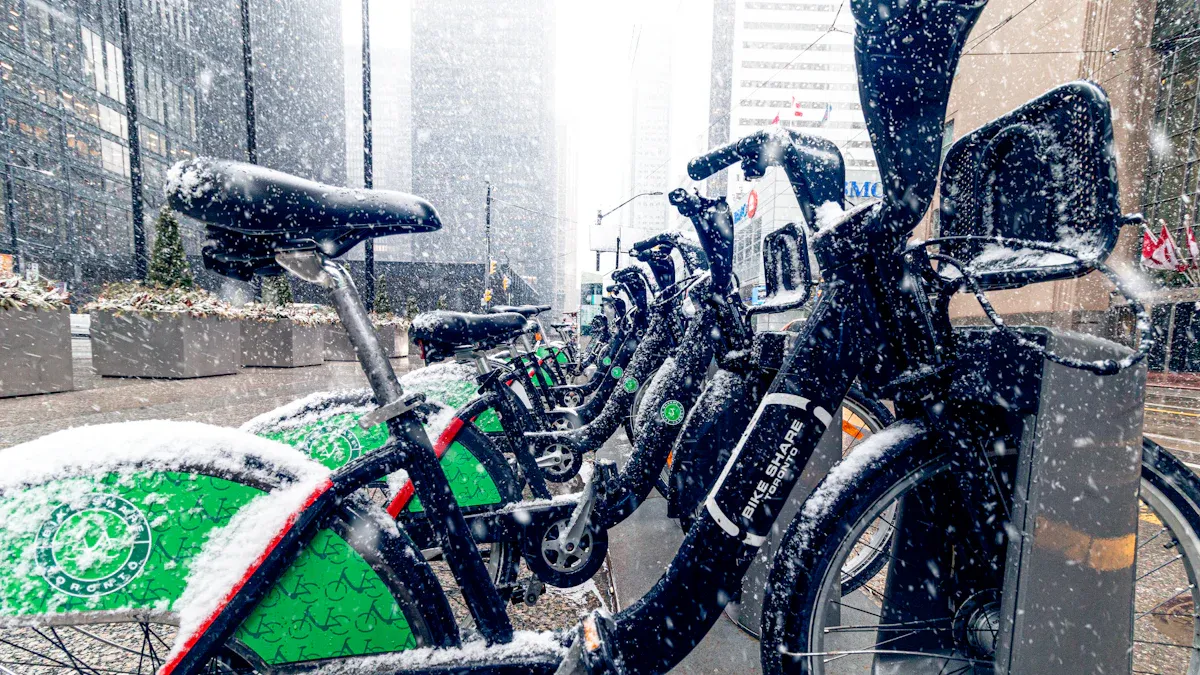
Caution is the top priority when riding in winter. Snow and ice make the roads slippery, which means longer braking distances. You should therefore always maintain larger distances from other road users. Brake early and gently to avoid locking the wheels. Especially on slippery roads, disc brakes help you, as they function reliably even in wet conditions.
Tip: Practice braking on a safe surface to get a feel for how your e-bike reacts.
Avoiding start assist on slippery surfaces
Your e-bike's start assist can be problematic on slippery surfaces. It increases the likelihood of the wheels spinning. Instead, start slowly and with low support. This way, you maintain control and avoid slipping.
Handling difficult road conditions
Letting it roll instead of braking abruptly on ice
On icy roads, you should avoid abrupt braking maneuvers. It is better to let your e-bike roll to maintain stability. If you must brake, use both brakes evenly and apply pressure cautiously. This minimizes the risk of skidding.
Note: Plan your routes so that you can avoid heavily iced roads if possible.
Anti-slip pedals for better grip
Slippery pedals can be dangerous in winter. Anti-slip pedals provide better grip and prevent your feet from sliding off. These pedals have special surfaces or rubber coatings that ensure stability even in wet and snowy conditions. Alternatively, you can use pedal covers to improve traction.
With these techniques and aids, you can safely master even difficult road conditions. Your e-bike remains a reliable companion in winter.
Maintenance and care of the e-bike in winter
Regular cleaning and inspection
Use of lukewarm water and soft materials
Regular cleaning protects your e-bike from the harmful effects of salt, dirt, and moisture. Use lukewarm water and a soft sponge to clean sensitive parts such as the chain, derailleur, and brakes. Special cleaning agents help remove stubborn dirt and prevent new dirt from adhering. After cleaning, you should dry your e-bike thoroughly to prevent corrosion.
Tip: Clean your e-bike after every ride on salty or muddy roads. This extends the lifespan of the components.
Avoiding high-pressure cleaners
High-pressure cleaners can force water into sensitive parts such as bearings or electronics. This often leads to damage and increased wear. Instead, you should rely on gentle cleaning methods. A bucket of water, a sponge, and a mild detergent are sufficient to keep your e-bike clean in winter.
Protection against moisture and corrosion
Dry storage and protective covers
Moisture is one of your e-bike's greatest enemies in winter. Store your e-bike in a dry, well-ventilated room. A protective cover offers additional protection against dust and moisture. This is especially important if you have to park your e-bike outdoors.
Note: Dry storage prevents rust formation and protects your e-bike's electronics.
Lubrication of moving parts
Wetness and dirt attack the moving parts of your e-bike. Lubricants specifically developed for winter protect the chain and derailleur from corrosion. Apply lubricant after every cleaning to ensure smooth operation. Regular chain maintenance prevents nasty surprises like broken chains and extends your e-bike's lifespan.
-
Why regular maintenance is important:
Brakes and gears are particularly susceptible to external influences.
A well-maintained chain remains functional for longer.
With these measures, your e-bike remains reliable and powerful in winter. This way, you can be safely on the road even in cold temperatures.
Storing the e-bike in winter
Ideal storage conditions
Dry, well-ventilated rooms
Properly storing your e-bike in winter is crucial to avoid damage and extend its lifespan. A dry and well-ventilated room offers the best conditions. Moisture can cause corrosion, while poor ventilation promotes mold growth. Rooms with temperatures between 10 and 20 degrees Celsius are ideal. Avoid leaving your e-bike outside overnight, as cold and moisture can impair the mechanics and electronics.
Tip: If you don't have an indoor space available, use a high-quality cover to protect your e-bike from weather conditions.
Removal and storage of the battery at room temperature
The battery is particularly sensitive to low temperatures. Remove it after every ride and store it at room temperature, ideally between 15 and 20 degrees Celsius. Cold temperatures increase electrical resistance and reduce performance. Only charge the battery once it has reached room temperature to avoid damage.
Note: A warm battery provides better range. Therefore, only reinsert it into your e-bike shortly before your ride.
Preparation for longer storage periods
Partial charging of the battery (30-60%)
If you don't use your e-bike for a long time, you should charge the battery to 30 to 60 percent. This partial charge protects the cells from deep discharge and extends the lifespan. Avoid fully charging or storing the battery empty, as this can affect capacity in the long term.
Tip: Check the battery's charge level every few weeks to ensure it doesn't fall below 30 percent.
Cleaning and protecting the e-bike before storage
Before storage, you should thoroughly clean your e-bike. Remove dirt, salt, and moisture to prevent corrosion. Use a mild detergent and a soft cloth to protect sensitive parts. After cleaning, dry the e-bike carefully and apply a protectant to the chain and other moving parts.
Note: Clean and protected storage ensures that your e-bike remains in perfect condition during winter and is ready for use in the spring.
Riding an e-bike in winter can be safe and enjoyable if you make the right preparations. Pay attention to winter tires, good lighting, and the care of your battery. Wear warm, functional clothing and ride carefully, especially in snow and ice. With these measures, you remain mobile and enjoy the benefits of winter riding.
-
Why winter riding is worthwhile:
It is an eco-friendly alternative to driving a car.
Outdoor exercise in the cold lowers inflammation markers.
Your immune system is strengthened.
Your cardiovascular system benefits.
Your metabolism is stimulated, and your well-being increases.
Outdoor exercise in the cold has a stimulating effect on the mitochondria, lifts your mood, and ensures a pleasant sense of well-being.
Take the opportunity to enjoy the fresh air while boosting your health. Your e-bike will remain a faithful companion even in winter.
FAQ
❓ Can I use my e-bike during heavy snowfall?
Yes, you can use your e-bike in snowfall. However, pay attention to winter tires and an adapted riding style. Avoid heavily iced routes and reduce your speed. This way, you stay safe on the road.
❓ How do I protect my e-bike battery from the cold?
Store the battery at room temperature and use neoprene covers while riding. Only charge it once it has reached room temperature. These measures protect performance and extend its service life.
❓ Which clothing is best suited for winter riding?
The layering principle is ideal. Wear functional underwear, an insulating middle layer, and wind- and waterproof outer clothing. Supplement your gear with gloves, hats, and reflective accessories for comfort and safety.
❓ How often should I clean my e-bike in winter?
Clean your e-bike after every ride on muddy or salty roads. Use lukewarm water and a mild cleaning agent. This prevents corrosion and extends the life of the components.
❓ Can I store my e-bike outside?
It is better to store your e-bike in a dry, well-ventilated room. If that is not possible, use a high-quality cover to protect it from moisture and cold.
Tip: Remove the battery if you store your e-bike outside and keep it indoors.