
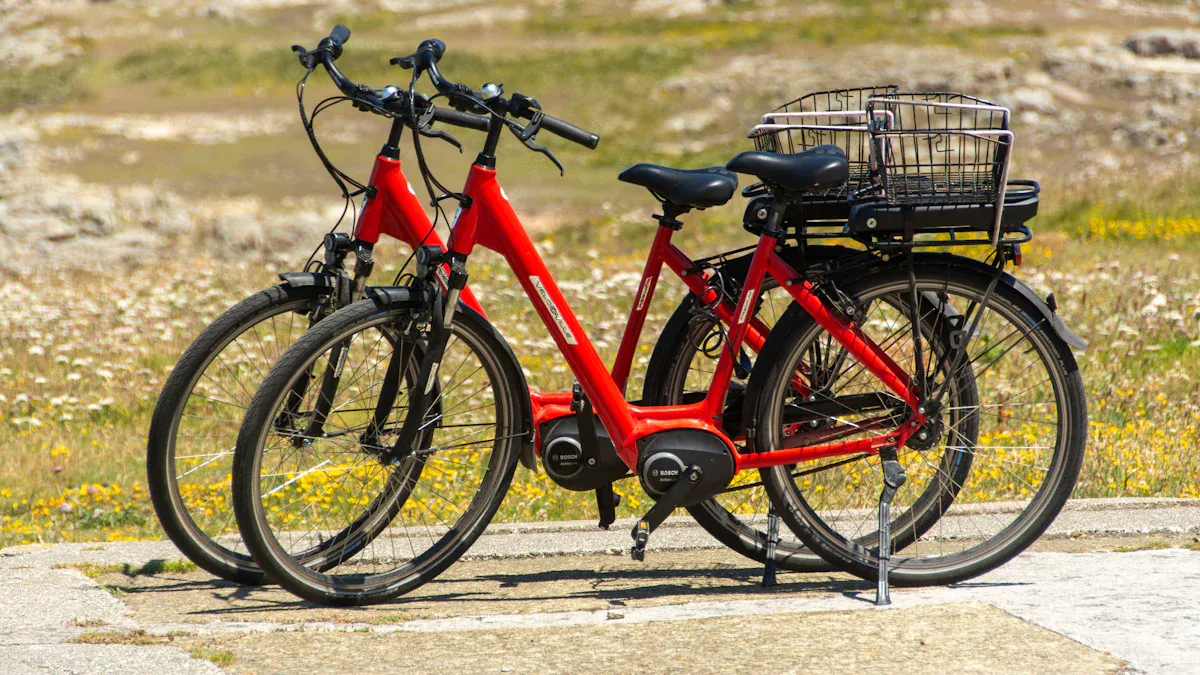
Have you ever wondered what’s driving the e-bike boom? Compared with traditional bicycles, e-bikes offer electric assistance that makes longer distances and steep climbs much easier. The market shows just how popular they have become:
By 2025, sales of e-bikes and bicycles are estimated to reach 143.82 million vehicles.
Revenue is expected to reach €60.71 billion by then.
In Germany alone, 4 million bicycles were sold, while 2.3 million were produced.
Whether you choose an electric bike or a traditional bicycle depends on your needs. Both have their own advantages.
Key Takeaways
E-bikes have a motor that makes riding easier. They’re great for long distances and hills, and are perfect for commuters or people with health issues.
Regular bicycles help you get fit because you rely solely on your own muscle power. They’re cheaper to buy and repair.
E-bikes are faster and more versatile for different kinds of rides. They’re suitable for commuting or long trips.
Environmental impact matters. Regular bicycles produce no CO2. E-bikes require electricity, but are better than cars.
Before buying, consider what you need and what you can afford. A test ride can help you choose the right bike.
Key Differences Between E-Bikes and Traditional Bicycles
Power source: Electric assistance vs. pedal power
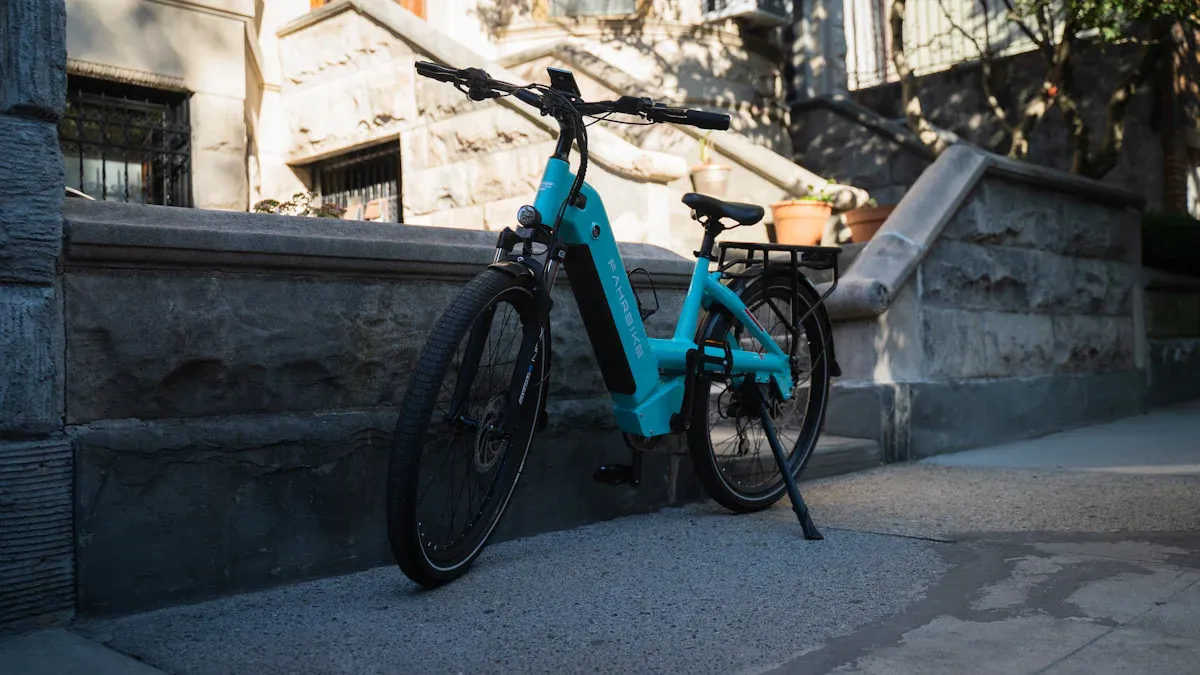
The most obvious difference between an e-bike and a traditional bicycle is how they’re powered. With a traditional bicycle, you rely entirely on your own muscle power, while an e-bike offers electric assistance. This means a motor helps you pedal, especially on steep climbs or long rides.
Tip: If you often travel longer distances or live in a hilly area, an e-bike could make a real difference. It reduces physical exertion and makes cycling more accessible—even for people with health limitations.
Traditional bicycles, on the other hand, rely entirely on your own energy. This makes them ideal if you want to improve your fitness or are simply looking for a challenge.
Speed and range
E-bikes deliver extra speed and range. With an e-bike, you can easily reach speeds of up to 25 km/h without wearing yourself out. This is especially handy if you commute to work or plan longer trips.
Extra speed: You’ll reach your destination faster, saving time.
Less fatigue: Longer rides feel less strenuous.
More flexibility: Whether you’re commuting, shopping, or enjoying some leisure time, an e-bike adapts to your needs.
A traditional bicycle has no electric assistance, which means your speed and range depend on your fitness. This can be a challenge, but it’s also a great way to build your endurance.
Costs and maintenance
Cost is another important difference. E-bikes are more expensive to buy and maintain than traditional bicycles. Here’s a comparison:
Aspect |
E-bike |
Traditional bicycle |
|---|---|---|
Purchase price |
From €300 |
|
Maintenance costs |
Higher costs due to electronic components and battery replacement |
Lower costs, usually simple maintenance |
Operating costs |
Electricity costs of €0.30 to €0.60 per 100 km |
No direct operating costs |
E-bikes require regular maintenance of their electronic components, such as the motor and battery. Replacing the battery can also be expensive. Traditional bicycles, on the other hand, require less maintenance and are easier to repair.
Note: If you’re on a limited budget, a traditional bicycle could be the better choice. It’s cost-effective and easy to maintain.
Benefits of an electric bike
Assistance on long rides
Have you ever taken a long bike ride and wondered how you’d manage the trip back? With an electric bike, that’s no longer a problem. Electric assistance helps you cover longer distances with ease. Studies show that people who ride pedelecs often travel farther than those on conventional bicycles.
Benefit of e-bikes |
Source |
|---|---|
Encourages physical activity and improves fitness |
WHO 2022 |
Longer distances compared with traditional bicycles |
Transportation Research Interdisciplinary Perspectives 2019 |
Assistance for people with health limitations |
WHO 2022 |
Whether you’re exploring a hilly landscape or simply want to reach your destination without breaking a sweat, an e-bike makes it possible. It gives you the freedom to enjoy the outdoors without overexerting yourself.
Comfort and flexibility
An electric bike doesn’t just offer assistance—it also adds comfort. Steep climbs? No problem. Headwinds? Barely noticeable. You can adjust the level of assistance to suit how much effort you want to put in yourself.
Tip: Use electric assistance to enjoy a relaxed commute or run errands without breaking a sweat.
You’ll also save time because you can travel faster. This makes e-bikes a flexible everyday solution, whether you live in the city or the countryside.
Suitable for commuters and older adults
E-bikes are an ideal choice for commuters. They help you cover distances more efficiently while meeting the WHO recommendation of 150 minutes of physical activity per week. At the same time, they make it easier to stay active regularly.
Older adults benefit especially from e-bikes. The lower physical effort and higher speed make cycling more enjoyable. Studies show that regular use improves fitness and reduces the risk of cardiovascular disease.
E-bikes support good health through regular exercise.
They offer an attractive alternative for commuters who want to save time.
Older adults report a better quality of life thanks to the assistance.
With an e-bike, you can make everyday life easier while staying active and healthy.
Benefits of a traditional bicycle
Improves fitness
A traditional bicycle is like a gym on wheels. You use your own muscle power to move forward, which strengthens your body. Cycling works your legs, improves your endurance, and supports heart health. It’s a great way to stay active without having to buy expensive fitness equipment.
Did you know that regular cycling can also reduce stress? Exercising in the fresh air and feeling that you’re doing something good for your body can act as a natural mood booster. You can decide how hard you want to ride—whether it’s a leisurely spin through the park or a challenging ride uphill.
Tip: If you want to improve your fitness, a traditional bicycle is the perfect choice. It challenges you and keeps you moving.
Lower costs
A regular bicycle is not only good for your body but also for your wallet. The purchase price is much lower than that of an e-bike. Maintenance and repairs are also cheaper because there are no complex electronic components.
Here’s a comparison that shows you the differences:
Cost factor |
E-bike |
Regular bicycle |
|---|---|---|
Purchase price |
Over €2,000 |
A few hundred euros |
Annual maintenance costs |
Approx. €300 |
Less than €100 |
Technical repairs |
More expensive due to the electrical system |
Cheaper |
As you can see, a traditional bicycle is a cost-effective option. It saves you money and time on maintenance.
Environmentally friendly
If sustainability matters to you, a traditional bicycle is hard to beat. It produces no CO2 emissions and requires neither batteries nor electricity. This makes it one of the most environmentally friendly ways to get around.
A comparison shows the benefits:
Feature |
E-bike benefits |
Traditional bicycle benefits |
|---|---|---|
Environmental impact |
Larger carbon footprint due to electricity use |
Completely emission-free; no battery or motor required |
With a regular bicycle, you can protect the environment while staying active. It’s a simple way to reduce your carbon footprint.
Note: If sustainability is important to you, a traditional bicycle is the best choice. It combines environmental awareness with physical activity.
Environmental impact compared
CO2 emissions
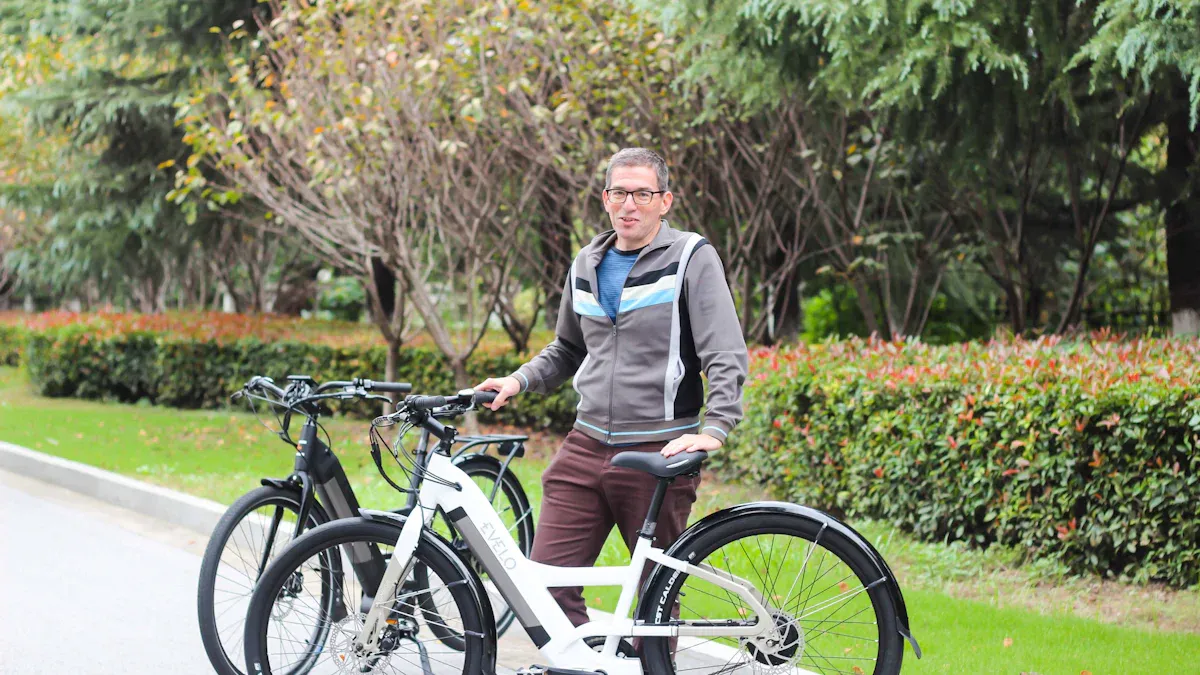
Have you ever wondered how e-bikes and traditional bicycles compare when it comes to CO2 emissions? E-bikes have a motor and require electricity, but they’re still much more environmentally friendly than cars or motorcycles. The average CO2 emissions of an e-bike are around 22 g per kilometer—almost nothing compared with a car, which emits more than 120 g of CO2 per kilometer.
Traditional bicycles clearly outperform e-bikes in this respect, however. They produce no direct CO2 emissions at all. You use only your own muscle power to move forward. So if you want to travel completely emission-free, a regular bicycle is the best choice.
Tip: If you want to reduce your carbon footprint, you can charge an e-bike using renewable electricity. This makes your rides even more sustainable!
Disposing of e-bike batteries
An e-bike’s battery is an important consideration when it comes to environmental impact. Lithium-ion batteries, which are used in most e-bikes, have a limited lifespan. They need to be replaced after around 500 to 1,000 charge cycles. That might not sound like much, but disposing of these batteries can be a problem.
The good news? Many manufacturers and recycling programs handle the environmentally responsible disposal and recycling of batteries. You can simply take your old battery to a specialist retailer.
Note: When buying an e-bike, check whether the manufacturer offers a recycling program. This helps ensure your battery doesn’t end up in the environment.
Sustainability of traditional bicycles
A traditional bicycle is hard to beat when it comes to sustainability. It requires no battery or electricity and has a long lifespan. With proper care, many bicycles last for decades. This makes them one of the most sustainable forms of transport around.
Manufacturing a regular bicycle also requires fewer resources than manufacturing an e-bike. There are no electronic components that need to be produced through complex processes. If you buy a used bicycle, you can reduce its environmental footprint even further.
Bottom line: A traditional bicycle is the perfect choice if you value maximum sustainability. It’s durable, environmentally friendly, and easy to maintain.
When to use each type
When an electric bike makes sense
An electric bike is ideal if you want to cover longer distances without ending up completely exhausted. It’s a great choice especially for commuters. You can ride to work comfortably without breaking a sweat while also helping the environment. Studies show that 75% of e-bike users use their bikes for commuting.
E-bikes are also perfect for hilly areas or places with strong headwinds. The motor assists you, so you can keep moving effortlessly. If you regularly ride more than 10 km, an e-bike is a worthwhile investment. In fact, 70% of e-bike users regularly travel these distances.
Another advantage is the moderate physical activity an e-bike provides. With an average heart rate of 114 beats per minute, you can improve your fitness without overexerting yourself. The WHO confirms that e-bikes are a good way to stay active while covering longer distances.
Tip: If you want to replace your car, an e-bike is an eco-friendly alternative. Studies show that 51% of e-bike users have replaced their car with an e-bike.
When a traditional bicycle makes sense
A traditional bicycle is the best choice if you want to cover short distances. For trips of up to 10 km, it is affordable and eco-friendly. You don't need a battery or motor maintenance—just hop on and ride.
If you want to improve your fitness, a regular bicycle is hard to beat. It gives you an effective workout because you rely solely on your own muscle power. Cycling builds endurance and strengthens your cardiovascular system. It's also a great way to relieve stress and enjoy nature.
Traditional bicycles are also lighter and easier to transport. If you live in the city and often need to carry or store your bike, a regular bicycle is more practical. The upfront cost is low, and you save on extra expenses for batteries or specialized maintenance.
Note: If you’re on a limited budget, a traditional bicycle is the perfect choice. It’s affordable, low-maintenance, and ideal for everyday use.
Combining both options
Why not combine both options? An e-bike can help you on longer trips and challenging rides, while a traditional bicycle is ideal for short journeys and exercise. You can switch between the two as needed and enjoy the best of both worlds.
For example, you could use an e-bike for your commute to save time and arrive feeling relaxed. For leisure activities or athletic challenges, you could use your traditional bicycle. This combination gives you maximum flexibility and adapts to your lifestyle.
Tip: If you own both bikes, you can make the most of your mobility. Use the e-bike for practical trips and the traditional bicycle for fitness and fun.
Decision guide
Analyze your needs and goals
Before deciding whether to get an e-bike or a traditional bicycle, you should carefully analyze your personal needs and goals. Ask yourself: What matters to you when cycling? Do you want to improve your fitness, or are you looking for a practical commuting option?
Here are a few points that can help you decide:
Physical exertion: A traditional bicycle challenges your muscles and improves your endurance. An e-bike, on the other hand, gives you assistance, especially on long trips or steep climbs.
Speed: If you want to save time, an e-bike is ideal. It lets you reach your destination faster and with less effort.
Eco-friendliness: Both options are sustainable. Although e-bikes use electricity, they are still more eco-friendly than cars.
Cost: A traditional bicycle is cheaper to buy. However, an e-bike can save money in the long run if it replaces a car.
Tip: Consider how often and what you want to use the bicycle for. Do you commute to work every day, or are you planning occasional recreational rides? Your answers can make the decision easier.
Consider your budget
Your budget plays an important role in choosing the right bicycle. E-bikes cost more upfront, but offer long-term benefits. If you replace your car with an e-bike, you can save on fuel and maintenance costs. Traditional bicycles, on the other hand, are an affordable option, especially if you only travel short distances.
Here's a comparison:
Purchase cost: An e-bike often costs over €1,500, while you can buy a traditional bicycle for as little as €300.
Operating costs: E-bikes use electricity, but the costs are minimal (around €0.30 per 100 km).
Maintenance costs: Traditional bicycles are cheaper to maintain because they have no electronic components.
Note: Set a realistic budget and consider whether you’re willing to invest more for the additional benefits of an e-bike.
Take test rides
A test ride is the best way to find out which bicycle suits you. Many users say they weren't sure they'd made the right choice until after taking a test ride. With e-bikes in particular, you can test the different assistance levels and get a feel for the speed.
A test ride is important for traditional bicycles, too. It helps you find the right frame size and geometry. Without prior experience, it can be difficult to judge which model suits you best.
Tip: Take your time on a test ride and try different models. Pay attention to how the bicycle feels and whether it meets your needs. That way, you can be sure you're making the right decision.
E-bikes and traditional bicycles both have their strengths. Want to ride longer distances without breaking a sweat? Then an e-bike is perfect for you. It offers comfort and assistance, especially on hilly routes or into a headwind.
A traditional bicycle, on the other hand, is ideal if you want to improve your fitness. It costs less and is more eco-friendly. You can stay active while saving money.
Tip: Think about what matters to you—comfort or fitness? Your needs will determine which bicycle is best for you.
FAQ
What is the main difference between an e-bike and a traditional bicycle?
The biggest difference is the type of propulsion. An e-bike assists you with an electric motor, while a traditional bicycle relies solely on your muscle power. An e-bike makes longer trips and steep climbs easier.
How long does an e-bike battery last?
An e-bike battery lasts around 500 to 1,000 charge cycles. Depending on how often you use it, that can amount to several years. Make sure to maintain and store the battery properly to extend its lifespan.
Tip: Don’t let the battery run completely flat to maximize its lifespan.
Can I ride an e-bike without electric assistance?
Yes, you can use an e-bike like a regular bicycle. The motor only kicks in when you activate the assistance. However, it is harder to ride without power because an e-bike weighs more.
Is a traditional bicycle really more eco-friendly than an e-bike?
Yes, a traditional bicycle produces no emissions at all. An e-bike uses electricity and has a battery that must be disposed of. Even so, an e-bike remains an eco-friendly alternative to cars.
Which bicycle is better for beginners?
It depends on your goals. An e-bike is ideal if you want to ride longer distances or need assistance. A traditional bicycle is better suited if you want to improve your fitness or have a smaller budget.
Note: Try both options to find out which one suits you better.