

The choice between e-bikes and traditional bicycles depends heavily on your individual needs. E-bikes offer you electric assistance, which is particularly practical if you cover long distances or have to tackle steep climbs. They are an ideal choice for commuters who don't want to arrive at their destination sweaty. Traditional bicycles, on the other hand, rely on muscle power and promote your fitness more intensively. According to the Zweirad-Industrie-Verband, the market share of e-bikes in Germany is 48 percent, but traditional bicycles without motors remain popular as well. Both options, e-bikes vs. traditional bicycles, have their advantages, which you should weigh according to your lifestyle.
Key takeaways
E-bikes have a motor, good for long distances and hills.
Normal bicycles keep you fit, as they run solely on muscle power.
E-bikes cost more to purchase and repair.
Normal bicycles are cheaper and easier to maintain.
Choose based on your goals and your daily routine.
Test rides help you find the right bike.
E-bikes vs. traditional bicycles: Pros and cons
Advantages of e-bikes
Electric assistance for less exertion
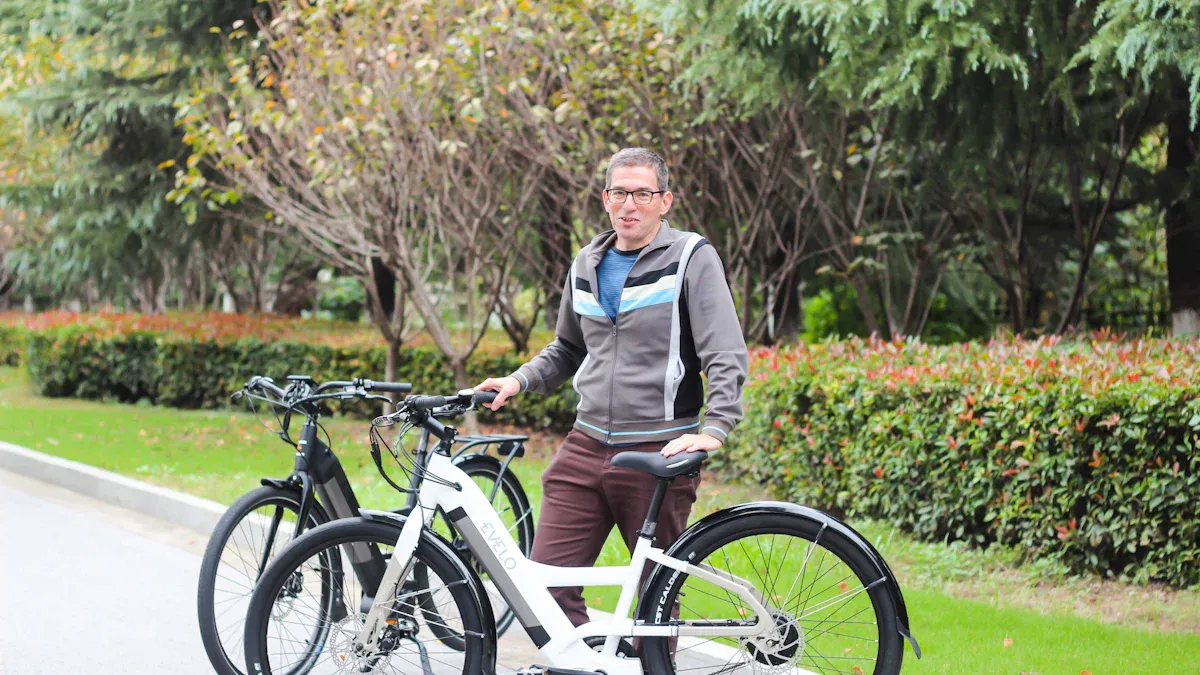
E-bikes make riding easier for you thanks to their electric assistance. You can travel with less physical effort, especially on long distances or steep climbs. This makes them ideal for commuters or people who want to reduce physical exertion.
Higher speed and shorter travel times
With an e-bike, you reach higher speeds than with a traditional bicycle. This saves you time, especially on longer routes. For commuting or daily errands, this is a major advantage.
Suitable for long distances and hilly terrain
E-bikes are perfect for long tours or hilly regions. The motor assists you, allowing you to easily handle even demanding routes.
Environmentally friendly with lower CO2 emissions
Although e-bikes require electricity, they are significantly more environmentally friendly than cars. They cause fewer CO2 emissions and thus contribute to a more sustainable lifestyle.
Flexibility in city traffic through the use of bike lanes
In city traffic, e-bikes offer you flexibility. You can use bike lanes and avoid traffic jams. This saves time and makes commuting more pleasant.
Disadvantages of e-bikes
Higher purchase and maintenance costs
E-bikes are more expensive to purchase than traditional bicycles. Maintenance costs are also higher because they contain more complex components such as motors and batteries. According to one study, 33% of repairs are due to wear and tear and 22% are due to technical defects.
Cause |
Percentage |
|---|---|
Wear and tear |
33% |
Technical defects |
22% |
Dependence on the battery and its charging time
The battery of an e-bike must be charged regularly. When it is empty, you can only ride using muscle power, which can be exhausting on a heavy e-bike.
Heavier weight due to motor and battery
Due to the motor and battery, e-bikes are heavier than traditional bicycles. This makes them less manageable, especially when carrying or storing them.
More complex maintenance and repair
The technology of an e-bike requires special maintenance. Repairs are often more expensive and can only be carried out by professionals.
Safety aspects at higher speeds
The higher speeds of an e-bike increase the risk of accidents. You should therefore ride particularly carefully and wear protective gear.
Advantages of traditional bicycles
Promotion of fitness and physical activity
Traditional bicycles promote your fitness. You use your muscle power and train your endurance and strength in the process.
Lightweight for easy handling
Without a motor and battery, traditional bicycles are lighter. This makes handling easier for you, especially when carrying or storing them.
Simple maintenance due to fewer technical components
With fewer technical components, traditional bicycles are easier to maintain. You can perform many repairs yourself, which saves time and money.
Cheaper purchase costs
Traditional bicycles are cheaper to purchase. They are a good choice if you have a limited budget.
Environmentally friendly without battery or motor
Since they do not require a battery or motor, traditional bicycles are particularly environmentally friendly. They produce zero emissions and are a sustainable choice.
Vehicle type |
Market share in Germany |
|---|---|
E-bikes |
|
Traditional bicycles |
Demand remains high |
Disadvantages of traditional bicycles
Higher physical exertion required
Traditional bicycles require more physical exertion from you. You must ride using only your muscle power, which can be challenging, especially on long routes or steep climbs. If you don't train regularly, riding can quickly become tiring. For people who prefer a relaxed ride, this is often a disadvantage.
Lower speed and range
With a traditional bicycle, you reach lower speeds. This means you have to plan more time for longer routes. The range is also limited, as it depends on your physical stamina. If you often cover long distances, this can be a problem. Compared to e-bikes vs. traditional bicycles, you are slower on a normal bike.
Limited use for people with physical limitations
A traditional bicycle is not suitable for everyone. People with physical limitations or low fitness levels quickly reach their limits. Without electric assistance, riding can be strenuous or even impossible. This becomes particularly apparent in hilly regions or when riding against the wind. For this target group, e-bikes offer a better alternative.
E-bikes vs. traditional bicycles: Potential applications
When is an e-bike the better choice?
Ideal for commuters on long routes
E-bikes are an excellent choice if you cover long distances every day. With an average speed of 20–25 km/h, you save time and reach your destination faster. Studies show that e-bike users ride 22% more than they would with conventional bicycles. For commuting routes, this figure rises to as much as 75%. Furthermore, 51% of commuters leave their car behind once they own an e-bike. This makes e-bikes not only practical but also environmentally friendly.
Study |
Result |
|---|---|
e-Rad Hafen |
E-bike users ride 22% more, and 75% more for commuting. |
VCD Besser E-Radkaufen |
74% of e-bike users replace the car, 70% regularly ride over 10 km. |
Perfect for hilly regions or steep climbs
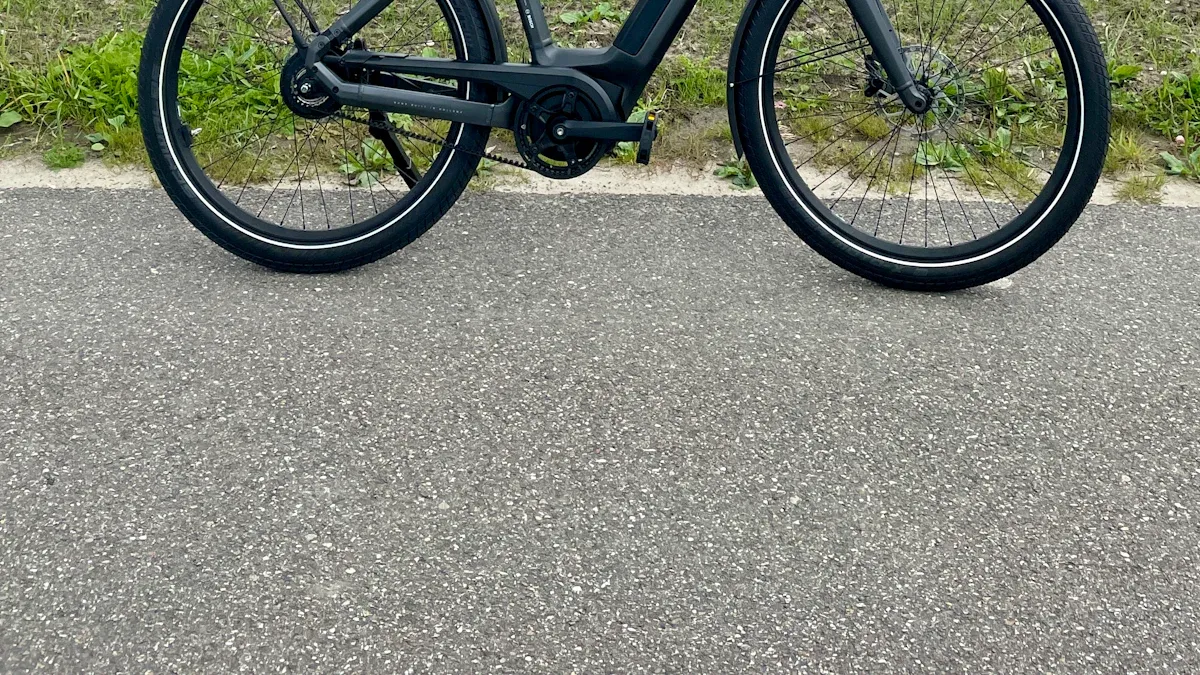
In hilly areas or on steep climbs, an e-bike offers you decisive advantages. The motor assists you so that you have to exert less force. This allows you to effortlessly master even demanding routes. According to a study, e-bike users travel longer distances and arrive faster, even in difficult terrain.
Advantage |
Description |
|---|---|
Speed |
E-bikers ride 20–25 km/h, which saves time. |
Distance |
E-bikes enable longer distances that are difficult to manage with normal bicycles. |
Suitable for people with limited mobility
If you have physical limitations, an e-bike can help you stay mobile. The electric assistance reduces the effort and allows you to continue being active. Older people or people with health problems in particular benefit from this technology.
When is a traditional bicycle the better choice?
Optimal for fitness and training sessions
A traditional bicycle is excellent if you want to improve your fitness. You train your endurance and strengthen your muscles, as you ride using only muscle power. For athletic activities or targeted training sessions, the classic bicycle is unbeatable.
Practical for short distances and everyday errands
For short distances or everyday errands, a traditional bicycle is ideal. It is light, easy to handle, and requires no battery. You can use it quickly without having to worry about charging.
Suitable for a simple and inexpensive riding experience
If you are looking for an uncomplicated and affordable riding experience, a traditional bicycle is the right choice. It is cheaper to purchase and maintain. Furthermore, you can carry out many repairs yourself, which saves you additional costs.
Personal preferences and decision-making aid
How do I choose between e-bikes and traditional bicycles?
Define goals: fitness, comfort, or efficiency?
Think about what you want to achieve with your bicycle. If you want to improve your fitness, a traditional bicycle is ideal. It challenges your muscles and increases your endurance. If you value comfort, however, an e-bike with electric assistance offers a more relaxed ride. For efficient commuting or longer routes, an e-bike is also the better choice.
Consider budget: What can I afford?
Your budget plays an important role in the decision. E-bikes are more expensive to purchase and maintain. Traditional bicycles are cheaper and easier to repair. Consider how much you are willing to spend and also take into account long-term costs such as maintenance and spare parts.
Analyze lifestyle: How often and for what do I use the bike?
Your lifestyle influences the choice. If you use the bike daily for commuting or long tours, an e-bike is more practical. For occasional rides or athletic activities, a traditional bicycle is sufficient. Statistics show that 74% of e-bike users replace their car and regularly ride distances over 10 kilometers.
74% of those surveyed use e-bikes as a car replacement.
Over 70% regularly ride over 10 kilometers.
20% of all professional daily trips are covered with pedelecs.
Tips for decision-making
Take test rides to experience the feeling of riding
Test different models before you decide. A test ride helps you to experience the ride feel and find out which bike suits you better. Many specialist retailers offer this possibility.
Seek advice from a specialist retailer
Get advice from experts. Specialist dealers can explain the differences between e-bikes and traditional bicycles. They will help you find a model that meets your needs.
Consider long-term costs and maintenance
Think about the long-term costs. E-bikes have higher maintenance costs due to their electrical components. Traditional bicycles are easier and cheaper to maintain. The following table shows the most important differences:
Criterion |
E-bike |
Classic bicycle |
|---|---|---|
Drive type |
Electrically assisted |
Muscle power |
Weight |
Heavier (motor and battery) |
Lighter |
Costs |
Higher purchase costs |
Lower purchase costs |
Range |
Extended by motor |
Limited by fitness |
Maintenance |
More complex |
Simpler |
Fitness |
Lower (motor assistance) |
Higher (pure muscle power) |
Ride feel |
Faster, less strenuous |
Direct and unfiltered |
Ideal for |
Long distances, commuting |
Short distances, training |
With these tips, you will find the bike that perfectly suits you.
Both e-bikes and traditional bicycles offer you unique advantages. E-bikes make long distances and hilly terrain easier, while traditional bicycles promote your fitness and are more cost-effective.
Your choice depends on your goals and your lifestyle. Do you want to commute efficiently or train your endurance? Both options support your health and protect the environment.
Regardless of whether you choose an e-bike or a traditional bicycle, you will discover the joy of cycling while making a sustainable contribution. 🚴♂️
FAQ
How much does an e-bike cost compared to a traditional bicycle?
Prices for e-bikes start at around 1,500 euros and can go up to 5,000 euros or more. Traditional bicycles are more affordable and often cost between 300 and 1,500 euros. The choice depends on your budget and your requirements.
How long does an e-bike battery last?
The lifespan of an e-bike battery is generally 3 to 5 years. This depends on usage, maintenance, and charging frequency. Regular maintenance and avoiding deep discharges will extend its lifespan.
Can I ride an e-bike without electrical assistance?
Yes, you can use an e-bike just like a normal bicycle. However, riding without electrical assistance is more strenuous because the e-bike is heavier due to the motor and battery.
Are e-bikes more environmentally friendly than cars?
E-bikes are significantly more environmentally friendly than cars. They produce no direct emissions and require less energy. They are a sustainable alternative for short distances and commuting.
Which bicycle is better suited for beginners?
Traditional bicycles are better suited for beginners. They are lighter, easier to operate, and more affordable. However, e-bikes offer comfort and support, especially for people with limited fitness levels.
💡 Tip: Try out both options to find out which bicycle suits you better!