

Are you wondering whether an e-bike or a standard bicycle is a better fit for you? Look at your daily routine and your needs. Many commuters, seniors, and fitness enthusiasts face this question. Sales figures show that e-bikes were even more popular than regular bicycles in 2023.
In 2023: 2.1 million e-bikes sold, 1.9 million non-motorized bicycles
Health, environment, costs, and weight play an important role
E-bikes motivate you to be more active and help protect the environment
Ask yourself: What is really important to you in your everyday life?
Key takeaways
E-bikes are ideal for commuters, seniors, and people with physical limitations. They offer assistance and make riding on hilly terrain easier.
E-bike costs are higher than those of standard bicycles. Consider the purchase and maintenance costs before making a decision.
E-bikes promote exercise and are easy on the joints. They offer an effective workout, even when you use the assistance.
The choice between an e-bike and a standard bicycle depends on your needs. Consider how often you ride long distances or transport heavy loads.
Use the provided checklist to find out which bike best suits your daily routine. Try both types to get the right feel.
E-bike or bicycle – Who benefits?
User groups compared
Are you wondering for whom an e-bike or a standard bicycle is particularly worthwhile? Different user groups benefit in different ways from both versions. Here is a quick overview:
People with limited mobility enjoy more freedom with an e-bike. The electric assistance is gentle on the joints and makes longer distances possible.
Commuters arrive at work feeling relaxed and without sweating.
Families with children enjoy using e-bikes for group outings, even when going uphill.
Older riders often cycle more pain-free with motor assistance and remain mobile.
Overweight individuals find an easier entry into increased activity with an e-bike.
A study by the Hannover Medical School shows that e-bike riders exert less stress on the knee joint. The German Sport University Cologne found that e-bikes make regular physical activity easier for older people.
A look at the age groups makes the differences even clearer:
Age group |
E-bike usage |
Standard bicycle usage |
|---|---|---|
Over 55 years |
Primary users |
Small market share |
40-54 years |
Significantly lower |
Small market share |
Under 45 years |
Growing usage |
Strongest representation |
As you can see, people over 55 in particular like to choose an e-bike. Younger people use the classic bicycle more frequently, but interest in e-bikes is also rising among them.
Everyday situations and needs
In everyday life, what matters is how well the bike fits your needs. Take a look at typical situations:
Situation |
Standard bicycle |
E-bike |
|---|---|---|
Flat routes under 15 km |
Very suitable |
Possible, but often overkill |
Hilly routes or headwinds |
Strenuous |
Clear advantage |
Commuting in a suit or without a shower |
Difficult |
Clear advantage |
Sport and fitness as the main goal |
Better suited |
Less suitable |
Budget under 1,500 euros |
Many options |
Hardly viable |
Shopping and transporting loads |
Suitable with a cargo bike |
Very suitable |
Routes over 30 km daily |
Strenuous |
Very suitable |
Physical limitations |
Limited suitability |
Very suitable |
Bike must be carried up stairs |
Clear advantage |
Difficult |
Do you want to be athletic and are looking for a challenge? Then a standard bicycle is a better fit. Do you want to ride longer distances, often face headwinds, or need to transport loads? This is where the e-bike plays to its strengths.
The range of models is also geared towards individual needs:
Features |
Particularly suitable for |
|
|---|---|---|
City bike |
Low step-through, comfortable, up to 25 km/h |
Seniors, women, short trips |
Folding bike |
Handy and flexible |
Commuters |
Mountain bike |
Suspension forks, powerful motor |
Mountain bikers, hobby cyclists |
Touring bike |
High range, stable |
Athletes, long-distance riders |
S-Pedelec |
Up to 45 km/h, driver's license required |
Experienced riders, speed enthusiasts |
XXL e-bike |
High weight, stable |
Tall or heavier individuals |
Tip: Think about how often you have to handle inclines, long distances, or heavy loads in your daily life. That will help you choose.
With this information, you can better estimate which bike fits your everyday life.
E-bike and bicycle cost comparison
Acquisition and operation
Would you like to know what a bicycle or an e-bike really costs you? The prices differ significantly. Take a look at the table:
Product |
Average price 2022 |
|
|---|---|---|
Bicycles |
470 euros |
500 euros |
E-bikes |
2,950 euros |
2,800 euros |
A standard bicycle costs less than an e-bike. The purchase is more affordable, especially if you have a small budget. You often pay six times as much for an e-bike. Operating costs also apply. You charge the battery for about 13 to 15 cents per charge. With 700 charging cycles and a battery price of 700 euros, you pay approximately 1 euro per charge. Subsidies help you with the purchase. Cities like Munich, Tübingen, or Wiesbaden offer subsidies of up to 1,000 euros. Nationwide, there is support of up to 2,500 euros for electric cargo bikes.
Tip: Find out about subsidy options in your city before buying. That way you can save real money!
Maintenance and follow-up costs
Maintenance costs also differ. An e-bike requires more care and special parts. Here is an overview:
Category |
Standard bicycle costs |
|
|---|---|---|
Battery replacement (3–5 years) |
400–900 € |
N/A |
Motor maintenance |
50–200 € periodically |
N/A |
Wear parts |
Higher wear |
50–200 €/year |
Annual check |
N/A |
50–120 € |
With an e-bike, you must replace the battery after a few years. Motor and electronics need regular updates. Wear parts like brakes and tires wear out faster because the e-bike is heavier. A standard bicycle requires less maintenance. Depreciation is higher for an e-bike. After one year, it loses 20–30% in value, and after five years, up to 65%. A bicycle retains its value longer.
If you want to spend little money on maintenance and spare parts, a standard bicycle is a better fit for you. If you want comfort and assistance, you must account for higher follow-up costs with an e-bike.
Everyday life and comfort
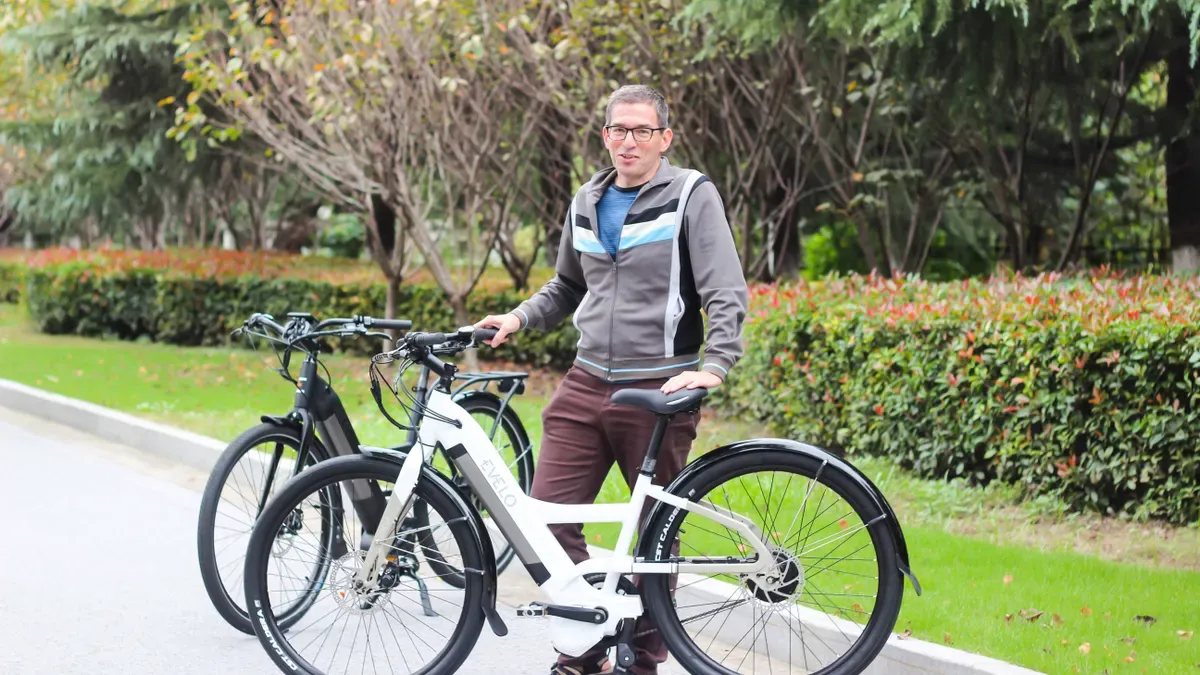
Range and terrain
Do you want to know how far you can get with a bicycle or an e-bike? The range depends on several factors. With a standard bicycle, your fitness determines how long you can keep going. With an e-bike, the battery plays a major role. Most pedelecs have a battery capacity of about 500 Wh. The fitter you are, the better you can utilize the motor assistance.
Aspect |
E-bikes |
Standard bicycles |
|---|---|---|
Drive |
Motor assistance |
Muscle power |
Range |
Depends on battery and fitness |
Depends on your fitness |
Battery capacity |
Usually 500 Wh |
None |
Influence of fitness |
More fitness - longer battery life |
Fitness is decisive |
Terrain strongly influences range. You can get particularly far with an e-bike on flat routes. If you often ride uphill, the range decreases. The motor power helps you on inclines, but the battery drains faster. With a standard bicycle, you need a lot of strength on hills. An e-bike makes life easier if you live in a hilly area or cover long distances.
Tip: Plan longer tours with an eye on the terrain and battery range. This way you stay relaxed on the go.
Transport and weight
There are big differences when it comes to transport. A standard bicycle usually weighs between 10 and 14 kg. An e-bike often weighs 22 to 24 kg. Some models even weigh up to 30 kg. You feel this when you have to carry the bike up stairs or put it in the basement.
A standard bicycle is easier to handle on buses and trains.
You need more strength for an e-bike, especially when loading and unloading.
Public transport often has special rules for e-bikes. There are sometimes space problems or time restrictions.
You must securely fasten the e-bike on a car roof or rear rack to avoid any issues.
The higher weight of an e-bike is often a disadvantage on short, flat routes. For longer tours or steep paths, however, it offers you a lot of comfort and assistance.
Health and Environment
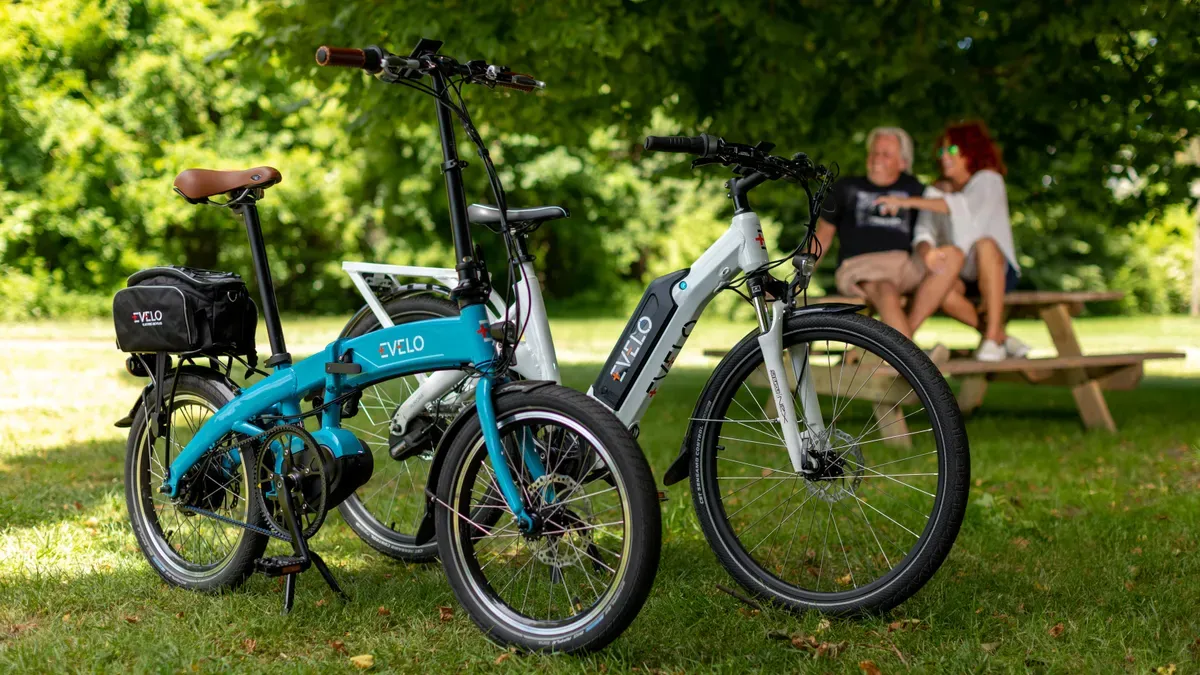
Fitness and Joint Protection
Do you want to know what cycling does for your body? Cycling offers many benefits for your health. It is easy on your joints because the bicycle carries your weight. Even a leisurely ride can improve your fitness. Your joints remain flexible and discomfort can be reduced.
Many think that e-bikes offer fewer fitness benefits. That is not entirely true. A study showed that cyclists on e-mountain bikes had a heart rate almost twice as high as riders on regular mountain bikes. This means you also train your cardiovascular system with a motor. Riding an e-bike is more strenuous than walking and strengthens your muscles.
Here you can see what else cycling can do for you:
Cycling is easy on your joints and helps with discomfort.
The movement keeps your joints supple.
The electric motor relieves strain on your knees, especially when starting off or going uphill.
You get an effective workout, even if you use assistance.
Tip: If you have joint problems, a bike with a motor can be a real help.
Sustainability and Life Cycle Assessment
Do you want to know how environmentally friendly cycling is? Regular bicycles perform the best. They do not require electronics and consume few resources. E-bikes have a greater environmental impact because they have batteries and motors. Producing batteries requires many raw materials. After a few years, the batteries lose performance and must be recycled. Recycling is complex, but manufacturers take back old batteries for free.
What about CO2? Take a look at the table:
Vehicle Type |
CO2 Emissions per Kilometer |
|---|---|
E-bike |
7.8 g CO2 |
Car |
150–250 g CO2 |
You can see: even with a motor, your travel is much cleaner than by car. If sustainability is very important to you, the classic bicycle remains the best choice. If you want to ride longer distances and still do something for the environment, the e-bike is a good alternative.
Decision Aid: E-Bike or Bicycle
Checklist for Choosing
Do you want to know which bike suits you? With this checklist, you can find out quickly. Take a moment and answer the questions honestly. This will give you a clear direction for your decision.
Do you regularly ride long distances that push you to your limits on a regular bicycle?
Would you like to reach your destination in a relaxed manner and without great exertion?
Are you often on hilly routes or struggling with strong headwinds?
Do you value physical activity and want to specifically improve your fitness?
What is your main goal when cycling? (e.g., commuting, fitness, adventure, racing)
What does your budget look like? Is it enough for maintenance and spare parts?
Do you have physical limitations such as joint, back, or heart problems?
Do you need to transport loads regularly, such as a child seat, luggage, or groceries?
Are you allowed to use an e-bike legally everywhere in your region?
Is the terrain in your daily life more flat, hilly, or mixed?
Tip: Count how often you answer "Yes" to points 1–3 and 7–9. The more "yes" answers, the more an e-bike is worth it for you. If points 4, 5, and 10 dominate, a regular bicycle fits your daily life better.
Recommendations for Target Groups
Every target group has different wishes and requirements. Here you will find an overview of what makes the most sense for you:
Target Group |
Regular Bicycle |
E-Bike |
|---|---|---|
Commuters |
For short, flat routes |
For longer, hilly routes |
Seniors |
Possible, but strenuous |
Very well suited |
Fitness Fans |
Optimal |
Good, but less intense |
Families with children |
Possible |
Very practical |
People with limitations |
Difficult |
Very well suited |
Budget under €1,500 |
Many options |
Hardly sensible |
Transporting loads |
Possible with cargo bike |
Very well suited |
Adventure and sport |
Very well suited |
Possible, but less sporty |
Are you a commuter who wants to arrive at work in a relaxed way? Then an e-bike offers you many advantages. Seniors and people with physical limitations benefit especially from the motor assistance. Families who often transport children or groceries experience more comfort and safety with a motor. Fitness fans and athletes get the maximum out of a normal bicycle because they use more of their own strength.
Scientific studies show that e-bikes increase stamina and cardiac output. They also make exercise possible for people who are otherwise less active. Your endurance improves after just a few weeks. Normal cycling provides the greatest health benefits if you ride regularly and intensely. Just 100 minutes per week are enough to lower your risk of many diseases.
Note: There is no "right" or "wrong." Decide what fits your daily life, your body, and your goal. Test rides will help you get the right feel.
You have now learned the most important differences. E-bikes make movement easier, especially for older or less active people. Studies show that your cardiovascular system benefits similarly as it does with a normal bike. Consider what is important to you and use the checklist for a quick assessment.
Tip: Try out both versions. When testing, pay attention to the seating feel, motor behavior, and handling. This is how you will find out what really suits you.
Every decision is individual. Take your time and listen to your gut feeling.
FAQ
How much does an e-bike cost compared to a normal bicycle?
You will usually pay between 1,000 and 4,000 euros for an e-bike. You can get a normal bicycle starting at 400 euros. Maintenance and spare parts are more expensive for an e-bike.
What do I need to keep in mind regarding an e-bike battery?
You should charge the battery regularly and protect it from frost. After about 3 to 5 years, you will need a new battery. Manufacturers take back old batteries for free.
What are the health benefits of an e-bike?
You exercise more and are easy on your joints. The motor helps you on inclines. You train your cardiovascular system, even if you use assistance.
What happens if the battery is empty?
You can keep riding, but without motor assistance. The e-bike feels heavier. You will need more strength, especially on inclines.
What is better for the environment: e-bike or bicycle?
The normal bicycle has the best ecological footprint. It requires no battery and produces less CO2. Nevertheless, the e-bike is still much more environmentally friendly than a car.