
Do you commute daily, want to cover longer distances, or are you looking for convenient everyday support? Then an e-bike is worth it for you. If you prefer athletic activity and low costs, a regular bicycle is a better fit. The decision depends on factors such as range, environmental friendliness, costs, and flexibility. In small communities, 42% of people already use an e-bike, while in large cities, the share is 17%:
Region |
Share of e-bike users |
Comparison to regular cyclists |
|---|---|---|
Communities under 20,000 inhabitants |
42% |
Higher share of e-bike users |
Large cities over 500,000 inhabitants |
17% |
Lower share of e-bike users |
Total (last 6 years) |
35% (increased from 12%) |
Almost tripled |
Consider how you travel and what matters to you: range, the environment, health, or costs? That is how you will find the best solution for your everyday life.
Key Findings
E-bikes offer support for longer distances and inclines.
Regular bicycles are lighter and more cost-effective.
E-bikes have higher purchase and maintenance costs.
Both bike types promote health and are gentle on the joints.
E-bikes are more environmentally friendly than cars, but regular bicycles are more sustainable.
E-bike and bicycle: Differences
Technology and functionality
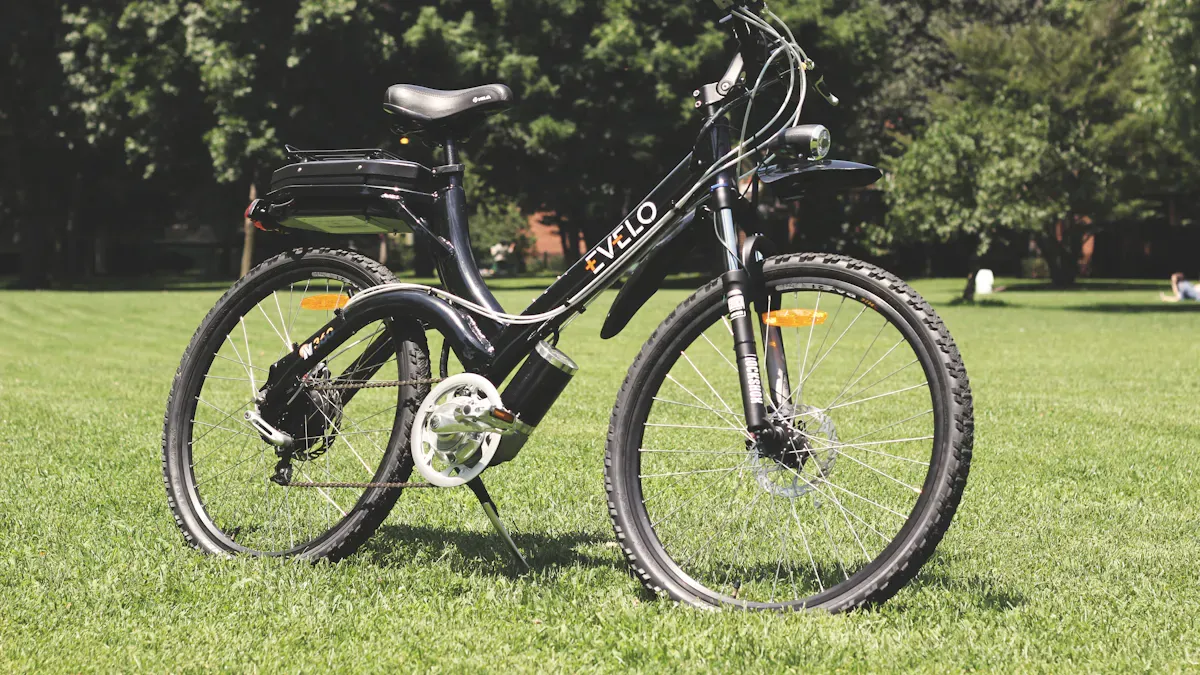
Do you want to know how an e-bike differs from a regular bicycle? The technology makes the biggest difference. An e-bike has an electric motor that supports you while pedaling. You can choose different support modes, for example, Eco for longer distances or Turbo (fast) for steep climbs. The battery powers the motor and lasts between 32 and 130 kilometers per charge, depending on the model. A regular bicycle relies entirely on your muscle power. There is no motor and no battery. The technology remains simple: chain, pedals, and brakes.
Feature |
E-bike |
Regular bicycle |
|---|---|---|
Motor support |
Yes, with electric motor |
No, completely manual |
Battery |
Present, powers the motor |
Not present |
Additional features |
Sensors, onboard computer, integrated lighting |
Simplicity with chain and brakes |
Tires |
Often larger balloon tires |
Standard tires |
Frame |
Sturdier, often for higher payload |
Standard frame |
Tip: An e-bike is particularly suitable if you want to tackle longer distances or many inclines.
Weight and handling
Weight plays an important role in everyday life. Due to the motor and battery, an e-bike usually weighs significantly more than a regular bicycle. You will notice this especially when carrying it up stairs or storing it in the basement. Regular bicycles are lighter and easier to lift or push. Handling on the road also differs. You often ride more relaxed with an e-bike because the motor supports you. You have to exert less effort, especially against headwinds or on hills. A regular bicycle requires more personal effort but gives you a more direct riding feel.
E-bikes often weigh between 20 and 28 kilograms.
Regular bicycles usually weigh between 10 and 16 kilograms.
You should consider the weight when choosing your bike, especially if you have to carry it often.
E-bike: Costs and maintenance
Purchase costs
Do you want to know how much a new bike costs? The prices vary greatly. You can get a simple city bike from 400 euros. A mountain bike starts at 500 euros. You pay at least 800 euros for a road bike. A cargo bike costs from 1,000 euros. If you decide on an e-bike, you have to invest more. Entry-level models start at 1,500 euros. For a good mid-range model, you pay between 2,500 and 4,000 euros. Premium models often cost over 5,000 euros.
Bike type |
Price range (€) |
|---|---|
City bike |
from 400 |
Mountain bike |
from 500 |
Road bike |
from 800 |
Cargo bike |
from 1,000 |
E-bike (entry-level) |
from 1,500 |
E-bike (mid-range) |
2,500 - 4,000 |
E-bike (premium) |
over 5,000 |
Running costs
In addition to the purchase price, there are other costs. With a regular bicycle, you pay for wear parts and an annual check-up. With an e-bike, there are battery replacements, motor maintenance, and electricity costs. A battery replacement costs about 400 to 900 euros every 3 to 5 years. Motor maintenance is between 50 and 200 euros. For charging, you pay about 30 cents per 100 kilometers. An inspection at a specialist shop is recommended once or twice a year.
Cost type |
E-bike |
Regular bicycle |
|---|---|---|
Battery replacement (3–5 years) |
400–900 € |
N/A |
Motor maintenance/firmware updates |
50–200 € periodically |
N/A |
Wear parts |
Faster wear |
50–200 €/year |
Annual check-up |
N/A |
50–120 € |
Charging costs |
approx. 30 cents per 100 km |
N/A |
Professional inspection |
Recommended 1–2x annually |
N/A |
Compared to a car or motorcycle, you save a lot of money. The total annual costs for an e-bike are about 175 euros. A small car like the Renault Twingo costs over 2,000 euros per year.
Category |
E-bike |
Car (Renault Twingo) |
|---|---|---|
Maintenance |
70 € |
400 € |
Electricity / Fuel costs |
4.50 € for 3,000 km |
935.20 € for 7,000 km |
Insurance |
100 € (theft protection) |
480 € (liability insurance) |
Tax |
– |
62 € |
Inspection (TÜV) |
– |
64 € |
Parking fees |
– |
65 € |
Total |
2,006.20 € |
Tip: With an e-bike, you travel cheaper in everyday life than with a car.
Depreciation
You should also consider depreciation. Cheap e-bikes lose up to 85% of their value after three years. Brand-name bikes lose 50 to 60%. Regular bicycles often retain their value for longer, especially with good care.
Type of bike |
Depreciation after 3 years |
|---|---|
Cheap e-bikes |
|
Brand-name bikes |
50-60% |
Conclusion: An e-bike costs more to purchase and maintain than a regular bicycle, but remains cheaper than a car.
E-bike or bicycle: Health
Training effect and exercise
Do you want to stay fit and are looking for an athletic activity? Both cycling and riding an e-bike provide many health benefits. Even moderate movement on a bike strengthens your cardiovascular system and improves your stamina. The most important effects are as follows:
You increase your heart rate and improve blood circulation.
With both bike types, you achieve a level of exertion that is sufficient for effective endurance training.
Intensive cycling increases the heart rate even more and brings additional benefits.
Regular cycling significantly lowers the risk of cardiovascular diseases.
A study by the Hannover Medical School shows: The health benefits of pedelecs are almost on par with those of conventional bicycles. The average heart rate of e-bikers was only slightly lower than that of regular cyclists. This constant exertion is ideal for base training.
You can even increase the training effect on an e-bike by reducing the support level or riding longer distances. This way, you train your heart and muscles without overexerting yourself.
According to a study by the Federal Ministry of Transport, regular riding lowers the risk of heart attack by up to 40 percent. The steady load strengthens the heart and is gentle on the joints.
Joint protection and support
Many people have problems with their joints or back. Cycling offers great advantages here. You relieve your joints because up to 80 percent of your body weight rests on the saddle. The movement remains steady and gentle.
E-bikes enable joint-friendly riding without peak loads.
Electric support helps you stay active even with pain or weakness.
You benefit from the moderate load, especially with osteoarthritis, knee problems, or back pain.
The upright sitting position strengthens your back muscles.
You strengthen your leg and core muscles, which further relieves the joints.
E-biking is also suitable for people with inflammatory diseases like arthritis. You can move without overstraining your joints. This way, you stay active and promote your health in a gentle way.
E-bike in everyday life
Range and speed
With an e-bike, you can plan your tours easily. You can cover distances between 32 and 130 kilometers per battery charge. You ride further in Eco mode; in Turbo (fast) mode, you reach your destination faster, but the battery lasts for a shorter time. Regular bicycles do not have a limit imposed by a battery. Your fitness, your nutrition, and your time determine how far you go. When riding uphill, the motor helps you so that you can master even steep routes without great effort. On long, flat paths, you are often just as fast with a regular bicycle, as long as you stay within the e-bike speed range.
Category |
E-bikes |
Regular bicycles |
|---|---|---|
Distance and range |
32–130 km per battery charge, depending on mode and route |
Dependent on your fitness, no battery limitations |
Terrain |
Motor assists on inclines and maintains cadence |
Particularly efficient on flat routes |
Areas of Use (City, Countryside, Commuting)
Do you use your bike for commuting, shopping, or excursions? Various types of e-bikes suit your daily routine:
Pedelecs reliably get you through city traffic.
E-trekking bikes offer comfort for longer distances and everyday errands.
SUV e-bikes are stable and comfortable, perfect for weekend trips.
E-cargo bikes transport children or groceries safely and eco-friendly.
E-bike Type |
Area of Use |
Advantages |
|---|---|---|
Pedelecs |
City, commuting |
Support in everyday life |
E-trekking bikes |
Everyday use, longer tours |
Comfort, long range |
SUV e-bikes |
Everyday use, leisure |
Stability, versatility |
E-cargo bikes |
Children, shopping |
High transport capacity, environmentally friendly |
Transport and Flexibility
Do you want to transport heavy groceries or your children? Transport and cargo e-bikes are made for this. They offer large transport boxes and carry up to 200 kilograms. You can safely take several children with you. Many models have rain covers, seat cushions, or special child seats. Dogs also have space. There are benefits for older people and individuals with health limitations: electrical assistance protects your joints and ensures steady movement. The upright seating position strengthens your back. This way, you stay mobile and active, no matter what your daily routine looks like.
Tip: With an e-bike, you can handle large shopping trips, take your children to daycare, or enjoy relaxing excursions—all without stress.
Environmental Friendliness
Energy Consumption and CO2
Do you want to know how environmentally friendly e-bikes and regular bicycles really are? Energy consumption differs significantly. When riding a normal bike, you burn more calories because you have no assistance. An e-bike takes some of the work off your hands. This is also reflected in the calorie consumption per hour:
Vehicle Type |
Calorie consumption per hour |
|---|---|
Bicycle |
400 to 600 kcal |
E-bike |
200 to 400 kcal |
You save energy with an e-bike, but also CO2. Compared to a car, the difference is huge. An e-bike emits only about 3 grams of CO2 per kilometer. An electric car comes to 53 grams per kilometer. If you regularly leave the car behind and use the e-bike instead, you can save a lot of CO2. Studies show that e-bikes prevent around 42,000 tons of CO2 annually in Germany. This corresponds to an energy saving of 681 terajoules.
Tip: Even taking short trips by e-bike instead of by car helps the environment.
Sustainability
Do you want to travel sustainably? Then you should know: A regular bicycle is always more environmentally friendly than an e-bike. The production of an e-bike requires more energy. Manufacturing the motor and battery uses additional raw materials. Battery production and the extraction of raw materials burden the environment. Recycling e-bike batteries is more complex than recycling bicycle parts. A regular bike is easier to recycle and requires fewer raw materials.
A bike without a motor is the most sustainable.
E-bike production requires more energy.
Batteries and electronics make recycling more difficult.
Raw material extraction for batteries burdens the environment.
If you prioritize maximum sustainability, a normal bike is the best choice. However, an e-bike remains an eco-friendly alternative to a car.
Maintenance and Technology
Maintenance Requirements
Do you want to know how much time and money you should budget for maintenance? E-bikes require more care than normal bicycles. The reason lies in the technology. You not only have to check the chain and brakes but also the motor, electronics, and software. Repair shops often perform special checks and updates. This costs more time and money. Normal bikes get by with a simple inspection. You occasionally change the brake pads, oil the chain, and check the tires.
Here is an overview of the differences:
Aspect |
E-bike |
Normal Bicycle |
|---|---|---|
Maintenance effort |
Higher, due to software updates and checks |
Lower, standard maintenance |
Material costs |
Higher, special parts required |
Lower, standard parts |
Average costs |
Base costs |
Tip: Plan for regular workshop visits for an e-bike. This keeps your bike safe and reliable.
Spare Parts and Service
Will you eventually need new parts for your bike? With e-bikes, the selection of spare parts is larger, but not always simple. Branded e-bikes offer you good supply. You can find suitable parts and trained workshops almost everywhere. No-name e-bikes make it difficult for you. Many workshops refuse repairs because they cannot get suitable parts. Motors from the Far East in particular often cause problems. If the motor breaks, you will rarely find help.
You should avoid no-name motors from the Far East. Spare parts are difficult to get.
Normal bikes can be repaired almost anywhere. Parts are cheap and available.
Note: Rely on well-known brands if you want to enjoy your e-bike for a long time. This saves you trouble and costs.
Legal and Safety
Traffic Rules
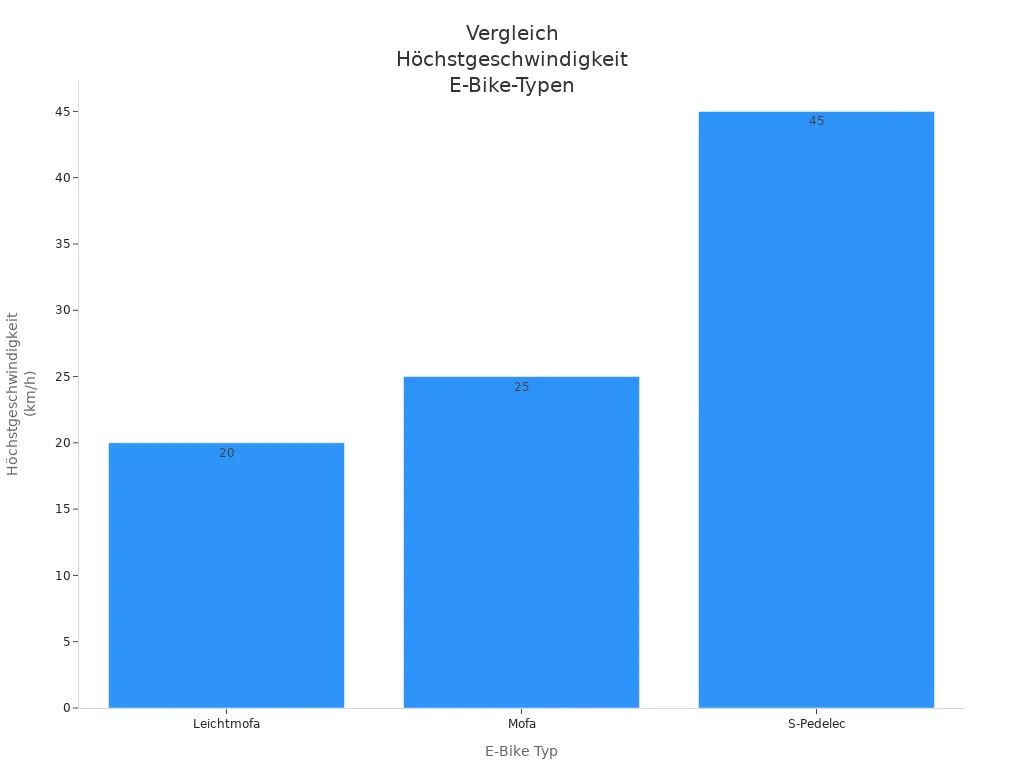
You must observe various rules when riding an e-bike or bicycle. Pedelecs are legally considered bicycles. You do not need a driver's license or a helmet. You may use bike lanes and there is no age restriction. E-bikes that run without pedal assistance are considered light mopeds. For these models, you need a moped test certificate. You must use the road and may not ride on bike lanes. S-pedelecs reach up to 45 km/h. You need a Class M driver's license and must wear a helmet. You may only use bike lanes if they are expressly designated for them.
E-bike Type |
Maximum Speed |
Requirements |
Helmet requirement |
Use of bike lanes |
|---|---|---|---|---|
Light moped |
20 km/h |
Moped certificate, minimum age 15, insurance license plate |
No |
No |
Moped |
25 km/h |
Moped certificate, minimum age 15, insurance license plate |
Yes |
Yes |
S-Pedelec |
45 km/h |
Class M driver's license, minimum age 16 |
Yes |
Only if authorized |
Tip: Check before every ride whether your e-bike is permitted on bike lanes and whether you must wear a helmet.
Insurance and Safety
You are usually covered by your private liability insurance when riding a pedelec up to 25 km/h. You do not need special insurance. For S-pedelecs up to 45 km/h, liability insurance is mandatory. You need an insurance license plate. Comprehensive insurance additionally protects your e-bike against theft and damage. Many insurance companies offer comprehensive bicycle protection as an add-on to household insurance. You receive protection against theft, accident damage, breakdowns, and vandalism.
Pedelecs up to 25 km/h: no mandatory insurance, private liability is sufficient.
S-pedelecs up to 45 km/h: liability insurance and insurance license plate are mandatory.
Comprehensive insurance: recommended for theft, accident damage, and breakdowns.
Bicycle comprehensive insurance: also protects against technical defects and vandalism.
Accident statistics show that e-bike riders cover longer distances on average. The accident risk increases with usage. 67% of killed pedelec users were 65 years or older. You should ride especially cautiously if you are older or planning longer trips.
Year |
Bicyclists killed |
Pedelec users killed |
|---|---|---|
2015 |
383 |
36 |
2025 |
462 |
217 |
Note: Ride defensively and use safety equipment to reduce the risk of accidents. A helmet protects you regardless of the bike type.
Who Is an E-bike Worth It For?
Target Groups Overview
Are you wondering if an e-bike fits your daily routine? Various groups benefit particularly from electrical assistance. Usage patterns show clear differences between age groups and life situations. The following table gives you an overview:
Age Group |
Usage Pattern |
|---|---|
Average age |
|
Pensioners |
Almost a quarter of e-bike owners |
Over 65 years |
Usage for bicycle tours in the foreground |
Working age |
Most frequent use for commuting to work |
Both groups |
Primarily for shopping trips and leisure activities |
You see, older people like using the e-bike for excursions and tours. Professionals ride them to work and run errands. Many seniors appreciate the motor power because they can manage longer distances without great effort. Commuters prioritize high battery life so they can reliably get to work. Athletes value performance and sportiness to optimize their training.
Needs differ depending on the group:
Group |
Needs |
|---|---|
Commuters |
Value sufficient battery life |
Seniors |
Focus on motor power |
Athletes |
Demands on performance and sportiness |
You can classify yourself and check which requirements are important for you.
Decision Aid
Do you want to make a clear decision? Experts recommend considering various criteria. The following table shows you the most important factors:
Criterion |
Description |
|---|---|
Depends on whether you are commuting, enjoying leisure time, or are athletically active. |
|
Terrain |
Flat terrain or many inclines influence the choice. |
Budget |
E-bikes cost more than regular bicycles. |
Weight |
E-bikes are heavier, which can be a disadvantage when carrying them. |
Maintenance |
Electrical components require more care. |
Personal preferences |
Do you want less exertion or more fitness? |
You should also consider your annual mileage. E-bike users ride an average of 2,600 kilometers per year. Car drivers cover about 10,000 kilometers. With an e-bike, you can cover many everyday trips while saving costs and CO2.
Means of transport |
Average annual mileage |
|---|---|
E-bike |
2600 km |
Car |
10,000 km |
Financial subsidies make it easier to get started. Many cities and municipalities offer grants for the purchase of e-bikes. Electric cargo bikes, in particular, are subsidized with several hundred to over a thousand euros. Companies receive up to 2,500 euros for commercially used cargo bikes. Some municipal utilities or energy suppliers pay an average of 100 euros toward the purchase of an e-bike. Targeted online research will help you find local programs. If you use the e-bike as a company vehicle, you can deduct the costs from your taxes.
Many cities and municipalities have their own subsidy programs.
Electric cargo bikes are subsidized particularly frequently.
Companies benefit from high subsidies.
Municipal utilities often offer small bonuses upon purchase.
Health insurance companies only subsidize purchases in specific medical cases.
Tip: Check the subsidy options in your region. You can save hard cash and make the switch easier.
You should analyze your personal preferences and your everyday life. Consider whether you regularly travel long distances, have to overcome inclines, or value comfort. An e-bike is worth it for you if you are looking for support, cover many kilometers, or have health restrictions. For athletic activities and short trips, a regular bicycle remains the best choice.
You have now learned the most important differences between an e-bike and a bicycle. An e-bike offers you comfort and support; a normal bicycle scores points for low weight and low costs. Before making your decision, consider:
Check the distance of your daily trips.
Choose the right motor for your needs.
Pay attention to battery capacity and charging options.
Think about your usage profile, for example, commuting or touring.
Reflect on your wishes and decide what fits your everyday life.
FAQ
How long does an e-bike battery last?
Battery life varies depending on the model and usage. On average, a battery lasts 3 to 5 years. The range per charge is usually between 32 and 130 kilometers, depending on the assistance level and terrain.
Do I need a driver's license for an e-bike?
For pedelecs up to 25 km/h, you do not need a driver's license. S-pedelecs with speeds up to 45 km/h require a class M driver's license and insurance. Check the legal requirements before purchasing.
How often do I need to have my e-bike serviced?
You should have your e-bike checked by a specialist dealer at least once a year. The motor, battery, and electronics need regular inspection. Normal bicycles require less maintenance; an annual inspection is usually sufficient.
Is riding an e-bike safer than riding a normal bicycle?
E-bikes provide support, reduce fatigue, and help with inclines. This can increase safety. Older riders should be particularly careful, as higher speeds can increase the risk of accidents.