
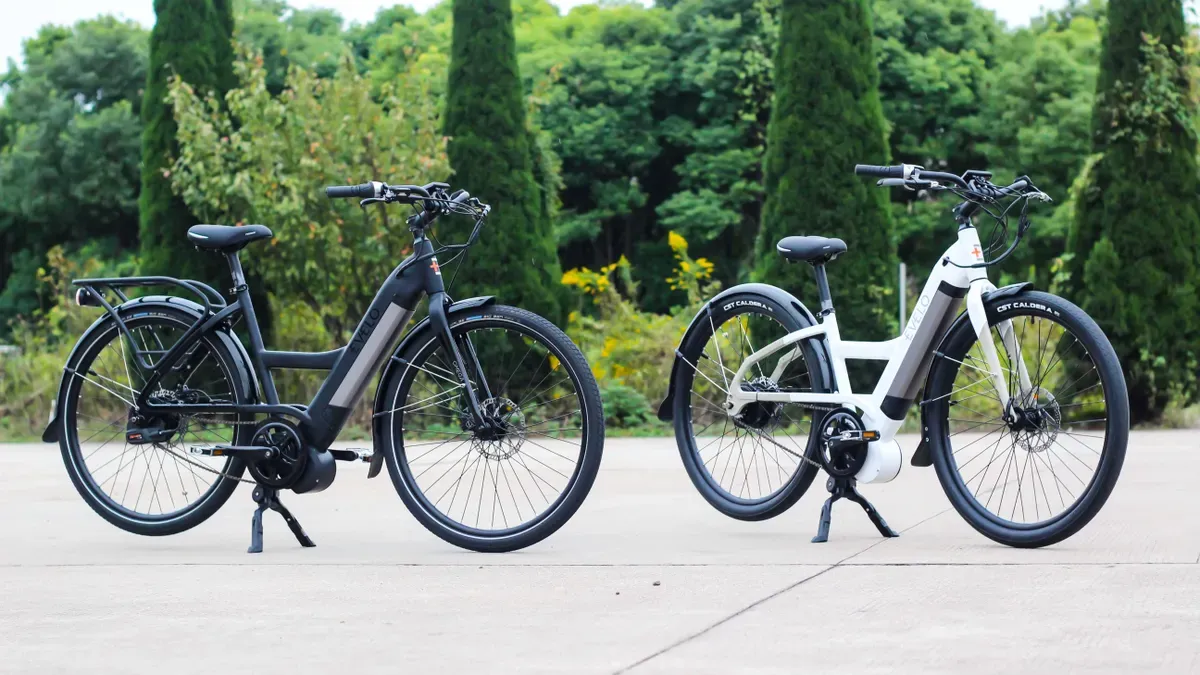
Which bike is really right for you? An e-bike is particularly worthwhile if you commute to work daily, conquer steep climbs, or ride long distances against headwinds. Are you looking for an affordable model, do you love minimalism, or do you want to boost your fitness? Then the classic bicycle remains your best choice.
Market insights clearly confirm this shift:
Bike type |
Market share (2025) |
|---|---|
E-bikes |
53% |
Conventional bicycles |
47% |
Key insights
E-bikes make daily commuting easier and master steep climbs effortlessly.
Classic bicycles save money and offer the best training for your fitness.
As a car replacement, an e-bike saves over a thousand euros annually in fuel and maintenance.
E-bikes weigh significantly more and entail higher costs for batteries and maintenance.
A test ride at a specialist retailer will help you choose the right model.
Purchase criteria in comparison
Which bike meets your needs? We compare the most important criteria for you.
Acquisition and operating costs
Charging an e-bike costs only about 25 cents per 100 kilometers. Nevertheless, the running costs are higher than those of a normal bicycle.
Bike type |
Cost category |
Estimated cost |
Notes |
|---|---|---|---|
Electric bike |
Battery replacement |
€400 – €900 |
Necessary every 3–5 years |
Electric bike |
Motor maintenance |
€50 – €200 |
Regularly at a specialist shop |
Normal bicycle |
Wear parts |
€50 – €200 / year |
Chain, tires, and brake pads |
Normal bicycle |
Annual check-up |
€50 – €120 / year |
Regular inspection |
Weight and transport in everyday life
Classic city bikes usually weigh 12 to 15 kg. Electric bikes, on the other hand, often weigh 22 to 25 kg. This high weight makes it significantly more difficult to carry them up stairs. There are also clear rules on trains:
You need a firm seat reservation for long-distance travel.
The tire width must be a maximum of 60 mm.
Range and battery independence
A 500 Wh battery provides you with a range of about 70 to 100 kilometers in practice. Once the battery is empty, pedaling becomes noticeably harder. The high weight of the e-bike and the slight pedaling resistance of the motor then require more muscle power.
Fitness and health benefits
The normal bicycle burns more calories because you pedal without assistance.
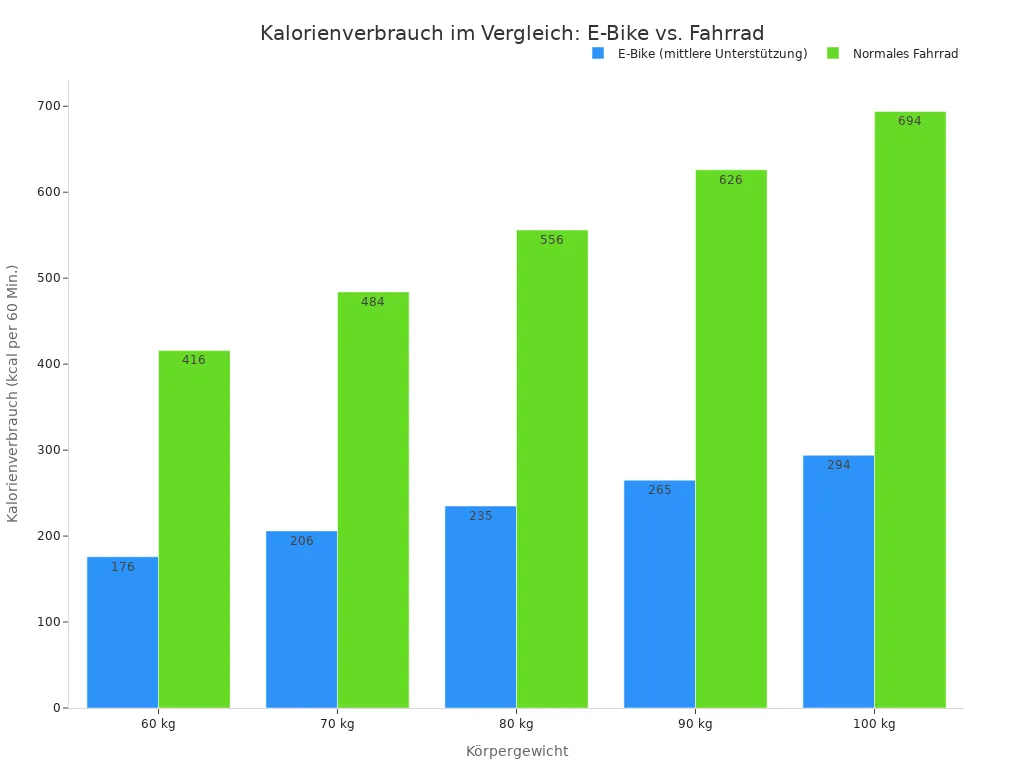
Nevertheless, the motorized version also strengthens your health. The strain on your cardiovascular system remains effective. Especially for people who are overweight, have joint problems, or chronic illnesses, the motor makes starting regular exercise easier.
The right bike type for your everyday life
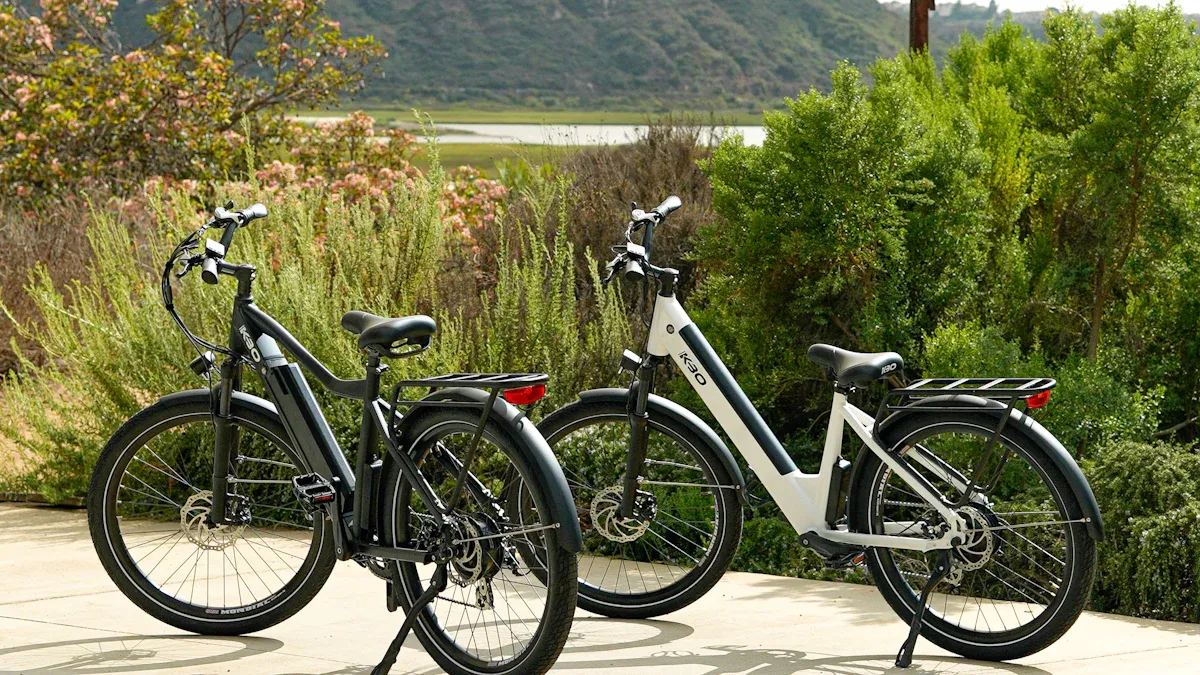
Daily commuting in city traffic
Master heavy commuter traffic without stress! A suitable electric city bike will get you to your destination safely and relaxed. In stop-and-go traffic, you benefit from key advantages:
Quick start: You accelerate effortlessly and quickly at traffic light stops.
Increased reactivity: Precise handling makes it easier to perform evasive maneuvers on busy streets.
Better overview: The upright seating position improves your view of traffic.
Ergonomic stopping: Step-through frames allow for easy and safe foot placement when stopping.
Complete safety equipment: Standard compliance with road traffic regulations guarantees proper lighting in road traffic.
Tours with climbs and headwinds
Long excursions are simply more fun with full support. Are you planning many rides on mountainous routes?
For rides with steep inclines, mid-drive motors are most suitable. They provide the highest torque and offer optimal performance, especially in mountainous terrain, as well as for e-mountain bikes, trekking bikes, and cargo e-bikes. In contrast, rear hub motors reach their limits on long climbs due to the risk of overheating and decreasing efficiency, while front motors are unsuitable for inclines due to loss of traction.
Sporty use on trails and gravel
Away from paved roads, many riders seek sporty adventure. An e-bike opens up completely new possibilities on natural paths, but also requires some getting used to.
Category |
Advantages of e-MTBs |
Disadvantages of e-MTBs |
|---|---|---|
Riding dynamics & trails |
• Allows for riding technical uphill trails. |
• High weight (24–26+ kg) makes maneuvering in tricky trail passages difficult. |
Motivation & experience |
• New challenges on uphill sections. |
• Loss of maximum sporty challenge and the deep sense of achievement on extreme climbing sections. |
Handling off the trail |
• Higher range for tours. |
• Difficult to carry (e.g., into the basement or car). |
When is an e-bike worth it as a car replacement?
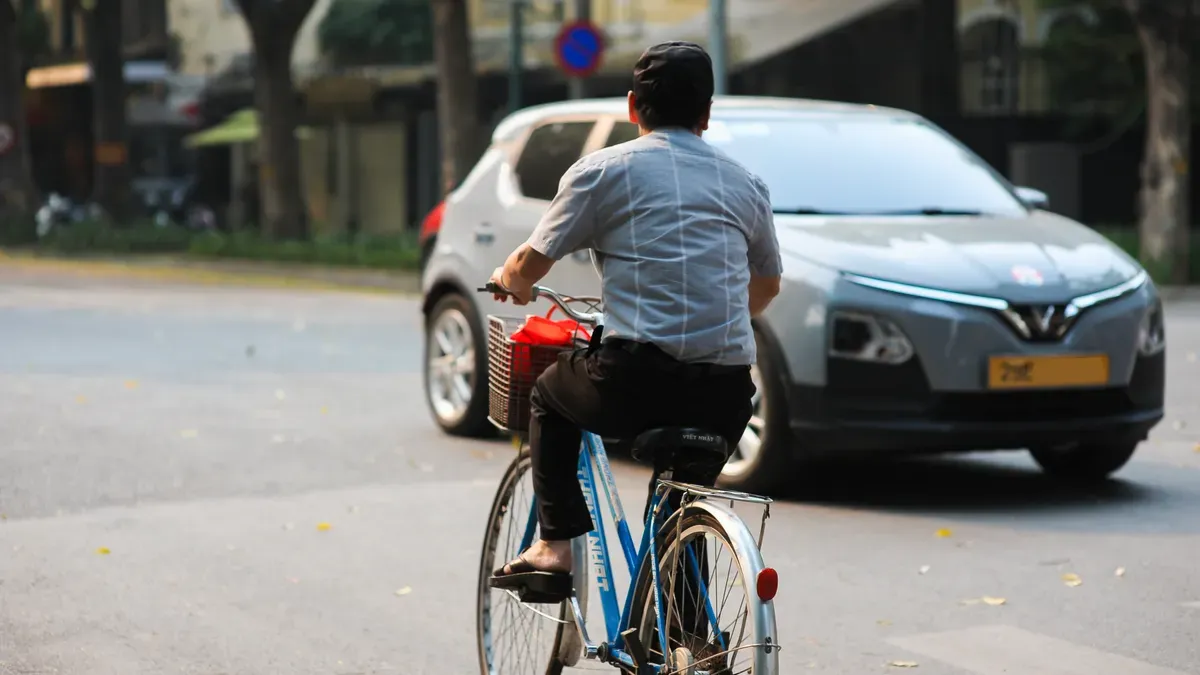
Own a car costs you a lot of money every month. At first glance, buying an e-bike may seem expensive. But for short distances, you save tangible cash after just a few months and relieve the environment.
Savings on fuel and maintenance
Leave your car in the garage more often for daily errands. This will drastically reduce your ongoing operating costs. The direct cost comparison shows your significant annual savings:
Cost category |
Car (per year) |
E-bike (per year) |
Annual savings |
|---|---|---|---|
Energy / Fuel |
€900 |
€20 |
€880 |
Maintenance & repair |
€1,020 |
€200 |
€820 |
Total costs |
€1,920 |
€220 |
€1,700 |
You not only save money, but you also reduce your ecological footprint:
CO₂ emissions of combustion engines: A normal car produces around 154 grams of CO₂ per passenger kilometer.
CO₂ emissions of an electric vehicle: With an electric bike, you only cause 5 to 14 grams of CO₂ per kilometer.
Savings during commuting: With a 30-kilometer round trip, you save almost a full ton of greenhouse gases per year.
Lifespan of battery and motor
Factor in potential future costs realistically from the start. Modern lithium-ion batteries last for about 500 to 1,000 charging cycles with good care. You can easily use the bike for many years with that.
Important for your financial planning: Eventually, every battery's capacity will decrease. You will pay about 400 to 900 euros for a new replacement battery. Repairing or completely replacing the motor costs between 600 and 1,300 euros.
Despite these occasional expenses, giving up the car is extremely cost-effective for you very quickly.
Decision matrix for your choice
You are faced with the choice between two suitable companions. Both variants offer great advantages for your everyday life. We will help you with your final decision.
Checklist for the purchase
Clarify your personal needs before a test ride. Answer simple questions about your intended use and transport needs:
Area of use: How often do you ride short distances in the city or long tours?
Living situation: Can you conveniently charge the battery in your apartment?
Health: Are you looking for maximum physical fitness or gentle support?
Budget: Which purchase price and ongoing costs suit you?
Pay attention to important technical details when testing:
Component |
What you should check |
|---|---|
Drive & motor |
Does the power suit flat paths or inclines? |
Controls |
Is the display easy to use and easy to read? |
Braking system |
Do the brakes react quickly and reliably? |
Weight |
Is the bike easy to push and carry? |
Advantages and disadvantages at a glance
Compare the most important points directly:
Criterion |
E-bike |
Normal bicycle |
|---|---|---|
Effort & Speed |
Faster progress against headwinds and on inclines |
Requires full physical exertion |
Costs |
Higher purchase price and more expensive maintenance |
Very affordable to purchase and maintain |
Weight & Handling |
Heavier weight due to battery and motor |
Lightweight and easy to handle |
Fitness Factor |
Gentle workout for joints and heart |
Maximum boost to muscle strength and stamina |
Our tip for you: Be sure to take a test ride on both types at a local dealer. Which riding experience instantly puts a smile on your face? Test how it handles on a hill and how it feels when stationary. This is the best way to ensure you find your perfect companion!
Your choice depends entirely on your personal goals! 🚲
A regular bicycle is a perfect fit for active, sporty individuals, casual cyclists, students, and minimalists. You save a lot of money and remain completely independent of charging times.
An e-bike provides ideal support for long distances, steep climbs, or daily commutes in city traffic.
Our advice: Test both variants directly at a specialized dealer! During your test ride, pay close attention to ergonomics, motor performance, brakes, and steering behavior. This way, you will feel immediately which bike fits your daily life.
FAQ
How long does an e-bike battery last?
An e-bike battery typically lasts for 500 to 1,000 charge cycles. This corresponds to about four to five years of regular use. Good maintenance noticeably extends its lifespan. It is best to always charge the battery at room temperature.
Can I ride an e-bike without a driver's license?
For a standard pedelec up to 25 km/h, you do not need a driver's license. There is also no legal requirement to wear a helmet. The situation is different for fast S-pedelecs up to 45 km/h. For these, you need at least a class AM driver's license.
How much more expensive is an e-bike compared to a regular bicycle?
Good bicycles start at around 500 euros. For a high-quality e-bike, however, you will pay at least 2,000 euros. However, the higher investment pays off quickly if you use the e-bike as a car replacement.
How much does it cost to charge an e-bike battery?
Savings tip: Charging via a power outlet is extremely cheap! A full charge currently costs you only about 20 to 30 cents. With that, you can comfortably travel up to 100 kilometers.