
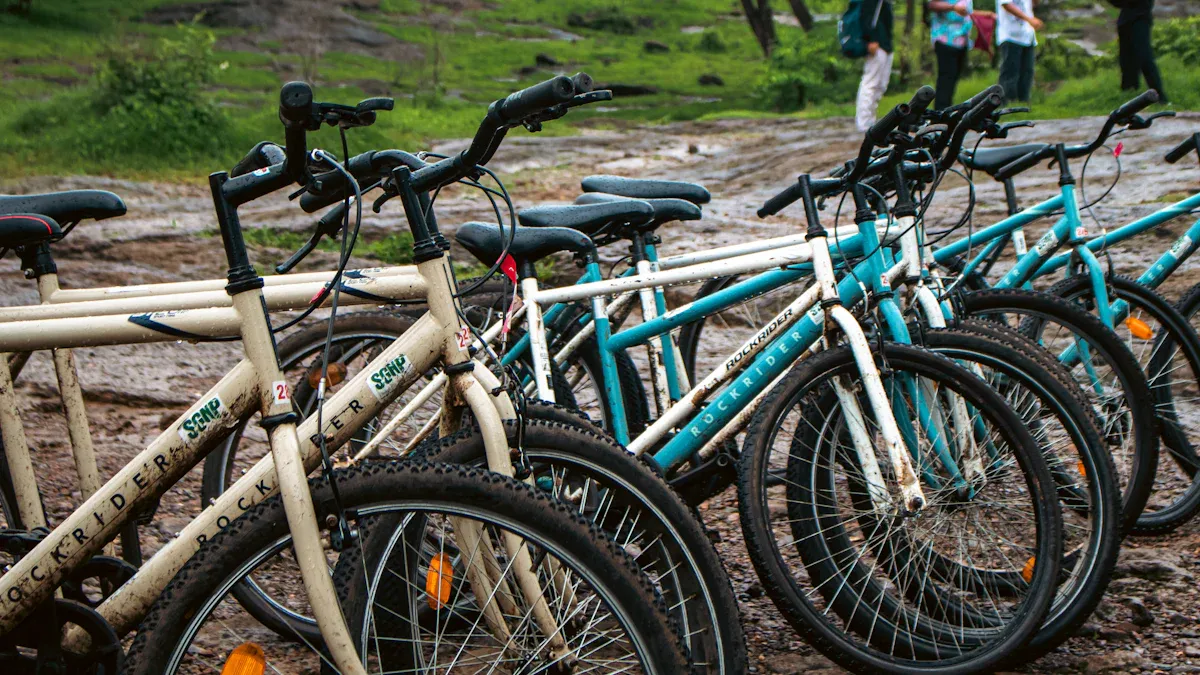
Are you planning your first e-bike trekking tour? Many beginners ask themselves questions like: Which e-bike is right for me? Which route is suitable? You might be wondering how to find accommodations or what you should eat on the go. Uncertainties often arise:
Route planning
Accommodation options
Food and drinks during the tour
Necessary equipment and preparation for longer distances
With a little courage and good planning, you can safely embark on your adventure.
Key Takeaways
Choose a suitable route with daily distances of 20 to 30 kilometers for relaxed riding.
Prepare physically by riding regularly and increasing your stamina.
Thoroughly check your e-bike before the tour to ensure safety and riding enjoyment.
Pack only the essentials and use a good packing list to keep your luggage light.
Plan regular breaks to avoid exhaustion and to enjoy nature.
Choosing a Route
Route length and stages
You want to plan your first e-bike trekking tour. The right route length plays a major role. For beginners, a daily distance between 20 and 30 kilometers is recommended. This allows you to ride in a relaxed manner and have enough time for breaks. The following table shows you approximately how long you will be on the road:
Category |
Daily distance (km) |
Duration (hours) |
Speed (km/h) |
|---|---|---|---|
Beginner |
20-30 |
4-6 |
5 |
Plan your tour in manageable stages. You can take a break and recover after each stage. This keeps your motivation high and ensures you enjoy the ride.
Route characteristics
The nature of the route is important for your safety and riding enjoyment. Trekking e-bikes are suitable for longer tours. You can also use them to travel on unpaved paths and gentle terrain. Look out for the following features:
Wide tires with a strong tread
Sturdy frame with special geometry
Good suspension with long travel
Strong brakes
High-performance battery
Derailleur gears
You can find plenty of information about trail conditions in navigation apps like Outdooractive and Komoot. Bikemap shows you busy routes and offers offline use. Travel guides like bikeline or KOMPASS provide you with detailed tour descriptions. Many cycling paths run on asphalt and away from traffic. Within towns, you sometimes share the path with cars.
Tip: Find out about the route in advance. This way, you avoid unpleasant surprises and can enjoy the tour better.
Sights
You can make your e-bike trekking tour special by planning to see sights along the way. Along popular routes in Germany, you will find many highlights:
Meißen: Porcelain and the Old Town
Wittenberg: Historic buildings
Dessau: Bauhaus and modern architecture
Hamburg: Port city and Elbphilharmonie
Burg Prunn: Medieval castle
Eichstätt: Baroque architecture
Solnhofen: Fossil finds
Konstanz: City on Lake Constance
Mainau: Flower island
Romantic vineyards: Wine tastings
Imposing castles: Castles on the Rhine
You can also incorporate leisure activities like swimming pool visits. The combination of nature, culture, and sport increases your motivation and makes the tour varied.
Navigation
There are many digital tools available for navigation on your e-bike trekking tour. The most popular apps are:
komoot: Outdoor navigation app with data exchange
Outdooractive: Tour portal for quality routes
Locus Map: Many features, including offline
Naviki: Cycling routes and bicycle POIs
You can also use GPS bike computers or outdoor GPS devices. The following table shows you the pros and cons:
Type of navigation |
Pros |
Cons |
|---|---|---|
Mobile app |
Inexpensive, intuitive, offline navigation possible |
High power consumption, lack of weather protection |
GPS bike computer |
Better readability, longer battery life, more robust |
More expensive, less flexible to operate |
Outdoor GPS device |
Robust, often with special outdoor features |
Clunky operation, limited routing features |
Note: Fully charge your devices before the tour. Take a power bank with you so that you have enough power on the go.
Preparation
Basic fitness and training
Even if you are traveling by e-bike, your basic fitness plays an important role. You benefit from increased stamina and can manage longer distances more easily. E-bikes help you get moving, even if you are not very athletic. They offer you a gentle start, protect your joints, and increase your fitness.
E-bikes motivate you to ride regularly.
Especially after a break, this helps you get back into the sport.
Start with short rides in your local area. Increase the length and speed slowly. This way, you get used to the bike and strengthen your muscles.
Weather and season
The weather strongly influences your e-bike trekking tour. Check the weather forecast before starting. It is best to plan your tour early in the morning or in the evening to avoid the heat. Take weather warnings seriously, as thunderstorms or heavy rain can be dangerous.
App name |
Features |
|---|---|
Personalized forecasts for your route and speed. |
|
WarnWetter App |
Precise weather warnings, location-based forecasts, UV radiation, precipitation radar. |
Windy |
Many weather models, fast updates, comprehensive data for cyclists. |
With the right clothing, you protect yourself against wind, rain, and sun. A rain jacket, breathable shirts, and headgear should always be in your luggage.
Food and accommodation
Regular drinking is important on every tour. Drink about 150 to 250 ml every 15 to 20 minutes. Still mineral water or diluted fruit juices are particularly suitable.
Energy-dense foods like oatmeal, couscous, or freeze-dried trekking meals give you strength.
A mixture of one part juice and two parts water is isotonic and gentle on your stomach.
For overnight stays, you will find many options along popular routes:
Type of accommodation |
Advantages for cyclists |
|---|---|
Holiday apartments |
Plenty of space, opportunity to dry clothes, secure bike storage |
Hotels/guesthouses |
Bike-friendly, repair tools, charging options for e-bikes |
Glamping sites |
Extraordinary stay, ideal for longer visits |
Plan your breaks and accommodations in advance. This way, you can enjoy your e-bike trekking tour in a relaxed and safe manner.
Equipment
E-bike check
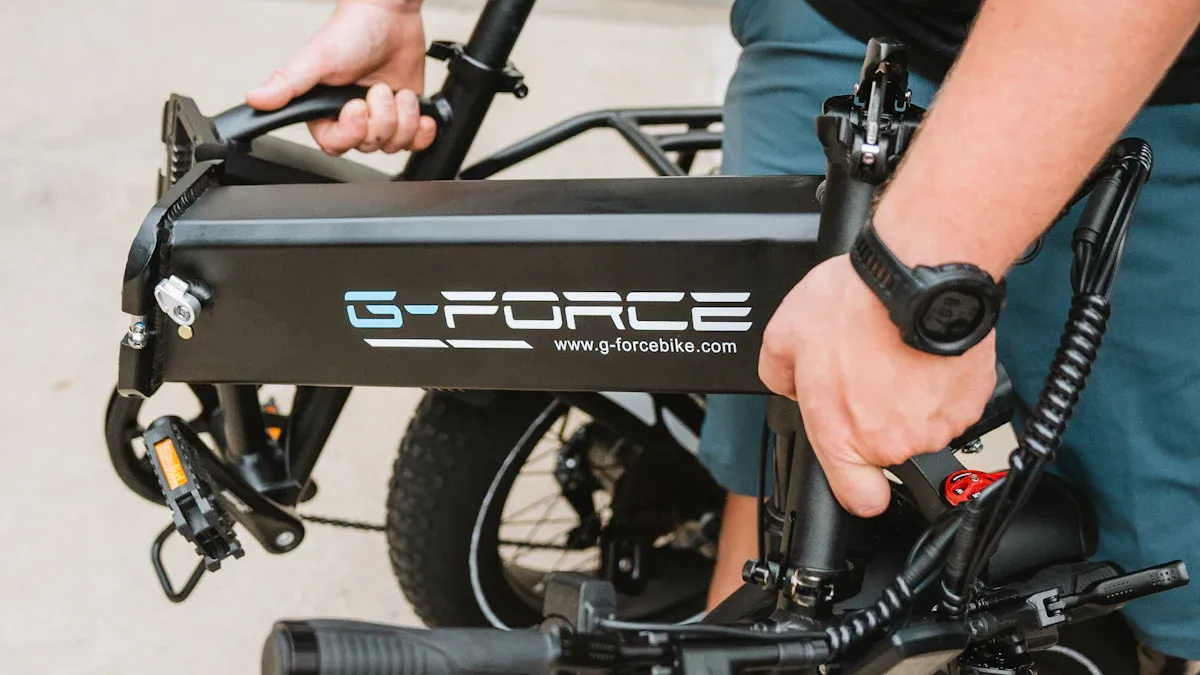
Before you start your tour, you should thoroughly check your e-bike. A well-maintained bike ensures safety and riding pleasure. Clean the chain and oil it regularly, especially after riding in bad weather. Check the frame and components for cracks, rust, or corrosion. Test the brakes: they must function reliably and must not make any unusual noises. Check the tire pressure to avoid punctures and ensure good grip. Measure the chain length, as a worn chain can quickly cause problems. Ensure that the battery is properly locked in and fully charged. Test the lighting system so that you are safe in the dark.
Tip: E-bikes are often used more intensively than standard bicycles. Therefore, you should take maintenance seriously and do a quick technical check before every longer e-bike trekking tour.
Safety equipment
Safety always comes first. A suitable helmet protects your head in the event of a fall and can save lives in an emergency. Accident statistics show: without a helmet, the risk of serious head injuries is significantly higher.
Criterion |
E-bike rider without helmet |
E-bike rider with helmet |
|---|---|---|
Probability of brain hemorrhage |
Lower |
|
Risk of subdural hematoma |
13 times higher |
Lower |
Frequency of traumatic brain injuries |
Higher |
Lower |
In addition to the helmet, you need a reliable front and rear light so that you are clearly visible in all weather and at all times of day. Efficient mudguards protect you from wetness and dirt. A high-quality bicycle lock prevents your e-bike from being stolen. A first-aid kit should always be in your luggage so you can treat minor injuries immediately. A suspension seat post and a suspension fork increase comfort and protect your spine on uneven paths.
Cycling clothing
The right clothing makes your tour comfortable and safe. Breathable materials ensure good ventilation and prevent you from sweating too much. Water-repellent properties keep you dry in the rain. Elastic fabrics offer you freedom of movement and adapt to your body. A well-padded cycling short protects you from pressure points. Multiple thin layers keep you warm without restricting you. In cold and rain, it is best to wear functional underwear, a brushed cycling jersey, thermal cycling pants, and a wind- or waterproof jacket. For changeable weather, a light windbreaker is better than a heavy jacket.
Weather conditions |
Recommended clothing |
Notes |
|---|---|---|
Cold and rain |
Breathable functional underwear, brushed cycling jersey, thermal cycling pants, wind- or waterproof jacket |
Use multiple layers instead of one thick jacket |
General |
Well-padded cycling shorts, warming layers, rain gear |
Dress slightly warmer than for normal cycling |
Tip: Freedom of movement is important. Make sure your clothing is not too tight and does not restrict you while riding.
Packing list
A good packing list helps you not to forget anything and to keep luggage weight low. Think carefully about what you really need. Weigh every item you want to pack. Share equipment with your tour partner to save weight. Choose a smaller backpack so that you only take the essentials with you. Multifunctional equipment saves space and weight. Plan in advance where you can buy water and food. That way, you have to carry less with you.
Here you will find the most important things for your e-bike trekking tour:
Your bike – well-maintained and checked
Helmet – for your safety
Bicycle lights – for visibility in any weather
Bicycle tools and repair kit – for minor breakdowns
Weatherproof jacket and trousers – protection from rain and wind
Water bottles or hydration system – for sufficient fluid intake
Snacks like energy bars – for quick energy
First-aid kit – for minor injuries
Map or GPS – for navigation
Personal items – mobile phone, money, ID
Tip: Use an ultralight, waterproof liner instead of a heavy rain cover. Pack quick-drying clothing with odor-neutralizing properties. This allows you to wash on the go and stay fresh.
With the right equipment, you are prepared for any situation. A sturdy e-bike with heavy-duty wheels and multiple attachment points ensures comfort and safety. Functional and stylish clothing protects you in any weather. Gloves provide you with grip and protect your hands. Bright and reliable lighting makes you visible day and night. This makes your e-bike trekking tour safe and comfortable.
Tips for e-bike trekking
Breaks and recovery
You should take regular breaks so that your body can recover. Experts recommend taking a short break every 60 to 90 minutes. This prevents fatigue and muscle tension.
You can stretch briefly or walk a few steps.
Drink something and eat a small snack.
Use the break to enjoy the view or take photos.
Tip: Listen to your body. If you get tired, treat yourself to a break, even if the time is not yet up.
Sustainability
Traveling by bike protects the environment. You do not use fossil fuels and lower CO2 emissions. Especially on a tour through the Alps, you protect nature and leave fewer traces.
Here you can see how different modes of transport reduce the burden on the environment:
Mode of transport |
Environmental benefit |
|---|---|
Bike rental |
Saves resources and reduces emissions |
E-bike in hills |
Enables longer distances without a car |
Walking in cities |
No energy consumption, no exhaust fumes |
You can also avoid waste on the go by using reusable bottles and containers. Stay on the trails to protect plants and animals.
Sharing experiences
After your tour, you can share your experiences with others. This brings many advantages:
You strengthen the community and find new friends.
Shared adventures bond and create beautiful memories.
You motivate others to become active themselves.
The exchange helps you to discover new routes and get tips.
Tip: Share your experiences on social networks or in cycling groups. This way you inspire others and get new ideas for your next tour yourself.
Choose a suitable route and plan your stages.
Prepare yourself with training and appropriate clothing.
Check your e-bike and pack only the essentials.
Pay attention to breaks, sustainability and share your experiences.
Start your planning now! With good preparation and the right equipment, you can experience a real adventure. Your first e-bike trekking tour is waiting for you – take the first step and enjoy the freedom on two wheels! 🚴♂️
FAQ
How long does the battery last on an e-bike trekking tour?
The range depends on the terrain, riding style, and battery capacity. You can usually ride between 60 and 120 kilometers. Charge the battery fully before the tour. Take a charger with you if you want to recharge on the go.
Do I have to insure my e-bike before the tour?
Insurance protects you against theft and damage. You can take out special e-bike insurance. Check whether your home contents insurance covers the e-bike. A high-quality lock increases security.
Which apps help me with navigation?
You will find many helpful apps. Komoot, Outdooractive, and Naviki offer you maps, tour suggestions, and offline navigation. You can save your route and access it on the go. A power bank ensures enough power.
What do I do in case of a breakdown on the go?
You should always have a small repair kit with you. With a multi-tool, spare tube, and air pump, you can solve many problems yourself.
Tip: Practice changing a tire before your tour.