
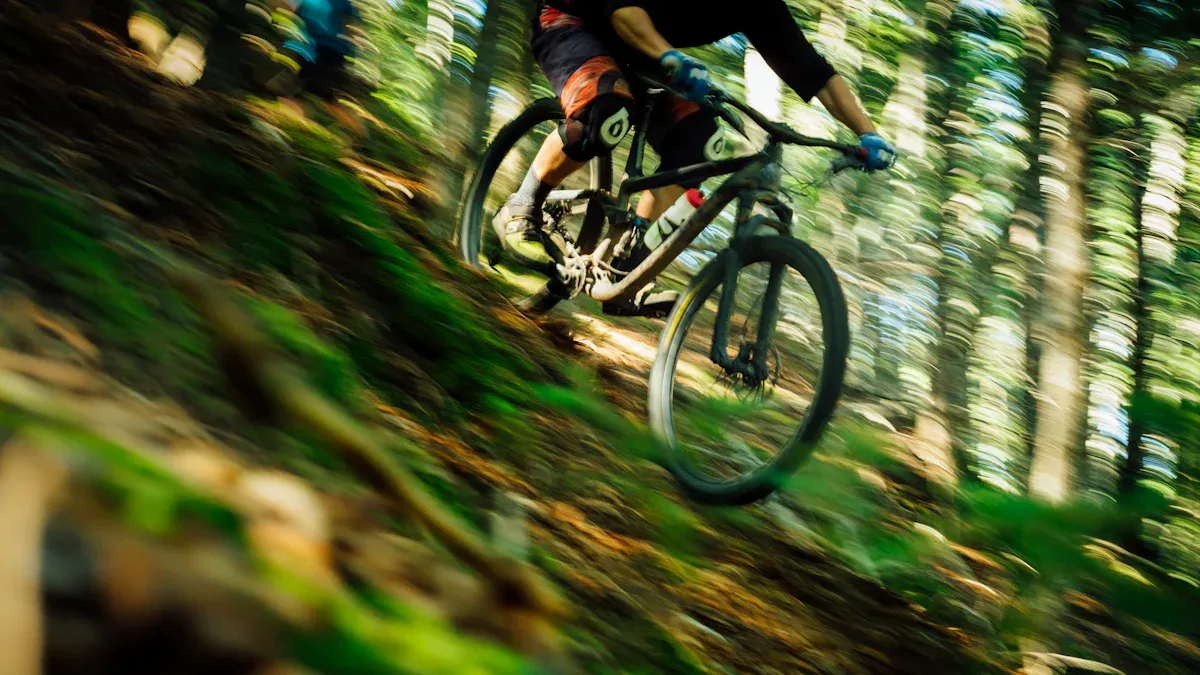
With e-bike trekking, you will experience a new way of cycling. Electric assistance helps you master longer distances and handle hilly paths with ease. You enjoy greater comfort and can explore various terrains. Modern technology ensures a greater range and fast travel. In this way, you can discover new adventures, stay flexible, and do something for the environment at the same time.
Key Findings
E-bike trekking enables longer distances and easier climbs through electric assistance. This keeps cycling relaxed and pleasant.
Choosing the right e-bike model is crucial. Consider your riding habits and the terrain to find the perfect model.
Careful route planning is important. Pay attention to battery range and elevation profiles to avoid unpleasant surprises.
Safety is the top priority. Always wear a helmet and ensure you have the legally required safety equipment.
Regular maintenance and care of your e-bike will extend its lifespan and ensure a safe riding experience.
E-Bike Trekking Overview
What is E-Bike Trekking?
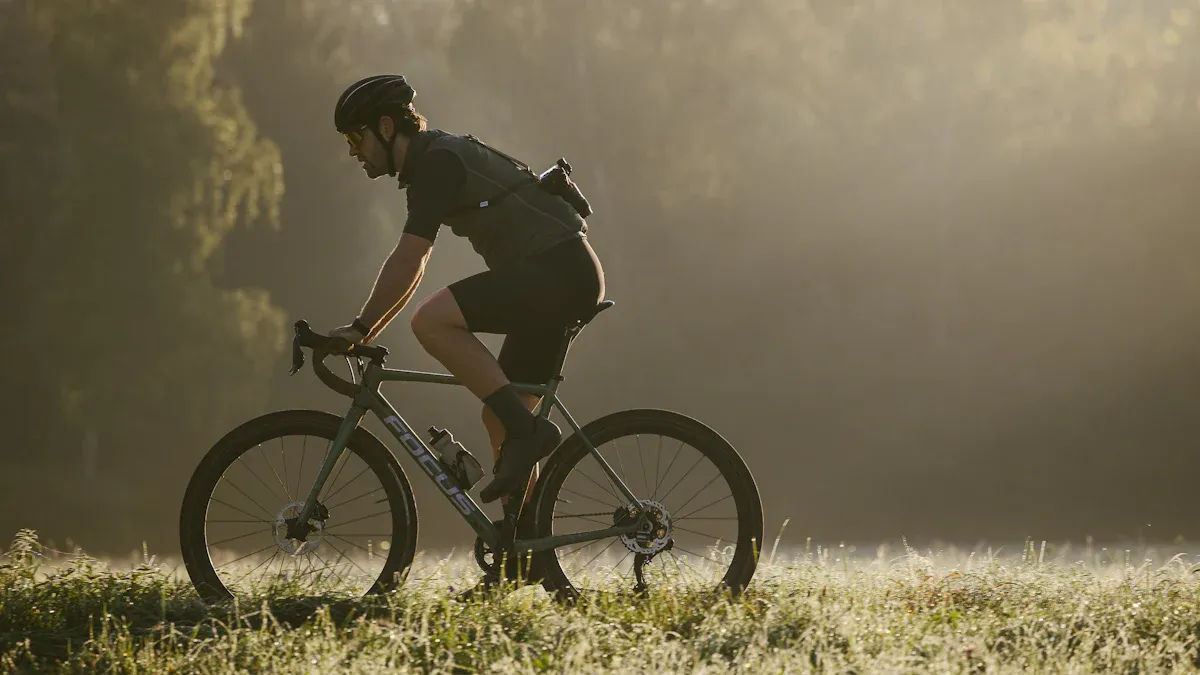
In e-bike trekking, you use a bicycle with an electric motor. This motor assists you while pedaling. This allows you to ride longer distances and conquer steep climbs more easily. Through this technology, many people are discovering new possibilities to experience nature. The trekking e-bike is particularly popular because it combines comfort, range, and versatility.
Tip: Trekking e-bikes offer an ergonomic seating position and often a suspension fork. This ensures more safety and riding pleasure on long tours.
Recent market research shows that various groups are discovering e-bike trekking for themselves:
Pragmatists who use e-bikes for daily use.
People who consider e-biking a hobby or a passion.
Less athletic individuals who can take long tours thanks to motor assistance.
The popularity of trekking e-bikes is growing steadily. The following table shows how trekking e-bikes compare to other e-bike models:
E-Bike Model |
Popularity (%) |
|---|---|
City E-Bike |
37.3 |
Trekking E-Bike |
26.4 |
E-Mountain Bike |
15.9 |
Differences to Classic Trekking
In classic trekking, you ride a normal bicycle without a motor. You have to handle all routes under your own power. This can be exhausting, especially on long tours or steep paths. With a trekking e-bike, you receive support from the motor. You can cover longer distances while still remaining relaxed.
You can find the most important technical features of a trekking e-bike in this table:
Feature |
Description |
|---|---|
Motor |
Mostly mid-drive motor from Bosch or Shimano – for natural assistance |
Battery |
Long-range, often 500–750 Wh, fully integrated depending on the model |
Equipment |
Mudguards, lighting system, luggage rack – ready for touring from the factory |
Comfort |
Ergonomic seating position, optional suspension fork, wide tires for safety |
Electronics |
Multiple assistance levels, often with Purion or Kiox display |
Many users report that they experience more comfort and safety with an e-bike. You benefit from a relaxed seating position and better handling, even on unpaved paths. This makes e-bike trekking an attractive choice for both adventure and everyday life.
Benefits
Comfort and Assistance
You will immediately feel the difference with e-bike trekking. The electric assistance helps you ride longer distances without great effort. You can also master steep climbs without tiring quickly. The modern motors and batteries offer you a long range. This way, you stay relaxed, even when you cover many kilometers.
Tip: With a powerful battery (up to 750 Wh), you can plan your tours flexibly and have to worry less about the next charging station.
Many people report that they feel safer thanks to motor assistance. You benefit from a robust frame and powerful motors that also help you on demanding routes. The ride remains pleasant, even if the path gets bumpy.
The health benefits are also remarkable:
You increase your endurance because you cover longer distances.
The activity is gentle on your joints, especially if you are older or have joint problems.
You burn calories, even if you exert less force.
Moving in nature reduces stress and improves your mental health.
Regular riding strengthens your heart and reduces the risk of cardiovascular diseases.
Adventure and Flexibility
With a trekking e-bike, you can design your tours very individually. You decide for yourself how long your stages are and which terrain you explore. Families adapt the route to the age and interests of their children. You can choose quiet and flat regions if you are a beginner. You determine the stage length based on your fitness and energy level.
You discover new paths that would be too strenuous on a normal bike.
You remain flexible because you can adjust the assistance level at any time.
You plan your adventures according to your own needs and capabilities.
Note: The variety of routes and the easy adjustability make e-bike trekking a popular choice for all age groups.
E-Bike Selection
Trekking E-Bike Types
You will find various types of trekking e-bikes on the market. Each type offers you specific advantages for different purposes. The most important models are:
Trekking E-Bikes: These bicycles are suitable for long rides and various surfaces. You sit comfortably and benefit from a good balance between performance and comfort. Many models have luggage racks and mudguards, so you are safe even in bad weather.
Trekking SUV E-Bikes: This variant combines the features of trekking and mountain bikes. You get comfort, strong performance, and off-road capability. Wider tires provide better grip. You can ride on both asphalt and unpaved paths.
The price ranges for trekking e-bikes vary significantly. The following table shows you which types you can find in which price range:
Price Range |
E-Bike Types |
|---|---|
Under 2000 Euros |
Entry-level models (E-city bikes, simple trekking and hardtail e-bikes, cross e-bikes) |
2000 to 3500 Euros |
Mid-range (aluminum frame, good suspension components) |
From 3500 Euros |
Premium models (high quality and equipment) |
Tip: Before buying, consider how often and on what terrain you want to ride. This will help you find the right model for your adventure.
Battery and Range
The battery is the heart of your e-bike. The range determines how far you can go on a single charge. In e-bike trekking, the average range is between 70 and 120 kilometers. The exact distance depends on the model and battery capacity.
The following factors significantly influence the range:
Assistance levels: The higher the assistance you choose, the more energy the motor consumes. The range decreases.
Cadence: A higher cadence ensures more efficient energy consumption.
Weight: More luggage or a heavier bicycle requires more energy. The range decreases.
Weather conditions: Temperature, wind, and tire pressure play a major role. Cold weather or low tire pressure can reduce battery performance.
You can increase the range by adjusting the assistance level and paying attention to weight. Plan your tours so that you always have enough energy for the return trip.
Note: Modern lithium-ion batteries offer long lifespans and short charging times. Check the charge level before every tour and take a charger with you on longer trips.
Weight and Comfort
The weight of your trekking e-bike affects riding behavior and handling. Lighter models are easier to maneuver. This is especially practical for beginners and in the city. You can carry the bicycle more easily, for example up stairs or on public transport.
A higher weight requires higher tire pressure, which changes the riding dynamics.
Weight also plays a role when you transport a lot of luggage. Ensure that you do not overload it.
Comfort is especially important in e-bike trekking. User reviews show what you should pay attention to:
Seating position: You can choose between sporty and relaxed. A good seating position ensures less fatigue.
Gears: At least 7 gears are sensible so that you can ride sportily and flexibly.
Brakes: Hydraulic rim or disc brakes offer safety and control.
Equipment: High-quality materials, the right frame size, a stable frame, modern batteries, lighting systems, and mudguards are crucial for comfort and safety.
Tip: Test different models and seating positions before you decide. This way you will find the e-bike that suits you best.
Equipment
Safety Equipment
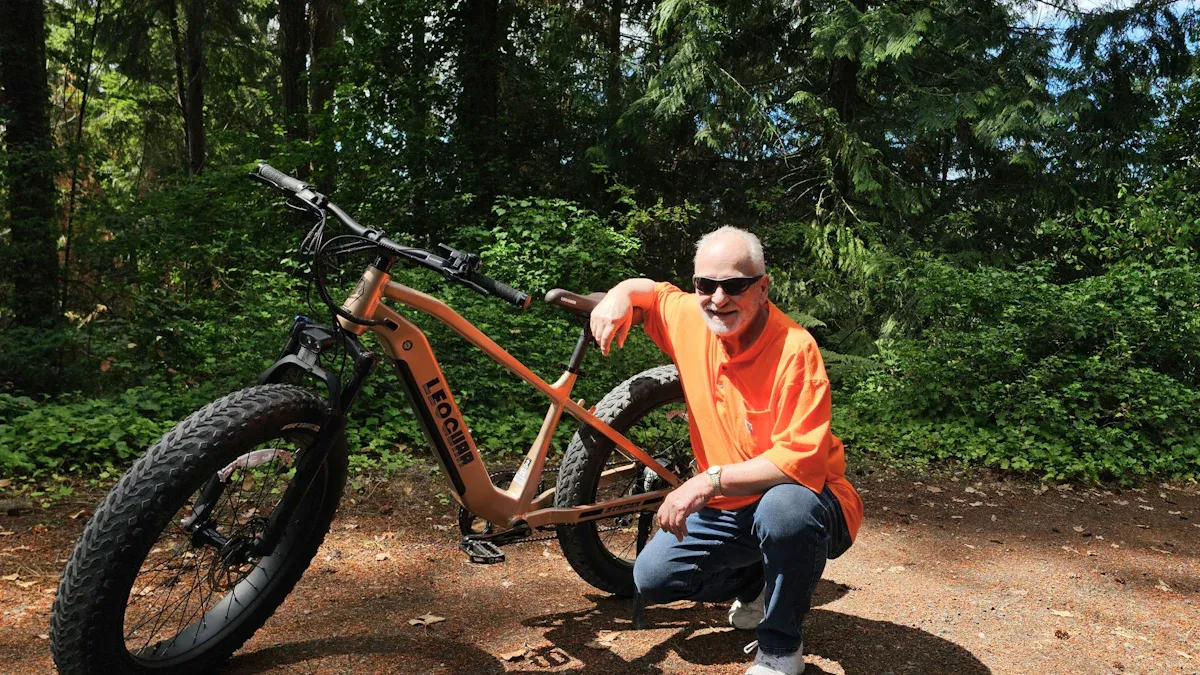
Your safety is the top priority in e-bike trekking. You must have certain equipment on the bicycle. This is legally required. The following table shows you what you need:
Safety Equipment |
Description |
|---|---|
Headlight |
White, front, 40–120 cm above the road |
Taillight |
Red, rear, 25–120 cm above the road |
Reflectors |
White front, red rear, often integrated into headlights and taillights |
Pedals |
Yellow reflectors, directed forward and backward |
Side Reflectors |
White reflectors on spokes/rims or two yellow reflectors per wheel |
You should also wear a helmet. Many experienced e-bike trekkers also recommend gloves, glasses, and pads. These protect you in case of falls and against wind or insects.
Tip: A good lock protects your e-bike from theft. Always secure your bike, even during short breaks.
Luggage and Checklist
It is best to organize your luggage so that you can find everything quickly while riding. Distribute the weight evenly on both sides of the bicycle. Pack heavy items like tools or a sleeping bag low and centrally. Clothing and sleeping gear belong in the saddlebags. Handlebar and top tube bags are suitable for snacks and electronics. Weatherproof bags protect your equipment in the rain.
Indispensable items of equipment:
Helmet
Gloves
Glasses
Weatherproof clothing
Sturdy shoes
Pads
Puncture kit and spare inner tube
Mini pump or CO2 pump
Air pressure gauge
Multi-tool
Provisions
Backpack or hip bag
Packing list for multi-day tours:
Lightweight tent
Sleeping pad (best inflatable)
Sleeping bag for summer nights
Travel pillow
Camping stove and fuel
Cookware, cup, plate, cutlery
Dish towel, sponge, dish soap
Headlamp
Tip: You should store frequently needed items within reach. This way you can find them quickly without searching for a long time.
Navigation and Tools
You will find your way around on your tour better if you use modern navigation. Many e-bikers use GPS devices or smartphone apps. These show you the best route and help you keep an eye on your battery range.
A multitool, a mini-pump, and a puncture repair kit should always be in your luggage. With these tools, you can fix minor problems directly on the go. An air pressure gauge helps you maintain the optimal tire pressure. This way, you ride safely and save energy.
Note: Plan your route in advance and download maps offline to your phone. This way, you stay oriented even without internet.
Planning
Route and Difficulty Level
It is best to plan your e-bike trekking route carefully. Your battery's range plays a major role in this. The shortest route is not always the best choice. You should pay attention to the elevation profile, as many meters in altitude consume more energy. A route with fewer climbs extends the range of your e-bike.
Tip: Choose routes that correspond to your fitness level and battery capacity. This helps you avoid nasty surprises along the way.
These tips will help you with your planning:
Plan longer tours in advance and check charging points.
Look for routes with as few steep climbs as possible.
Avoid unnecessary detours and choose a suitable route profile.
Adjust your speed to save energy.
Think about alternatives for difficult sections.
With these tips, you will find the right balance between adventure and safety.
Accommodation and Catering
There are various options available for your accommodation. You can choose vacation homes if you need space to relax and dry your equipment. This option is particularly suitable for groups or families. Hotels and guesthouses often offer bicycle storage rooms and repair tools. Make sure the accommodation is bike-friendly. Many cyclists like to stay in one place for several days to avoid having to constantly move.
For catering, you should rely on light and high-energy food. Dehydrated foods or instant meals are practical and save weight. Energy bars and nuts are suitable for on the go. A small gas stove and a pot help you prepare warm meals. Plan to refill water along the way. Always keep some emergency food ready in case you are on the road longer than planned.
Note: Good planning regarding accommodation and food ensures more comfort and safety on your tour.
Weather and Clothing
The weather can significantly influence your tour. Rain, storms, or even snowfall require flexible planning. Unpredictable weather conditions can impair the safety and feasibility of your tour. In some regions, the risk of rockfall or other natural hazards increases in bad weather.
It is best to adapt your clothing to the respective season. The following table shows you what you should wear for your head, torso, legs, hands, and feet:
Body Area |
Spring |
Summer |
Autumn |
Winter |
|---|---|---|---|---|
Head (incl. helmet) |
Helmet liner / Cap |
Summer cap / Bandana |
Helmet liner / Cap |
Thermal helmet liner / Balaclava |
Torso |
Functional undershirt (short/long) |
Sleeveless functional undershirt |
Functional undershirt (short/long) |
Thermal functional undershirt |
Legs |
Functional underwear (short) |
Functional underwear (short) |
Functional underwear (long) |
Thermal functional underwear (long) |
Hands |
Full-finger gloves |
Summer/half-finger gloves |
Full-finger gloves |
Winter gloves |
Feet |
Cycling socks |
Thin cycling socks |
Long cycling socks |
Thermal cycling socks |
Tip: With the right clothing, you stay warm and dry in any weather.
Insurance and Legal
You should know the legal requirements for e-bikes in Germany. The rules differ depending on the type of your e-bike. The following table gives you an overview:
E-Bike Type |
Power |
Top Speed |
Age Requirement |
License Requirement |
Other Regulations |
|---|---|---|---|---|---|
S-Pedelecs |
up to 4,000 W |
45 km/h |
15 years |
Class AM, insurance plate |
Operating permit required |
E-Bike |
up to 500 W |
25 km/h |
none |
Moped test certificate |
Road-safe equipment required |
Pedelecs |
up to 250 W |
25 km/h |
none |
none |
count as normal bicycles |
For S-pedelecs, you need liability insurance and an insurance license plate. Without this insurance, you are violating the Compulsory Insurance Act. Special e-bike insurance additionally protects you against theft, vandalism, and damage to your own bike. Liability insurance only covers damages to third parties, whereas e-bike insurance also covers your own damages.
Note: Check before every tour whether your insurance coverage is current and matches your e-bike.
With the right planning and preparation, e-bike trekking becomes a safe and unforgettable experience.
Tips
For Beginners
You are just starting with e-bike trekking. You want to be safe and relaxed on the road. Here you will find important tips for getting started:
Choose a simple route with little incline. This will help you get to know your e-bike better.
Test all assistance levels. You will feel how the handling changes.
Check the battery level and brakes before every ride.
Always wear a helmet and bright clothing. You will be seen better.
Pack only the essentials. Less weight makes the ride easier.
Tip: Practice riding with luggage on short routes. You will get a feel for the balance.
For Advanced Riders
You already have experience with e-bike trekking. You want to ride longer and more demanding tours. These tips will help you:
Plan your route with digital maps or apps. You will find new paths and exciting destinations.
Use different assistance levels depending on the terrain. You save energy and increase your range.
Check the chain, tires, and battery regularly. You will avoid breakdowns on the road.
Try multi-day tours with overnight stays. You will experience real adventures.
Exchange ideas with other e-bike riders. You will learn new tricks and get valuable recommendations.
Note: A GPS device helps you reach your destination safely, even in unknown regions.
Sustainability
You want to travel in an environmentally friendly way. With these tips, you protect nature and ride more sustainably:
Sustainable Measure |
Effect |
|---|---|
Charge the battery with green electricity |
You reduce CO₂ emissions. |
Use reusable bottles |
You avoid plastic waste. |
Repair instead of throwing away |
You save resources. |
Ride on designated paths |
You protect plants and animals. |
🌱 Remember: Every small step counts for the environment. You can achieve a lot with your behavior.
Mistakes
Beginner Mistakes
Many beginners make typical mistakes when e-bike trekking. You can easily avoid them if you know them:
Shifting under load: You should not shift while pedaling hard. This protects the chain and the motor.
Incorrect starting: Always start in a low gear. This takes the load off the motor and lets you start more smoothly.
Battery in the sun: Store the battery in a cool and dry place. Heat shortens the lifespan of your battery.
Parking your e-bike: Never park your e-bike in damp or very hot areas. This prevents corrosion.
Regular maintenance: Have your e-bike checked regularly. A professional will detect problems early on.
Tip: With good care and correct handling, your e-bike will remain reliable for a long time.
Equipment Mistakes
The right equipment makes your tour safer and more pleasant. Many underestimate the importance of suitable equipment. You should pay attention to these points:
Mistake |
Consequence |
|---|---|
No helmet |
Higher risk of injury |
Wrong clothing |
Freezing, overheating, or wetness |
Too few tools |
No help for breakdowns |
Poor lighting |
Low visibility in the dark |
Cheap locks |
Increased risk of theft |
Always pack a helmet, weatherproof clothing, and a good lock. A multitool and a spare tube will help you with minor repairs along the way.
Safety Risks
You should always prioritize your safety when e-bike trekking. Many underestimate the speed and weight of an e-bike. Ride with foresight and keep your distance from other road users. Brake in good time, especially on wet or gravel surfaces. Check the brakes and tire pressure regularly.
Attention: An e-bike accelerates faster than a normal bicycle. Adjust your speed to the route and your experience. This way, you stay safe on the road.
You now have the necessary knowledge for your e-bike trekking adventure.
Choose the right e-bike and pay attention to proper equipment.
Plan your route and check the battery level.
Think about your safety and ride with foresight.
Start today! Every tour brings new experiences and strengthens your self-confidence. With e-bike trekking, you will discover the world in a whole new way. 🚴♂️
FAQ
How far can I ride with an e-bike on a tour?
The range depends on the battery, your riding style, and the terrain. You will usually manage 70 to 120 kilometers on one battery charge. Use low assistance levels to go further.
Do I have to service my e-bike regularly?
Yes, you should check your e-bike regularly. Check the brakes, tire pressure, and battery. A specialist dealer will help you with maintenance. This keeps your e-bike safe and reliable.
Can I use my e-bike in the rain?
You can also ride your e-bike in the rain. The electronics are protected. Dry the bike after the ride. Wear weatherproof clothing and watch out for slippery paths.
What do I do if the battery runs out on the road?
You can charge the battery at many charging stations or at accommodations. Always pack the charger. Plan your route so that you find a charging opportunity in time.
Do I need special insurance for an e-bike?
You do not need special insurance for a normal pedelec. An S-pedelec requires an insurance license plate. E-bike insurance additionally protects you against theft and damage.