
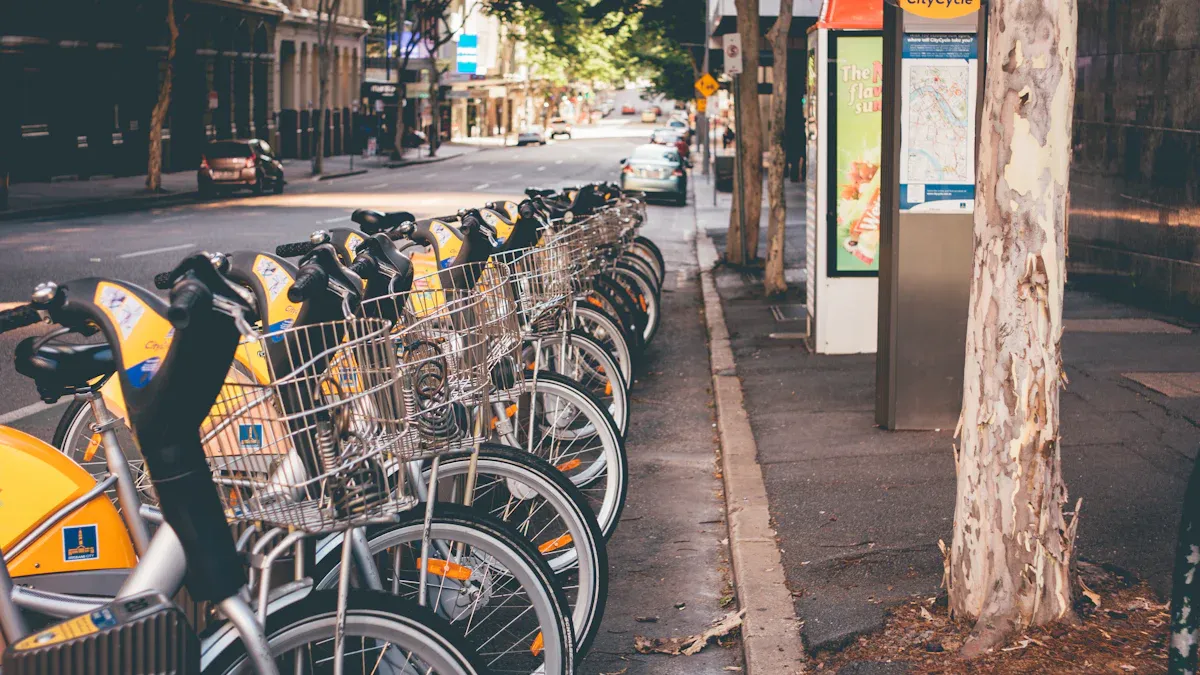
E-bike subsidies in Europe play a crucial role in promoting sustainable mobility. They enable you to switch to environmentally friendly means of transport while simultaneously reducing CO2 emissions. National programs such as the environmental bonus in Germany offer grants of up to 2,500 euros for the purchase of an e-bike. Regional subsidies, such as those in North Rhine-Westphalia, also support you with up to 500 euros. These measures promote green mobility and reduce reliance on cars. At the same time, they contribute to the implementation of the EU Green Deal by financing sustainable projects.
Key Insights
E-bike subsidies in Europe make purchasing more affordable and help the environment.
Countries provide up to 2,500 euros to make e-bikes more popular.
Tax relief and leasing make e-bikes cheaper for workers.
Combining national and regional aid saves more money on purchases.
E-bikes reduce CO2 and make city air cleaner.
Types of e-bike subsidies in Europe
Direct financial support
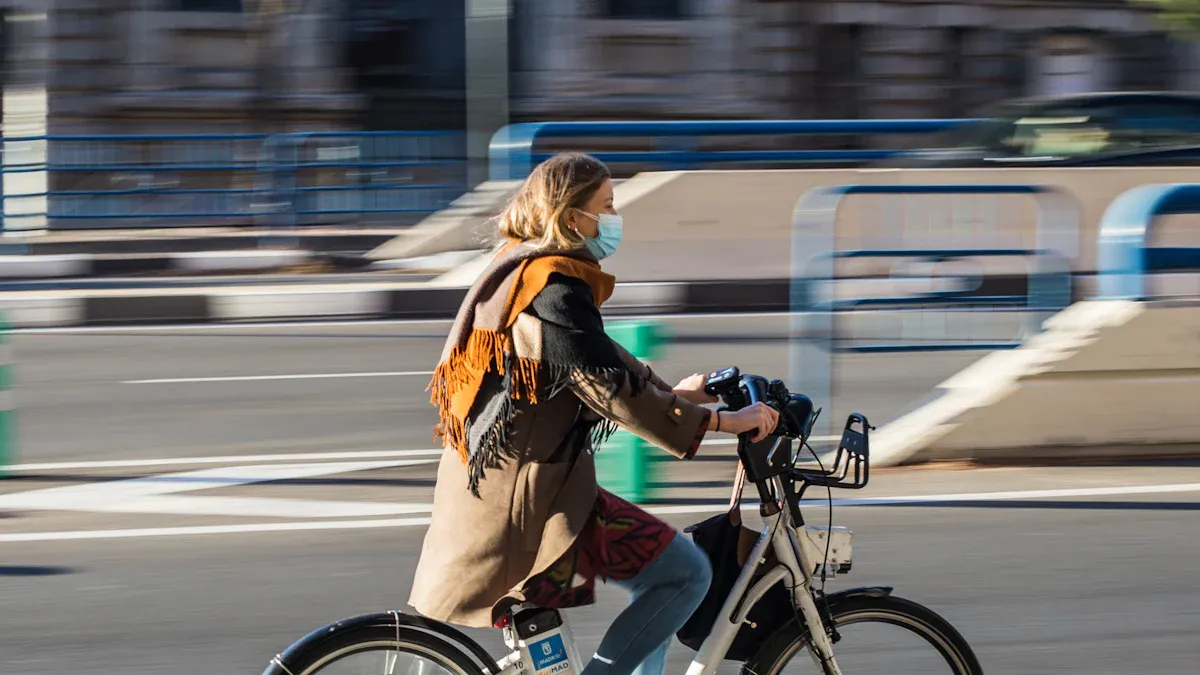
Direct financial support makes it easier for you to get started in the world of e-bikes. Many countries in Europe offer grants that cover a portion of the purchase price. These subsidies significantly lower the barrier to buying an e-bike. In Germany, for example, you can receive up to 25% of the purchase price, up to a maximum of 2,500 euros. France offers similar support of up to 50% of the purchase price, also up to 2,500 euros. Italy grants up to 60% of the purchase price, but with a cap of 500 euros. The Netherlands and Switzerland also offer attractive grants that depend on the type of e-bike or a percentage of the purchase price.
Country |
Type of grant |
Maximum grant |
|---|---|---|
Germany |
Up to 25% of purchase price |
Max. 2,500 euros |
France |
Up to 50% of purchase price |
Max. 2,500 euros |
Italy |
Up to 60% of purchase price |
Max. 500 euros |
Netherlands |
Grant depends on e-bike type |
Up to 750 euros |
Switzerland |
Up to 30% of purchase price |
Max. 1,000 CHF |
These grants make e-bike subsidies in Europe particularly attractive and promote sustainable mobility.
Tax benefits and leasing programs
Tax benefits and leasing programs offer you another way to reduce the cost of an e-bike. Some countries, such as Belgium and the Netherlands, have introduced tax-free commuter allowances. In Belgium, as an employee, you can benefit from tax-free allowances if you use an e-bike for your commute. In the Netherlands, tax advantages promote the leasing of e-bikes, which is particularly interesting for companies and employees.
Leasing programs are a flexible option for using an e-bike without having to buy it outright. Employers often offer attractive, tax-advantaged leasing models. These programs reduce upfront costs and make e-bikes accessible to a broader target group.
Mileage allowances and trade-in premiums
Mileage allowances and trade-in premiums create additional incentives for switching to an e-bike. Some programs offer you financial benefits that depend on the length of your commute. In France, for example, you can receive a trade-in premium if you swap your old vehicle for an e-bike. These premiums not only promote the purchase of e-bikes but also the reduction of environmentally harmful vehicles.
Additionally, some countries offer tax breaks for bicycle repairs or special leasing programs. These measures make e-bike subsidies in Europe particularly versatile and effective.
EU-wide funding programs and their goals
EU-wide funding programs play a central role in promoting sustainable mobility. They support you in switching to environmentally friendly means of transport such as e-bikes. These programs aim to reduce CO2 emissions and improve the quality of life in cities.
The European Union offers various initiatives to strengthen the e-bike market. The Recovery and Resilience Facility is a key component, financing projects that promote sustainable mobility. Urban mobility plans are also part of this, helping cities improve their cycling infrastructure. The European Regional Development Fund (ERDF) supports regions in implementing cycling projects.
A look at the results shows how effective these programs are:
Funding program |
Description |
|---|---|
Governments offer financial incentives to encourage the purchase of e-bikes. |
|
Incentive programs |
Almost 300 programs ranging from direct subsidies to tax deductions. |
EU initiatives |
Support through the Recovery and Resilience Facility and urban mobility plans. |
These funding programs make e-bikes more affordable and attractive for you. They create incentives that make the switch to sustainable transport easier. At the same time, they promote innovation and strengthen the bicycle industry in Europe.
By combining EU-wide and national programs, you can benefit from a variety of advantages. Find out about the available options and take the opportunity to contribute to climate protection.
Country-specific subsidy programs
Germany
National programs like JobRad and leasing options
In Germany, you can benefit from various national programs that facilitate access to e-bikes. JobRad is one of the best-known programs, allowing you to lease an e-bike through your employer. Monthly installments are deducted directly from your gross salary, providing you with tax advantages. This model makes e-bikes particularly attractive for commuters.
Leasing options offer you a flexible way to use a high-quality e-bike without having to bear the high initial costs. Many employers work with leasing providers to make this option accessible to you.
Regional and local subsidies (e.g., Berlin, Ascheim, Ismaning)
In addition to national programs, there are also regional and local subsidies in Germany. In Berlin, for example, you can apply for grants for the purchase of an e-bike. This support is primarily aimed at private individuals and small companies. In municipalities such as Ascheim and Ismaning, there are similar programs that financially support the purchase of e-bikes. Contact your local city administration to find the best offers in your region.
France
Bicycle bonus and trade-in premium
France offers you attractive incentives to switch to an e-bike. The so-called bicycle bonus grants you financial support of up to 400 euros when buying an e-bike. Additionally, you can benefit from a trade-in premium if you scrap your old vehicle. This premium can be up to 1,500 euros and makes the switch to sustainable mobility particularly worthwhile.
Regional grants (e.g., Corsica, Île-de-France)
There are also numerous funding programs in France at the regional level. In the Île-de-France region, for example, you can receive a grant of up to 500 euros for the purchase of an e-bike. There are similar programs in Corsica that promote the purchase of e-bikes. These regional grants complement the national programs and make e-bikes even more affordable for you.
Netherlands
Tax-free mileage allowance and leasing programs
The Netherlands relies on tax incentives to promote the use of e-bikes. You can receive a tax-free mileage allowance if you use your e-bike for commuting. This allowance rewards you for every kilometer driven and reduces your commuting costs.
Leasing programs are also widespread. Many companies offer you the option to lease an e-bike. These programs are tax-advantaged and make e-bikes particularly attractive for commuters.
Reduced VAT on bicycle repairs
Another advantage in the Netherlands is the reduced VAT on bicycle repairs. This measure lowers the cost of maintaining your e-bike and encourages sustainable usage. This way, you can save not only on the purchase but also on maintenance.
Belgium
Tax-free commuter allowances and company bikes
In Belgium, you benefit from tax-free commuter allowances when you use an e-bike for your commute. These allowances reward you for every kilometer you cover with your e-bike. As a result, you not only save money but also actively contribute to reducing CO2 emissions. Employers in Belgium also frequently offer company bikes. These models allow you to use an e-bike without having to buy one yourself. Costs are often covered by the employer or provided with tax advantages.
Company bikes are particularly attractive for commuters. They offer you a cost-effective and sustainable alternative to the car. At the same time, they promote your health and reduce traffic in cities. Check with your employer about available options and take advantage of these benefits.
Italy
Local programs to promote sustainable mobility
In Italy, e-bike subsidies focus on local programs. Many cities and municipalities offer financial incentives to encourage the purchase of e-bikes. These programs are often aimed at private individuals and small companies. They aim to reduce traffic in cities and improve air quality.
One example is the city of Milan, which provides grants for the purchase of e-bikes. This support helps you switch to an environmentally friendly means of transport. Find out about available programs in your region from your local administration so that you can benefit from the advantages of sustainable mobility.
Other countries
Austria: Grants up to €500 and fleet funding
In Austria, you can receive grants of up to 500 euros for the purchase of an e-bike. This support is primarily aimed at private individuals and companies that want to switch their vehicle fleets to sustainable mobility. Fleet funding supports you in purchasing multiple e-bikes for your company.
Spain: Regional funding programs
Spain offers regional funding programs that make purchasing e-bikes easier. These programs vary by region and are often aimed at commuters and businesses. Contact your regional administration to find the best deals.
Luxembourg: Tax benefits and 50% discount on bike purchases
In Luxembourg, you benefit from tax advantages and a discount of up to 50% on the purchase of an e-bike. These measures make e-bikes particularly affordable, promote the switch to sustainable transport, and contribute to the reduction of CO2 emissions.
Switzerland: Up to 30% of the purchase price, max. CHF 1,000
In Switzerland, you receive up to 30% of an e-bike's purchase price as a grant, with a maximum amount of 1,000 CHF. This funding makes e-bikes more affordable for you and supports your switch to an environmentally friendly means of transport.
Country |
Funding amount |
|---|---|
Switzerland |
|
Austria |
Up to 500 € |
Spain |
Regional programs |
Luxembourg |
Tax benefits and 50% discount |
E-bike subsidies in Europe offer you numerous opportunities to promote sustainable mobility. Use the programs in your country to benefit from the financial advantages.
EU-wide initiatives to promote e-bikes
Recovery and Resilience Facility
The Recovery and Resilience Facility (RRF) is a central EU instrument for promoting sustainable mobility. It supports projects that make the switch to environmentally friendly means of transport like e-bikes easier. You can benefit from these funds, as they flow into the expansion of cycling infrastructure and the promotion of e-bike programs. The goal is to improve the quality of life in cities while simultaneously reducing CO2 emissions.
The RRF also finances innovative approaches to integrate e-bikes into existing transport systems, making the switch from car to bike more attractive. These measures help achieve EU climate goals and promote a sustainable culture of mobility.
Urban mobility plans and investments in cycling infrastructure
Urban mobility plans play a crucial role in promoting e-bikes. They help cities improve their infrastructure for cyclists. Investments in safe bike paths and charging stations create a welcoming environment for you as a user.
The benefits of these measures are diverse:
Goal |
Description |
|---|---|
Investments in cycling and pedestrian infrastructure contribute to achieving climate goals. |
|
Promotion of active mobility |
E-bikes promote healthy, environmentally friendly, and cost-effective mobility in cities. |
Furthermore, e-bikes make the switch from the car easier, especially for longer distances. They complement buses and trains, thus promoting sustainable urban development.
Aspect |
Description |
|---|---|
E-bikes are seen as a complement to buses and trains, which encourages the switch from cars. |
|
Infrastructure |
Investments in safe bicycle paths and charging stations create an inviting environment for users. |
Sustainable urban development |
E-bikes support environmentally friendly transport systems and promote an inclusive mobility culture. |
European Regional Development Fund (ERDF)
The European Regional Development Fund (ERDF) indirectly supports you in using e-bikes. It promotes sustainable means of transport and finances e-bike procurement programs in various regions.
Fund name |
Purpose |
Scope of application |
|---|---|---|
ERDF |
Promotion of sustainable means of transport |
E-bike procurement programs |
These programs make e-bikes more affordable for you and encourage their adoption across Europe. They help strengthen regional development while simultaneously reducing environmental impact.
E-bike subsidies in Europe benefit significantly from these EU-wide initiatives. They create the foundation for a sustainable mobility future and offer you numerous opportunities to contribute actively to climate protection.
Impact of subsidies on sustainable mobility
Environmental benefits
Reduction of CO2 emissions and air pollution
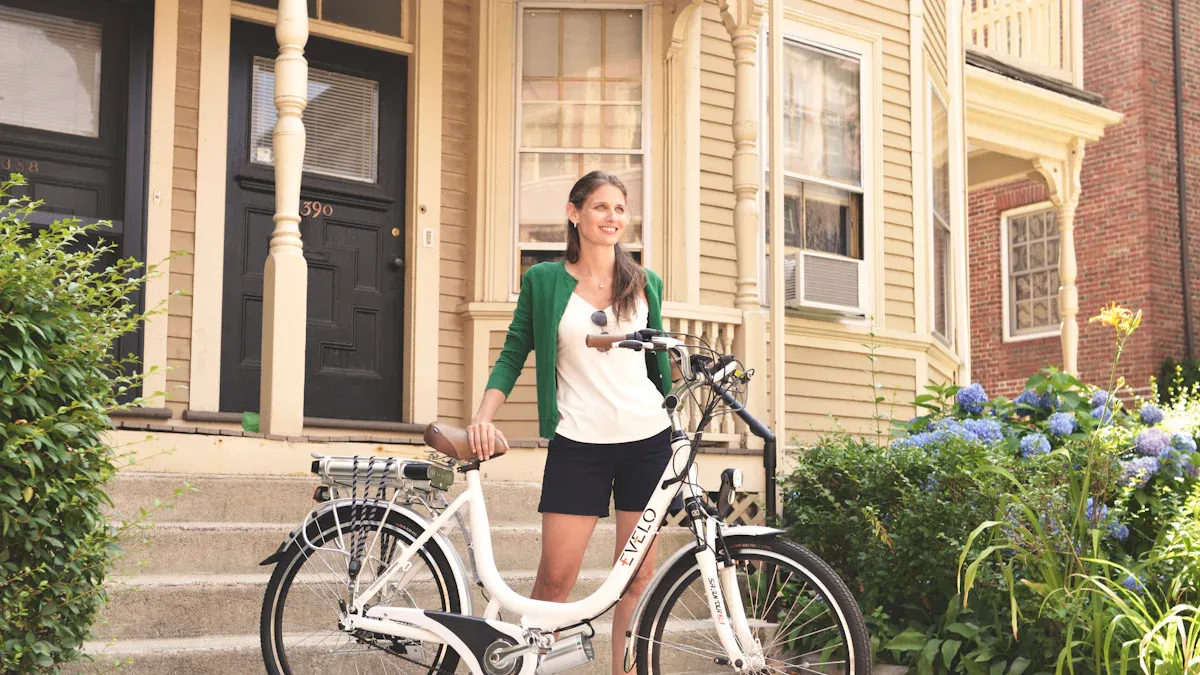
E-bike subsidies in Europe contribute significantly to improving air quality. When you use an e-bike, you often replace a car, which leads to less traffic congestion and lower greenhouse gas emissions. Studies show that e-bikes are an effective alternative to cars, especially for urban commuting.
E-bikes reduce the number of cars on the roads.
Fewer cars mean less air pollution and CO2 emissions.
Financial incentives promote sustainable transport options.
These benefits make e-bikes an environmentally friendly choice that both relieves pressure on cities and supports climate goals.
Economic benefits
Savings for individuals and promotion of the bicycle industry
E-bike subsidies lower the costs for you as a buyer. Direct subsidies reduce purchase costs, while tax benefits such as reduced leasing rates enable additional savings.
Type of subsidy |
Description |
|---|---|
Bike bonus |
Support for purchasing or renting an e-bike, submit application online. |
Environmental premium |
Subsidies for the purchase of an e-bike when an old vehicle is scrapped. |
Local aid |
Subsidies from municipalities for students and young professionals to facilitate access to e-bikes. |
These programs not only make e-bikes more affordable but also strengthen the bicycle industry. Manufacturers benefit from the increasing demand, which promotes innovation and jobs.
Social benefits
Improvement of urban mobility and quality of life
E-bikes improve mobility in cities. You can travel faster and more flexibly without sitting in traffic. At the same time, they promote a healthier lifestyle, as you get more exercise.
E-bikes relieve the burden on public transport.
They create space on the roads and reduce traffic noise.
Better air quality increases the quality of life in urban areas.
By using an e-bike, you contribute actively to a more livable city. You benefit from stress-free travel and support a sustainable future.
Practical tips for applying for e-bike subsidies
Requirements and eligibility
Before you submit an application for e-bike subsidies, you should ensure that you meet the basic requirements. Many programs require specific criteria that you must observe.
Your e-bike must meet certain technical requirements, such as a maximum motor power and a speed limit.
The type of subsidy depends on where you live. National and regional subsidies can differ.
Check with your local municipality or university regarding local aid. Students and young professionals, in particular, often benefit from special programs.
Criterion |
Description |
|---|---|
Motor power |
Maximum motor power must be adhered to. |
Speed limit |
E-bikes must meet a speed limit. |
Type of subsidy |
Varies depending on national and regional subsidies. |
Important documents and proof
You need some essential documents for the application. This evidence helps the authorities verify your eligibility and speed up the process.
Vehicle proof: A copy of the registration certificate part I (vehicle registration document) is required.
Proof of ownership: If you are not the vehicle owner, you must prove your ownership of the vehicle.
Letter of intent: A signed declaration between you and the funding agency is necessary.
Declaration regarding state aid: You must state whether you have already applied for or received other subsidies.
Control form: This form must be submitted filled out and signed.
Keep these documents ready to avoid delays.
Step-by-step guide to applying
The application process for e-bike subsidies is often straightforward. With these steps, you can ensure that your application is successful:
Check eligibility: Find out about the available programs in your region. National and local subsidies offer different benefits.
Prepare documents: Receipts, proof of residence, and other required documents should be on hand.
Apply online: Most programs offer user-friendly online portals. There, you can enter your data and upload the documents.
Visit the website of the relevant ministry or your municipality to submit the application. Fill out the form carefully and upload all required evidence. This way, you can benefit from the financial advantages and make your contribution to sustainable mobility.
Combining national and regional subsidies
You can achieve the greatest financial advantage if you combine national and regional subsidies. Many countries in Europe allow this combination, which can significantly reduce the total cost of your e-bike. However, it is important to check the conditions of each program carefully to ensure that you meet all requirements.
An example of this is Germany. Here, you can combine national subsidies like the environmental bonus with regional programs. The KfW Bank offers you up to 25% of the purchase price of your e-bike, up to a maximum of 2,500 euros. In France, you can also combine the bicycle bonus, which covers up to 50% of the purchase price, with local subsidies. The maximum support here is also 2,500 euros.
Country |
Subsidy (%) |
Maximum amount (€) |
Application office |
|---|---|---|---|
Germany |
25 |
2,500 |
KfW Bank |
France |
50 |
2,500 |
Agence de Services et de Paiement |
Tip: Check with your local council or city administration regarding regional programs. Often there are additional subsidies intended specifically for commuters, students, or families.
The combination of subsidies is particularly beneficial if you have a limited budget. You can not only reduce the purchase costs but also benefit from tax advantages. In France, for example, you can combine the bicycle bonus with a conversion premium if you scrap an old vehicle. In Germany, some cities like Berlin or Munich offer additional subsidies that you can combine with national programs such as JobRad.
National and regional subsidies can often be combined.
The bicycle bonus in France can be supplemented with local subsidies.
Check the conditions of each program to receive the maximum subsidy.
By skillfully using these programs, you can acquire your e-bike for a fraction of the original cost. Take this opportunity to make sustainable mobility more affordable for you and your family.
E-bike subsidies in Europe offer you numerous advantages. National and regional programs reduce costs through direct subsidies and tax benefits. Corporate support and EU funding promote green mobility and reduce dependency on cars. An overview shows the variety of subsidies:
Type of subsidy |
Benefits |
|---|---|
National subsidies |
|
Regional subsidies |
Tax benefits on leasing and tax-free commuter allowances |
Corporate support |
Promotes green mobility and reduces CO2 emissions |
EU funding |
Reduces dependency on cars for daily commuting |
These programs contribute long-term to solving urban congestion, air pollution, and climate change. They encourage you to choose sustainable transport options and support the protection of our planet. The future of e-bike subsidies in Europe looks promising. With further investments in cycling infrastructure and innovative incentives, sustainable mobility will be further strengthened.
FAQ
What are the requirements to apply for an e-bike subsidy?
To apply for a subsidy, you must generally reside in the country or region offering the support. Your e-bike must meet certain technical requirements, such as a maximum motor power of 250 watts and a speed limit of 25 km/h.
Can I use multiple subsidies at the same time?
Yes, in many countries you can combine national and regional subsidies. Check the conditions of the programs to ensure they are compatible. This way, you can receive the maximum financial support.
How long does it take to process a subsidy application?
Processing time varies depending on the program. As a rule, it takes between two weeks and three months. Submit all required documents completely to avoid delays.
Are there special subsidies for companies?
Yes, many countries offer special programs for companies. These promote the purchase of e-bikes for employees or the transition of vehicle fleets. Companies can often benefit from tax advantages or direct subsidies.
What happens if I sell my e-bike?
If you sell your e-bike within a certain period after purchase, you may have to pay back the subsidy. Check the terms of the subsidy program to make sure you fulfill the requirements.
Tip: Read the subsidy guidelines carefully before you sell or pass on your e-bike.