
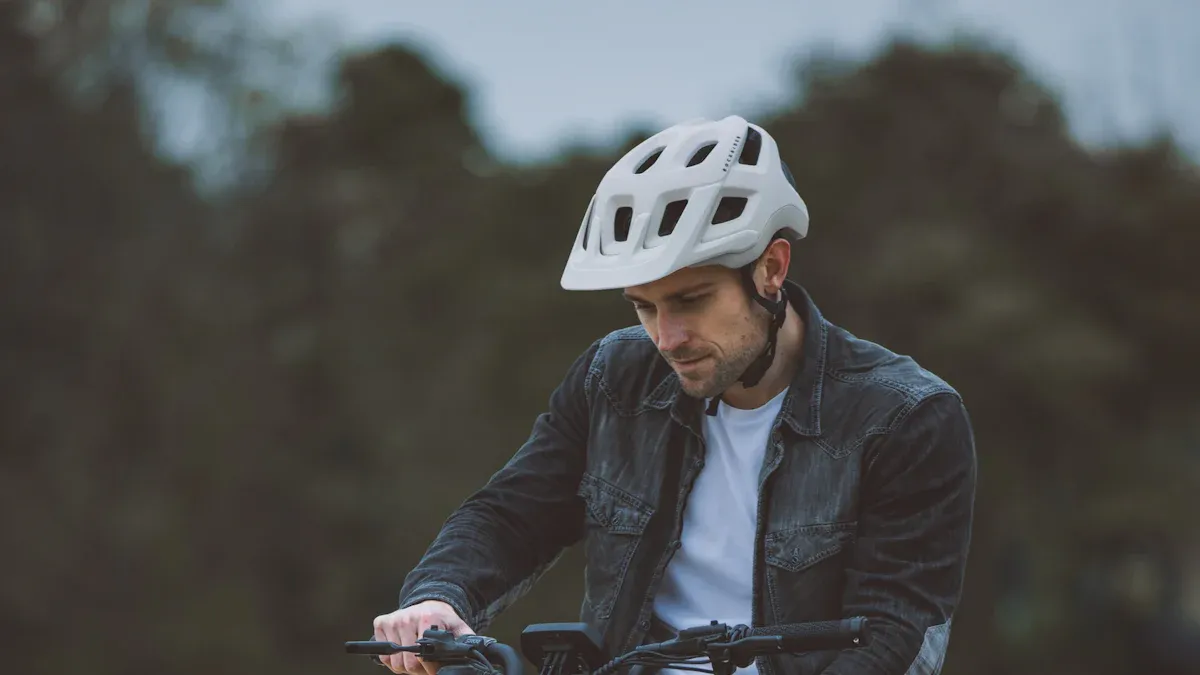
You are wondering which safety tips are particularly important for e-bikes. Safety always comes first. Technical checks, such as testing tire pressure and brakes, prevent many problems. E-bike riders report self-inflicted falls less frequently than standard bicycle riders. Implement these tips and actively protect yourself.
Key Insights
Always wear a helmet. A well-fitting helmet can prevent serious head injuries and is particularly important for your safety.
Check the lighting, brakes, and tire pressure before every ride. Regular checks help avoid technical problems and increase your safety.
Use reflective clothing and bright colors. These increase your visibility in traffic and significantly reduce the risk of accidents.
E-Bike Protection & Equipment
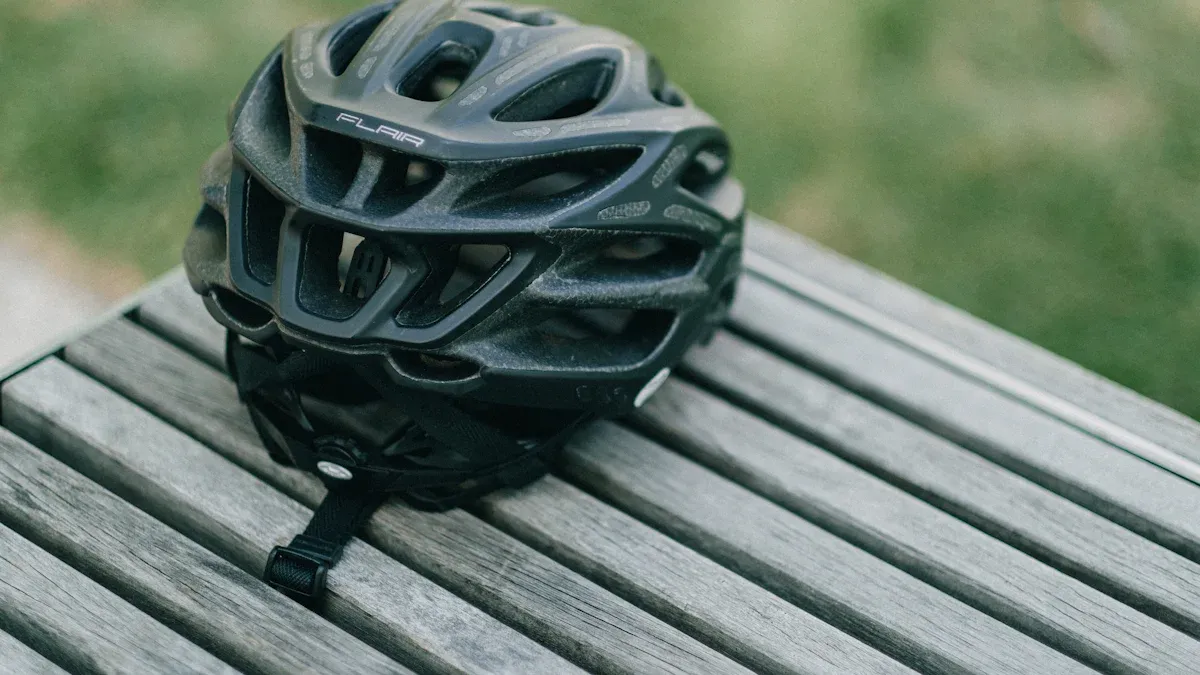
Helmet and Protective Gear
A helmet protects your head in the event of a fall. Without a helmet, the risk of serious head injuries increases sixfold. The probability of brain hemorrhaging is actually 6.4 times higher if you do not wear a helmet. A well-fitting helmet can prevent life-threatening consequences.
“A well-fitting helmet significantly reduces the severity of head injuries and is the most important protective measure when cycling.”
Ensure that the helmet does not cover your ears and leaves your forehead free. Check that the helmet bears the "DIN EN 1078" label and the CE mark. These marks indicate that the helmet has been tested. For S-pedelecs and fast e-bikes, a helmet is mandatory. The table below shows when a helmet is required:
E-Bike Type |
Helmet Mandatory |
Description |
|---|---|---|
Pedelecs (up to 25 km/h) |
None |
Helmet is voluntary. |
S-Pedelecs (up to 45 km/h) |
Yes |
Helmet is mandatory, must meet EU standard. |
E-bikes (up to 20 km/h, without pedal assist) |
Yes |
Helmet required according to moped regulations. |
Protective clothing such as gloves, long trousers, and jackets protects your skin in the event of a fall. Many e-bike riders already wear a helmet. Fluorescent colors in clothing increase your visibility during the day and at twilight by up to 400 percent.
Reflective Clothing
Reflective clothing makes you more visible in traffic. Motorists recognize you faster, especially in bad weather or darkness. Bright and fluorescent colors help you to be seen from a distance of 40 meters. Dark clothing is often only recognized from less than 25 meters away.
Category |
Percentage |
|---|---|
Cyclists with accident |
13.2% |
E-bike riders with accident |
9% |
Collisions with others |
8% |
77% |
Many accidents happen because riders are hard to see. If you wear reflective clothing, the risk of accidents decreases. This is especially important during the dark time of the year. Reflectors on jackets, trousers, or backpacks additionally increase your safety.
Front and Rear Lighting
Functional lighting is mandatory. You need a white headlight at the front and a red taillight at the rear. These lights must be securely attached and checked before every ride. This is mandated by the Road Traffic Licensing Regulations. S-pedelec riders must even use lights during the day.
Lighting Element |
Description |
|---|---|
Headlight |
White light, aimed forward |
Taillight |
Red light, aimed backward |
Passive elements |
Spoke reflectors, pedal reflectors, white front reflector |
Good lighting helps you to recognize obstacles early. It shows other road users where you are and where you are going. Reflectors and reflective clothing complement active lighting and make you even more visible. Regularly check that all lights are functioning. Also check the tire pressure, brakes, battery level, and chain before every ride. This way, you ride safely and avoid accidents.
E-Bike Riding Technique
Safe Starting and Stopping
It is best to start slowly and in a controlled manner. Choose a low assist level so that you get used to the handling. When starting, keep the motor under control by setting off carefully. When stopping, remember the longer braking distance of an e-bike. Always plan for an extra meter and look for a safe stopping point. Practice stopping regularly by placing one foot firmly on the ground.
Tip: Begin every ride with a short exercise. Start slowly, stop, and place one foot on the ground. This will make you feel more secure.
Proper Braking
Braking with an e-bike feels different than with a standard bicycle. You must maintain control over the extra weight. Practice braking on different surfaces. Brake in good time and modulate the force. The speed is often higher, so you must react faster. Keep both brakes ready and test them before every ride.
Braking performance is stronger when you use both brakes simultaneously.
Practice braking in turns to keep your balance.
React early to dangerous situations and reduce your speed.
Shifting and Assist Levels
Choosing the right assist level influences your riding behavior. Low levels like "Eco" offer minimal assistance and extend the range. Higher levels like "Turbo" increase your speed but consume more energy. You have more control if you adapt the assist level to the situation. Shift gears in a timely manner so as not to overload the motor and to make the ride comfortable.
"Eco" is suitable for long distances and calm riding.
Use "Turbo" for quick overtaking maneuvers or steep climbs.
Adjust the level to your surroundings and your ability.
E-Bike Traffic Rules
Important Rules for E-Bike Riders
When you are out on an e-bike, special traffic rules apply. You should be familiar with these rules to ride safely:
Pedelecs may travel up to 25 km/h, S-pedelecs up to 45 km/h.
Helmets are mandatory for S-pedelecs and fast e-bikes.
The blood alcohol limits are the same as for driving a car: From 0.5 per mille, you face a penalty; from 1.1 per mille, it is a criminal offense.
You may ride pedelecs from the age of 10. For e-bikes and S-pedelecs, you need a driver's license and must be at least 15 years old.
You must use bicycle lanes if they are present and are not marked as mandatory for use.
Always clearly signal where you are going when turning.
Using a mobile phone on the handlebars is prohibited.
Differences to Standard Bicycles
E-bikes, especially S-pedelecs, are considered motor vehicles. They are subject to stricter regulations than standard bicycles. You need a driver's license and insurance for S-pedelecs. Furthermore, special blood alcohol limits apply. Standard bicycles and pedelecs up to 25 km/h do not require a driver's license. S-pedelecs are not allowed to use bicycle lanes unless they are explicitly approved for e-bikes.
Behavior in Traffic
You should always ride with foresight. The e-bike is heavier and faster than a standard bicycle. Keep enough distance from other road users. Note that your braking distance is longer. Always use the lighting so that others can see you. Wear a helmet to protect yourself. Safety training can help you improve your riding technique.
Tip: Ride calmly and attentively. This allows you to recognize dangers early and react safely.
Accident Prevention
Defensive Riding
You can avoid many accidents by riding defensively. Stay attentive even on familiar routes. Always adjust your speed to traffic, weather, and visibility. Ride cautiously and avoid sudden evasive maneuvers or emergency braking. Keep an eye on other road users. Use both brakes simultaneously and build up braking force slowly on wet or slippery roads. Obey all traffic rules and stay alert in every situation.
Tip: Safety training helps you practice defensive riding and improve your reaction times.
Keep Your Distance
Always keep a sufficient distance from other road users. The Road Traffic Regulations require car drivers to keep at least 1.5 meters of distance in towns and at least 2 meters outside of towns when overtaking cyclists. You, too, should leave enough space when overtaking pedestrians or other cyclists. This protects yourself and others from dangerous situations.
Recognizing and Reacting to Dangers
In city traffic, there are many sources of danger. Different speeds and quick acceleration with an e-bike often lead to unexpected situations. Inexperienced riders sometimes underestimate their braking distance and their own reaction time. A lack of bicycle lanes sometimes forces you onto sidewalks or car lanes. Watch out for these risks and react in time. Awareness programs and road safety training help you to recognize dangers better and act correctly.
Stay attentive on every ride.
Make use of road safety offers.
Find out about safe routes in your city.
Anti-Theft Protection
Locking Your E-Bike Securely
The best way to protect your e-bike is with a high-quality lock. Chain locks offer you solid basic protection. U-locks are made of hardened steel and are considered particularly secure. Folding locks are flexible and easy to transport. Ensure that your lock meets the Sold Secure standard. Always lock your e-bike to a fixed object. Park in well-lit and busy areas. This significantly reduces the risk of theft.
Effect |
|
|---|---|
Security systems in apartments |
up to 50% reduced risk of theft |
Secure, lit bicycle parking |
reduces theft risk by up to 50% |
Bicycle registration system at work |
improves recovery by 40% |
Storage at Home and On the Go
At home, it is best to store your e-bike in a bicycle garage. There, it is protected from theft and weather. When on the go, park your e-bike against fixed objects and in busy areas. Coding makes your bicycle unique. An individual code on the frame discourages thieves and facilitates recovery. Register your e-bike so that the police can identify it more easily in the event of theft.
Tip: Never park your e-bike in remote locations. Always choose a place with plenty of light and people.
What to Do in Case of Theft
You should immediately inform the police and file a report. Have important details ready: proof of ownership, frame number, coding, model, and color. Also report the theft to your insurance company or the manufacturer of your GPS tracker. Share the information on social media or in local cycling groups. This increases the chances of getting your e-bike back.
You protect yourself best by wearing a helmet, checking the lights, and using a lock. Regularly check the brakes, tires, and battery. Practice starting and stopping. Read safety blogs and wear reflective clothing. Using a checklist helps you stay safe and continue learning.
FAQ
Do I have to check my e-bike before every ride?
You should check the brakes, tires, battery, and lights before every ride. This way, you ride safely and avoid technical problems.
What clothing protects me best when riding an e-bike?
A helmet protects your head.
Reflective clothing makes you visible.
Gloves and long clothing protect your skin in the event of a fall.
What should I do if my e-bike is stolen?
Report the theft to the police immediately. Have the frame number, proof of ownership, and photos ready. Inform your insurance company.