
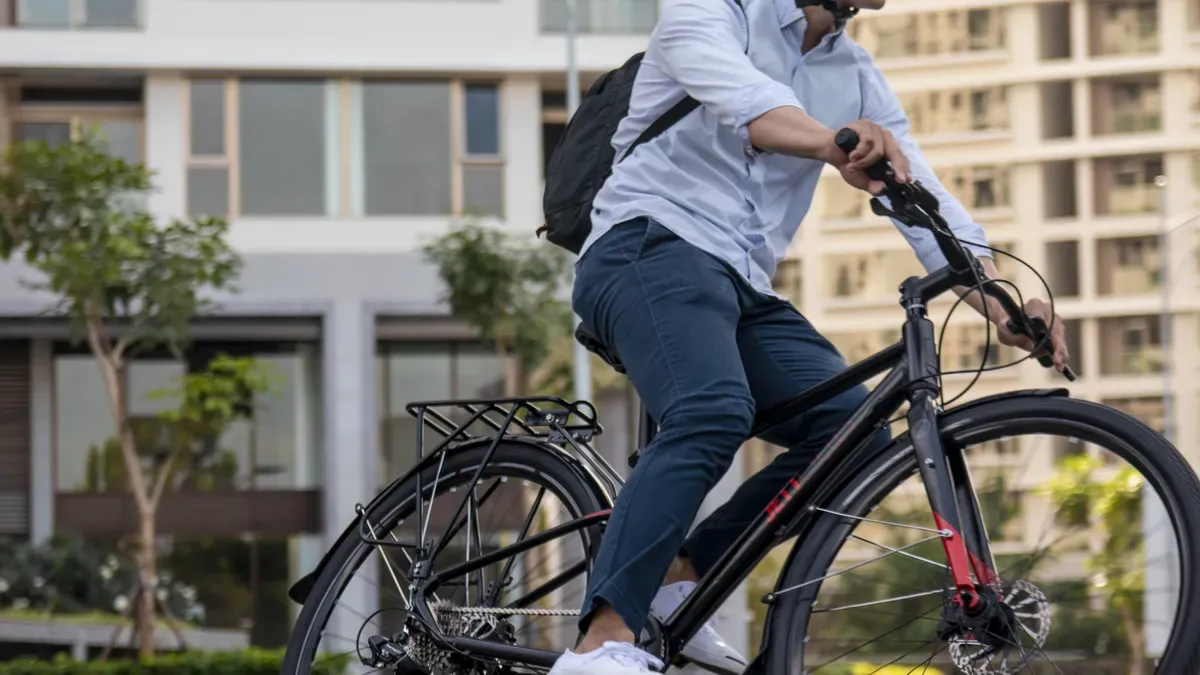
Safety plays a decisive role when starting out with an e-bike. The number of accidents is rising, especially among new riders and seniors.
In 2021, there were over 17,000 accidents involving pedelecs.
More and more people are riding e-bikes, and many underestimate the risks.
Percentage |
|
|---|---|
Self-inflicted falls |
13.2% |
Collisions with other road users |
8% |
Poor visibility |
Common in the dark season |
Inappropriate speed |
Common in the dark season |
Slippery road surfaces |
Common in the dark season |
Even small measures can significantly increase your safety.
Key Findings
Always wear a helmet. A helmet can reduce the risk of head injuries by up to 42 percent.
Check the brakes, tires, and battery before every ride. A quick safety check increases your safety and extends the service life of your e-bike.
Ride defensively and maintain sufficient distance from other road users. This protects you from sudden hazards and accidents.
E-Bike Safety Check & Equipment
Helmet and Clothing
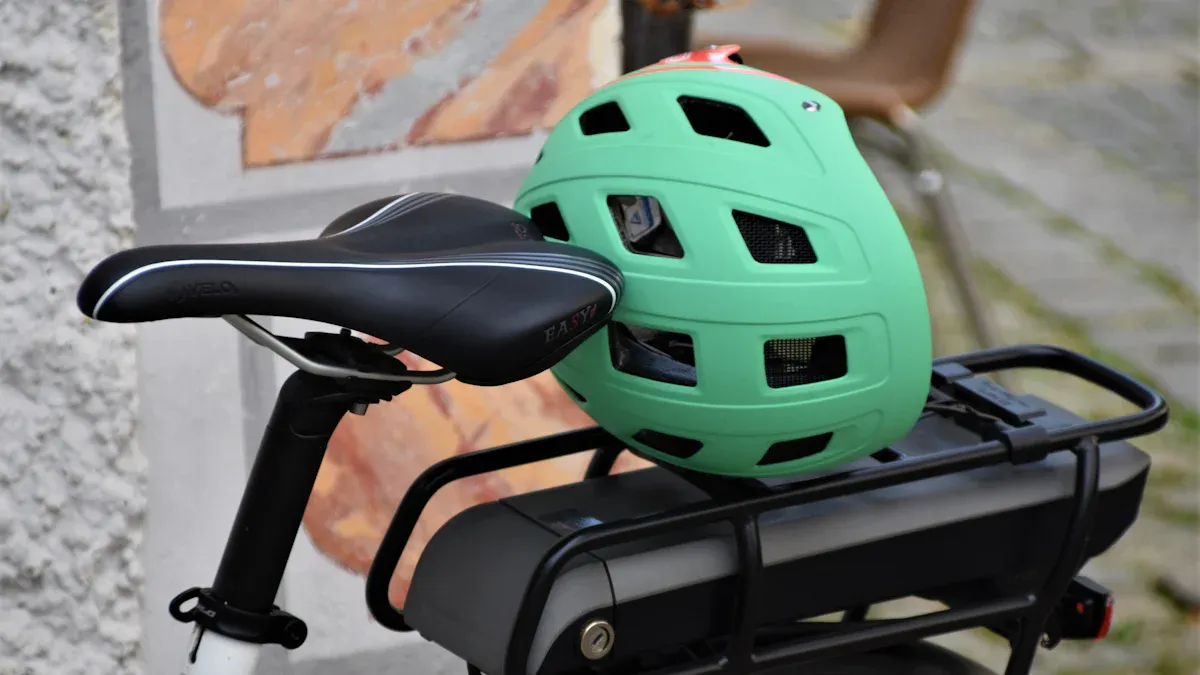
You should wear a helmet before every ride. A helmet protects your head in the event of a fall and can prevent serious injuries.
“In the event of a fall, a helmet can help prevent a serious head injury,” says Prof. Dr. Michael J. Raschke from the University Hospital Münster.
Protective effect of bicycle helmets |
Percentage reduction in head injuries |
|---|---|
For minor injuries |
|
For particularly severe injuries |
over 80% |
Road safety organizations recommend that you wear a helmet and choose bright clothing.
A helmet acts like a crumple zone and reduces impact forces during falls.
Wearing a helmet reduces the risk of head injuries by 42 percent.
Bright clothing and reflectors increase your visibility in traffic.
Garments with large reflective prints are particularly effective.
Eye-catching colors like yellow or orange make you more visible.
Reflective clothing improves your visibility in the dark.
Bright clothing and reflectors increase visibility from up to 140 meters.
Reflectors can save lives in an emergency.
Lighting and Visibility
You must ensure that your lighting is functional.
Description |
|
|---|---|
Lighting system |
Battery-operated lighting is allowed. Permanently attached lighting is no longer mandatory. |
Attachment |
The lighting must be securely attached and must not slip or cause glare. |
Approval |
All lighting elements must be approved by the Federal Motor Transport Authority (KBA). |
Front and rear lights are mandatory for all vehicle types in road traffic.
S-pedelec riders must also ride with their lights on during the day.
A valid insurance plate with lighting is mandatory for S-pedelecs.
You should check your lighting regularly.
Bright clothing reflects light better and increases detectability.
Reflectors on your e-bike and your clothing make you visible even in poor lighting conditions.
Before setting off: Check tires, brakes, battery, chain
You should do a quick safety check before every ride.
Recommended inspection frequency |
|
|---|---|
Brakes |
Once a year or every 1,000 to 1,500 kilometers |
Tires |
Every two to four weeks (air pressure check) |
Chain |
Every few weeks (cleaning and lubrication) |
Battery |
Annual inspection recommended |
Brakes must be checked regularly for wear.
You should check your tires for correct air pressure and wear.
You should clean and lubricate the chain every few weeks, especially after riding in the rain.
Basic maintenance every two to four weeks ensures safety.
A professional inspection once a year or after intensive use is recommended.
You can significantly increase your e-bike riding safety with these simple measures.
Tip: A quick safety check before every ride protects you and extends the life of your e-bike.
Riding Technique & Behavior in Traffic
Defensive Riding & Keeping Distance
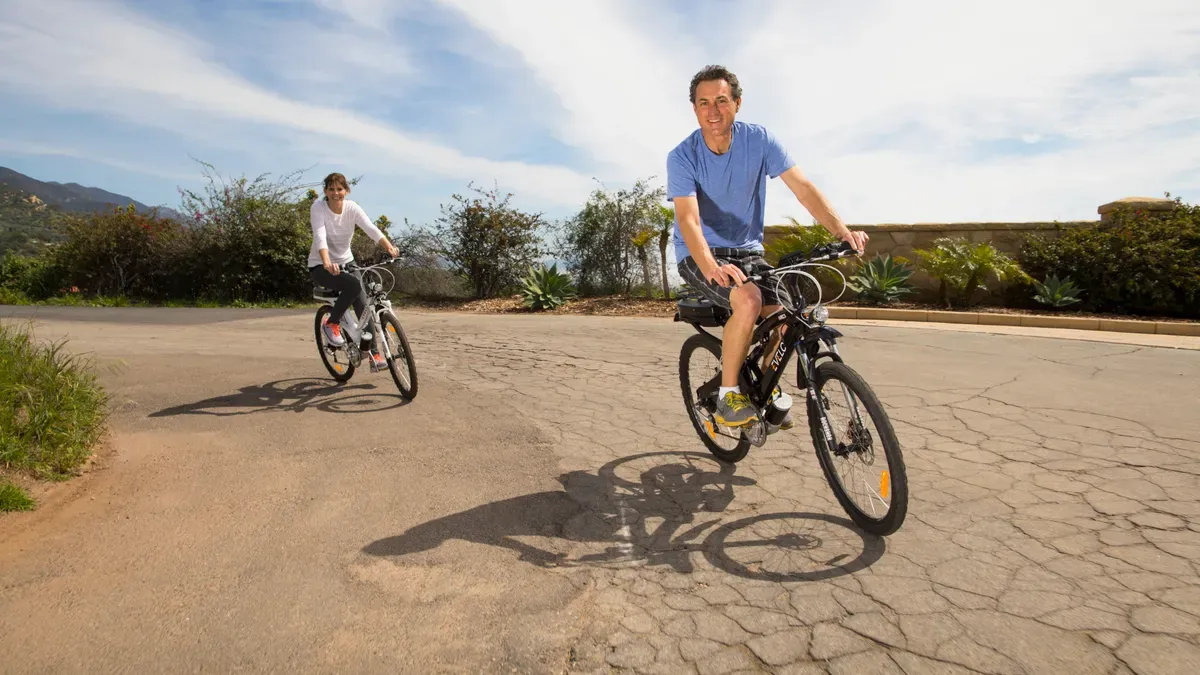
You should always ride defensively. Many e-bike beginners underestimate the speed and weight of their vehicle. Typical mistakes occur when you drive too close to other road users or brake abruptly. Traffic safety associations recommend clear minimum distances when overtaking:
Distance type |
Minimum distance |
|---|---|
Overtaking in built-up areas |
1.5 meters |
Overtaking outside built-up areas |
2 meters |
Maintain this distance from cars, bicycles, and pedestrians. You will protect yourself and others from sudden evasive maneuvers. Defensive riding means observing the traffic and reacting early. You should know and obey traffic rules. A quick look at the road ahead helps you detect obstacles in good time.
Tip: Never tailgate and always keep enough distance. This way you avoid dangerous situations.
Braking Distance and Speed on an E-Bike
An e-bike is heavier and faster than a normal bicycle. The higher weight and motor assistance extend the braking distance. You should adjust your speed to the environment. Many beginners underestimate the longer braking distance and brake too late. The additional mass generates higher contact pressure, which increases braking deceleration as long as the rear wheel does not lift off.
Ride more slowly in tight corners and on wet road surfaces.
Test the brakes regularly, especially before your ride.
Always keep both hands on the handlebars so you can react quickly.
Note: Practice braking in a safe area before you ride in public traffic.
Seating Position and Riding Technique for Beginners
The correct seating position has a major influence on safety and control. Physiotherapists recommend an upright seating position for beginners. This posture is easy on the back and gives you a better overview in traffic. A sporty position with the upper body leaning far forward is not suitable, as it requires well-developed muscles.
Choose a slightly forward-leaning seating posture (maximum 30-degree incline).
The correct saddle height is crucial: your leg should be almost fully extended when the pedal is at the bottom.
Sitting too far forward can strain the cervical spine.
The high weight of the e-bike affects handling. The correct basic position is the starting point for control and safety. You should practice riding technique regularly. The bike should do the work while you remain calm.
Tip: Take your time to get to know your e-bike. Practice starting off, braking, and cornering in a parking lot or a quiet street.
What should you consider as a beginner?
Always maintain enough distance from other road users.
Adjust your speed to the environment and the weather.
Practice the correct seating position and riding technique regularly.
Know the traffic rules and ride defensively.
Take your time to test the e-bike and get used to the riding feel.
With these measures, you increase your safety in traffic and have more riding fun.
Maintenance & Riding in Special Conditions
Regularly maintain your e-bike & care for the battery
Regular maintenance ensures safety and extends the service life of your e-bike. You should have your e-bike checked by a specialist dealer once a year. Many riders underestimate the importance of maintenance. Only about half adhere to maintenance intervals regularly.
Effects on e-bikes |
|
|---|---|
Improper handling |
Technical problems, especially with the battery and motor |
Failed self-repair |
Technical problems, especially with the battery and motor |
Lack of maintenance |
Technical problems, especially with the battery and motor |
You can extend the battery life with simple measures:
Remove the charger as soon as the battery is full.
Keep the battery charged between 20% and 80%.
Fully discharge the battery at least once a month.
Charge the battery at room temperature.
Dry the battery thoroughly after riding in the rain.
Take your time to test the e-bike and get used to the riding feel.
Take your time to test the e-bike and get used to the riding feel.
Take your time to test the e-bike and get used to the riding feel.
Tip: Do not store the battery fully discharged and protect it from extreme temperatures.
Safe riding in rain and darkness
Wet conditions, dusk, and uneven paths pose special challenges. You should ride more slowly in the rain and check your tire pressure regularly. In the dark, visibility is decisive.
Use bright lighting and reflective clothing.
Flashing lights are perceived better.
Side reflectors increase safety.
With sufficient lighting, you will be optimally seen by other road users.
You can be safe on the road even under difficult conditions with these measures.
You increase your safety if you check your e-bike regularly, ride defensively, and use the right equipment.
Further training strengthens your knowledge and skills.
You understand tasks better and stay motivated.
With practice and attention, you will become safer in road traffic.
FAQ
What should you consider on your first e-bike ride?
You should wear a helmet and reflective clothing. Check your e-bike for brakes, tires, and battery. Ride slowly and practice braking.
What lighting is mandatory for your e-bike?
You need a white front light and a red rear light. Reflectors on pedals and spokes increase your visibility in traffic.
What can you do if your e-bike gets wet in the rain?
Dry off the battery after the ride.
Check the brakes.
Store the e-bike in a dry place.