
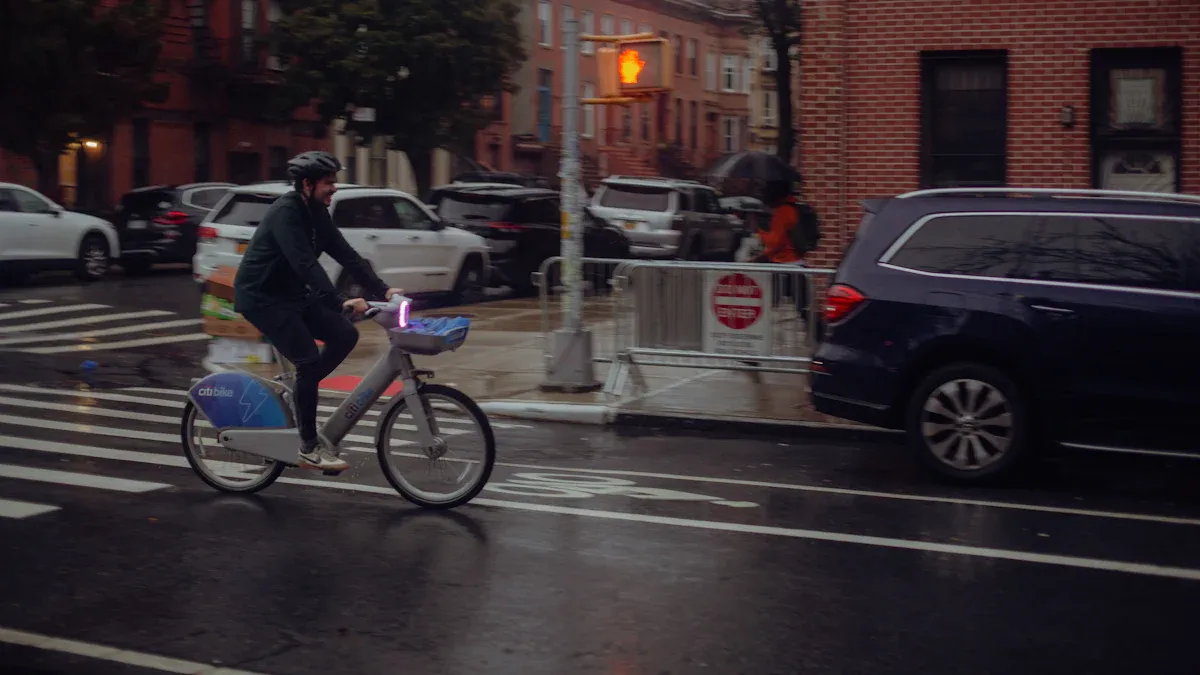
Riding an e-bike in the rain requires extra caution. You should know that most e-bikes are protected against normal rain and splashing water. The so-called IP rating tells you how well the components of your e-bike are protected against water. For example, an e-bike with the protection class IP54 offers protection against splashing water from all directions. Higher protection classes such as IPX6 or IPX7 even protect against strong water jets or temporary immersion in water. With the right knowledge and appropriate equipment, you can safely use your e-bike in the rain and minimize risks.
Key Takeaways
Check the IP rating of your e-bike. Higher classes provide better protection against water.
Ride carefully in the rain. Slow down and maintain a greater distance.
Use lights and reflective clothing to be more visible.
Cover your e-bike and park it in dry places to avoid damage.
Clean and dry your e-bike after rain to prevent rust.
Is your e-bike rainproof?
What does the IP rating mean?
Explanation of IP codes (e.g., IP54, IP67) and their meaning
The IP protection class indicates how well your e-bike is protected against the ingress of dust and water. The code consists of two digits: the first digit describes the protection against foreign objects such as dust, the second against water. For example, IP54 means that your e-bike is protected against dust in harmful quantities and splashing water from all directions. Higher protection classes like IPX7 even offer protection against temporary immersion.
Here is an overview of the protection levels:
IP Class |
Meaning |
|---|---|
IPX0 |
No protection against water |
IPX4 |
Protection against splashing water |
IPX5 |
Protection against water jets |
IPX6 |
Protection against powerful water jets |
IPX7 |
Protection against temporary immersion |
How do you check the water resistance of an e-bike?
To check the water resistance of your e-bike, you should check the technical specifications in the owner's manual or on the manufacturer's website. Look for the IP protection class. If you are unsure, ask your dealer. Avoid using your e-bike in the rain if no protection class is specified.
Limits of water resistance
Risks during heavy rain or immersion in water
E-bikes are designed for normal rain and splashes, but they are not completely waterproof. In heavy rain or if the e-bike is submerged in water, moisture can penetrate the electronics or the battery. This can lead to damage that is expensive to repair. The motor and battery are particularly sensitive to water.
Why prolonged exposure to rain should be avoided
Long rides in the rain increase the risk of water getting into the sensitive parts of your e-bike. Even if your e-bike has a high IP rating, you should not expose it to rain for unnecessarily long periods. Carefully dry your e-bike after every ride to prevent rust and other damage. This allows you to safely use your e-bike in the rain and extend its service life.
Safe riding in the rain

Adjusting riding behavior
Reduce speed and adjust braking behavior
Rain changes road conditions significantly. You should reduce your speed to maintain control of your e-bike. Wet roads increase braking distances, so it is important to brake early and gently. Sudden braking maneuvers can increase the risk of a fall. Adjust your riding style to ensure a safe journey.
Maintain a safe distance and ride defensively
A greater safety distance from other road users gives you more time to react to unexpected situations. Defensive riding helps you recognize hazards such as puddles or slippery surfaces in time. This allows you to safely use your e-bike in the rain and avoid accidents.
Increasing visibility
Use of lights and reflectors
Rainy weather reduces visibility. Ensure that your e-bike's lights are switched on. Reflectors on your bike and your clothing increase your visibility to other road users. This is especially important at dusk or in heavy rain.
Wearing conspicuous, weatherproof clothing
Bright, reflective clothing makes you more visible. A weatherproof jacket protects you from getting wet and keeps you warm. With the right clothing, you can focus on riding without being distracted by the cold or dampness.
Avoiding road hazards
Avoid slippery surfaces such as tram tracks and zebra crossings
Wet surfaces like tram tracks or zebra crossings become extremely slippery. Ride slowly and avoid sharp steering or braking when crossing such areas. This reduces the risk of losing control of your e-bike.
Avoid puddles and deep bodies of water
Puddles can be deeper than they look and may contain hidden obstacles. Drive around them whenever possible. Too much water can penetrate the sensitive parts of your e-bike and cause damage. With this caution, you can safely use your e-bike in the rain and extend its service life.
Tip: Ride with extra attention in the rain and adhere to these safety measures. This will keep you safe and protect your e-bike from damage.
Protective measures for the e-bike
Preventive protection
Use of protective covers and waterproof casings
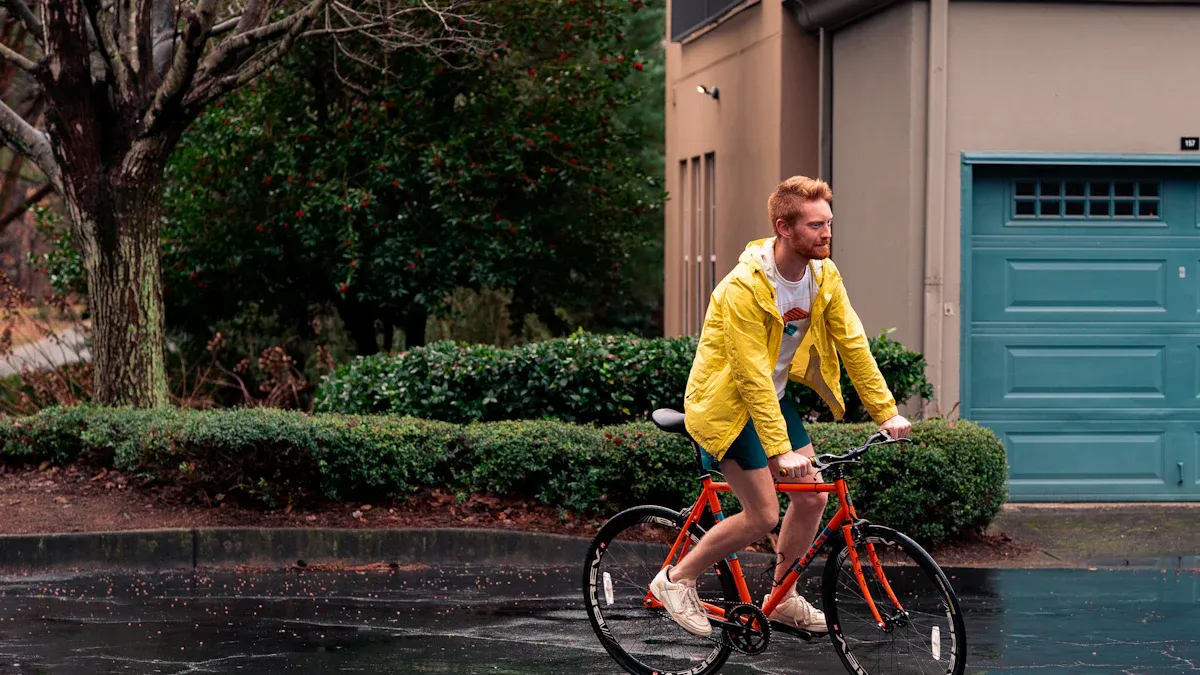
Protect your e-bike from rain by using special protective covers or waterproof casings. These protect sensitive parts such as the battery slot and motor from moisture. Covers that are precisely tailored to your model are particularly practical. If you transport your e-bike on a bike rack during rain, you should not use a loose cover. Instead, you can transport it inside the vehicle to keep it dry and clean. This keeps your e-bike in good condition even in adverse weather conditions.
Parking the e-bike in protected places
A protected parking space is essential to keep your e-bike away from rain and moisture. Leaving it in the rain for long periods can cause rust on various components and damage the electronics. Protected parking options, such as garages or covered bike racks, prevent such damage and extend the service life of your e-bike. If you do not have an interior space available, a waterproof bike cover helps you to safely use your e-bike in the rain.
Tip: Avoid unnecessary moisture by choosing alternative modes of transport during heavy rain.
Maintenance after the ride
Cleaning and drying the e-bike after rainy rides
After a rainy ride, you should thoroughly clean and dry your e-bike. Remove dirt and water residue with a soft cloth. Pay special attention to the motor, battery, and seals. These areas are sensitive and require special care. Regular cleaning keeps your e-bike roadworthy and ensures a longer service life.
Application of anti-rust spray and inspection of seals
An anti-rust spray protects metal parts from corrosion. Apply it after cleaning to prevent rust formation. Also, check the seals of your e-bike regularly. Damaged seals can allow water to enter and jeopardize the electronics. A professional inspection once or twice a year ensures that all parts of your e-bike remain in perfect condition.
Note: Good maintenance not only increases the service life of your e-bike but also your riding enjoyment.
What to do if the e-bike gets wet?
Immediate measures
Drying the e-bike and its components
If your e-bike has become wet, you should act immediately to prevent damage. Start by removing the battery and drying it thoroughly with a lint-free cloth. Make sure the contacts on the battery remain dry, as moisture here can lead to short circuits. Also, dry the chain and other metal parts to prevent rust formation.
Tip: Avoid leaving your e-bike out in the pouring rain. Too much moisture can cause long-term damage to the electronics and metal parts.
Checking for visible damage or moisture
After drying, you should carefully inspect your e-bike. Look for visible damage such as cracks or corrosion on the metal parts. Also check whether moisture has penetrated the motor or electronics. If you notice unusual noises or malfunctions, this could be an indication of moisture damage. In such cases, it is advisable to seek professional help.
When professional help is necessary
Signs of possible damage to the motor or battery
A wet motor or battery can cause serious problems. If your e-bike suddenly loses power or the battery no longer charges properly, moisture could be the cause. Corrosion on the contacts or an unusual smell from the motor area are also warning signs. You should not ignore these problems, as they can impair the safety and functionality of your e-bike.
Benefits of a professional inspection
A professional inspection offers you peace of mind if you suspect that your e-bike has been damaged by moisture. Specialized workshops can thoroughly check the electronics and battery and repair potential damage. They also identify wear or corrosion early on that could lead to bigger problems in the long run. Regular inspections help you to safely use your e-bike in the rain and extend its service life.
Note: Specialized workshops recommend having e-bikes serviced regularly, as they are exposed to higher wear and tear than conventional bicycles.
Riding an e-bike in the rain requires preparation and attention. Be sure to adjust your riding style, stay visible, and avoid hazards such as slippery surfaces. Protect your e-bike with covers and dry it thoroughly after the ride. Regular maintenance and inspections extend the service life of your e-bike.
Tip: With the right equipment and caution, you can be safe on the road even in the rain. Don't let the weather deter you and enjoy the ride – responsibly and safely! 🌧️🚴♂️
FAQ
Can I ride my e-bike in heavy rain?
Yes, you can safely use your e-bike in the rain as long as it has a sufficient IP rating. However, avoid heavy rain or prolonged exposure, as this could damage the electronics and the battery.
What should I do if my e-bike gets wet?
Dry your e-bike immediately. Remove the battery and clean the contacts. Check all parts for moisture or damage. If you notice problems, seek professional help.
How do I protect my e-bike from rain?
Use waterproof covers and park your e-bike in protected places. After the ride, clean and dry it to prevent rust and damage.
Can I ride my e-bike through puddles?
It is better to avoid puddles. They can be deeper than they look, and water can penetrate sensitive parts such as the motor or battery.
How can I increase my safety when riding in the rain?
Reduce your speed and maintain a greater safety distance. Use lights and reflectors to be more visible. Wear weatherproof clothing to protect yourself from getting wet.