
Are you starting out with an e-bike and wondering how to stay safe on the road? Safety is the top priority, as the number of e-bike accidents has risen sharply in recent years. Older people are particularly affected. The following table shows the trend:
Year |
|
|---|---|
2014 |
2,200 |
2023 |
23,900 |
Key Findings
Always wear a helmet to prevent head injuries. A helmet can save your life.
Regularly check your e-bike for technical safety. Pay attention to the brakes, tires, and lights.
Use reflective clothing to be more visible in traffic. This protects you from accidents.
E-Bike Basic Equipment
Helmet & Protective Gear
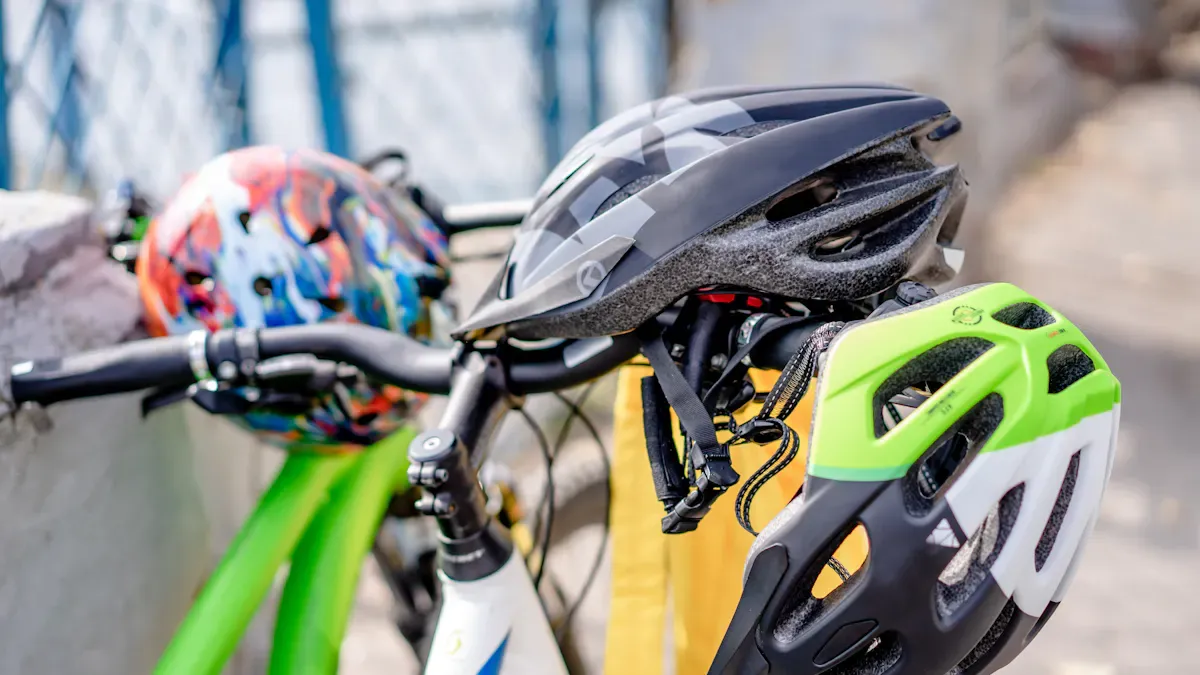
A helmet protects your head in the event of a fall. Many underestimate the risk, but the speed on an e-bike is often higher than on a regular bicycle. You should always wear a helmet, even if the law does not always require it. The following table shows when a helmet is mandatory:
E-bike type |
Helmet requirement |
Description |
|---|---|---|
Pedelecs (up to 25 km/h) |
None |
Wearing a helmet is voluntary. |
S-Pedelecs (up to 45 km/h) |
Yes |
Helmet is legally required and must meet EU safety standards. |
E-bikes (up to 20 km/h, without pedal assistance) |
Yes |
Helmet must comply with moped helmet regulations. |
The risk of head injuries is significantly increased with an e-bike. Without a helmet, the danger of serious injury rises:
E-bikers without a helmet have a six times higher probability of brain hemorrhages.
The risk of traumatic brain injury is 6.4 times higher without a helmet.
A helmet can protect you from life-threatening consequences.
Protective gear such as gloves and padded clothing offers additional protection in the event of falls. You will feel safer and be better prepared.
Lighting & Technical Check
Good lighting is mandatory. You must equip your e-bike with functioning lights. The Road Traffic Licensing Regulations (StVO) prescribe the following lighting:
Lighting element |
Description |
|---|---|
Headlight |
At least one forward-facing headlight with a white light is required. |
Taillight |
A red taillight with a reflector is mandatory. |
Passive elements |
Spoke reflectors, pedal reflectors, and a front white reflector are necessary. |
Mounting |
Lighting equipment must be firmly attached to the bike but may be removable. |
Power source |
Headlights and taillights may be battery-powered. |
You should perform regular technical checks. Check the brakes, tires, and lighting. A first inspection is recommended after 300 kilometers. During this, check safety-relevant parts such as brakes and gears. Check again after no more than 2,000 kilometers or one year:
Inspect the tires for damage and check the air pressure.
Check the brake pads, brake levers, and perform a brake test.
Test the lighting before every ride.
This ensures that your e-bike remains roadworthy at all times.
Reflective Clothing
In traffic, visibility is everything. Reflective clothing makes you visible from a great distance. Many drivers only recognize cyclists in dark clothing very late. The advantages of reflective clothing:
Bright clothing increases visibility to up to 40 meters.
Neon-colored, reflective clothing increases visibility to up to 160 meters.
Moving reflective elements on arms and legs increase recognizability through the biomotion effect.
Reflectors are especially helpful in bad weather and darkness.
Tip: Always wear a reflective vest or accessories. You will be seen faster in traffic and be safer on the road.
E-Bike Riding Technique
Starting & Braking
You should be especially careful when starting off with an e-bike. The motor assistance often kicks in faster than you are used to from a normal bicycle. Here is how to keep control:
Only apply power cautiously when starting. Start slowly so you don't take off too fast.
Keep both hands firmly on the handlebars and look ahead.
Brake in good time and with sensitivity, especially in wet conditions or on poor roads.
Always use both brakes at the same time. This distributes the braking force better and brings you to a safe stop.
Build up braking force slowly so the tires don't skid.
The braking distance on an e-bike is often longer than on a normal bicycle. You should therefore brake early and always remain alert.
Curves & Speed
Curves can become a challenge on an e-bike because you are traveling faster. Always adjust your speed to the road conditions. Especially on wet roads or gravel, you should drive slower. Lean slightly into the curve and keep your balance. Brake before the curve, not during it. This prevents the tires from skidding.
Tip: Observe the road ahead closely. Always anticipate that other road users might react suddenly or that obstacles might appear.
Using Assistance Levels Correctly
Setting the assistance levels correctly helps you ride safely and relaxed. Start with a low level while you are still getting used to the handling. This helps you maintain control and focus on your surroundings. Adjust the assistance level to your experience and the current situation. In the city or in heavy traffic, a low level is often sufficient. On long stretches or inclines, you can increase the assistance.
Always start with a low assistance level.
Increase the level only when you feel safe.
Adjust your speed to the surroundings to reduce the risk of accidents.
A proactive and defensive riding style protects you and others. Pay attention to the behavior of other road users. Wear bright clothing and use reflectors so you are better seen.
By constantly observing the flow of traffic, you can recognize dangerous situations early and react in time.
If you follow these tips, you will ride more safely and with more self-confidence.
Traffic Rules for E-Bike Riders
StVO & Cycle Paths
You must adhere to the same traffic rules as other cyclists. The Road Traffic Regulations (StVO) provide clear rules. Here are the most important points you should keep in mind:
You must observe right-of-way rules just like with a regular bike.
Always signal clearly and in time when turning.
Using your mobile phone on the handlebars is prohibited and dangerous.
The same blood alcohol limits apply to e-bikes as they do to drivers. You are committing an administrative offense at just 0.5 per mille. From 1.1 per mille, it is even a criminal offense. Use cycle paths when available and approved for your vehicle.
Tip: Always drive attentively and follow traffic signs. This protects yourself and others.
Keeping Distance
You should always leave enough distance to other road users. Your braking distance increases, especially in wet conditions. Therefore, keep a larger safety distance from cars, bicycles, and pedestrians. This allows you to react in time if someone suddenly stops or turns.
More distance in bad weather
Keep the braking distance in mind
Differences to Bicycles
Not every e-bike is the same. The regulations differ depending on the model. The following table shows the most important differences:
E-bike class |
Speed |
Legal Status |
Helmet requirement |
Insurance requirement |
|---|---|---|---|---|
Pedelec |
up to 25 km/h |
Bicycle |
No |
No |
S-Pedelec |
up to 45 km/h |
Moped |
Yes |
Yes |
E-bikes with starting aid |
up to 20 km/h |
Bicycle |
No |
No |
Pay attention to which class your e-bike belongs to. This is the only way to know which rules apply to you.
Accident Risks & Prevention
Common Mistakes
Many accidents happen because you make typical mistakes. You often underestimate the motor's power and accelerate too quickly. This can cause you to lose control when starting. Excessive speed also increases the risk. Many e-bike riders brake too late or use only one brake. This lengthens the braking distance and can lead to falls.
Acceleration too fast at the start
Speed not adjusted
Unsafe braking, often only with one brake
Routine sometimes leads you to make risky decisions. The weight and motor assistance change the handling, especially in curves.
Tip: Practice starting and braking in a safe place before riding in traffic.
Riding in Wet & Dark Conditions
The risk of accidents increases in rain and darkness. Braking distances become longer because the tires have less grip. You should ride slower and brake in good time. Watch out for slippery road markings and wet leaves. Wear bright, reflective clothing and check that your lights work. This way, you are seen better.
Adjust your speed to the weather conditions.
Avoid sharp leaning in curves.
Switch to public transport during extreme weather.
Seeing and being seen protects you most.
Responding Safely in Dangerous Situations
You can avoid many accidents if you ride proactively. Keep your distance from others and always expect mistakes from drivers or pedestrians. Brake early and keep both hands on the handlebars. Stay calm if something unexpected happens. The risk of a fatal accident is three times higher with a pedelec than with a normal bicycle. Therefore, always remain alert and ride defensively.
Category |
E-bike rider |
Classic cyclist |
|---|---|---|
Number of accidents |
4,204 |
- |
Number of deaths |
33 |
24 |
Risk per 1,000 accidents |
7.9 |
3.6 |
Safety starts with your attention and your behavior.
E-Bike Theft Protection
Parking securely
You best protect your e-bike by parking it correctly. Always choose a fixed object, such as a bike rack or a lamp post. Secure the lock through the frame and the rear wheel. Well-lit and busy locations significantly reduce the risk of theft. The following table shows how various measures work:
Measure |
Effect |
|---|---|
Security systems in apartments |
up to 50% reduced theft risk |
Secure, well-lit bicycle parking |
reduces theft risk by up to 50% |
Bicycle registration system at work |
improves recovery by 40% |
Theft rate in urban vs. rural areas |
three times higher in urban areas |
Tip: Never park your e-bike in dark or isolated places.
Lock & Coding
A good lock is the most important foundation for theft protection. You have various options:
Chain locks provide solid basic protection and are robust.
U-locks are considered particularly secure because they are made of hardened steel.
Folding locks are flexible and easy to transport.
Make sure your lock meets the Sold Secure standard. For high-quality models, at least the Silver level is recommended. Smart locks with Bluetooth technology, such as the Abus U-lock model 770A SmartX, allow for keyless operation via app.
Coding makes your bike unique. An individual code is applied to the frame and stored in a database. This deters thieves and makes recovery easier.
Registration
You can have your e-bike registered. The coding is recorded in a special database. In the event of theft, your bike can be clearly identified. This allows the police to find the rightful owner faster. The coding acts as a deterrent because stolen bikes are easier to track down.
The number of stolen bicycles remains high:
Year |
Stolen e-bikes and bicycles |
|---|---|
2024 |
|
2023 |
145,000 (estimated) |
By registering, you increase the chance of getting your e-bike back.
Observe these key tips for your safety:
Start carefully.
Adjust your speed.
Ride with foresight.
Wear reflective clothing.
Check your e-bike regularly.
Practice makes you safer and makes riding fun. 🚲
FAQ
Do I have to insure my e-bike?
You don't need insurance for pedelecs. For S-pedelecs, liability insurance is mandatory. Theft protection is always worth it. 🛡️
How do I maintain the e-bike battery correctly?
Charge the battery regularly.
Avoid extreme temperatures.
Store the battery in a dry place at room temperature.
Use the original charger.
Am I allowed to ride my e-bike on sidewalks?
E-bike type |
Sidewalk allowed? |
|---|---|
Pedelec |
No |
S-Pedelec |
No |
You are not allowed to ride any e-bike on sidewalks.