
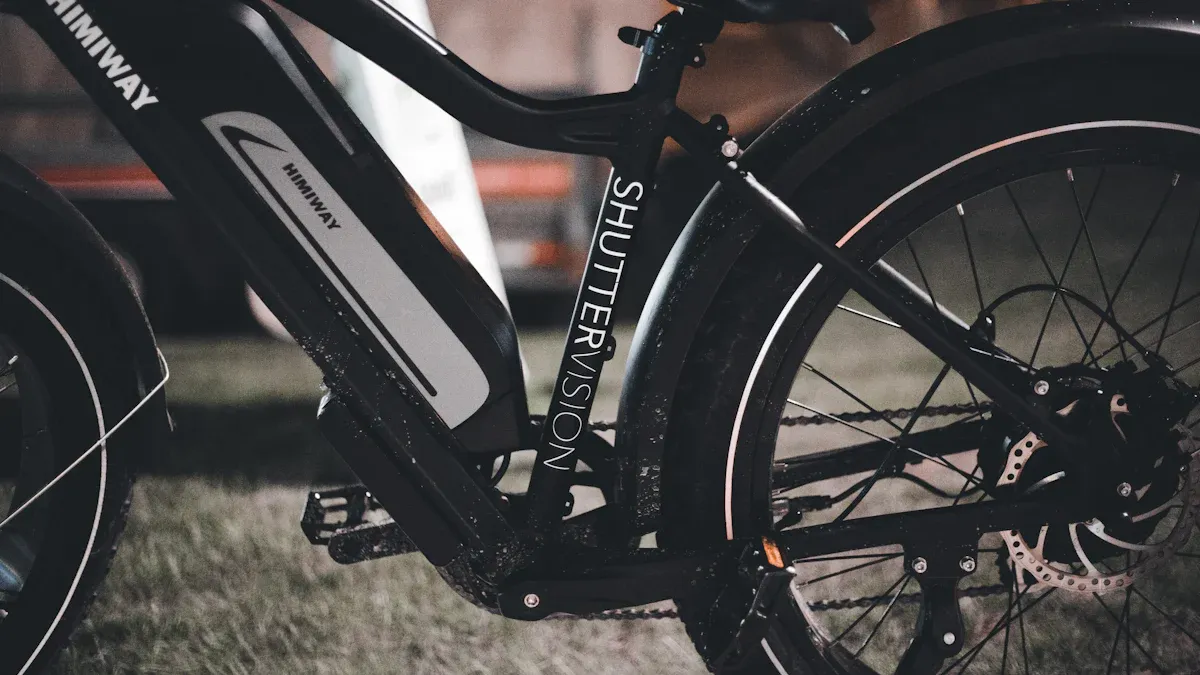
An e-bike belt drive is worth it because it provides a highly durable and low-maintenance riding experience. The belt lasts for many years and requires almost no care. You can look forward to clean pant legs and a quiet ride. The drive remains reliable even in daily use or on long distances. Frequent riders and commuters in particular benefit from this technology, which rarely causes issues even in rain and dirt.
Key takeaways
A belt drive on an e-bike lasts much longer than a chain and requires almost no maintenance.
The drive runs very quietly and remains reliable even in rain and dirt.
You don't need to oil the belt, which keeps your clothes clean and makes maintenance easier.
Belt drives are ideal for commuters, frequent riders, and anyone looking for a robust, low-maintenance e-bike.
When buying, you should pay attention to the right gearing, a powerful motor, and good equipment to get the best riding experience.
E-bike belt drive at a glance
How it works
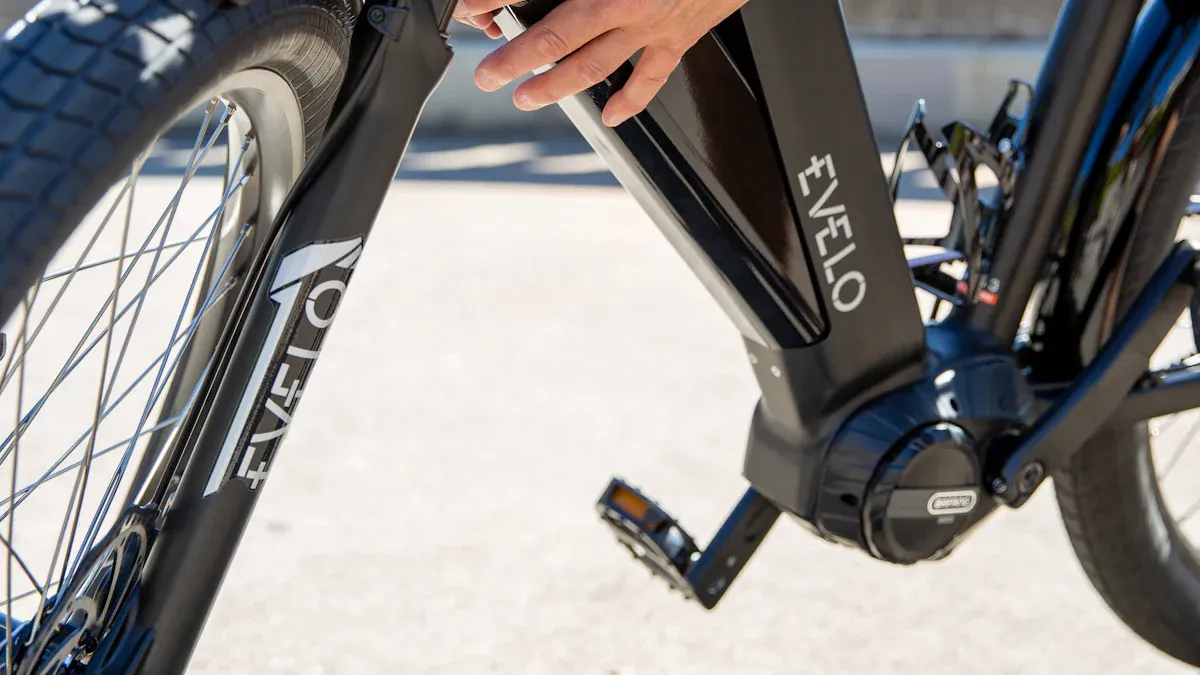
An e-bike belt drive uses a special belt made of carbon and nylon to transfer power from your pedals to the rear wheel. As you pedal, the teeth of the belt engage with the sprockets, moving the wheel. Unlike a chain, there are no open links, but a continuous belt. The carbon tension members inside ensure that the belt does not stretch, even under heavy load.
Important technical values help you understand its efficiency:
Tensile and bending stresses show how much load is placed on the belt.
The pretension force keeps the belt taut.
The bending frequency indicates how often the belt bends while riding.
Maximum transmissible power and specific power show how much force the belt can transfer.
You do not need any lubrication. A simple water spray is sufficient for cleaning. You must check the tension regularly to ensure the belt runs quietly and efficiently.
Difference from a chain
A belt drive differs from a classic bicycle chain in many ways. The following table shows the most important differences:
Aspect |
Belt drive |
Chain drive |
|---|---|---|
Service life |
20,000–30,000 km, very durable |
7,000–10,000 km, depending on care |
Maintenance |
Barely any maintenance, no oil needed |
Regular lubrication and cleaning |
Noise levels |
Very quiet |
Often louder, can rattle |
Material |
Carbon/nylon |
Metal |
Cost |
Higher initial cost |
Cheaper |
Repair |
Replacement belt more expensive, harder to do on the road |
Easy replacement possible |
Weather resistance |
Resistant to dirt and rust |
Susceptible to rust and dirt |
Gear ratio options |
Limited, but sufficient for daily use |
Very flexible, many variants |
Tip: If you are looking for a bike for everyday use or long tours, you will particularly benefit from the durability and quiet running of a belt drive. For sporty off-road use, a chain offers more flexibility.
Advantages
Durability
With an e-bike belt drive, you benefit from an impressive lifespan. The belt is usually made of carbon fibers and often lasts up to three times longer than a conventional bicycle chain. You can ride for many thousands of kilometers without having to worry about a replacement. The construction protects the belt from rapid wear and makes it particularly robust – ideal if you use your bike daily or plan long tours.
Low maintenance
You save a lot of time and effort because a belt drive requires barely any care. You do not need to oil or lubricate the belt. A short blast of water is enough for cleaning. This makes everyday life much easier, especially if you are on the go often.
Ryan Osborn emphasizes that belt drives are particularly suitable for commuting and touring because they are low-maintenance, durable, and suitable for all weather. He points out that less cleaning time and longer component life significantly reduce maintenance effort.
In addition, user reports and studies show:
Belt drives require no cleaning, no oiling, or lubrication.
The lifespan of a Gates belt can be up to three times longer than that of a chain.
You need to buy spare parts less frequently and save money in the long run.
Quiet operation
An e-bike belt drive runs almost silently. You hear almost nothing while riding because the belt does not rattle or grind. This ensures a pleasant riding experience, especially in the city or on long distances. Many users report that they find the quiet running very pleasant. You can concentrate better on traffic or nature without distracting background noises.
Weather resistance
With a belt drive, you are safe in all weather conditions. Rain, snow, or dirt don't affect the system. The materials are corrosion-resistant and are not damaged by moisture.
The belt drive system remains reliable even in heavy rain.
The design sheds water quickly and protects against rust.
Even under extreme conditions, the drive remains stable and functional.
You can be sure that your drive will still work perfectly even after many rides in the rain.
Cleanliness
A belt drive stays clean because you don't have to use oil or grease. Your pant legs and hands remain free of dirt. This makes everyday life more pleasant, especially when commuting to work or carrying the bike often.
Drive system |
Cleanliness and maintenance |
|---|---|
Belt drive |
Low-maintenance, requires no lubrication, stays cleaner as a result |
Chain drive |
High maintenance, regular lubrication necessary, leads to dirt on the bike and clothing |
The belt drive operates more cleanly than a chain, as it does away with oily messes. You don't have to worry about dirty clothes.
Disadvantages
Costs
You usually pay more for an e-bike with a belt drive than for a model with a chain drive. The higher acquisition costs are due to the special materials and more complex technology. A toothed belt costs about 80 euros, whereas a chain only costs 20 to 30 euros. The belt pulleys and corresponding accessories are also more expensive. The following table shows the most important differences:
Cost factor |
E-bike belt drive |
E-bike chain drive |
|---|---|---|
Acquisition costs |
High (approx. €80 for toothed belt) |
Low (approx. €20–30 for chain) |
Maintenance effort |
Very low |
High |
Service life |
5–8 years |
2–3 years |
Maintenance costs |
Low |
High |
Although you pay more at the beginning, you save later on maintenance and spare parts. The longer service life of the belt often offsets the higher costs.
Retrofitting
You cannot easily retrofit every bicycle with a belt drive. The frame must have a special opening in the rear triangle, as the belt cannot be opened like a chain. Many standard frames are not suitable. For retrofitting, you also need special parts and tools. The costs for a complete belt drive system range between 200 and 400 euros. A suitable crankset or adapter costs an additional 50 to 250 euros. If your frame does not fit, you have to have it modified, which causes additional costs.
Tip: Before buying, check whether your bike is suitable for a belt drive. Retrofitting is usually only worth it for high-quality bikes.
Spare parts
You won't find spare parts for belt drives everywhere. You usually only get them from specialized dealers or directly from the manufacturer. The selection is smaller than for chain drives. If you have a defect on the road, repairs can be more difficult. A replacement belt costs more than a chain. The matching pulleys are also more expensive. You should find out where you can get spare parts before a long trip.
Note: Always plan for a replacement belt on longer trips so that you can continue riding quickly in an emergency.
Technology
Materials
With modern belt drives, you benefit from high-quality materials. Carbon plays a central role. Manufacturers like Gates rely on carbon fibers because they make the belt particularly stable and durable. The combination of carbon, polyurethane, and nylon ensures that the belt does not tear or stretch, even under heavy load.
Here you can see the most important material advantages at a glance:
Material statistics / Property |
Description / Advantage with carbon in the belt drive |
|---|---|
Longer durability |
Carbon fibers make the belt more resistant to wear and damage, leading to a longer service life. |
Lower maintenance effort |
No lubricant required, only occasional cleaning, saves time and money. |
Quieter and low-vibration |
Carbon belts generate less noise and vibration than conventional chains. |
Clean operation |
Closed system prevents dirt transfer and contact with lubricants. |
Higher initial costs |
Manufacturing from carbon fibers leads to higher costs, indicating special material properties. |
As you can see, an e-bike belt drive with carbon offers you high durability, quiet running, and less maintenance effort.
Innovations
The technology behind the belt drive is constantly evolving. Many manufacturers rely on innovations to increase efficiency and comfort. An important point is the automatic adjustment of belt tension. At low power, the pretension remains low, which improves efficiency. Under heavy load, the tension increases so that the belt does not skip.
Tip: The belt drive shows its strengths especially in e-bikes with a power of 200 watts or more. You benefit from better efficiency and a longer service life.
Many e-bikes today achieve mileages of up to 30,000 kilometers with a belt drive. You only need to clean it occasionally and check the tension. Manufacturers like Riese & Müller or Brose rely on carbon-reinforced belts that ensure quiet and low-vibration running. The wide range of models shows that the belt drive is a future-proof alternative to the chain.
You get less maintenance and more comfort.
The technology remains efficient even under high load.
More and more brands are offering models with innovative belt drives.
An e-bike belt drive brings you not only modern materials but also advanced technology for the future.
Top models
Models
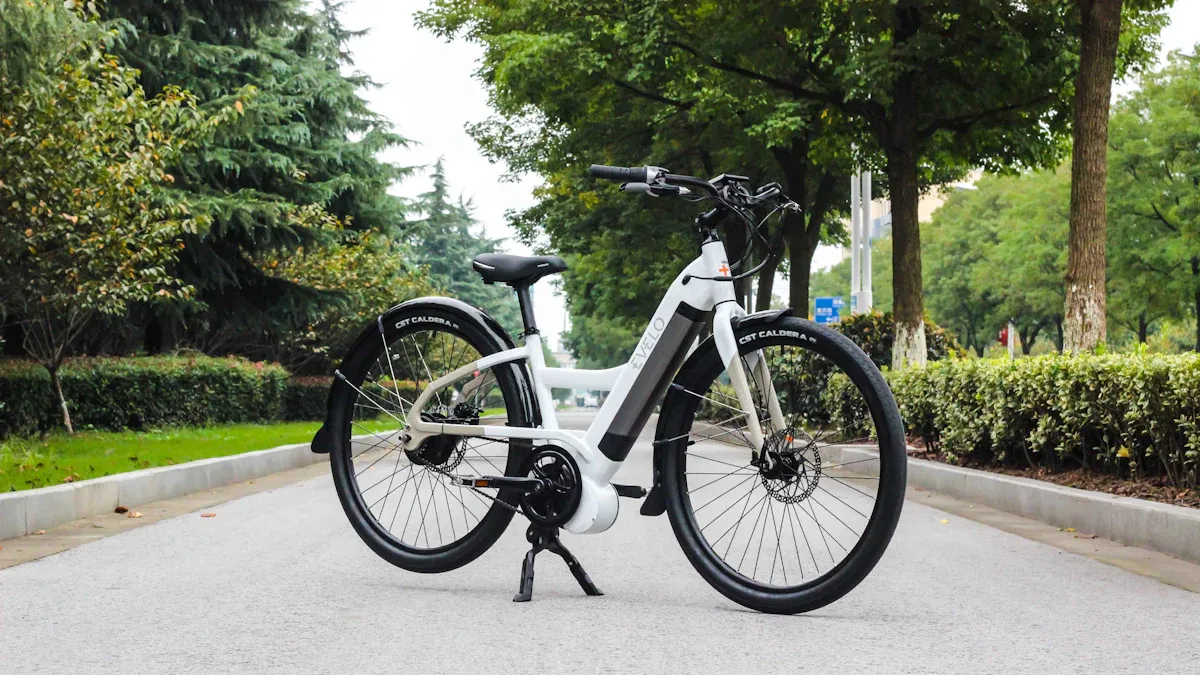
You can find many high-quality e-bikes with belt drives on the market today. The following table shows some of the best models that have impressed in recent tests:
Model name |
Type |
Special feature |
Test result (Source) |
Motor |
Battery (Wh) |
Gearing |
Equipment |
|---|---|---|---|---|---|---|---|
KTM Macina City 610 Belt |
City bike |
Belt drive |
Bosch Performance Line CX Gen 4 |
625 |
Shimano Nexus |
Hydraulic brake, hub gear, step-through frame |
|
Cube Kathmandu Hybrid Comfort Pro 800 |
Trekking bike |
Belt drive |
Similar models Grade 2.0 |
Bosch Performance Line CX |
800 |
Enviolo Trekking |
Hydraulic brake, hub gear, standard frame |
Kalkhoff Image 3.B Excite |
City bike |
Belt drive |
Grade 2.2 (similar models Stiftung Warentest) |
Bosch Performance Line |
500 |
Shimano Nexus |
Hydraulic brake, hub gear, step-through/trapeze frame |
City bike |
ABS technology |
“Good” (ElektroRad Magazine) |
Bosch Performance Line CX Smart System |
750 |
Enviolo Trekking |
Hydraulic disc brake, suspension seat post |
|
Flyer Gotour 6 |
City bike |
Stable handling |
“Very good” (Stiftung Warentest 2024) |
Bosch motor |
N/A |
Hub gear |
Quiet motor operation, user-friendly |
Many of these models offer you a low-maintenance hub gear system, a powerful motor, and a long range. The KTM Macina City 610 Belt in particular is impressive due to its very good rating and ease of use. The Kalkhoff Image 7 Excite+ ABS scores points with its modern ABS technology and high level of comfort.
Brands
You can rely on well-known brands such as KTM, Kalkhoff, Cube, Flyer, and Diamant. These manufacturers focus on quality and innovative technology. KTM offers you robust city bikes with comfortable features. Kalkhoff is impressive with a large selection of city and trekking bikes, often equipped with hydraulic brakes and suspension seat posts. Cube stands for sporty trekking bikes with powerful motor performance. Flyer is known for quiet motors and user-friendly operation.
Tip: Many test reports praise the low-maintenance drives and high-quality workmanship of these brands. The Diamant 247 Deluxe, for example, received the grade “very good” for its combination of Alfine 11-speed hub gears and low weight. With these brands, you benefit from quiet, clean, and long-lasting e-bikes.
If you are looking for an e-bike with a belt drive, you will find many suitable models for everyday use, touring, and city riding from these manufacturers.
Buying guide
Tips
When buying an e-bike with a belt drive, you should pay attention to a few important points. First, consider how you intend to use the bike. Do you ride to work every day, or are you planning longer tours? In that case, you need a model with a long range and a comfortable seating position.
Pay attention to the gear system. Many e-bikes with belt drives have hub gears. These are particularly low-maintenance and easy to use. Check whether the gearing matches your riding style.
Take a look at the motor. A powerful motor helps you on inclines and long distances. Find out about the battery capacity. A larger battery will take you further before you need to recharge.
Compare the equipment. Hydraulic disc brakes ensure safe braking in all weather conditions. A suspension seat post increases comfort. Many models also offer practical extras such as luggage racks or lighting.
Tip: Test ride the e-bike before you buy. This is the best way to find out if the seating position, handling, and operation feel right for you.
Target groups
An e-bike with a belt drive is particularly suitable for you if you value low maintenance and high reliability. Commuters benefit from the clean technology, as they don’t risk getting their trouser legs dirty. Frequent riders and touring cyclists also appreciate the long service life and quiet operation.
If you often ride in the rain or during winter, a belt drive is ideal. The technology remains reliable even in bad weather. Families and casual riders enjoy the comfort and simple handling. Whether you are looking for an e-bike for everyday use, the city, or longer excursions, you will find many suitable models.
Note: For sporty mountain bikers who require many gears and maximum flexibility, a chain drive is often more suitable.
An e-bike with a belt drive offers you many advantages in everyday life. You benefit from quiet operation, long service life, and little maintenance. The following overview shows you the most important points:
Quiet operation and no lubrication required
Rust-free and clean
Greater durability than chain drives
Who benefits from a belt drive? |
Recommendation |
|---|---|
Test various models and seek advice from specialist retailers. This will help you find the right bike for your needs.
FAQ
How often do you have to maintain the belt drive?
You rarely need to maintain the belt drive. Check the tension regularly and clean it with water. No lubricants are needed. A quick check before longer tours is usually sufficient.
Can you change a belt drive yourself?
You can change the belt yourself if your frame has an opening. Follow the manufacturer's instructions. Many specialist dealers also offer a replacement service. Suitable tools will assist you with this.
Is a belt drive suitable for mountain riding?
Yes, you can also ride up mountains with a belt drive. Most models offer enough gear ratios for inclines. Make sure you have a suitable hub gear system and a powerful motor.
How long does a belt drive last compared to a chain?
A belt drive often lasts three times longer than a chain. Many users report a service life of 20,000 to 30,000 kilometers. This saves you time and money on spare parts.
Are there any disadvantages in cold weather?
You can also use the belt drive in cold weather. The material remains flexible. At extreme sub-zero temperatures, the belt can become slightly stiffer. If that happens, check the tension more frequently.