
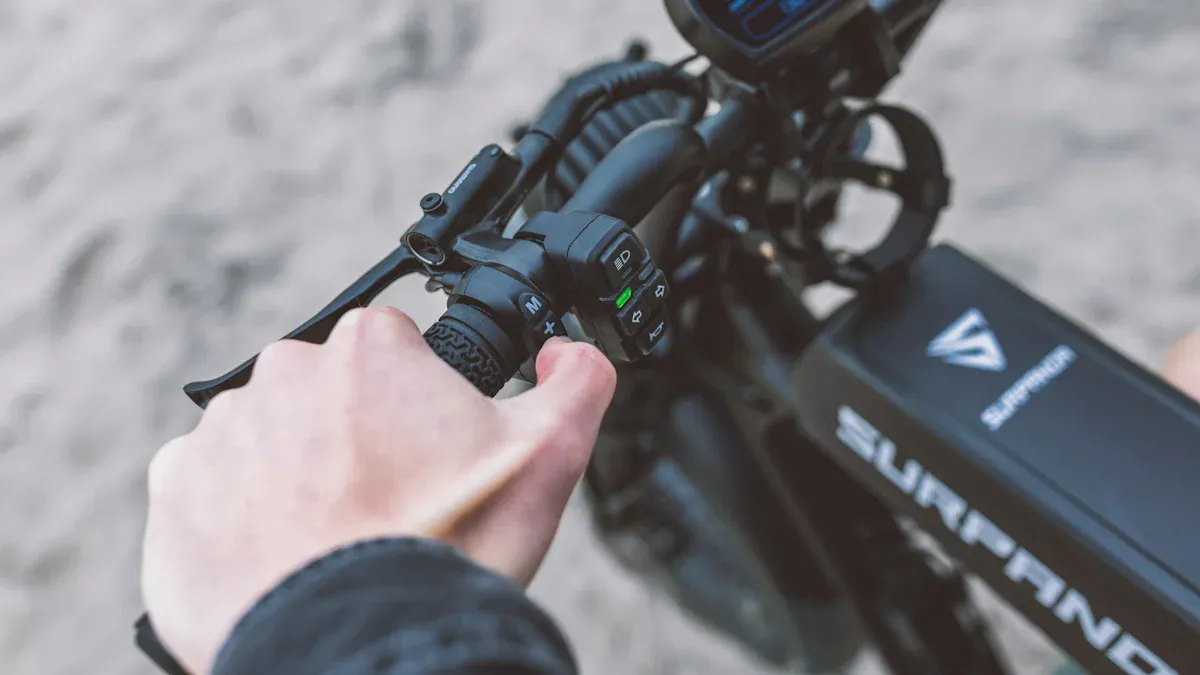
An e-bike road bike with a belt drive is impressive due to its strong performance and innovative technology. The combination of a powerful motor, durable toothed belt, and low-maintenance components offers tangible added value. Commuters and athletes in particular benefit from the long range, quiet operation, and minimal maintenance requirements. The following table shows key performance indicators:
Performance feature |
Value/Example |
|---|---|
Belt service life |
|
Motor torque |
Up to 85 Nm |
Maximum range |
Up to 150 km |
Weight (model example) |
Approx. 15 kg |
Battery capacity |
500 Wh to 750 Wh |
Belt drives remain reliable even in bad weather, thus increasing riding comfort in everyday life.
Key takeaways
E-bike road bikes with belt drives offer strong motor performance and a long range with low maintenance.
The belt drive is quiet, clean, and lasts up to 30,000 kilometers, making it particularly reliable and durable.
Modern motors deliver plenty of torque, which is especially helpful when climbing hills and during athletic rides.
Large batteries and smart features ensure greater comfort, safety, and flexible everyday use.
Commuters, athletes, and daily cyclists benefit from the combination of performance, comfort, and simple maintenance.
E-bike road bike: Performance
Motor
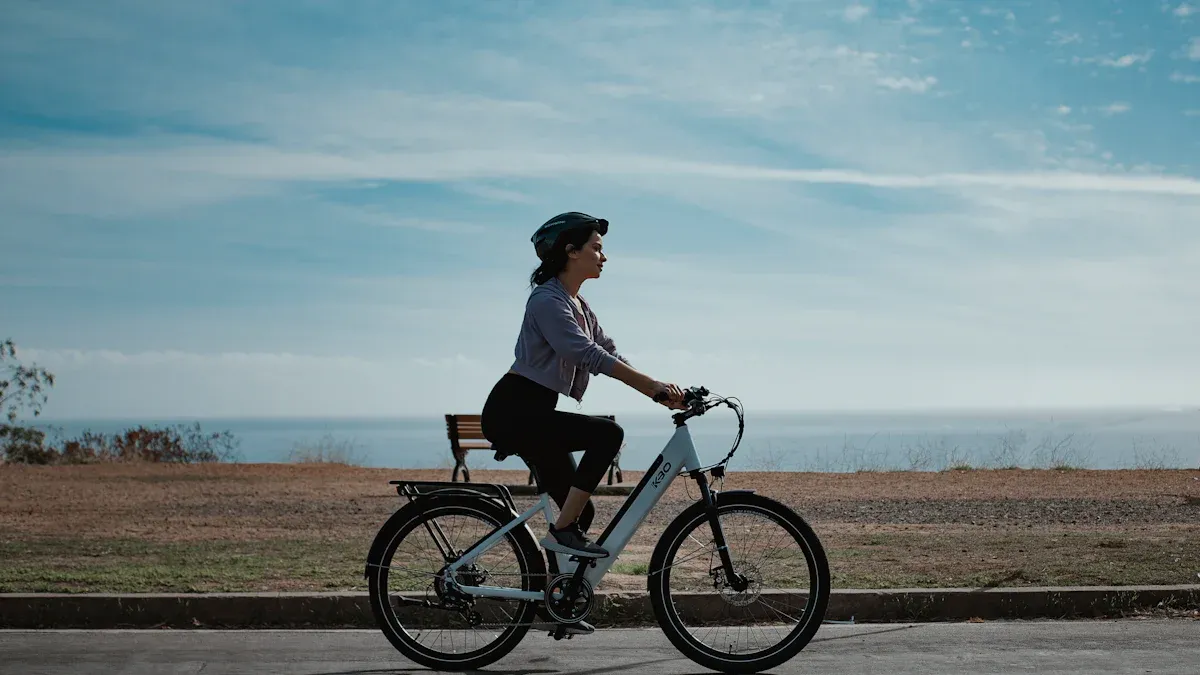
A modern motor determines the power and riding feel of an e-bike road bike. The most important values are torque and power. Higher torque helps when starting off and on inclines. Many models offer between 35 Nm and 70 Nm of torque. The nominal power is usually 250 watts, but the peak power can be significantly higher. The following table shows various motors and their performance data:
Manufacturer |
Model |
Max. torque (Nm) |
Nominal power (Watts) |
Max. power (peak) (Watts) |
Weight (kg) |
|---|---|---|---|---|---|
Bosch |
Performance Line CX (Gen5) |
85 - 100 |
250 |
600 - 750 |
2.7 |
Shimano |
EP8 (EP801) |
85 |
250 |
up to 500 |
2.7 |
SRAM |
Eagle Powertrain |
90 |
250 |
680 |
2.9 |
Specialized |
Turbo Full Power 2.2 |
90 |
250 |
565 |
2.98 |
DJI |
Avinox M1 |
120 |
250 |
850 - 1000 |
2.52 |
Brose |
Drive³ Peak |
95 |
250 |
up to 600 |
2.9 |
Fazua |
Ride 60 |
60 |
250 |
450 |
1.96 |
TQ |
HPR 50 |
50 |
250 |
300 |
1.85 |
Bafang |
M510 |
95 |
250 |
approx. 700 |
2.9 |
An e-bike road bike with a strong motor supports the rider, especially during long climbs and athletic rides. Efficiency also depends on the design and weight of the motor.
Tip: Higher torque provides more thrust on hills and against headwinds.
Battery
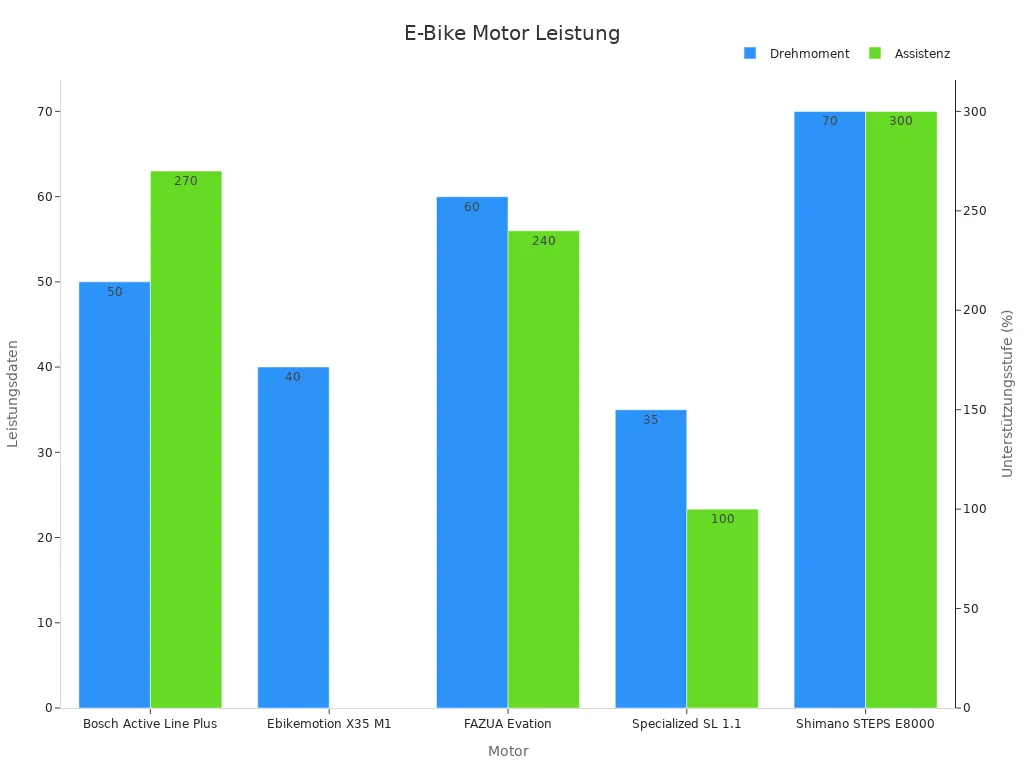
The battery provides the energy for the motor. Capacity is measured in watt-hours (Wh). Many e-bike road bike models use batteries with 250 Wh to 625 Wh. Some manufacturers even offer larger batteries or additional range extenders. A range extender can increase the capacity by up to 250 Wh. The following table shows examples of battery capacities:
Model name |
Battery capacity (Wh) |
Special features |
|---|---|---|
Engwe Engine Pro 2.0 |
832 Wh |
Full-suspension fatbike style, robust but heavy and sluggish |
Cube Kathmandu Hybrid Pro 800 Men (2025) |
800 Wh |
High motor power, large battery, maximum load capacity 110 kg |
Cube Kathmandu Hybrid SLX 800 Men (2025) |
800 Wh |
Strong motor, large battery size, less snappy riding feel |
Actual range depends not only on capacity. The efficiency of the motor, rider weight, terrain, and the chosen assistance level also play a role. A large battery provides more energy but also adds more weight.
Range
The range of an e-bike road bike varies greatly. Many models achieve between 50 and 150 kilometers on a single battery charge. The exact distance depends on several factors: terrain, assistance mode, rider weight, and weather. A lighter rider on flat terrain can often achieve 75 kilometers or more with a 250 Wh battery. With strong assistance and hilly terrain, the range decreases. The following table provides an overview:
Parameter |
Values / Specifications |
|---|---|
Battery capacities |
250 Wh (FAZUA, Ebikemotion), 504 Wh (Shimano), 300-625 Wh (Bosch) |
Range-extender battery |
Up to 250 Wh (e.g., Ebikemotion, Specialized) |
Range |
Approx. 50 to 150 km, depending on riding style, rider weight, terrain, assistance level |
Motor torque |
35 Nm to 70 Nm |
Assistance level |
Up to 300 % |
Motor types |
Hub motor (lighter, less torque at low speeds), mid-drive motor (higher torque, heavier) |
Special features |
Hub motor loses efficiency at low speeds; mid-drive motors offer more power but higher weight |
Battery charging options |
Varies by manufacturer (removable or charged in the frame) |
An e-bike road bike with an efficient motor and a large battery is particularly suitable for long tours and athletic use. Those who frequently use their bike in everyday life benefit from flexible charging options and modular batteries.
Belt drive
Functional principle
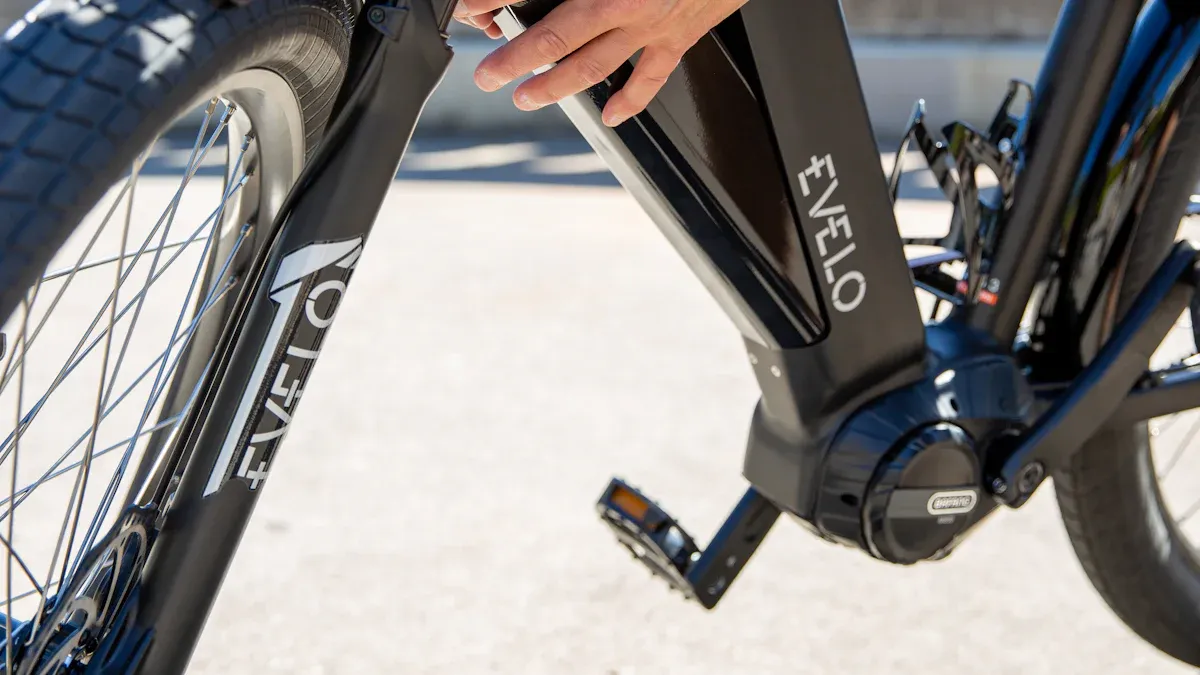
A belt drive replaces the classic bicycle chain with a robust toothed belt. This belt is usually made of carbon fibers and plastic. It runs over special sprockets on the motor and rear wheel. The motor transfers power directly to the belt. Modern e-bike road bikes often use a voltage of 48 volts and a motor power of up to 600 watts. Torque can reach up to 95 Nm in models like the Brose Drive³ Peak motor. The weight of the motor is approximately 2.9 kilograms. The higher voltage ensures better efficiency and a stable energy supply. The belt drive operates quietly and smoothly. It requires no lubrication and remains reliable even in wet or cold conditions.
A toothed belt does not stretch like a chain and remains low-maintenance for many years.
Advantages
The belt drive offers many advantages for e-bike road bikes. It operates very quietly and cleanly. Riders do not need to oil or clean the belt. The system is almost maintenance-free. A belt often lasts up to 30,000 kilometers. That is significantly longer than a conventional chain. The belt drive also remains reliable in winter, as it does not rust or lose performance. For commuters, touring cyclists, and everyday riders, the belt drive offers high comfort and saves time on maintenance.
Aspect |
Belt drive |
Chain drive |
|---|---|---|
Service life |
approx. 30,000 km |
approx. 10,000 km (with optimal care) |
Wear behavior |
No stretching, less wear |
Stretches due to wear, more frequent replacement necessary |
Maintenance costs |
Maintenance-free, no oil, no rust |
Regular cleaning, oiling, replacement of chain, sprockets, chainrings necessary |
Material sensitivity |
Sensitive to lateral impact |
Robust, but wears out due to movement |
Winter capability |
Waterproof, rust-free, no performance loss down to -20 °C |
Susceptible to rust, requires special care in winter |
Acquisition costs |
Higher, but offset by longer durability |
Cheaper, but higher follow-up costs due to frequent replacement |
Tip: Those who want to spend little time on maintenance benefit especially from the belt drive.
Disadvantages
A belt drive also has some disadvantages. The acquisition costs are usually higher than with a chain drive. The belt requires special sprockets and a compatible frame. Not all gear systems are compatible with a belt drive. Derailleur gears in particular cannot be combined with a toothed belt. Riders must rely on internal gear hubs or special transmission systems. The belt is sensitive to strong lateral loads. Improper installation can shorten its service life.
For athletic riders who want many gears and maximum flexibility, a chain drive is sometimes more suitable. However, those who value comfort, durability, and cleanliness will find the belt drive to be a modern solution.
Innovations
Motor-gearbox unit
Manufacturers of modern e-road bikes are increasingly opting for integrated motor-gearbox units. Systems like the Pinion MGU combine the motor and transmission into a single, compact component. This unit offers up to 12 gears and enables fast, precise shifting. Laboratory tests show that motors like the Pinion MGU impress with a maximum torque of 79 to 85 Nm and peak power outputs of up to 600 watts. This allows riders to achieve long ranges even with full assistance and master steep climbs. Bosch and Brose are known for their quiet and sensitive power delivery. The Fazua Ride 60 weighs only 4.2 kg and can be fully integrated into the frame. Many systems offer removable drive units, which make the e-road bike versatile.
Manufacturer |
Model |
Weight (kg) |
Max. Torque (Nm) |
Max. Power (W) |
Features |
|---|---|---|---|---|---|
Fazua |
Ride 60 |
4.2 |
60 |
>450 |
Removable drive unit, fully integrable, light and quiet |
Pinion |
MGU E1.12 |
4.1 |
85 |
600 |
Motor-gearbox unit, 12-speed transmission, automatic shifting function |
Bosch |
Performance Line SX |
approx. 2 |
55 |
600 |
Lightest Bosch mid-drive motor, Sprint mode, up to 50% less pedal resistance than CX |
Brose |
Drive³ Peak |
2.9 |
95 |
600 |
48V system, complete package with motor, battery, and display, high power at low weight |
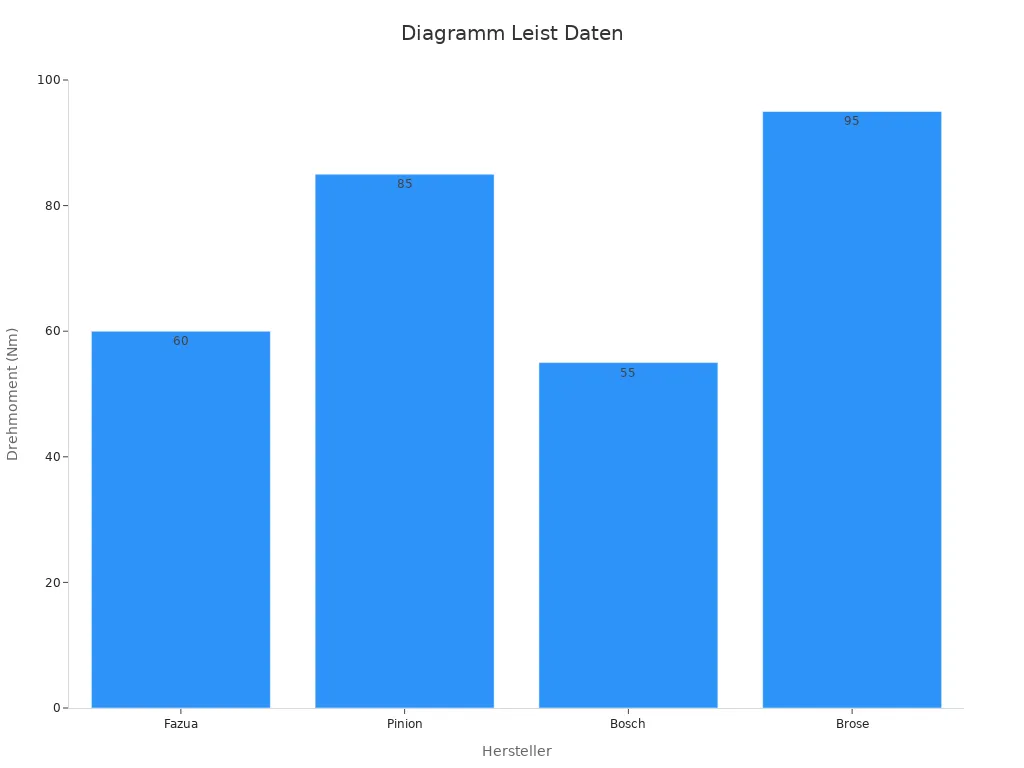
Integrated motor-gearbox units ensure a natural ride feel and high efficiency.
Smart Features
Modern e-road bikes offer numerous smart functions. Many models feature smartphone connectivity and IoT integration. Riders can access ride data in real time and control the bike via an app. Sensors measure heart rate, speed, and calorie consumption. GPS tracking and anti-theft systems increase security. Intelligent lighting adjusts automatically to the surroundings. Manufacturers such as Bosch and Shimano are developing systems that detect accidents and notify riders. Digitalization makes the riding experience more comfortable and safer.
Smart features help to optimize training and protect the e-road bike from theft.
Market Trends
The e-road bike market is developing rapidly. More and more models offer higher torque and larger batteries. Construction is becoming lighter without losing stability. High-performance batteries enable ranges of up to 200 kilometers. Fast-charging functions are becoming more popular. Many manufacturers are focusing on sustainable materials and improved ergonomics. Smart features such as adaptive brake assist and semi-autonomous riding modes are gaining in importance. Demand for connected, safe, and powerful e-bikes continues to rise.
Target Groups
Commuters
Commuters are looking for a bike that is reliable and low-maintenance. An e-road bike with a belt drive offers exactly these advantages. The belt drive does not need to be oiled and lasts for many years. This saves time and money. Many commuters ride to work every day and want to be able to rely on their bike. The number of e-bike users is rising every year, particularly in cities like Berlin or Munich.
Almost 50% of bicycle sales in Germany already come from e-bikes. By 2028, this could reach 80%.
The following table shows how strongly the market is growing:
Year |
E-bike share of the bicycle market in Germany |
E-bike sales figures (in millions) |
Revenue (in billion euros) |
|---|---|---|---|
2021 |
43% |
2.0 |
6.56 |
2023 |
53% |
2.1 |
7.00 |
Commuters benefit from the reliability and long service life of a belt drive. They do not need to worry about chain maintenance or rust.
Athletes
Athletes value performance and efficiency. An e-road bike supports them with powerful motors like the Bosch Performance Line SX or the Fazua Ride 60. These motors deliver up to 60 Nm of torque. Athletes can choose different assistance levels to customize their training.
E-road bikes reach speeds of up to 45 km/h.
Hydraulic disc brakes ensure safety at high speeds.
Electric assistance allows for longer and faster rides.
A study from the University of Colorado shows that e-bike riding improves fitness. Participants reached 75% of their maximum heart rate and increased their endurance. Professionals like Tim Böhme also report more fun and higher training intensity on an e-bike.
Everyday Riders
Everyday riders want comfort and durability. They use their bikes for shopping, excursions, or the school run. A belt drive remains quiet and clean, even in rain or snow.
No oil, no dirt on your pants.
Long service life of the belt (up to 30,000 km).
Low maintenance and high reliability.
The average price for e-bikes in Europe is 2,736 euros. More and more people are investing in high-quality models because they value comfort and quality. Everyday riders enjoy the advantages of a modern e-road bike every day.
An e-road bike with a belt drive impresses with strong motor performance, long range, and minimal maintenance. Studies show that technical data such as torque, battery capacity, and handling are important when making a selection. Users benefit from comfort, durability, and modern technology. Commuters, athletes, and everyday riders, in particular, will find an innovative solution here. Anyone who values service, quality, and customization should take a look at the current models. 🚴♂️
FAQ
How long does a belt drive last on an e-road bike?
A belt drive often lasts up to 30,000 kilometers. Many riders report a longer service life than with a chain. A regular check ensures maximum durability.
Can you maintain a belt drive yourself?
A belt drive requires very little maintenance. Riders can simply clean the belt with water. Oil or grease is not necessary. If damaged, a specialist dealer should inspect the belt.
Is an e-road bike with a belt drive suitable for winter?
Yes, the belt drive functions reliably even in snow and cold. It does not rust and remains quiet. Many commuters use their e-bike all year round.
Which transmissions are compatible with a belt drive?
Transmission Type |
Compatible? |
|---|---|
Internal gear hub |
✅ |
Gearbox |
✅ |
Derailleur |
❌ |
Internal gear hubs and gearbox transmissions are compatible with a belt drive. Derailleurs do not work with a toothed belt.