
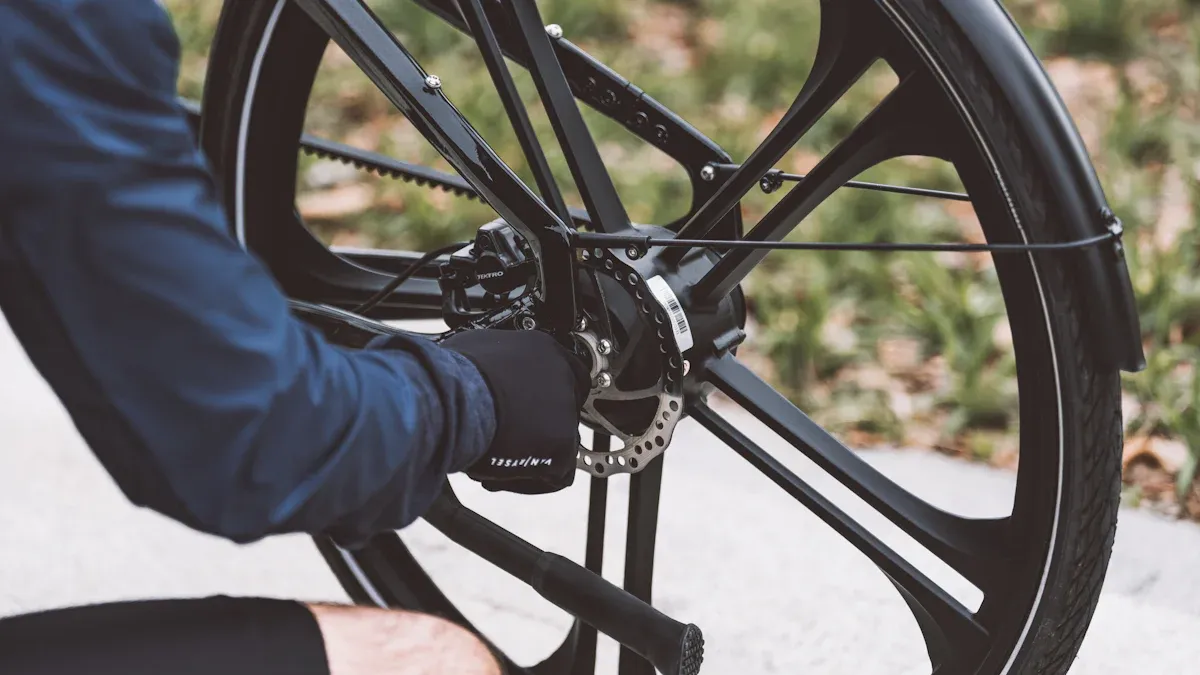
Choosing the right e-bike tires significantly influences your safety and riding experience. These tires are specifically designed for the higher speeds and additional weight of e-bikes. They provide you with stability, comfort, and better control on the road. A suitable tire protects you from punctures and ensures optimal performance, whether you are riding in the city or on unpaved paths. Your choice of the right tire can make the difference between a safe ride and a risk.
Key Findings
The right e-bike tires ensure safety and comfort. They should be stable and offer good grip.
E-bike tires are different from regular bicycle tires. They are wider and non-slip on wet roads.
Check your tires often and keep the pressure correct. This helps them last longer and ensures you ride more safely.
Choose tires that suit your riding style. City tires are good for roads, off-road tires for non-asphalt paths.
Buy tires with certificates like ECE-R75. These are safe for high-speed riding.
Why special e-bike tires?
Differences between e-bike and regular tires
E-bike tires differ significantly from conventional bicycle tires. They are specially developed for the requirements of e-bikes. A comparison shows the most important differences:
Feature |
E-bike tires |
Regular bicycle tires |
|---|---|---|
Specifically for additional weight |
Standard for light weight |
|
Grip-firm tread |
High safety on slippery roads |
Standard tread |
Strong puncture protection |
Lower risk under high load |
Standard puncture protection |
Powerful braking effect |
Shorter braking distance |
Longer braking distance |
These differences make e-bike tires the better choice for safety and performance.
Benefits of e-bike tires (e.g., puncture protection, stability, grip)
E-bike tires offer you numerous advantages that make your rides safer and more comfortable:
Stability and width: They support the additional weight of your e-bike and ensure more comfort.
Grip-firm tread: This tread offers you better hold, especially on wet or slippery roads.
Strong puncture protection: Even under high loads, these tires minimize the risk of punctures.
Powerful braking effect: Shorter braking distances increase your safety, especially at higher speeds.
These features make e-bike tires durable and reliable, whether you are riding in the city or on unpaved paths.
Legal requirements and certifications (e.g., ECE-R75)
Special legal requirements apply to e-bike tires. Especially for fast e-bikes (S-pedelecs), certification according to ECE-R75 is crucial. This standard guarantees that the tire is suitable for speeds up to 50 km/h. When purchasing, make sure your tires carry this certification. This ensures that they meet legal requirements and guarantee your safety.
Types of e-bike tires
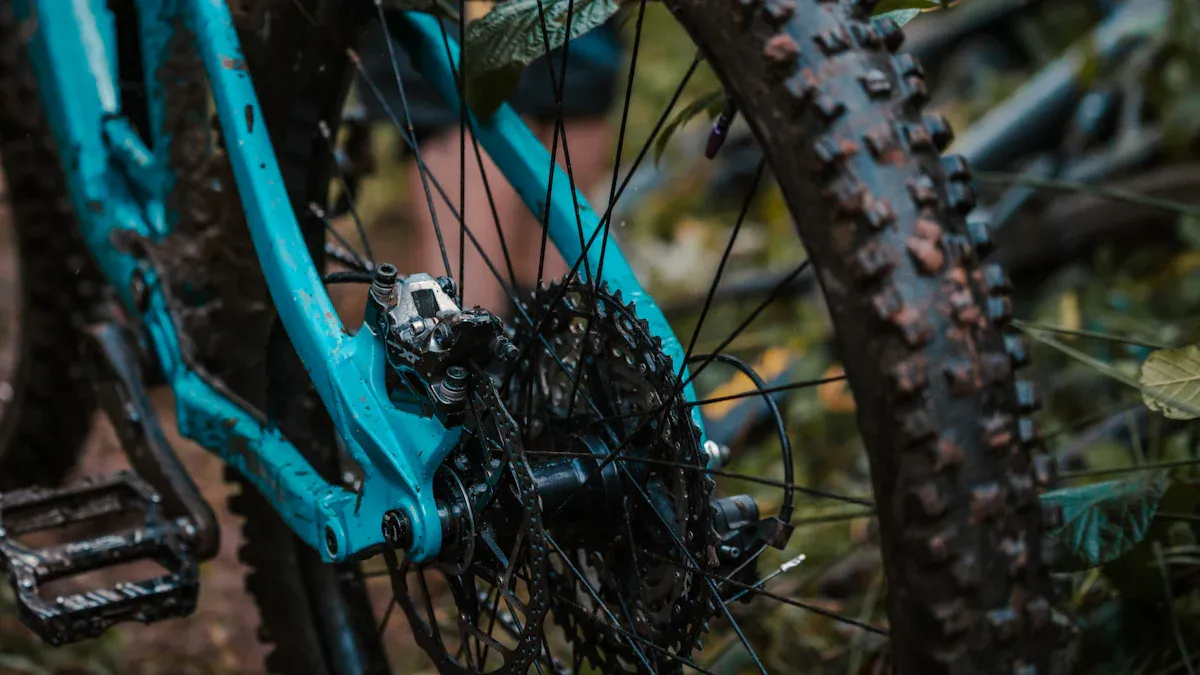
City tires: Features and areas of use
City tires are the perfect choice for everyday urban life. They offer you a quiet and efficient ride on asphalt and other smooth surfaces. Their sleek design ensures low rolling resistance, meaning you need less energy to move forward. These tires are ideal for short distances and daily commutes.
Another feature of city tires is their durability. They are robust and resistant to small obstacles like glass shards or gravel. The smooth tread of these tires allows you to enjoy a smooth ride without annoying noise. If you mainly ride in the city, city tires are a reliable and practical choice for your e-bike.
Touring tires: Versatility for city and forest paths
Touring tires offer you impressive versatility. They are suitable for both asphalt and gravel and nature trails. Their tread provides good grip on loose surfaces and snow, so you are safe even in difficult conditions. These tires show excellent traction on damp forest paths while rolling smoothly on asphalt.
There are a few features you should keep in mind: touring tires are heavier than slick models, which can affect handling. Furthermore, they generate louder road noise, which might be noticeable during city rides. Nevertheless, they offer a wider range of use and are ideal if you want to switch between city and nature.
Trekking tires: For long distances and mixed terrains
Trekking tires are the right choice for long tours and versatile routes. They offer you high puncture protection thanks to thicker rubber treads and special fabric layers. This makes them particularly reliable when you cover longer distances. Models like the Conti 'Contact' combine low rolling resistance with sufficient protection so you can ride efficiently and safely.
These tires are suitable for both asphalt and gravel and nature paths. Their grip ensures that you maintain control on different terrains. Trekking tires are an excellent choice if you are looking for an e-bike tire that won't let you down on mixed routes.
Gravel tires: Comfort and control off-road
Gravel tires are ideal if you take your e-bike off paved roads. These tires offer you a perfect combination of comfort and control, even on uneven terrain. Their wider construction and special tread ensure stability and traction, even on gravel roads or muddy paths.
Some models like the Schwalbe G-One R and the Ritchey Speedmax are particularly popular. They offer you not only good grip off-road but also high puncture resistance. The G-One is excellent for dry conditions. However, if you often ride on muddy paths, the Donnelly PDX or the Panaracer Gravelking Mud might be the better choice. Users report that the G-One does not always offer sufficient traction in wet conditions, which is why alternatives can be useful.
Gravel tires are versatile and robust. They are suitable for riders who love to explore new paths without sacrificing comfort. With these tires, you can be sure that your e-bike tire remains reliable even off the road.
MTB tires: Optimized for unpaved trails
MTB tires are specially designed for unpaved trails. They provide you with maximum control and stability on demanding routes. Wider tires with lower air pressure reduce rolling resistance and simultaneously increase comfort and grip. These features make them the perfect choice for rocky or muddy trails.
Finding |
Description |
|---|---|
Rolling resistance |
Wider tires with less air pressure roll more easily. |
Comfort and grip |
Wide tires offer more comfort and better hold. |
Traction and stability |
Less air pressure ensures better traction and stability. |
Manufacturers like Maxxis have further developed their tires based on these findings. Their models are robust and resistant to punctures. If you often ride on trails, you should look for tires with a coarse tread and reinforced sidewalls. These features guarantee your safety and riding enjoyment, even on the most difficult routes.
Enduro tires: All-weather tires for snow and mud
Enduro tires are the all-rounders among e-bike tires. They were specifically developed for extreme conditions like snow, mud, or rain. Their deep tread and wide grooves effectively channel away water and mud. This allows you to maintain control of your e-bike even in adverse weather conditions.
These tires offer you not only excellent grip but also high stability. They are particularly robust and durable, which makes them ideal for demanding trails. Enduro tires are suitable for riders who are out in any weather and do not want to compromise on safety.
If you often ride in rain or snow, enduro tires are an excellent choice. They guarantee a safe ride, no matter how challenging the conditions are.
Winter tires: Safety in cold and slippery conditions
Winter tires are indispensable if you want to use your e-bike in cold temperatures or on slippery roads. These tires consist of special rubber compounds that remain flexible even at low temperatures. As a result, they offer you better grip and more control on snow and ice. The deep tread and the sipe structure ensure that water and snow are effectively channeled away. This allows you to ride safely and stably, even in adverse weather conditions.
Some winter tires are equipped with studs. These small metal pins dig into ice and snow and significantly increase traction. Studded tires are particularly useful if you ride in regions with frequent frost or icy roads. However, keep in mind that studded tires are louder on asphalt and have a higher rolling resistance.
Wire tires vs. folding tires: Differences and potential uses
The choice between wire tires and folding tires depends on your needs. Wire tires are more stable and offer you more comfort because they absorb impacts better. They are ideal if you value safety and durability. In the event of a defect, wire tires also have higher safety reserves, making them particularly suitable for longer tours.
Folding tires, on the other hand, score with lower rolling resistance and more precise steering behavior. They are lighter and easier to transport. If you change your e-bike tires often or prioritize performance, folding tires are a good choice.
Tubeless tires: Benefits and areas of use
Tubeless tires do not require an inner tube and offer you several advantages. They are more puncture-resistant because small holes are automatically closed by sealant. This significantly reduces the risk of flats. Furthermore, you can ride tubeless tires with lower air pressure, which improves comfort and traction. You benefit from this technology particularly off-road or on uneven roads.
To mount tubeless tires, you need special rims and some patience. However, once they are properly installed, they offer you a reliable and low-maintenance solution. If you often ride on demanding routes, tubeless tires are a worthwhile investment.
Important selection criteria
Tire width: Influence on grip, stability, and rolling resistance
Tire width plays a decisive role in your riding experience. Wider tires offer you a larger contact patch, which improves grip on the road or off-road. This ensures more safety, especially in wet or slippery conditions. At the same time, a wider ground contact area increases the stability of your e-bike, which benefits you on uneven paths.
Another advantage of wider tires is the lower rolling resistance at the same pressure. This is because the ground contact area is more evenly distributed, meaning less energy is lost. For off-road use, you can reduce tire pressure to increase comfort and traction. Note, however, that wider tires can feel somewhat more sluggish on asphalt. Therefore, choose the tire width according to your intended use.
Tread: Smooth, knobby, or intermediate depending on terrain
The tread of your tire determines how well your e-bike performs on different surfaces. Smooth treads are excellent for paved roads. They minimize rolling resistance and enable an efficient ride. However, if you often ride on unpaved paths, knobby treads are the better choice. They offer you maximum grip and stability, especially on muddy or rocky trails.
For a mixture of city and nature rides, you can opt for an intermediate tread. It combines the benefits of smooth and knobby tires and offers you versatility. Always choose the tread of your tire according to the terrain you ride on most frequently. This way, you get the most out of your e-bike tire.
Tire tread |
Advantages |
Disadvantages |
|---|---|---|
Smooth |
High efficiency, ideal for asphalt |
Less grip on uneven terrain |
Knobby |
Maximum grip on off-road routes |
Higher rolling resistance |
Intermediate |
Versatile for mixed terrains |
Not optimal for extreme conditions |
Material and types: Wire tires, folding tires, tubeless tires
The choice of material affects the performance and handling of your tire. Clincher tires are robust and durable. They are particularly suitable for daily use and long tours. Folding tires, on the other hand, are lighter and easier to transport. They offer you more precise steering behavior and are suitable for sporty riders.
Tubeless tires do not require an inner tube and offer you several advantages. They are more puncture-resistant, as small holes are automatically sealed by sealant. In addition, you can ride with lower air pressure, which improves comfort and traction. However, you need special rims for mounting. Choose the tire type that best suits your riding style and requirements.
Criterion |
Tubeless tires |
Clincher / Folding tires |
|---|---|---|
Rolling resistance |
Low |
Slightly higher |
Puncture protection |
Very good |
Varies |
Weight |
Light |
Heavier |
Mounting |
More complex |
Easier |
Tire pressure: Optimal values for various conditions
The correct tire pressure is crucial for the safety and performance of your e-bike. Optimal pressure ensures better grip, lower rolling resistance, and increases the lifespan of your tires. But how do you find the right pressure for your riding conditions?
Vehicle and tire manufacturers often provide tables that help you determine the optimal tire pressure for your e-bike. These tables are a valuable resource to ensure that you maintain the recommended pressure. However, pressure that is too low can have serious consequences:
Fuel consumption increases by 6% if the pressure is 0.3 bar too low.
With 1 bar of pressure deficit, consumption even increases by 30%.
Higher tire wear and longer braking distances.
Increased probability of tire damage.
Deteriorated lateral guidance, especially in corners.
You should adjust the pressure for different conditions. On smooth roads, a higher pressure is recommended to minimize rolling resistance. Off-road, however, you can reduce the pressure slightly to improve grip. Make sure to check the pressure regularly, as it can change due to temperature fluctuations. A simple tip: use a digital pressure gauge to measure the pressure precisely.
Understanding size specifications: ETRTO, inches, and French designations
E-bike tire size specifications can be confusing because different systems are used. The three most common designations are ETRTO, inches, and the French designation. Each has its own characteristics:
Size designation |
Description |
|---|---|
ETRTO |
Clearly specifies width (e.g., 37 mm) and inner diameter (e.g., 622 mm). |
Inches |
Approximate figures for outer diameter and tire width (e.g., 28 x 1.40). |
French |
Outer diameter and width (e.g., 700 x 35C), where the letter indicates the inner diameter. |
The ETRTO specification is the most precise method as it clearly defines width and inner diameter. The inch specification is less accurate and can vary by manufacturer. The French designation is primarily used for road bikes but is not available for all tire sizes.
When buying new tires, look for the ETRTO specification. It helps you find the right size for your rims. For example: A tire marked 37-622 has a width of 37 mm and an inner diameter of 622 mm. This way, you can ensure that the tire fits your e-bike perfectly.
Care and maintenance
Regular inspections: Wear, cracks, and foreign objects
Regular inspections of your e-bike tires are crucial to detect damage early and ensure safety. Check your tires before and after every ride for wear, cracks, or foreign objects. Pay particular attention to flattened tread, as this indicates a diminishing lifespan.
Tip: Check your tires for safety-relevant damage after about 300 kilometers. After 2,000 kilometers, or at least annually, you should perform a comprehensive inspection.
Cracks in the rubber or sharp objects like nails can lead to flat tires. Remove foreign objects immediately and have damaged tires inspected by a professional. You should replace old or cracked tires to avoid accidents.
Cleaning: Tips for proper care
Clean tires not only improve traction but also help you identify hidden problems. Use a damp cloth or a soft brush to remove dirt and debris. Avoid aggressive cleaning agents, as these can attack the material.
Note: Clean your tires regularly, especially after riding on muddy or gravel paths. This will extend their lifespan and maintain optimal performance.
After cleaning, you can inspect the tires for damage. Look for bulges or unusual wear patterns that might indicate a problem.
Tire pressure monitoring: Why and how often?
The correct tire pressure is crucial for the safety and efficiency of your e-bike. Check the pressure every 14 days and correct it if necessary. You should be especially careful before longer trips, such as a vacation.
Optimal tire pressure reduces rolling resistance and increases the lifespan of your e-bike tires. Use a digital pressure gauge to measure the pressure precisely. Pressure that is too low increases wear and lengthens braking distances. Pressure that is too high, on the other hand, can impair comfort.
Replacement and repair: When a tire should be replaced
A regular check of your e-bike tires helps you recognize in time when an exchange or repair is necessary. Wear and damage can compromise your safety. Here are some signs that it is time for a tire change:
Cracks or foreign objects: Check your tires before and after every ride. Small cracks or penetrated objects like glass shards can lead to greater damage. Remove foreign objects immediately to avoid punctures.
Flattened tread: A worn tread reduces grip and lengthens the braking distance. If you notice that your tire no longer provides sufficient adhesion, you should replace it.
Repeated punctures: Frequent flats are a clear sign that the tire's lifespan has been reached. In such cases, a replacement is often the best solution.
Smaller damages, such as small holes, can be repaired with a repair kit. For larger damages or heavily worn tires, however, a complete replacement is recommended. Ensure that you always choose high-quality replacement tires that fit your e-bike.
Tip: Keep a repair kit and an air pump with you during your rides. This way, you can fix minor problems directly and continue riding safely.
Tips for extending the lifespan of e-bike tires
With proper care, you can significantly extend the lifespan of your tires. Here are some simple but effective measures:
Check tire pressure regularly: Always keep the pressure within the recommended range. Optimal pressure reduces wear and improves riding characteristics.
Keep tires clean: Remove dirt and small stones after every ride. This prevents foreign objects from working their way into the material.
Adjust riding style: Avoid sharp braking and rapid acceleration. These maneuvers stress the tires unnecessarily and lead to faster wear.
Consider storage: Store your e-bike in a cool, dry place. Direct sunlight or moisture can make the rubber brittle.
Note: Replace your tires after at the latest 5,000 to 7,000 kilometers or in case of visible damage. This keeps you riding safely and avoids unnecessary risks.
With these tips, you can not only extend the lifespan of your tires but also make your rides safer and more enjoyable.
Adjustment to various conditions
City riding: Narrow tires for efficiency
If you mainly ride in the city, narrow tires are the best choice. They offer you an efficient ride on asphalted roads. Due to their low rolling resistance, you can ride faster with less effort. This saves energy and makes your daily rides more pleasant.
Narrow tires are particularly suitable for commuters who ride on smooth roads. They are light and allow you precise steering behavior. At the same time, they minimize the risk of punctures, as they are less susceptible to small obstacles like glass shards. For urban everyday life, these tires are a practical and reliable solution.
Off-road: Wider tires for better grip
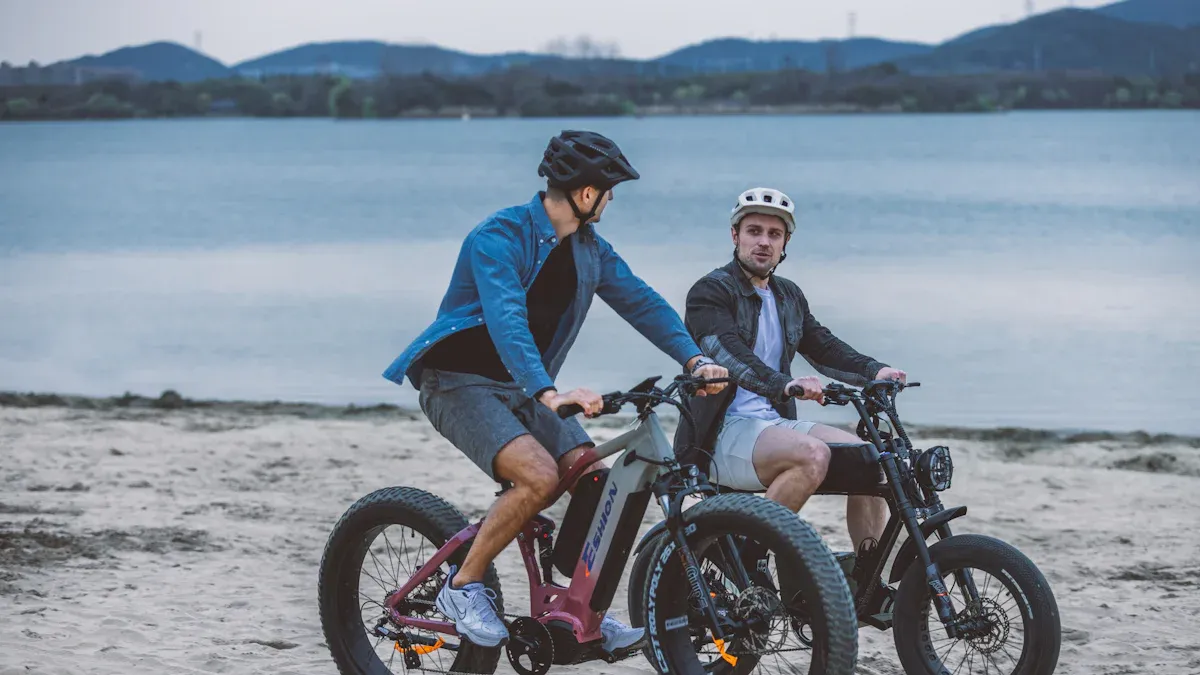
For off-road adventures, wider tires are indispensable. They offer you a larger contact surface, which improves grip on uneven terrain. Especially on trails or gravel paths, they provide more stability and safety.
Wider tires (e.g., 2.8 inches) show significant advantages in tests during braking maneuvers and cornering.
The difference between 2.3-inch and 2.6-inch tires is noticeable. Wider models offer you more safety and reach the limit range later and more gently.
Less experienced riders benefit particularly from the increased stability.
With wide tires, you can also safely master challenging routes. They reduce the risk of sudden slipping and give you the control you need off-road.
Winter: Special tires for snow and ice
In winter, you need tires that are specifically developed for cold and slippery conditions. Winter tires consist of a special rubber compound that remains elastic even at low temperatures. This provides you with better grip on slippery roads.
A deep tread or studs improve traction on snow and ice.
Studded tires dig into icy surfaces and increase stability.
E-bike winter tires minimize the risk of slipping in hail, snow, and black ice.
If you ride in regions with frequent frost, studded tires are particularly effective. They guarantee safety and control, even in extreme weather conditions. With the right winter tires, you can use your e-bike worry-free even in the cold season.
Mixed terrains: Hybrid tires for versatility
Hybrid tires offer you an ideal solution if you ride on different surfaces. These tires combine the characteristics of city, trekking, and off-road tires. They allow you versatile use without having to constantly change tires. Whether asphalt, gravel, or forest paths – hybrid tires adapt flexibly.
Characteristics of hybrid tires
Hybrid tires are characterized by an intermediate tread. This tread offers you a good balance between grip and rolling resistance. They roll efficiently on smooth roads, while providing sufficient hold on unpaved paths. The tire width is usually in the mid-range, which guarantees stability and comfort.
Tip: Choose hybrid tires with reinforced sidewalls. These increase puncture resistance and make the tires more durable.
Advantages for mixed terrains
Hybrid tires offer you several advantages when you often switch between different surfaces:
Versatility: You can easily ride from the city into off-road territory.
Comfort: The medium width ensures a pleasant ride, even on uneven paths.
Efficiency: The tread reduces rolling resistance on asphalt.
Safety: The grip remains reliable even on gravel paths.
Who are hybrid tires suitable for?
Hybrid tires are ideal if you are an all-rounder. Commuters who ride in the city every day and take trips into the countryside on weekends benefit particularly. These tires are also an excellent choice for longer tours with changing conditions.
Note: Make sure that the tires fit your e-bike and your riding style. This way, you get the most out of your hybrid tires.
With hybrid tires, you are well equipped for every route. They offer you the perfect mix of performance, comfort, and safety.
Choosing the right e-bike tires is crucial for your safety and the riding experience. They influence stability, grip, and comfort on every route. Regular care and inspections extend the lifespan and ensure reliable performance. Adapt your tire choice to your individual needs and riding conditions. Whether city, off-road, or winter – with the right tires, you are on the road safely and efficiently. Invest in quality and ensure proper maintenance to get the best out of your e-bike.
FAQ
What is the optimal tire pressure for e-bike tires?
The optimal tire pressure depends on your weight, the tire type, and the surface. It is usually between 2.5 and 4.5 bar. Check the specifications on the tire sidewall or in your e-bike's operating manual.
Tip: Use a digital pressure gauge for precise measurements.
How often should I change my e-bike tires?
Change your tires after at the latest 5,000 to 7,000 kilometers or in case of visible damage such as cracks or worn tread. Frequent punctures are also a sign that a replacement is necessary.
Can I use normal bicycle tires on my e-bike?
Normal bicycle tires are not designed for the higher speeds and additional weight of e-bikes. They offer less stability, grip, and puncture protection. Always use specifically certified e-bike tires to ride safely and efficiently.
Are studded tires really necessary in winter?
Studded tires offer you significantly more grip and safety on snow and ice. They are particularly sensible in regions with frequent frost or icy roads. On asphalt, however, they generate more rolling resistance and noise.
How do I identify the correct tire size for my e-bike?
You can find the tire size on the tire sidewall. Look for the ETRTO specification (e.g., 37-622). It indicates the width and inner diameter. Alternatively, you can use the inch or French designation, though ETRTO is more precise.
Note: Check that the size is compatible with your rims.