
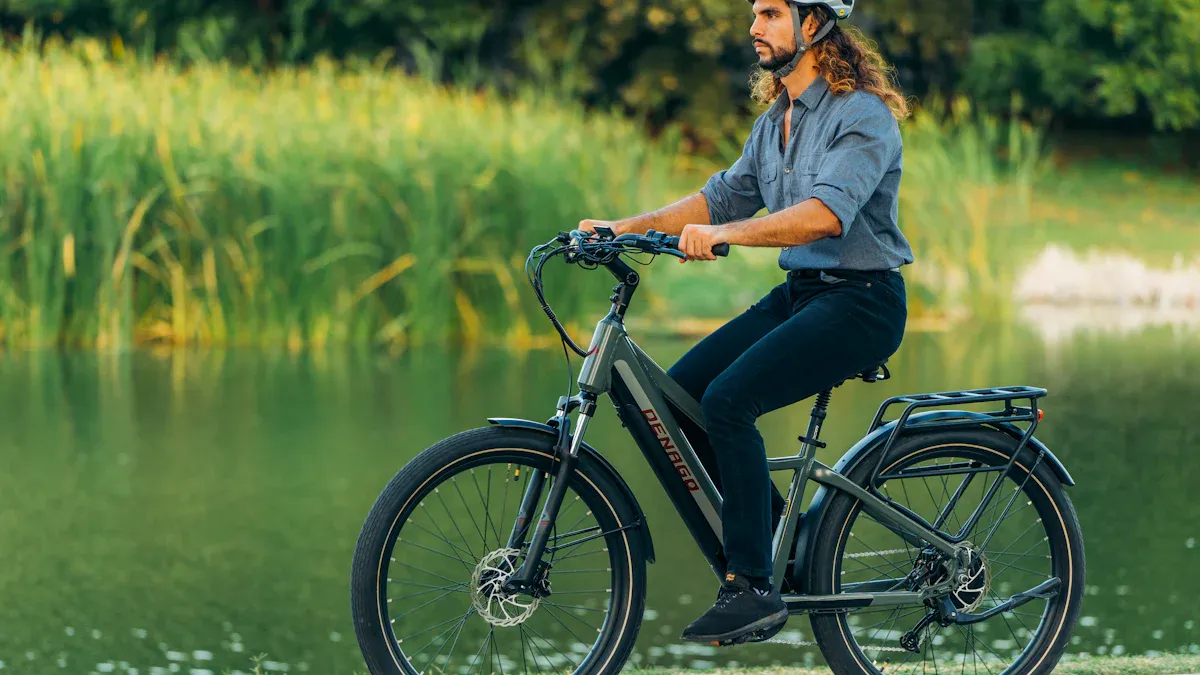
How far can you go on your e-bike? In practice, you will usually only achieve 60–70% of the manufacturer's specifications. The range is often between 40 and 120 km. Many factors play a role, such as the battery, route, and weather. Always plan your route plus 20% as a buffer.
Key Insights
Plan your e-bike tours with a 20% buffer. This way, you avoid unpleasant surprises.
Pay attention to the battery level. Keep it between 20% and 80% for a longer lifespan.
Use Eco mode to maximize the range. This allows you to ride for many kilometers.
E-Bike range in everyday life
Manufacturer specifications vs. reality
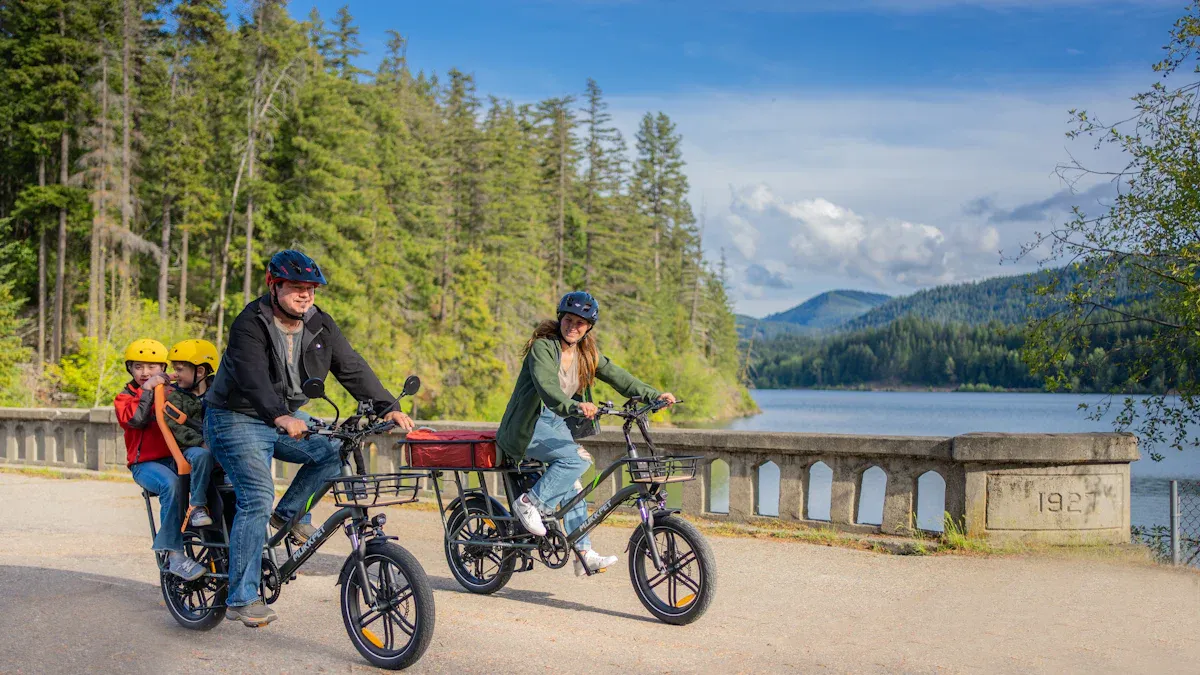
Many manufacturers quote high ranges for their e-bikes. In reality, you will usually only achieve 60 to 70 percent of these values. The differences arise due to various everyday conditions. You can see this well in the following points:
The rider's weight plays a role.
The surface influences the range.
The performance of the e-motor is crucial.
Manufacturers often provide guide values that can vary in practice.
Independent tests show that the actual values are often lower. The following table shows an example of the discrepancy between manufacturer specifications and real range:
Model |
Real range |
Deviation (%) |
|
|---|---|---|---|
Lucid Air Grand Touring |
960 km |
829 km |
-13.7 |
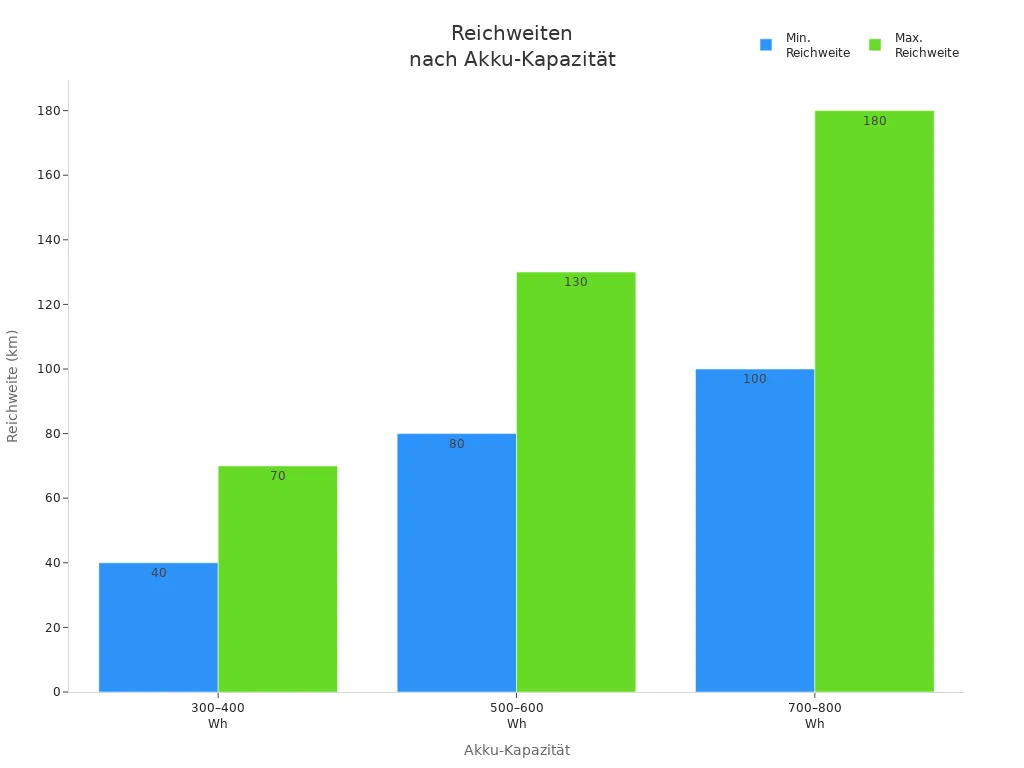
There are also major differences between the specifications and the actual values for e-bikes. The average range with mixed riding style is often between 50 and 80 kilometers. Depending on the model, you can see values from 40 to 200 kilometers.
The following table shows what the range looks like with different battery capacities:
Battery capacity |
Range (approx.) |
Ideal for |
|---|---|---|
300–400 Wh |
40–70 km |
Short commutes and city riding |
500–600 Wh |
80–130 km |
Touring and trekking e-bikes |
700–800 Wh |
100–180 km |
Long tours and E-MTBs |
Factors influencing the range
Many factors determine how far you really get on your e-bike. The most important influencing factors are:
The support level has a major influence on energy consumption and thus on the range.
In Eco mode, you can ride for many kilometers. In Sport or Turbo mode, the range drops significantly.
The total weight, i.e., you and your luggage, strongly influences the range.
The battery capacity, measured in watt-hours (Wh), is decisive for the range.
An efficient riding style helps you get further. Frequent stopping and starting costs energy.
The terrain plays a role. Hilly routes require more energy than flat paths.
The weather has an effect. Headwinds or low temperatures reduce the range.
The following table shows how different models perform in independent tests:
E-Bike Model |
Battery capacity (Wh) |
Energy consumption (Wh/km) |
|
|---|---|---|---|
Model A |
80 |
500 |
6 |
Model B |
100 |
625 |
5 |
Model C |
120 |
750 |
4 |
As you can see, your e-bike's range depends on many factors. Always plan your tour with a buffer and observe how far you actually get with your model.
E-bike tips for more kilometers
Riding style and battery care
You can significantly increase your e-bike's range if you pay attention to your riding style and battery care. Many specialist magazines and manufacturers recommend adapting battery capacity to your riding habits. An oversized battery makes the bike heavier and affects handling. Consider how long your tours are and whether range or agility is more important to you. In a survey, 77% of users stated that a 630 Wh battery was sufficient for them.
Follow these tips for more kilometers:
Keep the battery level between 20% and 80% if possible.
Avoid fully discharging the battery or constantly charging it to 100%.
Charge the battery at room temperature and not in fast-charge mode.
Store the battery in a dry place with a medium charge level.
Ride with foresight and use Eco mode when possible.
Effective riding practices can increase range by up to 20%.
The battery works most efficiently at temperatures between 15 and 25 °C.
Gear selection and tire pressure
The right gear selection and appropriate tire pressure help you save energy and go further. Technical analyses show that you can protect the drivetrain and reduce energy consumption with a high cadence and a light gear. Shift down in good time on inclines. This prevents unnecessary wear and overheating.
Choose a light gear on inclines.
Maintain a cadence of 70 to 80 revolutions per minute.
Shift regularly to use the motor efficiently.
Use Eco mode on flat routes and Sport mode only when necessary.
Check the tire pressure regularly. Tires that are too soft significantly reduce range.
Optimal tire pressure ensures less rolling resistance and more kilometers.
E-Bike Type |
Range (km) |
Energy consumption (Wh/km) |
Support modes |
|---|---|---|---|
City E-Bike |
60–80 |
8–12 |
Eco, Sport, Turbo |
E-Mountainbike |
30–50 |
15–25 |
Eco, Sport, Turbo |
E-Cargo-Bike |
up to 100 |
variable |
Eco, Sport, Turbo |
Tour planning and rule of thumb
Good planning protects you from surprises. Many riders rely on manufacturer specifications and underestimate the influence of the route, weather, and riding style. Always plan your tour with a buffer. The rule of thumb is: plan the distance plus 20%. For longer trips or daily use over 40 km, you should take a larger or second battery with you.
Digital tools help you to better estimate the range. Apps like the Kalkhoff app or Bike Citizens offer you:
Real-time information on range and navigation.
Consideration of riding style and route profile.
Route planning for over 450 cities worldwide.
Integration of various functions in one app.
Tip: Use apps for range calculation and navigation. This way, you plan safely and avoid range anxiety.
With these measures, you get the maximum out of your e-bike and are safe on the road.
You can improve your e-bike's range with simple measures. Experts recommend riding with foresight, checking tire pressure, and avoiding unnecessary weight. Users report that battery care and the rule of thumb help in everyday life. Regular maintenance ensures safety and optimal performance.
FAQ
What happens if you run the battery completely empty?
You risk deep discharge. The battery can be damaged. Always recharge it in time.
What influences your e-bike's range the most?
Your support level, your weight, and the terrain determine the range. Tire pressure also plays an important role.
What should you consider in cold weather?
Tip: Store and charge the battery at room temperature. Cold reduces the performance and range of your e-bike.