
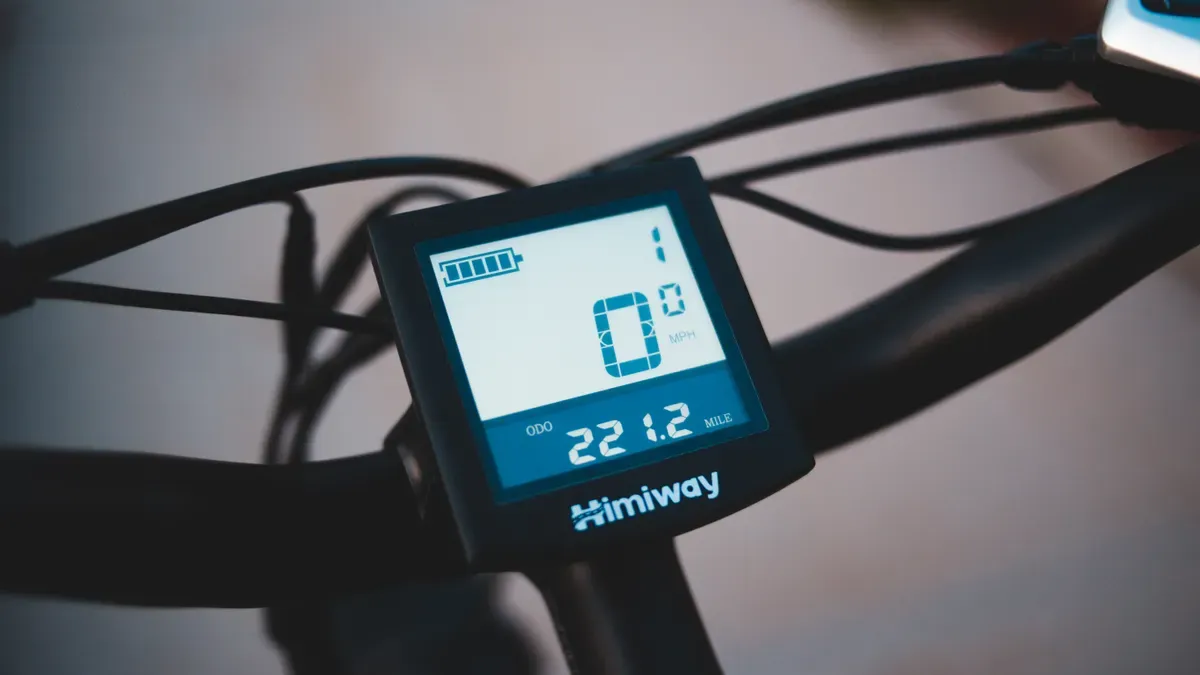
In reality, you can usually manage 40 to 120 kilometers per charge with your e-bike. Manufacturers' specifications are based on ideal laboratory conditions. In everyday life, factors like headwinds, inclines, or heavy loads often mean you will achieve only about half of these values.
Battery capacity (Wh) |
Average range (km) |
|---|---|
400 Wh |
40 – 80 km |
500 Wh |
50 – 90 km |
625 Wh |
60 – 110 km |
750 Wh |
75 – 130 km |
💡 Tip: Use our concrete reference values to optimize your personal route specifically!
Key takeaways
E-bikes usually cover 40 to 120 kilometers per battery charge in everyday use.
The economical Eco mode and flat routes save a great deal of power.
High tire pressure and smooth riding noticeably extend your range.
Cold temperatures and heavy loads significantly reduce your battery's range.
Factors influencing e-bike range
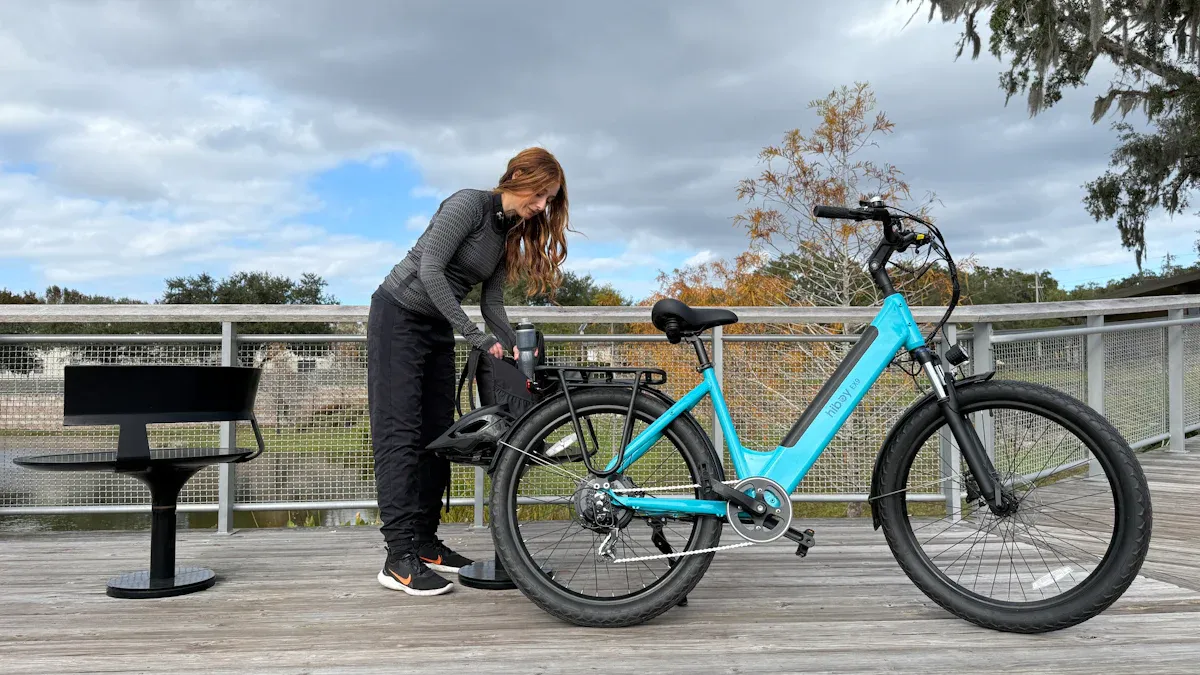
Would you like to know more precisely why your battery sometimes runs empty faster? Various daily factors strongly influence your travel distance.
Battery capacity and motor assistance
The motor mode you choose determines power consumption significantly. Riding in the economical Eco mode? You will consume only about 5 Wh per kilometer. Your battery will last for up to 100 kilometers this way. In the powerful Turbo mode, however, consumption quickly climbs to over 20 Wh per kilometer. This rapidly shrinks your distance to under 25 kilometers. Constantly stopping at red lights also costs you a great deal of energy.
Assistance level |
Consumption data |
Impact on range |
|---|---|---|
Low (Eco) |
approx. 5 Wh/km |
Maximum distance |
Medium (Tour) |
approx. 15 Wh/km |
Moderate distance |
High (Turbo) |
20 Wh/km and more |
Strongly reduced distance |
Total weight of rider and luggage
Your body weight and your luggage play a major role. Every additional kilogram demands more power from the motor.
💡 Did you know? For every 10 kilograms of additional load, your range decreases by about 5 to 8 percent.
If you pack heavy groceries or panniers on your bike, your energy storage will deplete noticeably faster.
Route profile and weather conditions
Mountains and steep paths demand everything from your motor. For every 100 meters of elevation gained, you consume an additional 10 to 15 watt-hours. Weather also slows you down:
Ambient temperature: Is the thermometer dropping below 20 °C? You lose about 1 percent of battery performance per degree of cold. In freezing conditions, capacity even drops to 70 to 75 percent.
Tire pressure: Too little air in the tires significantly increases rolling resistance. Inflate your tires regularly!
With proper maintenance and clever gear selection, you can easily get the best out of your e-bike.
Real-world reference values by battery size
Manufacturers often promise huge distances. But in real life, what counts are your own routes. So how far do you really get with one battery charge? The actual energy in the reservoir determines your radius on the road.
Range with a 400 Wh battery
A compact battery with 400 watt-hours is perfectly sufficient for many everyday trips. Under real conditions, your e-bike will take you about 35 to 100 kilometers on it.
Flat paths and light assistance save a lot of power. Are you looking for a light bike for the city or short trips after work? Then this battery size fits your needs perfectly.
Range with a 500 Wh battery
The classic among energy storage units is the 500 Wh battery. Under normal everyday conditions, you can travel about 60 to 120 kilometers with it.
Test results from the manufacturer Scott show clear differences depending on the bike type. A rider weighing around 80 kilograms covers an average of about 80 kilometers on an e-mountain bike. A comfortable e-city bike, on the other hand, rolls around 100 kilometers through traffic with the same battery.
Different models use energy with varying levels of efficiency:
Model |
Motor type & Torque |
Battery capacity |
Practical range |
|---|---|---|---|
Giant Talon E+ EX (2023) |
Sync Drive Core (50 Nm) |
500 Wh |
approx. 55 – 170 km |
Liv Allure E+2 GTS |
Sync Drive Sport (50 Nm) |
500 Wh |
approx. 55 – 180 km |
Giant Explore E+2 GTS |
Sync Drive Sport (70 Nm) |
500 Wh |
approx. 55 – 180 km |
Steep climbs and heavy luggage will significantly decrease these values, however:
Effect of additional weight: For every 10 kg of additional load, the distance drops by about 5 to 8 percent.
Consumption on inclines: For every 100 meters of elevation climbed, the motor draws about 10 to 15 watt-hours from the battery.
Terrain and mode: On flat terrain, you can easily reach 100 to 120 kilometers in Eco mode. In steep mountains in Turbo mode, your reserves quickly shrink to 50 to 60 kilometers.
Higher capacities for long tours
Are you planning day-long trips without a stop at a power outlet? Larger energy storage units give you relaxed peace of mind on the road.
Battery capacity |
estimated distance |
Terrain / Rider type |
|---|---|---|
625 Wh |
60 to 120 km |
Hilly landscape & tours |
750 Wh |
70 to 140 km |
Complex routes & frequent rides |
A battery with 750 watt-hours provides you with an average of about 130 kilometers of assistance. With gentle pedaling and a flat route, you can manage up to 140 kilometers.
💡 Looking for even more endurance? DualBattery systems link two batteries together. They double your capacity and allow you to take day trips of well over 100 kilometers without any charging breaks.
Additional energy reserve: High endurance despite luggage, trailers, or steep mountain passes.
Maximum flexibility: Simply adjust your battery performance to your planned daily route.
Maximizing e-bike range effectively
You can significantly extend your range with a few simple tricks. This way, you can easily get the maximum out of every charge.
Efficient riding style and shifting
Your riding style influences energy consumption tremendously. Ride with foresight and shift to smaller gears regularly. This significantly protects your battery.
Use a higher cadence: Ideally, pedal at 70 to 80 revolutions per minute. The motor works extremely efficiently in this range.
Avoid stop-and-go: Every start uses a lot of power. It is better to roll slowly towards red lights instead of coming to a complete stop.
Pedal evenly: A smooth and constant pressure on the pedals saves valuable energy.
Carry your momentum: Ride swiftly through turns and navigate obstacles with foresight. This means you have to accelerate less strongly afterward.
Optimal tire pressure
Flat tires slow you down significantly. Low air pressure increases the contact area of the tires on the ground. This noticeably increases rolling resistance, and your motor has to work much harder.
Therefore, pump your tires regularly to the pressure recommended by the manufacturer. This way, you will roll easily over the asphalt and save valuable power on every kilometer.
Battery care and temperature protection
The battery loves comfortable temperatures. Extreme cold or heat damages the battery cells and shortens the distance.
💡 Tip for winter: Always charge your energy storage at room temperature. Insert the battery into your e-bike only shortly before the ride. A special neoprene protective cover also keeps the battery warm in winter!
Downshift in time on long climbs. A low gear relieves the system and protects the technology from overheating.
Digital tools for route planning
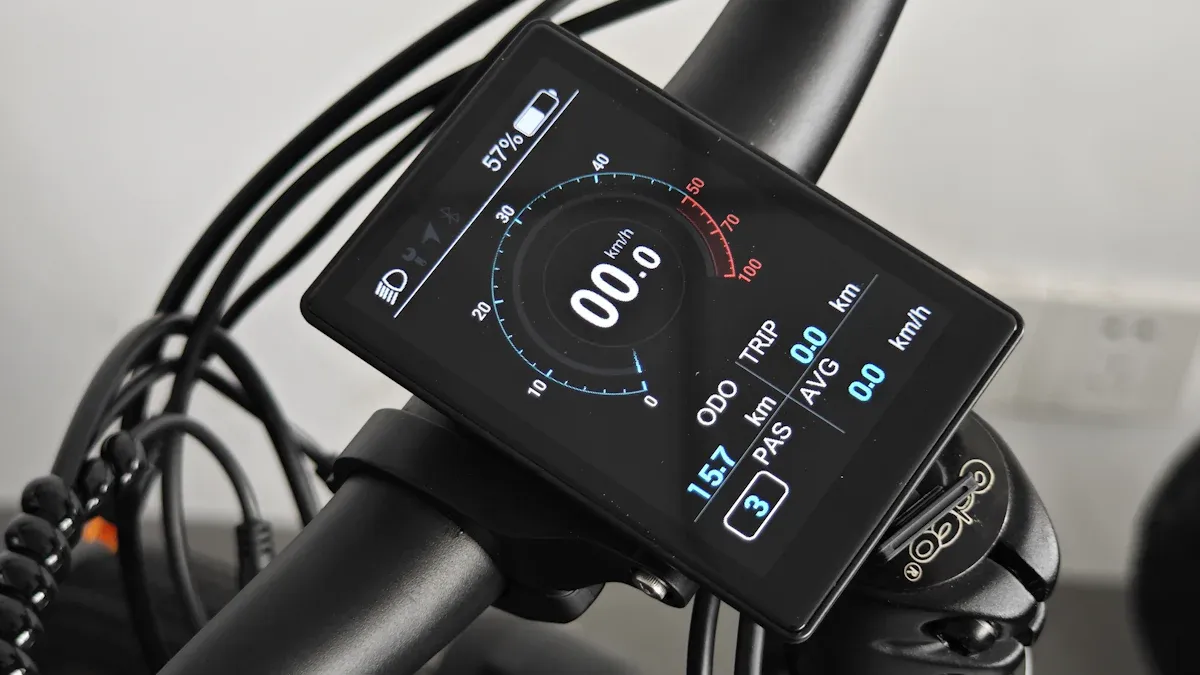
Would you like to know how far your battery will reach before you even start your ride? Clever digital helpers take the guesswork out of it completely. They calculate your individual route in advance and adapt to your personal riding profile.
Manufacturer range calculators
Online calculators from leading motor manufacturers work surprisingly accurately. Well-known tools like the Bosch Range Assistant or the Shimano E-Tube tool divide your available battery capacity by the estimated consumption per kilometer. Under normal everyday conditions, these systems achieve a prediction accuracy of about 80 to 85 percent.
💡 Practical tip: Enter your data online shortly before your tour. This way, you can plan your charging breaks without any nasty surprises!
The calculators consider various factors for your individual calculation:
Riding speed & riding mode: You choose your preferred pace and your assistance level from Eco to Turbo.
Total weight: You enter the total system weight consisting of your body weight, the bike, and your luggage.
Hardware & components: You select the specific drive, your battery, and your gear type.
Bike & rider profile: The software considers your bike type, your aerodynamic seating position, and the tire tread.
Route planning via app
Special smartphone apps plan your tour even more precisely and take difficult elevation profiles into account. They connect your smartphone directly to the drive and ensure you keep moving.
App |
Relevant functions for elevation profiles & battery |
|---|---|
Komoot |
Takes into account elevation, incline profiles, and battery range; offers offline maps. |
Shimano (E-Bike Connect) |
Offers individual energy management as well as consumption evaluations. |
Modern applications like the eBike Flow App offer very useful features. You can simply set your desired target battery level. Dynamic motor adjustment regulates the assistance automatically during the ride. This guarantees that you reach your destination with the planned remaining energy. The intelligent incline consideration factors your personal riding data, preferred inclines, and speeds directly into the route planning.
Manufacturer specifications usually only offer ideal reference values from the laboratory. In reality, your weight, the weather, and the assistance level determine your actual range.
However, you have your distance in your own hands! Through forward-thinking shifting, proper tire pressure, and good battery care, you can noticeably get more kilometers out of it.
Measure |
Benefit for your ride |
|---|---|
Ride smartly |
A high cadence saves a lot of power |
Good maintenance |
Optimal tire pressure reduces consumption |
It is best to gather your own experience on your regular routes. This way, you will get to know your e-bike and your battery perfectly!
FAQ
How far will my e-bike really go on one charge?
In reality, you will usually manage 40 to 120 kilometers. Your chosen motor level, the route profile, and your weight strongly influence the distance. In the economical Eco mode, you will get significantly further than in the powerful Turbo mode.
Do low temperatures damage my e-bike battery?
💡 Cold protection: In freezing temperatures, you lose up to 30 percent of your normal range!
Cool temperatures noticeably reduce battery performance. Therefore, always charge your energy storage at room temperature. Insert the battery into your bike only right before the ride.
How can I easily increase my range?
Pedal evenly at approximately 70 to 80 revolutions per minute. Check your tire pressure regularly. Ride in a forward-thinking manner and avoid constant stopping at traffic lights. That saves an extreme amount of power!
When is the best time to charge my e-bike battery?
It is best to charge your energy storage when it is between 20 and 80 percent. Avoid deep discharge completely. This protects the sensitive battery cells and noticeably extends the service life of your battery.