
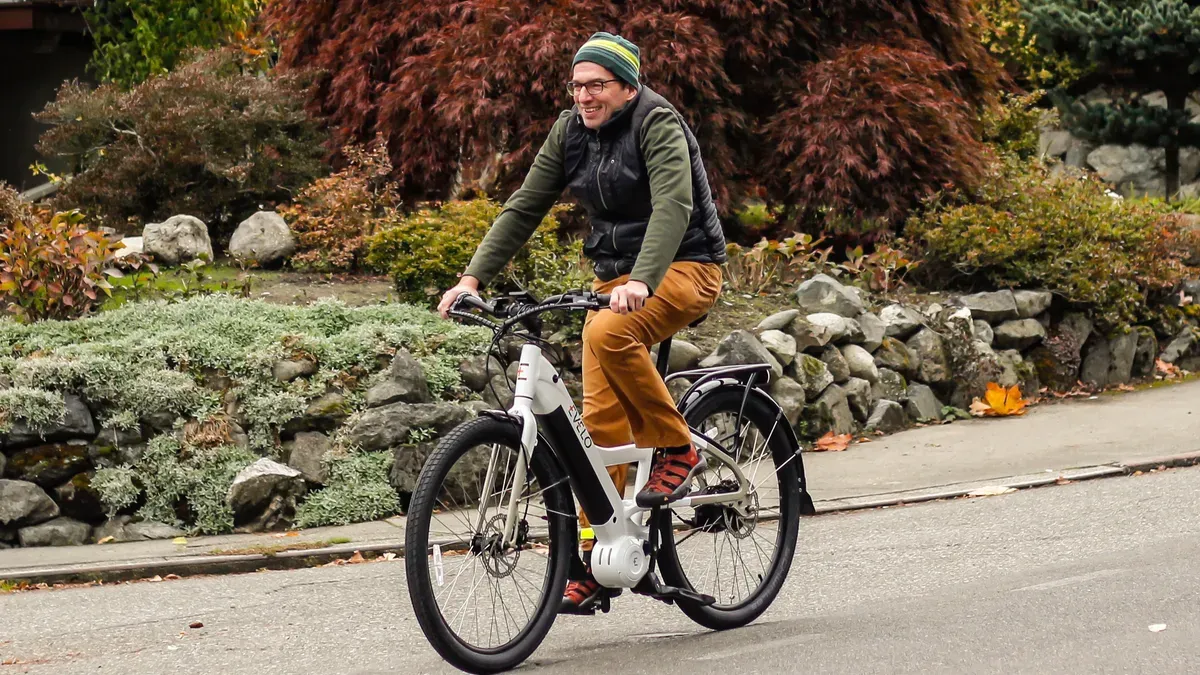
With a 400 to 500 Wh battery, you can usually cover 35 to 80 kilometers on your e-bike. You can follow this rule of thumb: take your planned route distance and add 20 percent. Many people are surprised by how large the differences are between manufacturer specifications and real-world values. Consumer surveys show that the range often deviates from brochure values by 50 to 70 percent:
Average deviation |
Percentage deviation |
|---|---|
Manufacturer specifications |
50-70% |
Here you will find practical tips and realistic estimates for your everyday life.
Key takeaways
Plan your e-bike tour with 20 percent more than the planned distance to avoid nasty surprises.
Use the Eco mode to increase the range of your e-bike and use the battery more efficiently.
Reduce the weight of your luggage to maximize the range. Every kilogram less helps.
Pay attention to tire pressure. Optimal pressure can increase the range by up to 15 percent.
Charge your battery regularly and keep it between 20 and 80 percent to extend its lifespan.
E-bike range: What influences it?
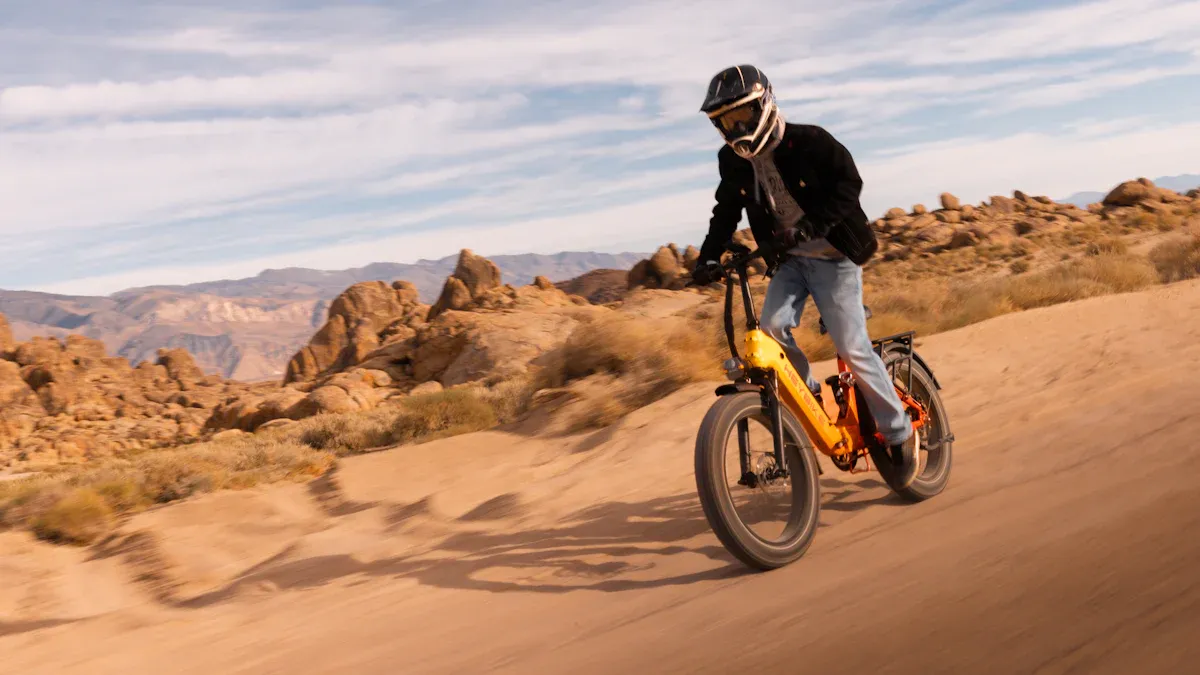
The range of your e-bike depends on several factors. You can usually ride 35 to 65 kilometers with a 400 Wh battery. A 500 Wh battery will take you 45 to 80 kilometers. The rule of thumb is: plan your route and add 20 percent as a buffer. This way, you avoid nasty surprises.
Battery and performance
The battery is the heart of your e-bike. The larger the capacity, the further you can go. The following table shows how the range changes with different battery capacities:
Battery capacity (Wh) |
Range (km) |
|---|---|
400 |
60 to 120 |
500 |
75 to 150 |
The actual range is often lower than the manufacturer's specifications. You should orient yourself by the realistic values.
Riding style and assistance level
Your riding style significantly affects the range. If you ride steadily and brake with foresight, you can achieve up to 20 percent more kilometers. The assistance level also plays a major role. If you choose a high level, your e-bike consumes more energy. With a low level, you save battery and go further.
Tip: Try to ride in Eco mode as often as possible. This way, you use the motor's power efficiently and extend the range.
Empirical studies show that eco-driving significantly increases range. Researchers have developed various riding style metrics to analyze behavior. User performance and preference construction influence how far you can get with your e-bike.
Weight and load
Weight plays a decisive role. The heavier you are and the more luggage you take with you, the faster the battery drains. The following table gives you an overview:
Description |
|
|---|---|
Total weight |
Significantly influences the range. |
Assistance level |
Varies the range depending on the selected level. |
Rider weight |
Higher weight reduces the range. |
Route profile |
Different route profiles influence the range. |
Realistic range |
Is usually between 30 and 70 km, depending on the factors mentioned above. |
You should avoid unnecessary luggage and reduce weight to go further.
Terrain and altitude
The terrain influences the range enormously. Flat routes are energy-efficient. Steep climbs cost a lot of energy and reduce the range. If you ride many meters of altitude, you have to expect fewer kilometers.
Note: Plan your route so that you have as few steep sections as possible. This saves the battery and increases the range.
Weather factors
The weather has a large influence. In cold weather, the range can drop by up to 40 percent. Wind and rain increase energy consumption. You should plan for more reserves in bad weather.
Cold reduces battery performance.
Headwind costs additional energy.
Wet conditions increase rolling resistance.
If you take these factors into account, you can better estimate the range of your e-bike and use it optimally.
Manufacturer specifications and reality
Brochure vs. practice
Many manufacturers state high ranges for their e-bikes. You often see values like 120 kilometers in the brochure. In practice, you rarely reach these numbers. The manufacturers test under optimal conditions. They ride on flat routes, with little weight, and in Eco mode. However, you often ride differently in everyday life. You have luggage with you, ride uphill, or use a higher assistance level. The weather also plays a role. Cold and wind significantly reduce the range.
Tip: Do not rely solely on the brochure specifications. Plan your tour with realistic values.
Experts recommend treating manufacturer specifications with caution. You should always include a buffer. This prevents the battery from suddenly being empty.
Rule of thumb for estimation
You can better estimate the range of your e-bike if you use a rule of thumb. Many experts recommend planning with 60 to 70 percent of the manufacturer's specification. For mountain bikes on trails, the range even drops to 50 to 65 percent. When buying a battery, you should consider a buffer of 30 to 40 percent. An additional buffer is important, especially for long tours or changeable weather.
Here you will find practical examples for applying the rule of thumb:
Plan with 60 to 70 percent of the manufacturer's range specification.
For mountain bikes on trails, calculate with 50 to 65 percent.
Consider a buffer of 30 to 40 percent when buying a battery.
Always include a buffer, especially for long tours or changeable weather.
If you know your usual route, simply add 20 percent.
You can also easily apply the rule of thumb:
Usual route distance plus 20 percent.
If you ride 30 kilometers daily, your e-bike battery should manage at least 36 kilometers.
For an 80-kilometer tour, the e-bike range should be 96 kilometers.
If you ride many meters of altitude, you need more energy. The following table shows how many additional watt-hours you should plan for climbs:
Altitude (meters) |
Additional watt-hours |
|---|---|
100 |
10 - 15 |
You see: With these simple rules, you can better estimate the range. You plan your tour safely and avoid nasty surprises. Your e-bike will reliably bring you to your destination if you follow the rule of thumb.
Optimizing e-bike range
Adjusting riding style
You can significantly increase your e-bike's range if you adjust your riding style. Ride with foresight and avoid frequent starting and braking. Maintain a steady speed. Energy consumption increases especially at low temperatures. The following table shows how temperature affects consumption:
Temperature (°C) |
Consumption (KW) |
|---|---|
over 20 |
14 |
10-20 |
15 |
If you accelerate gently and shift gears early, you save energy and go further.
Choosing the assistance level
Choose the assistance level consciously. Use the Eco mode more often in everyday life. This way, you save the battery and increase the range.
The assistance level: The riding mode is chosen at will. A lower level saves the battery and challenges the rider more.
You can choose a higher level briefly in headwinds or on hills. On flat ground, a low level is often sufficient.
Tire pressure and maintenance
Pay attention to the correct tire pressure. Check your tire air pressure regularly. The recommended value is usually on the tire sidewall. A correctly inflated tire rolls more easily and saves energy.
An optimal tire pressure can increase the range by up to 15%, as a correctly inflated tire rolls more easily, thus consuming less energy. Tire pressure that is too low increases rolling resistance. The tire deforms more strongly and requires more energy when rolling. As a result, the motor has to work harder. Just 0.5 bar too little pressure increases consumption by up to 15%.
Reducing weight
Reduce the weight you are transporting. Only take the essentials with you. Every kilogram less saves the battery and takes you further. Remove unnecessary bags or luggage racks if you don't need them. This way, you make optimal use of your e-bike's energy.
Battery care for more range
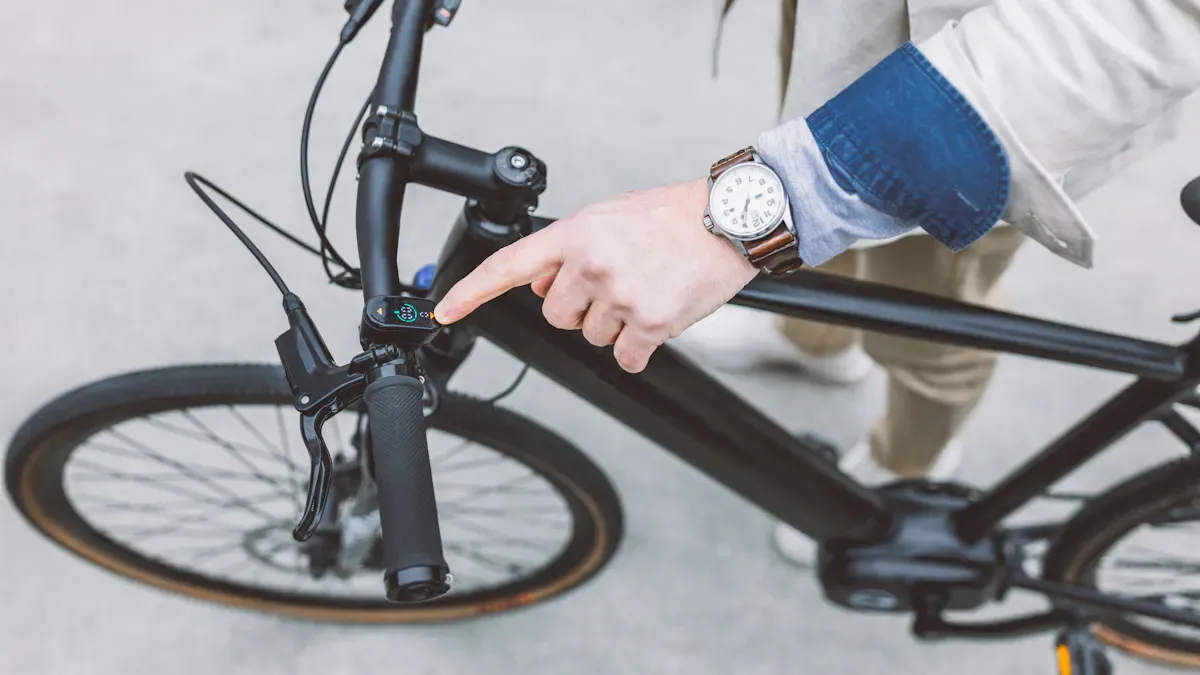
Storage and charging
You can improve your battery's range if you store and charge it correctly. Experts recommend keeping the charge level between 20% and 80%. Charge the battery regularly, but avoid fully discharging it. For longer breaks, store the battery with about 50% charge. A cool, dry place is best. Check the charge level every four to six weeks. Use the original charger to avoid damage.
Keep the charge level between 20% and 80%
Store the battery at 10 to 20 degrees
Use the manufacturer's charger
Check the charge level regularly
Tip: Remove the battery before cleaning the bicycle and wipe it with a damp cloth. Grease the connector poles with technical Vaseline to keep them protected.
Observing temperature
Temperature strongly influences the battery's range and lifespan. High temperatures accelerate aging. Low temperatures reduce capacity. At 0 °C, the capacity drops by about 20%. Do not park the battery in direct sunlight. Store it at moderate temperatures between 10 and 25 degrees Celsius.
Temperature (°C) |
Effect on battery |
|---|---|
0 |
Capacity -20 % |
10-25 |
Optimal |
>40 |
Faster aging |
Note: Protect the battery from extreme temperatures so that you can enjoy your e-bike for longer.
Extending lifespan
You can extend the battery's lifespan if you follow a few simple measures:
Store the battery in a dry place at 10-20°C and with about 50% charge.
Avoid deep discharge and recharge the battery after every ride.
Keep the contacts clean and dry. Clean them occasionally with a dry cloth.
Do not use high-pressure cleaners to protect the electronics.
Regular maintenance and correct storage ensure that your battery lasts longer and you get more kilometers.
Calculating range: Tools & Apps
Online calculators
Do you want to know how far you can get with your e-bike? Online calculators help you with this. The tools from Bosch and Shimano are particularly accurate. The Bosch Range Assistant is considered one of the best. It takes more than 20 different factors into account, for example, your weight, the route profile, and the selected assistance level. The accuracy is about 80 to 85 percent under normal conditions. Shimano also offers a very detailed calculation with the E-Tube tool. Yamaha and other manufacturers have their own calculators, which differ in the weighting of individual factors. With these tools, you can better plan your tour and avoid surprises.
Apps for on the go
Many apps also support you while you're on the go. They show you your current range and adjust the forecast while you ride. The Bosch eBike Flow app is particularly practical. It uses artificial intelligence to predict range as accurately as possible. The app incorporates total weight, the elevation profile, and your riding behavior. With every ride, the predictions become more accurate. You can even set a minimum battery level for your destination. The app continuously updates the forecast so you can focus on riding.
Bosch eBike Flow app with AI-powered 'Range Control' feature
Considers weight, route, and riding style
Forecast adjusts during the ride
Set a minimum battery level for your destination
Tip: Use apps to always keep track of your remaining range while on the road.
Example calculation
An example calculation makes planning easier. Imagine you weigh 80 kg, your e-bike weighs 25 kg, and you have 5 kg of luggage. You mostly ride in Eco mode and are planning a route with few inclines. With a 500 Wh battery, the Bosch Range Assistant shows you a range of about 70 kilometers. If you ride more often in Turbo mode or have many inclines, the range drops to about 45 kilometers. With these numbers, you can safely plan your tour.
The future of e-bike range
New batteries
You can look forward to many exciting developments in battery technology. Semi-solid and solid-state cells will hit the market in the coming years. These new batteries will offer you more energy with less weight. They will charge faster and perform better in cold weather. Manufacturers are working on making production cheaper. This means you will soon get more powerful batteries at a better price. Researchers are also developing sustainable solutions, recycling raw materials from old batteries and focusing on eco-friendly manufacturing. Solid-state batteries promise greater safety because they are less prone to catching fire.
Semi-solid and solid-state cells for increased range
Faster charging times and better thermal behavior
Sustainable recycling of raw materials
Smart systems
Smart systems will make your e-bike even more efficient in the future. Intelligent battery management systems control energy output and protect the battery. Sensors measure your pedal power and adjust motor assistance accordingly. This saves energy and extends your range. New motors are becoming smaller and lighter. They run quieter and consume less electricity. Digital technologies assist you with navigation, showing you the best route in real-time and calculating energy consumption. Fast-charging functions will reduce wait times while you are on the road.
Intelligent systems optimize range
Sensors adapt assistance to your riding style
Digital navigation plans the best route
Fast-charging functions save time
Trends
You can already see many new trends today. Premium models will soon achieve up to 150 kilometers per charge. In the future, even 200 kilometers will be possible. Manufacturers are focusing on lighter and more efficient e-bikes. Short charging breaks will become normal, just like with smartphones. Sustainability is becoming more important. Recycling and environmentally friendly production are in focus. Hybrid mobility concepts combine e-bikes with other modes of transport. Smart systems automatically adjust settings and make riding even more enjoyable.
Shorter charging times thanks to new technologies
More sustainability and recycling
Flexible usage through hybrid mobility concepts
Tip: Stay curious and keep yourself informed about new developments. This is how you make the most of the technology's advantages.
You can realistically estimate your e-bike's range if you pay attention to your riding style, weight, tire pressure, and the weather. Experts recommend checking your tire pressure regularly, riding with foresight, and maintaining a cadence of over 50 revolutions per minute. Check your e-bike and battery regularly to ensure everything is working perfectly. Store the battery at room temperature and charge it in good time. New batteries and smart systems like AI-supported range planning will soon make your riding experience even better. 🚴♂️
FAQ
How can I quickly improve the range of my e-bike?
You increase your range by riding in Eco mode and checking your tire pressure. Remove any unnecessary luggage. Avoid frequent starting and stopping. This allows you to use the battery more efficiently.
What happens if my battery runs out while I'm on the road?
You can continue riding, but without motor assistance. The e-bike will function like a normal bicycle. You should check your range beforehand and plan for a buffer.
How often should I charge my e-bike battery?
It is best to charge your battery after every ride. This avoids deep discharge. Experts recommend keeping the charge level between 20% and 80% to extend its lifespan.
Which apps help me with range planning?
Use apps like the Bosch eBike Flow app. It shows your current range and adjusts the forecast while you ride. Many apps offer maps and tour planning features.
Can I store my e-bike battery outside in winter?
You should not store the battery outside. Cold temperatures reduce capacity and damage the battery. Store it at 10 to 20 degrees Celsius in a dry place.