
Are you wondering if an e-bike without pedaling is truly possible? In fact, you can ride a bike without moving the pedals by using a throttle. This is particularly practical for people with limited mobility, as a throttle allows for stepless acceleration and increased comfort. While many pedelecs dominate the market, classic models that don't require pedaling are purchased less frequently. Please note: There are legal boundaries and technical hurdles you should be aware of before you get started.
Key Takeaways
An e-bike without pedaling using a throttle is possible, but its use is strictly regulated by law.
E-bikes with a throttle may only be ridden without pedaling up to 6 km/h; otherwise, they are classified as mopeds, requiring a license and insurance.
The conversion requires a stable bicycle, suitable motors and components, and technical know-how.
The costs for the conversion are usually between 1,500 and 1,700 euros, including the bicycle and accessories.
Before converting, be sure to check current laws and seek advice from professionals to ensure you are operating safely and legally.
Law 2025
E-bike without pedaling and the law
Do you want to ride an e-bike without pedaling? Then you should know the legal rules in detail. In Germany, there are clear limits on how fast you are allowed to go using a throttle. You may use the throttle without pedaling up to 6 km/h – which is practical if, for example, you want to start moving at a traffic light. As soon as you go faster, your bike is no longer considered a bicycle, but a moped. This brings many new regulations with it.
Tip: Most pedelecs only assist you while pedaling. A true e-bike without pedaling that uses a throttle falls into a different vehicle class and requires more than just a conversion.
The laws differentiate between various types of e-bikes. Here are the most important differences:
Vehicle Type |
Max. Power Output |
Max. Speed (without pedaling) |
Legal Class |
License / Minimum Age |
Special Features / Obligations |
|---|---|---|---|---|---|
Pedelec |
up to 250 watts |
up to 25 km/h |
L1e-A |
no license required, no minimum age |
no license plate, no helmet obligation |
E-Bike (up to 25 km/h with throttle) |
up to 500 watts |
up to 20 km/h (throttle) / 25 km/h (with pedal) |
L1e-A |
Moped test certificate, minimum age 15 years |
license plate and insurance required, helmet not mandatory |
S-Pedelec (up to 45 km/h) |
up to 4000 watts |
up to 45 km/h |
L1e-B |
Class AM license, minimum age 16 years |
license plate and insurance required, helmet mandatory, no bike paths |
The European Directive 168/2013/EU and German regulations, such as the Driving License Ordinance (FeV) and the Road Traffic Act (StVG), regulate how your e-bike without pedaling is classified. If you manipulate your bike to ride faster, you lose your operating permit and are committing a criminal offense. This also applies if you use the throttle on public roads without the necessary documents.
Empirical studies, such as the "Stadtkern_PLUS" project from Vienna, show that technical and legal hurdles in the conversion process are often underestimated. The researchers emphasize that many regulations and planning rules must be observed. Especially when converting to an e-bike without pedaling, the complexity becomes clear due to the many legal and technical requirements.
Insurance and License
As soon as your e-bike travels faster than 6 km/h without pedaling, you need more than just a helmet. You must take out liability insurance and attach an insurance plate to the bike. For e-bikes up to 20 km/h, a moped test certificate is sufficient; from 25 km/h, you need a Class AM license. The minimum age is 15 or 16 years, depending on the model.
Many people think that household insurance is sufficient. That is incorrect. The insurance requirement applies because e-bikes with a throttle are faster and heavier. The risk of accidents increases, and repair costs are high. Specialized liability insurance protects you from high costs in the event of accidents or theft. If you "trick out" your e-bike without pedaling to make it faster, you not only lose your insurance coverage but also risk fines and points on your driving record.
E-bikes without pedal assist that travel up to 45 km/h are considered mopeds and require liability insurance with a license plate.
These e-bikes require a driver's license (Class AM from age 16).
Helmet requirements and restrictions on using bike paths are mandatory.
Pedelecs (pedal assist up to 25 km/h) do not require insurance or a license.
S-Pedelecs (pedal assist up to 45 km/h) require insurance, a Class AM license, and a helmet.
The necessity of insurance coverage is justified by the increased accident risk due to higher speed and motorized propulsion.
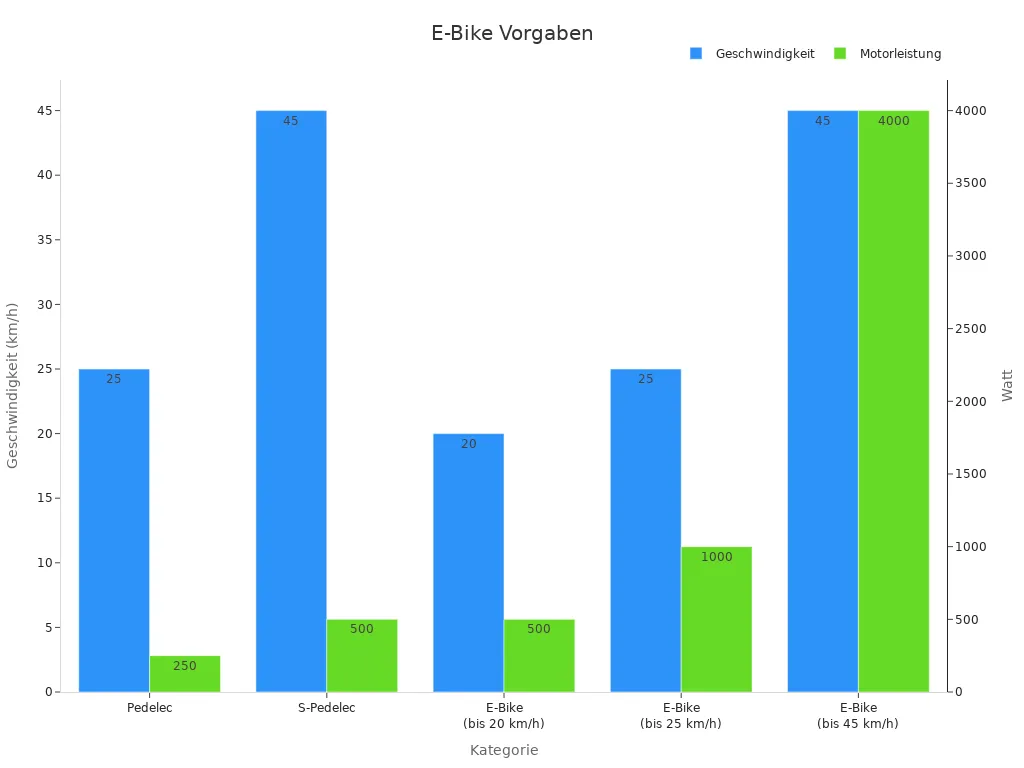
The official figures show how strict the rules are:
Category |
Max. Speed |
Motor Power (max.) |
Legal Classification |
Insurance Obligation |
License Obligation |
|---|---|---|---|---|---|
Pedelec |
25 km/h |
250 watts |
Bicycle |
No |
No |
S-Pedelec |
45 km/h |
500 watts |
Moped |
Yes |
Yes (AM license) |
E-Bike (up to 20 km/h) |
20 km/h |
500 watts |
Light moped |
Yes |
Yes (Moped license) |
E-Bike (up to 25 km/h) |
25 km/h |
1,000 watts |
Moped |
Yes |
Yes (Moped license) |
E-Bike (up to 45 km/h) |
45 km/h |
4,000 watts |
Moped |
Yes |
Yes (AM license) |
Note: For people with disabilities, an e-bike without pedaling can be a real relief. Nevertheless, you must comply with all legal requirements. The rules apply to everyone, regardless of the reason you want to use a throttle.
If you convert your e-bike, you should get well-informed beforehand. Laws change regularly. A violation can become expensive and even lead to imprisonment. Safety and legality always come first.
Technology and Conversion
Suitable E-Bikes
Not every bicycle is suitable for conversion into an e-bike without pedaling. You should pay attention to a few important things before you start:
Your bike needs a stable frame. The dropouts, in particular, must be robust to withstand the additional weight and the power of the motor.
High-quality brakes and good gears are a must. The motor puts more strain on the components than regular cycling.
The system voltage should be 36V or 48V. This is standard for most conversion kits.
Modern disc brakes ensure safe stopping, especially at higher speeds.
The bike should not be too old. Material fatigue or rust can be dangerous.
A specialist dealer can advise you on whether your bike is suitable and which parts you need.
Here you can see typical motors often used in conversions:
Motor Type |
Power (W) |
Torque (Nm) |
Weight (kg) |
Voltage (V) |
|---|---|---|---|---|
Bafang BBS01 |
250 |
80 |
3.9 |
36 |
Bafang BBS02 |
500 |
90-100 |
4.3 |
48 / 52 |
Bafang BBSHD |
1000 |
160 |
5.6 |
48 / 52 |
These motors can be programmed and are compatible with many bicycle types. They offer connections for shift and brake sensors, which increase safety.
Throttle and components
For an e-bike without pedaling, you need more than just a motor. Here are the most important parts you need:
Throttle: This is used to control speed without pedaling. There are twist and thumb throttles.
Controller: It connects the battery, motor, and throttle. The controller regulates how much power flows to the motor.
Motor: You can choose between a mid-drive, rear hub, or front hub motor. Mid-drive and rear hub motors are usually the better choice because they distribute power well.
Battery: The capacity determines how far you can travel. Spare batteries increase the range.
Sensors: Shift and brake sensors ensure safety and prevent the motor from continuing to run while braking.
Cables and mounts: They connect all parts together and ensure they are securely fastened.
Tip: Many conversion kits are not compatible with bicycles equipped with a coaster brake. Check compatibility beforehand!
Step-by-step conversion
Do you want to turn your bicycle into an e-bike without pedaling? Here is a concise guide:
Preparation
Check if your bike is stable enough. Pay attention to the frame, brakes, and gears. Clean the bike thoroughly.Choosing the conversion kit
Select a suitable motor (e.g., mid-drive or rear hub), a controller, a throttle, and a battery. Ensure the correct voltage (36V or 48V).Mounting the motor
Install the motor in the desired location (center, rear, or front). Fasten it securely to the frame.Installing the controller and throttle
Mount the controller in a protected location. Attach the throttle to the handlebars.Wiring and battery connection
Connect all components with the appropriate cables. Ensure connections are clean and secure.Installing sensors
Install shift and brake sensors. They ensure safety while riding.Testing and calibration
Check all functions. Test the throttle, brakes, and motor assist.Acceptance and insurance
For an e-bike without pedaling, you often need an operating permit (e.g., from the TÜV). Take out liability insurance and obtain a license plate.
Note: Many workshops refuse to convert DIY e-bikes. It is best to seek advice from a professional or hire a professional service provider.
Costs and technical challenges
The costs for a conversion kit start at around 1,000 euros. Additionally, there are often assembly costs, tools, and small parts. Overall, you should expect to spend 1,500 to 1,700 euros. A stable base bike costs an additional 200 to 500 euros.
After the conversion, you lose the manufacturer warranty and often product liability as well.
The installation is technically demanding. You need manual skills and technical understanding.
Compatibility of frame, motor, and components is not always guaranteed. Assembly and calibration can take 4 to 10 hours.
Many insurance companies only accept e-bikes with TÜV approval.
Maintenance is more extensive than with a normal bicycle. Many workshops do not accept DIY converted e-bikes.
Many users report a powerful but sometimes jerky riding experience. Technical problems occur more frequently than with pre-built e-bikes.
Advantages and disadvantages
Daily Life and Target Audiences
Do you want to know how an e-bike that doesn't require pedaling performs in daily life? Many users report that the throttle makes riding much easier. You don't need any special skills and can simply sit back. Especially if you have health issues or find inclines difficult, the throttle helps you tremendously. Starting off on a hill becomes child's play. It is super practical for relaxed rides through the city or in the countryside.
Here is an overview of the most important pros and cons:
You ride without effort, which is ideal if you have limited pedaling power.
The throttle makes it easier to start on inclines.
You need less strength and can enjoy longer distances.
The battery drains faster because the motor is working harder.
You have to charge more often because the range decreases.
Cheap throttles can be difficult to operate.
Use on public roads is severely restricted.
Costs and Risks
There are several costs associated with the conversion. A retrofit kit costs between 800 and 1,500 euros. You will pay another 200 to 500 euros for a sturdy base bicycle. In total, you are usually looking at 1,500 to 1,700 euros. Accessories and tools are additional. By comparison: A ready-made pedelec often costs 2,500 euros or more, but it comes with a warranty and service.
Aspect |
DIY E-Bike (No Pedaling) |
Ready-made Pedelecs |
|---|---|---|
Cost |
approx. 1,500–1,700 euros |
from 2,500 euros |
Range |
approx. 80–100 km |
similar, depending on model |
Loss of Warranty |
Manufacturer warranty usually lost |
Warranty remains intact |
You often lose the manufacturer's warranty during a conversion. Many workshops will not repair DIY converted e-bikes. The risk of technical problems increases.
E-bike without pedaling in comparison
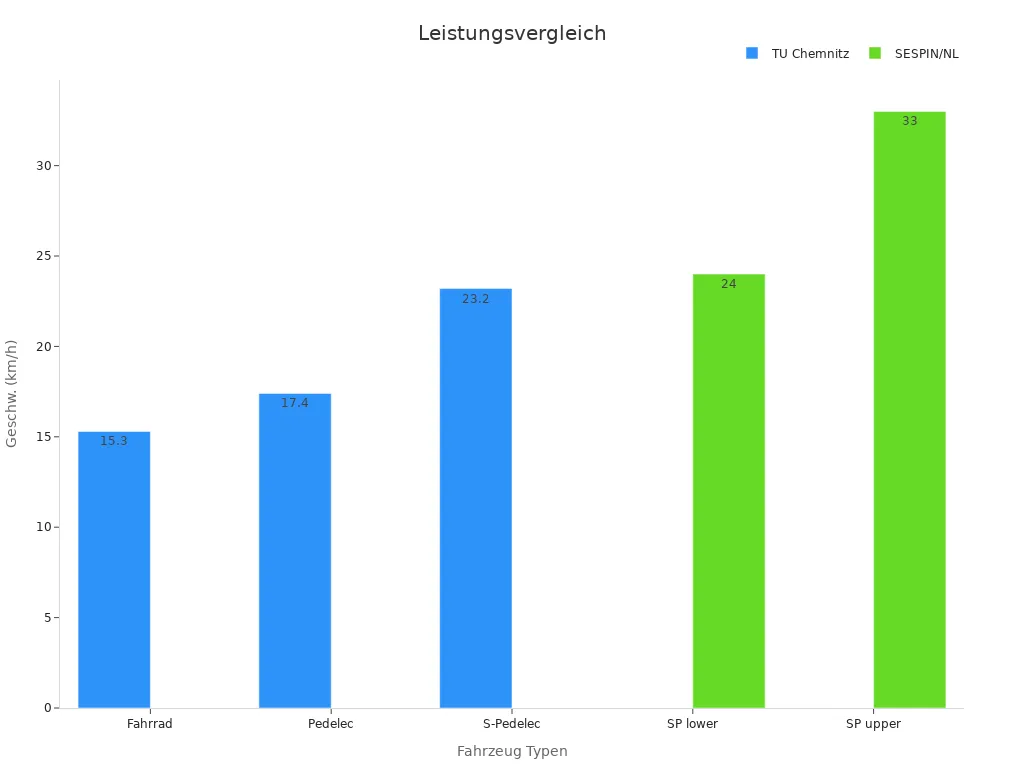
How does your converted e-bike compare to pedelecs and S-pedelecs? Studies show that S-pedelecs in the city travel around 10 km/h faster than normal bicycles. The average speed is between 23 and 33 km/h. Pedelecs usually reach 17 to 25 km/h. So you are traveling faster, but you need more energy and must pay attention to legal requirements.
Tip: Think carefully about whether you really need an e-bike without pedaling or if a classic pedelec is sufficient for you. Always check the legal regulations and your own needs.
You have now seen how an e-bike without pedaling works. Converting is especially worthwhile if you have physical limitations or simply want more comfort.
Always check the legal requirements.
-
Gather enough information before converting.
Tip: Get advice from professionals so that you are riding safely and legally. Only then will you enjoy your e-bike for a long time! 🚲
FAQ
Can I legally ride my e-bike entirely without pedaling?
You are only allowed to ride your e-bike without pedaling up to 6 km/h. If you ride faster, you need an insurance license plate and often a driver's license. Always check the current laws before you start.
How much does the conversion to a throttle really cost?
Most conversion kits cost between 1,000 and 1,500 euros. Sometimes there are also workshop costs involved. You also need a sturdy bicycle. Plan for a total of about 1,500 to 1,700 euros.
Do I lose the warranty if I convert my e-bike?
Yes, usually you lose the manufacturer's warranty. Many manufacturers do not allow conversions. Workshops often refuse repairs on converted e-bikes. Think this step through carefully.
Do I always need a driver's license for an e-bike with a throttle?
For e-bikes with a throttle and speeds over 6 km/h, you need at least a moped test certificate. From 25 km/h, an AM class driver's license is required. Check the rules for your specific model.
Can I do the conversion myself or do I need a professional?
You can do the conversion yourself if you have technical skills. However, many steps are tricky. A professional will help you avoid mistakes and ensure safety. Get some advice!