
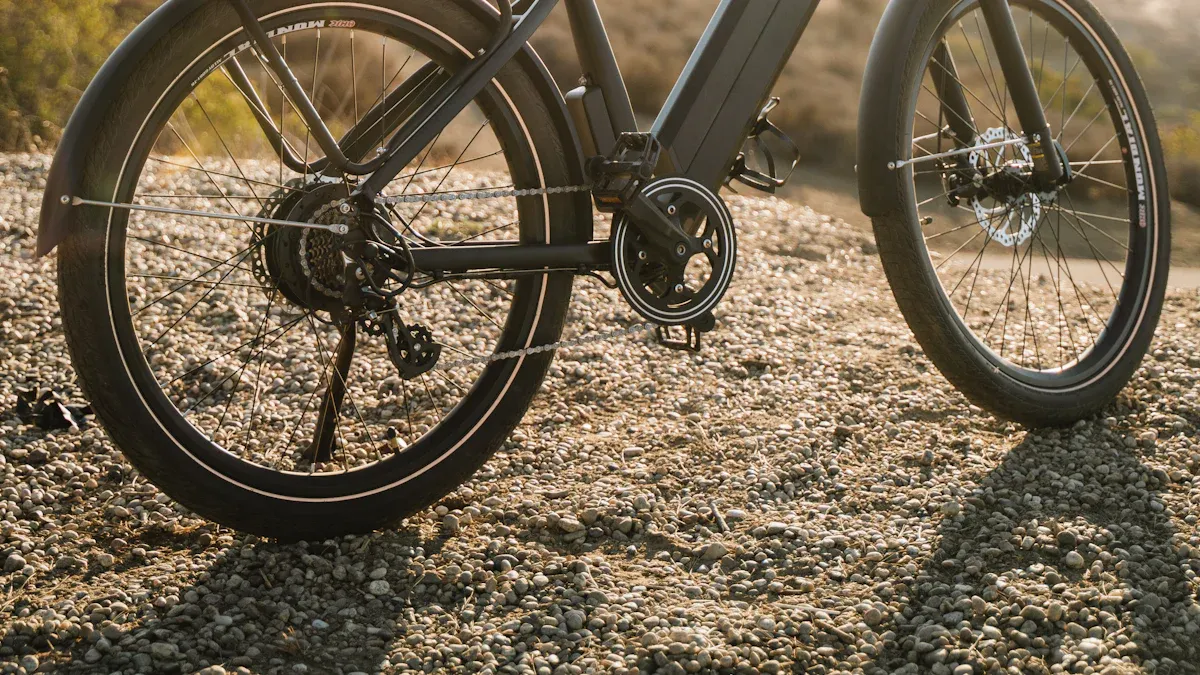
You will experience a whole new form of trail riding with an electric motor on your mountain bike. You will master steep climbs more easily and extend your tours without significant effort. Many riders report more fun and less fatigue. However, the technology also brings challenges, such as weight and the right control. New innovations are ensuring fresh riding experiences. More and more people are interested in e-bike MTBs. Current figures show this:
Category |
Percentage |
|---|---|
E-MTBs seen |
|
E-MTB purchase interest |
14.9% |
Never seen an E-MTB |
10.8% |
You benefit from technical advances and can look forward to exciting trails, whether you are a beginner or a professional.
Key takeaways
E-MTBs make steep climbs easier and extend tours, which means more riding pleasure and less fatigue.
Modern batteries offer high capacity and fast-charging technology, so you can cover longer distances efficiently.
The software allows you to customize the motor support and maximize your range.
E-MTBs encourage riding together, regardless of age or fitness level, and bring generations together.
Regular maintenance and care are important to extend the lifespan of your E-MTB and ensure safety.
e-bike MTB technology
Motor and drive
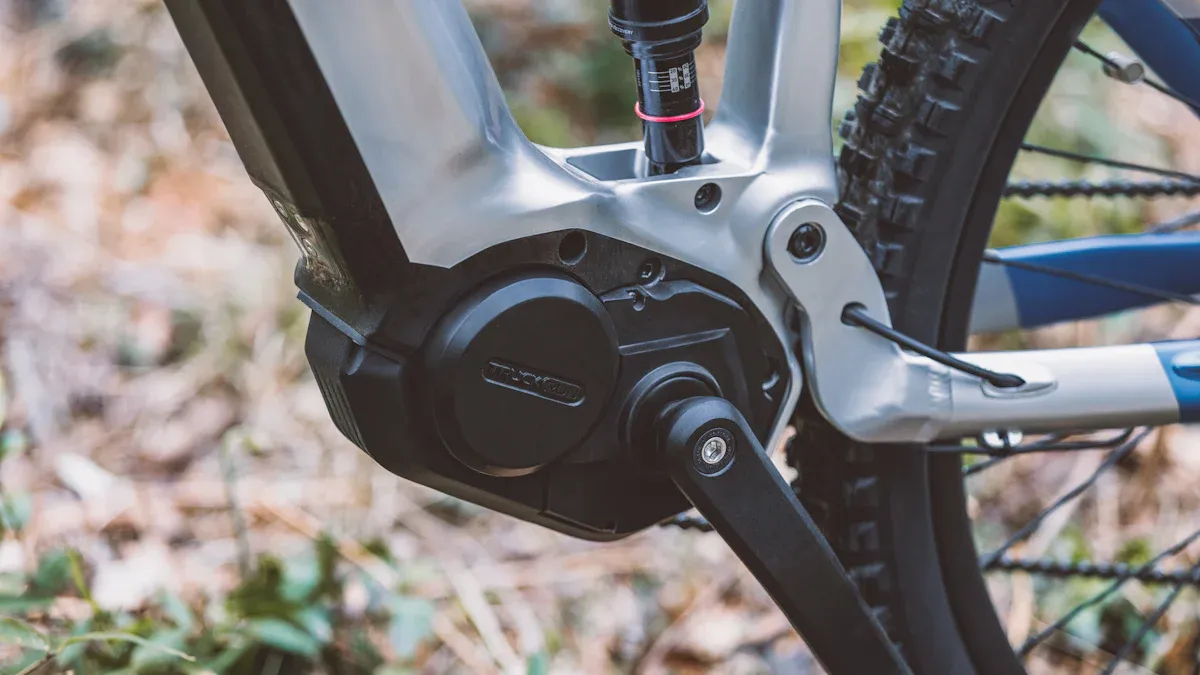
You feel the difference immediately when you are out on a modern e-bike MTB. The motor supports you while pedaling and provides more power on the mountain. The technology differs significantly from classic mountain bikes. Take a look at the most important features in comparison:
Feature |
E-MTB motors |
Classic MTB drives |
|---|---|---|
Rated continuous power |
250 watts |
Varies by model |
Support levels |
3-5 selectable levels |
No support |
Maximum speed |
25 km/h |
Depends on the rider |
Weight |
2.5-4.2 kg |
Varies by drive |
Drive type |
Mid-motor or rear-hub motor |
Rear-wheel drive only |
Wear |
Higher wear due to mid-motor |
Lower wear |
Center of gravity |
Central, low center of gravity |
Varies, often higher |
You can choose between several support levels with an e-bike MTB. This makes riding more flexible. The motors deliver high torque. This ensures powerful thrust on steep trails. The following table shows you the values for different models:
Manufacturer |
Model |
|
|---|---|---|
Bosch |
Performance Line CX |
85 |
Shimano |
EP8 |
85 |
Brose |
Brose Motor |
90 |
Yamaha |
PW mid-motor |
80 |
Shimano |
Steps E8000 MTB |
70 |
Giant |
Yamaha |
80 |
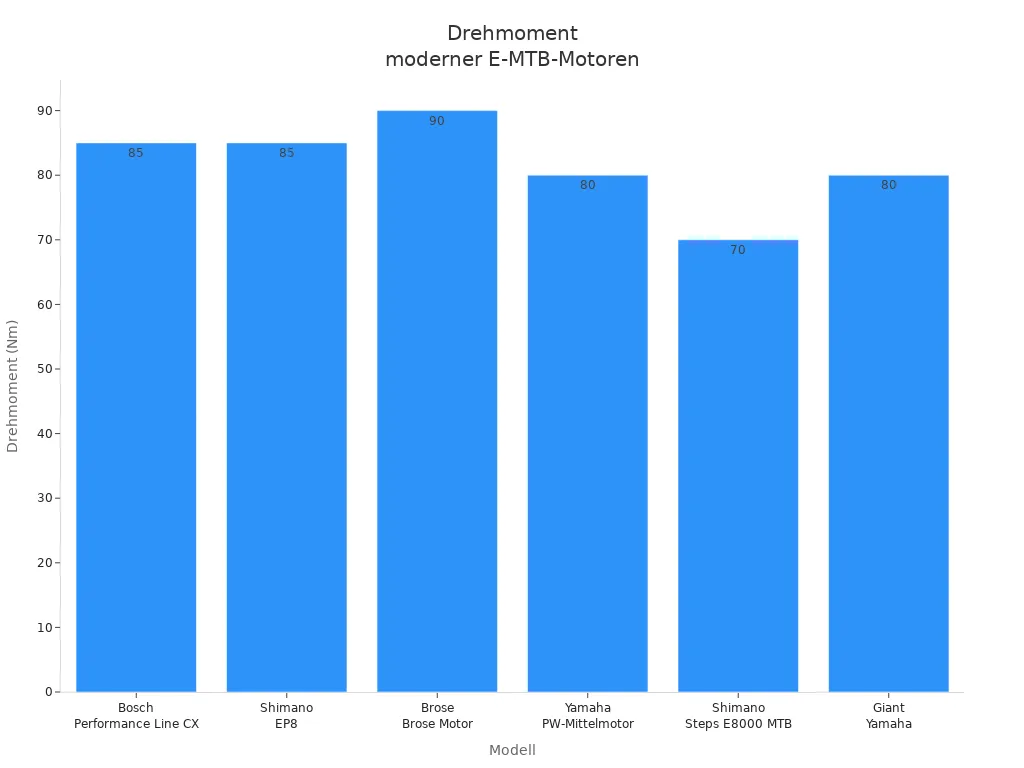
You benefit from the strong performance when you tackle steep climbs or difficult sections. The motors are compact and bring the weight closer to the center of gravity. This improves control on the trail.
There are also tuning possibilities. Shorter cranks improve handling and safety off-road. Some riders use tuning chips to increase the speed. However, this can lead to more wear and legal problems. Manufacturers warn against it because safety can suffer.
Battery and range
The battery is the heart of your e-bike MTB. It determines how far you get. Modern batteries offer high capacity and charge quickly. The range depends on several factors:
Battery capacity
Support level
Rider weight
Route profile
Riding behavior
You can ride about 10 kilometers on challenging trails with full support. If you choose a moderate level, you can reach over 100 kilometers. The following table shows you the differences:
Support level |
Range (km) |
|---|---|
Full load |
10 |
Moderate support |
over 100 |
Many e-bike MTB models offer fast-charging technology. You recharge the battery in a short time. This makes longer tours possible. However, you always have to keep an eye on the weight. A larger battery provides more range, but also more weight.
Software and control
The software controls the motor and adjusts the support to your needs. You can choose different modes, for example the eMTB mode from Bosch. The control is often via a display on the handlebars. You can see speed, battery level, and the selected support level there.
Modern e-bike MTB systems offer you smart features. You can adjust the settings via an app. Some models allow updates via your smartphone. The software ensures that the motor works efficiently and that you always get the right support.
Tip: Use the different support modes to save energy and increase the range. The software helps you get the most out of your e-bike MTB.
Trail riding with an E-MTB
New possibilities
With an e-bike MTB, you discover trails in a completely new way. The motor support helps you master steep climbs and technical sections much more easily. You reach summits that were previously too strenuous. The riding time on demanding routes is reduced significantly because the motor supports you efficiently.
You master steep sections without long breaks.
Technical sections feel less strenuous.
You can plan longer tours and ride more trails in one day.
The constant motor thrust, as offered for example by the Bosch Performance CX motor, can be controlled intuitively. This improves your handling and gives you more control, especially on difficult terrain. An e-bike MTB thus opens up new possibilities that you often do not have with a classic mountain bike.
Tip: Use the motor support specifically to explore new routes and push your limits. You will be surprised at how much more you can achieve!
Riding techniques
You need special techniques when riding an e-bike MTB. The additional weight and the motor change the riding experience. You should choose a more active and dynamic body position. Stay closer to the handlebars and correct your balance laterally more often.
Pay attention to line choice: Concentrate on the rear wheel to avoid slipping and maintain flow.
Use the motor overrun on uphills. This allows you to roll over obstacles more easily.
Manage your pedal strokes consciously to make optimal use of the motor power.
A light e-bike MTB is easier to maneuver in technical sections. You need more force during rapid direction changes if the bike is heavier. The center of gravity should be central and low. This improves riding dynamics and gives you more safety on the trail.
Note: Practice handling on easy trails before you venture onto difficult sections. This gives you a feel for the interaction of motor, weight, and balance.
Riding fun for everyone
With an e-bike MTB, you experience mountain biking together with others, regardless of age or fitness. The motor support levels out performance differences. You can ride with friends or family without anyone being left behind. Many report that the e-bike MTB brings generations together and opens up new perspectives.
You decide for yourself how intensely you want to ride.
Women benefit particularly because they train more healthily and arrive at their destination more relaxed.
Children, parents, and grandparents can go on a tour together.
Imagine planning a tour without worrying about your fitness level. You enjoy nature, have fun on the trail, and feel happy and satisfied at the end.
Tip: Plan joint excursions with people you might otherwise not take with you on the trail. The e-bike MTB makes it possible!
Innovations & Trends
Battery technology
Battery technology is developing rapidly. Today, you benefit from significantly shorter charging times and a longer range. New battery types charge up to ten times faster than classic lithium-ion batteries. They offer more safety and work even at temperatures down to -20° C. The following table shows you the most important advantages of modern batteries:
Advantages of alternative battery technologies |
Description |
|---|---|
Significantly shorter charging time |
Ten times faster than current lithium-ion batteries |
Higher safety |
Improved safety features |
Longer range |
Increased range for E-MTBs |
Low-temperature charging down to -20° C |
Works even in extreme temperatures |
The charging times of current batteries are also impressive. An example: The EnergyPak Smart 500 charges to 80% in just 2.5 hours. Compact models like the EnergyPak Smart Compact 500 can even do it in 2 hours and 20 minutes. Robust batteries like the Brose Battery 630 offer high durability and are fully charged after about 4 hours.
Motor development
The motors of modern e-bike MTBs are lighter, more compact, and more powerful than ever before. In recent years, you have experienced the following advances:
Smaller and lighter motors with up to 340% pedal power support make handling easier.
New smart systems allow updates via app and offer you flexible settings.
Special race modes deliver up to 400% support and react lightning-fast to your movements.
Lighter motors and batteries make the bikes slimmer overall. Compact motors like the DJI Avinox M1 weigh only 2.52 kg. As a result, e-bike MTB models are becoming increasingly lighter and more affordable.
Tip: A lighter bike improves your riding experience and makes technical trails easier.
Software updates
Software updates regularly bring new features to your e-bike MTB. You get more power, better traction, and new riding modes. You can find the most important improvements in this table:
Improvements |
Details |
|---|---|
Performance and Torque |
Updates increase performance and provide traction control in eMTB+ mode. |
Performance Line SX motor |
Up to 60 Nm and 400% support, better control on the trail. |
Avinox update |
Turbo mode with 1,000 W and individual settings. |
Firmware Bundle 12 |
Fast motor response and KickOverrun for technical uphills. |
ZF Ride App |
Three new riding profiles for different conditions. |
Manufacturers usually provide major updates every six months. This allows you to constantly benefit from new features and improvements.
Sustainability & Maintenance
Environmental aspects
You want to enjoy nature with your e-MTB while being environmentally conscious. Despite emissions during battery production and electricity consumption, e-bikes have a very good carbon footprint. Compared to cars, you only generate about 22 grams of CO₂ per kilometer with an e-bike. A car emits six to eight times that amount. The following table shows the most important values:
Parameter |
CO2 emissions (kg CO2 equivalent) |
|---|---|
Battery production |
121 |
Share of the battery |
59% |
If you use your e-MTB regularly, you are more than 12 times more environmentally friendly than by car. There are also clear rules for recycling. You can hand in e-bike batteries for bikes up to 25 km/h at a recycling center free of charge. For S-pedelecs over 25 km/h, car dealerships or scrapyards handle returns under certain conditions.
Care and service
An e-MTB requires more maintenance than a classic mountain bike. The electric drive accelerates wear. You should check the drive, gears, bearings, brakes, and wheels regularly. Maintenance intervals are shorter because the motor and battery bring additional stress. Maintenance costs are higher than for classic MTBs.
Regularly check all electrical components.
Keep the battery clean and only charge it with the original charger.
Software updates bring new features and security patches. They extend the lifespan of your e-MTB and ensure optimal performance.
Tip: Have your e-MTB checked by a specialist dealer at least once a year. This keeps your bike safe and reliable.
Safety
Safety is the top priority for e-MTBs. Strict standards apply to e-MTBs, such as DIN EN ISO 4210 for frames, brakes, and handlebars, as well as DIN EN 15194 for electrical components. Bicycle helmets must be tested according to DIN EN 1078.
E-MTBs pose special challenges due to their higher weight and speed. Accident statistics show that e-bike riders are on average older and the risk of serious accidents is increasing. The following table gives you an overview:
Type of bicycle |
Fatal accidents per 1,000 traffic accidents |
|---|---|
E-bikes (pedelecs) |
|
Classic bicycles |
3.5 |
Always wear a certified helmet and adjust your speed to the terrain. This is how you protect yourself and others on the trail.
Future of e-MTBs
Trends
You are experiencing an exciting time in the e-MTB sector. Manufacturers are focusing on new technologies that improve your riding experience. You can find the most important trends in this table:
Trend |
Description |
|---|---|
New drive systems |
Innovative motors provide more power and efficiency. |
Lightweight e-MTBs |
Less weight makes your bike more agile and easier to control. |
Higher battery capacities |
Batteries with up to 800 Wh or range extenders provide more range. |
Improved suspension systems |
New damping technologies offer more comfort and control. |
Sustainable materials |
Manufacturers use recycled aluminum and environmentally friendly fibers. |
You benefit from these developments directly on the trail. Demand for e-MTBs remains high. In the mountain bike sector, e-MTBs already make up around 40% of the e-bike market. Classic mountain bikes are losing importance. Demand in the bicycle market remains stable and shows no signs of declining.
Challenges
You also face some challenges when using an e-MTB. Many cities still offer too few bicycle parking spaces. Charging stations for e-bikes are often missing in popular regions. Safety plays a major role. Stricter standards are necessary so that you and other riders remain protected. The infrastructure must continue to improve. You should inform yourself about the risks of e-bike riding.
Lack of e-bike charging stations
Need for stricter safety standards
Improvement of bicycle infrastructure
Education about the risks of e-bike riding
Nature conservation also remains an issue. Manufacturers and associations are seeking dialogue. They emphasize that e-MTBs can help resolve conflicts between hikers and bikers. Some huts deliberately do not offer charging options. Experts see opportunities for society in e-mountain biking and no increase in accident numbers.
Outlook
You can look forward to an exciting future. Technology is developing rapidly. E-MTBs are becoming lighter, more powerful, and more sustainable. The range is increasing, and batteries are charging faster. Manufacturers are relying on environmentally friendly materials. The infrastructure is growing so that you can use your bike everywhere.
Tip: Stay curious and keep yourself regularly informed about new developments. This is how you get the most out of your e-MTB and are always safe on the road. 🚴♂️
The next few years will bring many improvements. You will experience trails that seem unreachable today. E-MTBs make mountain biking accessible to everyone and ensure more fun and adventure in nature.
You have seen how electric motors are revolutionizing trail riding.
You master steep climbs more easily.
You enjoy longer tours and more riding fun.
New technology makes the e-MTB accessible to everyone.
Tip: Try an e-MTB yourself. Discover new paths and experience how much joy modern technology can bring. The future has many exciting developments in store for you! 🚴♀️
FAQ
How far can I ride with an e-MTB?
The range depends on the battery, support level, weight, and route. You can often manage over 100 kilometers with moderate support. At full power on steep trails, the range drops to about 10 kilometers.
How long does it take to charge the battery?
You usually charge modern batteries in 2 to 4 hours. Fast chargers shorten the charging time. Always check the manufacturer's specifications. It is best to charge the battery at room temperature.
Do I have to maintain my e-MTB differently than a normal mountain bike?
Yes, you should check the motor, battery, and electronics regularly. Keep the contacts clean. Only charge the battery with the original charger. Have your e-MTB checked by a specialist dealer once a year.
Am I allowed to ride an e-MTB on all trails?
Many trails allow e-MTBs. Some regions have their own rules. Inform yourself about local regulations before the tour. Consideration for other users remains important.
How much does a good e-MTB cost?
Entry-level models start at about 2,000 euros. High-quality e-MTBs often cost 4,000 to 8,000 euros. For this, you get modern technology, powerful motors, and long-lasting batteries.