
Do you want to know what really sets an e-bike mountain bike apart? In Germany, you weren't the only one making that decision in 2023:
Year |
E-mountain bike sales figures |
|---|---|
2023 |
These bikes offer you more than just motor support. They have a sturdy frame, high-performance brakes, and specialized gearing.
Special feature |
Description |
|---|---|
Motorization |
Mid-motor, no hub motors |
Frame construction |
Extra sturdy and prepared for battery/motor |
Brakes |
Hydraulic disc brakes, large brake discs |
This makes it easier for you to find the right model and benefit from more riding fun and safety.
Important takeaways
E-bike mountain bikes offer motorized support that makes riding on steep inclines easier and enables longer distances.
Choosing the right model depends on your riding style. Full-suspension bikes offer more comfort, while hardtails are lighter and more efficient.
Pay attention to battery capacity when buying. A larger battery allows for longer rides and more vertical meters.
The right fit is crucial for comfort and control. Test different frame sizes before you buy.
Regular maintenance is important. Budget for maintenance costs and carry out simple repairs yourself to save money.
What is an e-bike mountain bike?
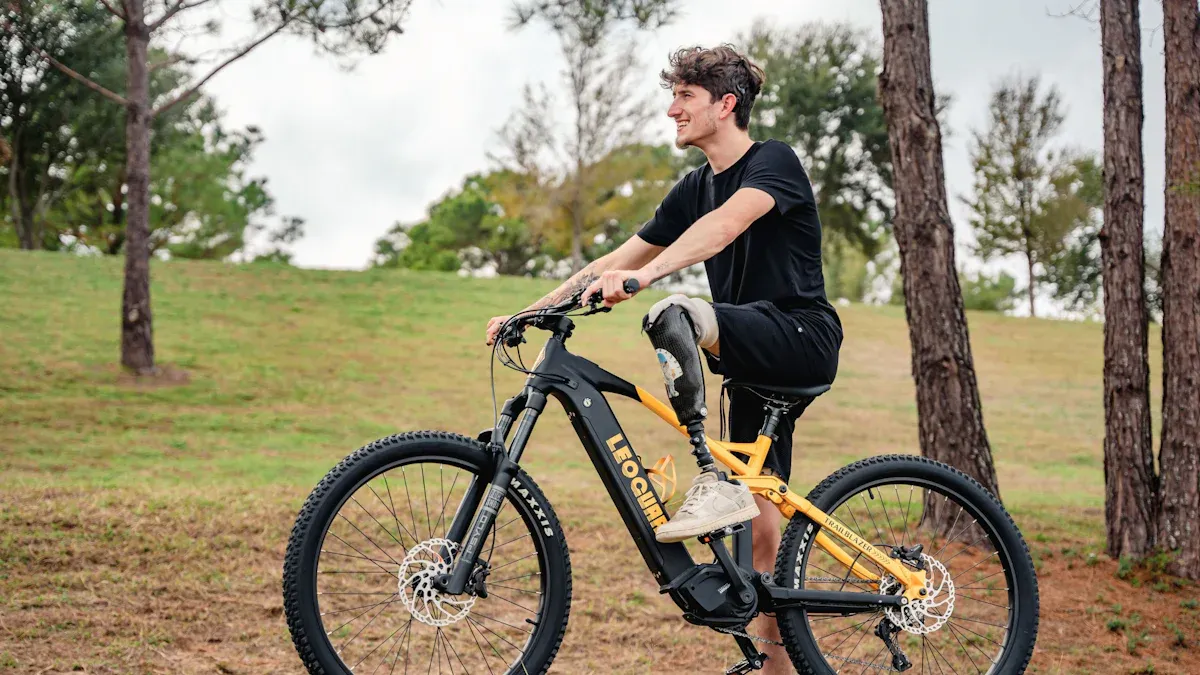
An e-bike mountain bike is a specialized bicycle designed for demanding terrain. You get more than just a mountain bike with a motor; it is a true all-rounder for steep climbs, long tours, and rough ground. The construction differs significantly from other e-bike types such as gravel or SUV e-bikes. While those may adopt some features, they are not made for extreme terrain.
Differences from the classic mountain bike
Are you wondering how an e-bike mountain bike differs from a classic mountain bike? You can find the most important differences here:
You receive motorized support that makes riding on steep inclines easier for you.
You can ride longer distances and more demanding routes without overexerting yourself.
The additional weight from the motor and battery can influence agility on very technical trails.
A classic mountain bike offers you a direct, unadulterated riding experience without electrical assistance.
Tip: Full-suspension (fully) and hardtail (front-suspension only) bikes differ greatly in terms of riding behavior. Consider which model suits your riding style.
Target groups
An e-bike mountain bike is suitable for many different users. You benefit particularly if you belong to one of these groups:
You are an experienced mountain biker and want to explore new tours and trails.
You are less experienced but want to discover new possibilities through electrical support.
You have health restrictions and still want to stay physically active.
You are a hiker or outdoor fan and are hesitant to get on a normal mountain bike due to your fitness level.
With an e-bike mountain bike, you can push your limits and re-experience adventure on two wheels.
Technology
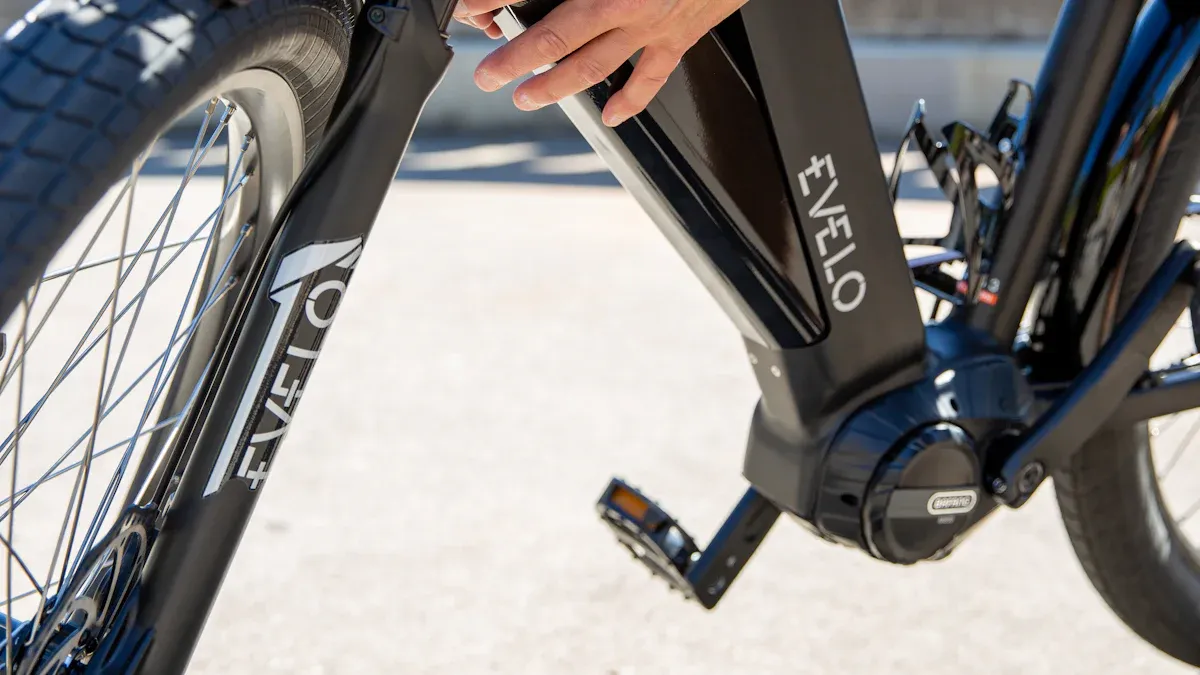
The technology behind an e-bike mountain bike is constantly evolving. You benefit from innovations that make the riding experience safer, more comfortable, and more efficient. Here you can find out what you should look out for regarding the motor, battery, frame, suspension, and display.
Motor and drive
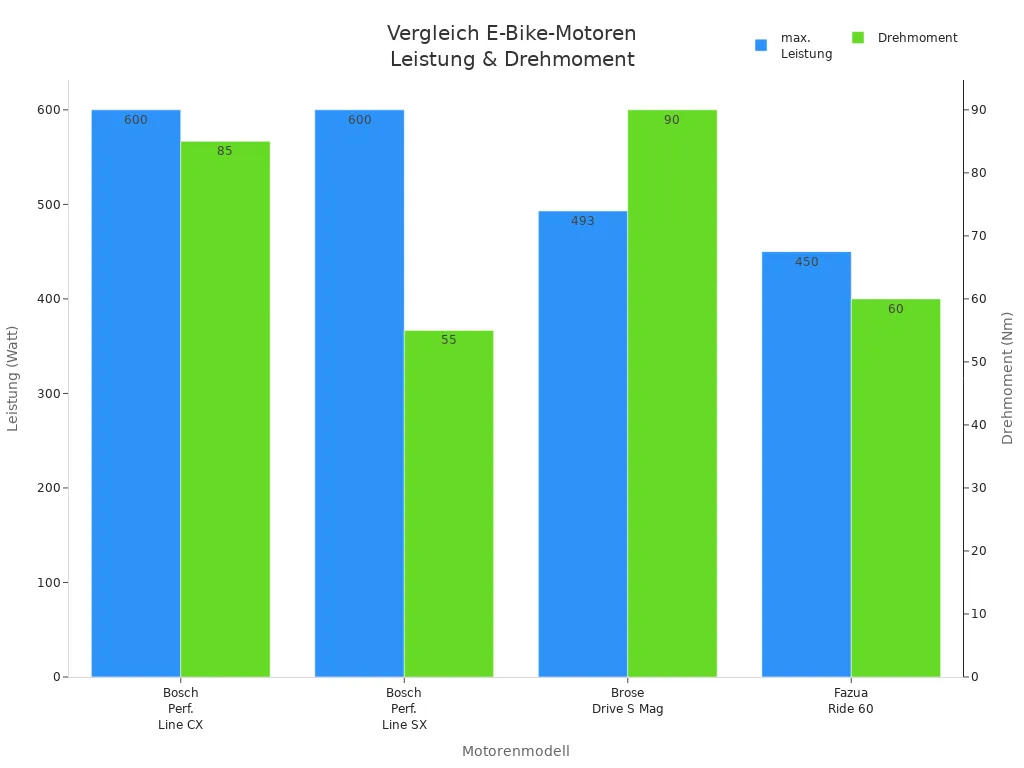
The motor is the heart of your e-bike mountain bike. Modern models usually rely on mid-motors because they ensure optimal weight distribution and provide a natural riding feel. The power and torque determine how forcefully your bike supports you—especially on steep inclines.
Weight in kilograms |
Max. power in watts |
Nominal continuous power in watts |
Torque in Newton meters |
|
|---|---|---|---|---|
Bosch Performance Line CX |
2.9 kg |
600 W |
250 W |
85 Nm |
Bosch Performance Line SX |
2 kg |
600 W |
250 W |
55 Nm |
Brose Drive S Mag |
2.9 kg |
493 W |
250 W |
90 Nm |
Fazua Ride 60 |
4.2 kg |
450 W |
250 W |
60 Nm |
New drive systems like the Pinion MGU system combine the motor and gearbox into a single unit. You can even shift under load, which provides advantages especially on trails. Many manufacturers focus on lightweight motors that still offer plenty of power. Innovative systems like the Carbotronics Power Frame integrate the drive completely into the frame.
Tip: Pay attention to the torque when buying. A high value ensures more thrust on the mountain.
Battery and range
The battery determines how far you can get with your e-bike mountain bike. Capacity is specified in watt-hours (Wh). Typical batteries offer 400 to 500 Wh. With this, you can often reach between 130 and 200 kilometers, depending on riding style and terrain. In a test, a 360-Wh battery managed 70 kilometers and 2,500 vertical meters—this shows how strongly the range depends on the conditions.
Battery capacity |
Range (km) |
Vertical meters |
|---|---|---|
70 |
2500 |
-
Many factors influence the range:
Your riding style
The terrain
The weight of the rider and equipment
The selected support level
The lifespan of a battery is usually around 1,000 to 1,100 charging cycles, which corresponds to about three to seven years. You can extend the durability if you store the battery at room temperature and avoid deep discharge.
Note: Smart batteries often offer a connection to a smartphone and show you the condition or the remaining range.
Frame and suspension
The frame forms the backbone of your e-bike mountain bike. Manufacturers usually use aluminum or carbon because these materials are lightweight and sturdy. Titanium is rarer but offers high durability.
Properties |
Advantages |
|
|---|---|---|
Aluminum |
Lightweight, robust, cost-effective |
Optimal for mountain bikes, good formability |
Carbon |
Very light, stiff, high riding comfort |
Popular for sports bicycles, high stiffness |
Titanium |
Durable, low maintenance, moderate weight |
Ideal for niche products, does not require painting |
The suspension is crucial for comfort and safety. A full-suspension e-bike mountain bike absorbs shocks at the front and rear. You feel fewer vibrations and maintain control even on uneven surfaces. The suspension ensures that the wheels follow the ground and you don't lose traction. This makes a big difference, especially on technical trails or mountain paths.
-
Advantages of suspension:
More riding comfort due to fewer jolts
Better traction and control
Higher safety on fast descents
Note: Good suspension increases the weight slightly but significantly improves the riding feel.
Control and display
The display is the cockpit of your e-bike mountain bike. You use it to control support levels, view speed, battery status, and much more data. Modern displays often offer touchscreens, color displays, and smartphone connectivity. You can personalize settings and even activate anti-theft protection.
Description |
|
|---|---|
Touchscreen functionality |
Intuitive user interface for simple control, similar to smartphones. |
Color display |
Improves readability and makes information visually more appealing. |
Connectivity |
Connection to smartphones via Bluetooth or Wi-Fi for data transfer and remote control. |
Anti-theft protection |
Security functions like PIN codes offer additional protection against theft. |
Personalization |
Adjustment of display options for an individual riding experience. |
Motor monitoring |
Monitoring of the motor to prevent overheating with warning symbols on the display. |
-
The display shows you:
Speed
Battery status
Support level
Range
Maintenance instructions
Many systems can be paired with your smartphone. You receive updates, can plan tours, or track the location of your bike.
Tip: A clear display makes operation easier and ensures more safety on the go.
Overview of current innovations
Lightweight motors and batteries
Smart equipment with smartphone connectivity
Safety features like ABS and adaptive brake assist
Sustainable materials and recyclable components
32-inch tires for more smoothness and traction
With these technologies, your e-bike mountain bike becomes a high-tech sports device that offers you a safe and fun riding experience on every trail.
E-bike mountain bike advantages
Riding fun and motivation
With an e-bike mountain bike, you experience more riding fun, no matter how fit you are. Many users report that the motor support motivates them more to try new routes. You can ride with friends, even if your fitness levels differ. According to surveys, fun is the primary motivation for 88% of riders.
Primary motivation |
Percentage |
|---|---|
Fun |
88 % |
Tip: The motor compensates for performance differences. This way, no one gets left behind, and you can enjoy longer tours together.
Range and Assistance
You can often achieve 70 to 120 kilometers on a single battery charge. The assistance on hills makes steep climbs easier. You choose the level of assistance yourself. In turbo mode, you use more battery, but even rough terrain is no problem. Many riders report that they manage routes they couldn't conquer before with an e-mountain bike.
More altitude gain
Quick access to mountains after work
Facilitates riding together with different fitness levels
Safety and Load Management
Safety is the focus of modern e-mountain bikes. Wide tires with aggressive tread and sturdy frames give you grip. The suspension ensures comfort and control. High-quality brakes, such as one-finger brakes, offer you powerful stopping force and precise modulation.
Aspect |
Description |
|---|---|
Brakes |
One-finger brakes offer impressive stopping power and precise modulation, which increases safety. |
Note: Test results show that not every model is perfect. Before purchasing, check whether your desired model meets all safety standards.
Versatility
An e-mountain bike fits many situations. You can use it in everyday life, for nature tours, or in a bike park. It is suitable for commuting, for trips on gravel paths, and even as a replacement for the lift in a bike park.
Everyday use: Perfect for commuting to work or shopping, even in bad weather.
Nature tours: Enjoy tours on gravel roads or single trails.
Freeride and bike parks: Use the bike as a shuttle replacement and save waiting time.
With an e-mountain bike, you are flexible and can decide spontaneously where the next tour will go.
With an e-mountain bike, you are flexible and can spontaneously decide where the next tour goes.
E-Mountain Bike Types
You will find different types of e-mountain bikes that differ in equipment, comfort, and area of use. Here you will learn about the most important types and find out which one best suits your riding style.
Hardtail
A hardtail has a suspension fork at the front but no shock absorber at the rear. You benefit from a stable and lightweight frame. Hardtails are particularly suitable for less demanding terrain, dirt roads, or gravel paths. They are ideal for beginners and weekend trips.
Advantage
Efficient on smooth surfaces
Less maintenance required
Generally longer battery range
Tip: A hardtail rides efficiently on asphalt and firm paths. You save weight and battery if you rarely ride on very rough trails.
Full-Suspension (Fully)
The fully has suspension at the front and rear. You feel significantly more comfort because the bike absorbs bumps and unevenness better. A fully is suitable for demanding trails, steep descents, and alpine adventures. Many riders choose a fully for intensive rides with a high trail content or for tours in the mountains.
Suitable for after-work rides and long excursions
Perfect for steep descents and technical sections
Note: A fully costs more and requires more maintenance, but offers you maximum control and safety off-road.
Light E-MTB
The light E-MTB focuses on low weight and sporty handling. You get a lightweight carbon frame, smaller batteries, and firm kinematics. These bikes are suitable for all-mountain, trails, enduro, and even downhill. They offer you a particularly dynamic riding feel.
Lower total weight for more agility
Lighter and more compact batteries
Playful handling on trails
Focus on sporty riding dynamics
If you value a natural riding feel and quick reactions, a light E-MTB is perfect for you.
Buying Guide
Area of Use
Before you decide on an e-mountain bike, you should consider how and where you want to use it. Different models are suitable for different requirements. Pay attention to these points:
E-bike motor: Choose between classic and light motors. Classic motors offer more power, while light motors are lighter and sportier.
Battery size: Adjust the battery capacity to your planned tours and terrain. For long distances or significant altitude gain, you need a larger battery.
Battery integration: Consider whether you prefer an integrated or removable battery. This influences the weight and handling.
Equipment: Even if you are not planning extreme descents, you should look for powerful brakes and solid equipment.
Light E-MTB category: These bikes are particularly light and agile. However, they require more effort from you while riding.
Tip: Write down which routes you want to ride. This makes it easier to find the right model.
Fit
The right fit is crucial for comfort and control. You should test the frame size precisely after a preliminary selection. The area of use can influence the optimal size. Try out the bike before you buy.
An optimal fit ensures that you feel comfortable and safe on your bike. Your height, inseam, and measurements such as reach and effective top tube length help with the selection. A suitable bike rides more comfortably and is easier to steer.
Determine your height and inseam.
Use the frame geometry table to find the appropriate frame size for your riding style.
Tip: Test different frame sizes during a test ride. This way, you will immediately feel which bike suits you best.
Budget and Costs
An e-mountain bike costs more than a classic mountain bike. The technology is more complex, and maintenance is more expensive. Here is a comparison:
Category
E-Mountain Bikes
Classic Mountain Bikes
Purchase costs
from €3,000 to over €5,000
under €3,000
Maintenance costs
higher due to complex technology
lower
E-mountain bikes are significantly more expensive to buy and maintain. Think about how much you want to spend. There are various financing options:
Financing option
Advantages
Disadvantages
Purchase
Full ownership, no ties, cheaper in the long run
High one-time payment, additional costs for insurance and maintenance, depreciation
Leasing
No high one-time payment, integrated services, independence from employer
More expensive in the long run, no tax advantages, contractual obligations
Government subsidies
Reduction of the purchase price
Quickly exhausted, often tied to specific e-bike types
Tip: Set a budget before you start searching. Compare the prices of similar models and watch for special offers.
Dealer and Advice
A specialist dealer offers you many advantages over buying online:
Personal advice helps you find the right e-mountain bike.
You can test different models and sizes.
Many dealers offer an all-inclusive package with free setup and suspension tuning.
Specialist dealers ask the right questions and determine your needs.
They advise you individually and recommend suitable models.
You can take test rides with several bikes and experience the differences directly.
Tip: Use interactive buying guides and seek advice on-site. This way, you will find the bike that truly suits you.
Test Ride
A test ride is very important before purchasing. This allows you to experience the riding behavior and handling directly.
Test how different components feel.
Find out which bike best suits your riding style.
Get an overview of the variety of models.
Test rides help you compare the features and advantages of different bikes. You gain confidence and feel safer. Experience the assistance on the mountain and the ease of riding for yourself.
Tip: Always arrange a test ride before you decide. This ensures you make the best choice.
Maintenance
E-mountain bikes require more care than classic mountain bikes. The technology is more complex, and maintenance costs more. Here is an overview:
User group
Maintenance interval
Maintenance costs (annual)
Intensive users
every 800-1,200 kilometers
300-400 euros
Occasional riders
1,000-2,000 kilometers
150-250 euros
General
at least once a year
150-400 euros
You can save money if you perform simple repairs yourself. Brake pads, tires, and chains are often easy to change. More complex tasks, such as suspension fork service, should be left to a professional.
It doesn't always have to be the most expensive accessories.
However, cheap alternatives can lead to problems and make expensive repurchases necessary.
Compare prices and check whether you can perform repairs yourself.
Tip: Plan for maintenance costs from the start. This way, you won't encounter any unpleasant surprises.
When buying your e-mountain bike, consider these important criteria:
Motor
Wheel size
Frame material
Number of gears
Suspension travel
Area of use
A well-chosen bike noticeably improves your riding experience. Test different models and get advice. This is how you will find the e-mountain bike that suits you.
Look forward to new adventures and more fun on every trail!
FAQ
How do you maintain the battery of your e-mountain bike?
Store the battery at room temperature. Avoid deep discharge. Recharge the battery regularly. A clean contact ensures a long service life.
Tip: Clean the contacts with a dry cloth.
What range can you expect with an e-mountain bike?
The range depends on your riding style, terrain, and battery. You can usually achieve between 70 and 120 kilometers. A larger battery takes you further.
Battery capacity
Range (km)
400 Wh
80
500 Wh
120
Do you need special clothing for e-mountain bikes?
Wear comfortable, breathable clothing. Protect yourself with a helmet and gloves. In bad weather, a rain jacket and sturdy shoes will help.
Helmet
Gloves
Rain jacket
How often should you have your e-mountain bike serviced?
Bring your bike in for maintenance at least once a year. Check brakes, chains, and tires regularly yourself. Intensive use requires shorter intervals.
Note: You will recognize wear and tear early if you check your bike after every tour.