
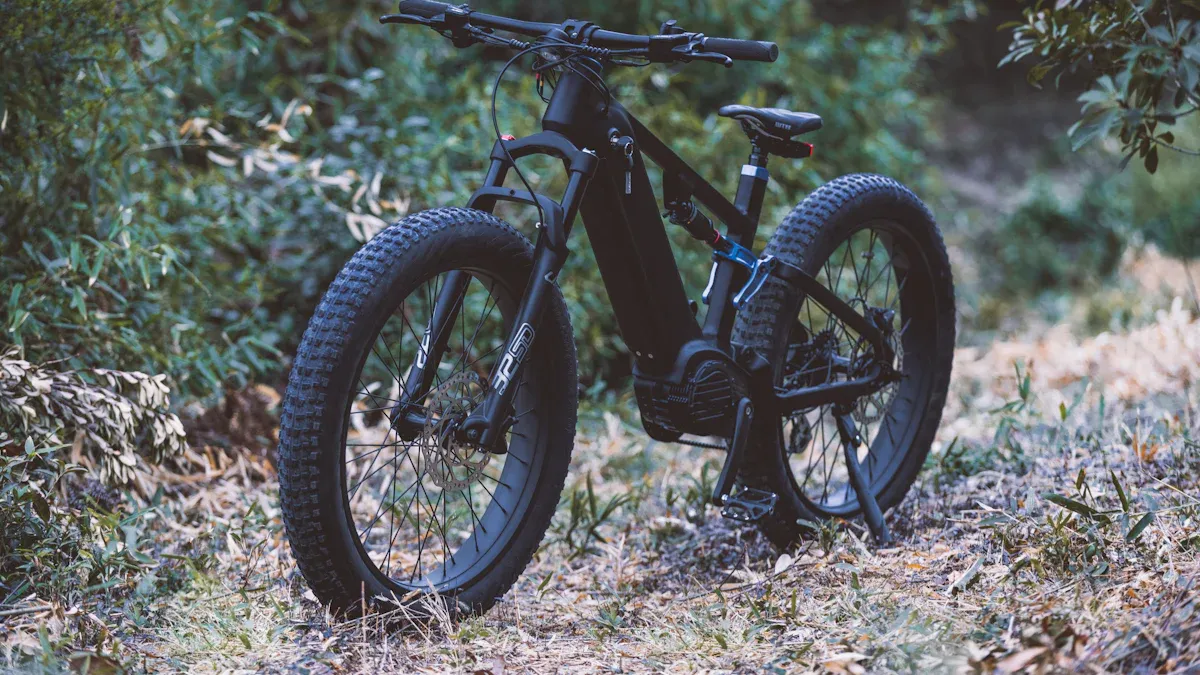
Choosing the right motor position significantly influences your riding experience. Each of the three main positions—front motor, mid-drive motor, and rear motor—offers unique characteristics. Your decision depends on how and where you want to use your e-bike. Are you planning relaxing rides in the city or challenging tours in the mountains? E-bike motor positions determine not only performance but also balance and ride feel. With the right motor, you will enjoy maximum comfort and efficiency.
Key Findings
Where the motor is located significantly changes the ride feel. Think about where and how you want to ride your e-bike.
Front motors are inexpensive and easy to install. They are good for the city, but poor for off-road terrain.
Mid-drive motors are powerful and well-balanced. They are suitable for mountains but require more maintenance and cost more.
Rear motors are quiet and save energy, especially on long distances. They offer a smooth ride, but make steep mountains more difficult.
Try out the motors to test the ride feel. This is how you will find the best motor for you.
Front Motor – Characteristics, Pros, and Cons
Advantages of the Front Motor
Cost-effective and easy to retrofit
A front motor offers you an inexpensive way to convert your bicycle into an e-bike. Models with a front hub drive are often available starting from 1200 to 1500 euros. Retrofitting is straightforward and does not require major technical adjustments. You can simply integrate the motor into the front wheel hub without changing the existing gear system.
Aspect |
Description |
|---|---|
Cost |
Front-hub-driven pedelecs are often affordable, available from 1200 – 1500 euros. |
Retrofitability |
A front hub drive can be retrofitted cost-effectively. |
Maintenance effort |
Low maintenance, similar to standard bicycles. |
Drive system |
Uses conventional bicycle technology (chain, hub, or bottom bracket gears). |
Brakes |
Possibility to install a coaster brake. |
Compatible with all gear types and coaster brakes
The front motor harmonizes with almost all gear systems. Regardless of whether you have a bike with derailleur gears or hub gears, the motor adapts. Additionally, you can easily use a coaster brake, which makes it particularly attractive for classic bicycles.
Low maintenance and direct power transmission
Front motor technology is robust and low-maintenance. You benefit from direct power transmission to the front wheel, which increases efficiency. Maintenance effort remains similar to that of a conventional bicycle.
All-wheel drive effect through muscle power on the rear wheel
A unique advantage of the front motor is the all-wheel drive effect. While the motor drives the front wheel, your muscle power provides propulsion at the rear wheel. This combination improves traction and handling on flat routes.
Disadvantages of the Front Motor
Heavier steering due to motor weight
The additional weight of the motor puts a load on the front wheel. This makes steering stiffer, especially in tight turns or when riding slowly.
Risk of slipping on wet or sandy surfaces
On slick or loose surfaces, the front wheel can slip more easily. This is because the front motor concentrates traction on the front wheel.
Limited suitability for steep or uneven terrain
The front motor is less suitable for mountainous routes. Its power is often insufficient for mastering steep climbs.
Unusual ride feel due to front-wheel drive
The ride feel with a front motor differs from conventional bicycles. The lack of coordination between the motor and pedaling impulse can feel unharmonious.
Disadvantage |
Description |
|---|---|
Heavier steering |
The weight of the motor loads the fork and influences steering behavior. |
Risk of slipping |
On wet roads, there is a risk of the front wheel slipping. |
Limited off-road capability |
Less suitable for steep or uneven routes. |
Unharmonious ride feel |
Lack of synchronization with the pedaling impulse leads to an unfamiliar ride feel. |
E-bike motor positions with front-wheel drive offer you a cost-effective and simple solution for city traffic. However, you should consider the disadvantages, such as heavier handling and limited off-road capability.
Mid-Drive Motor – Characteristics, Pros, and Cons
Advantages of the Mid-Drive Motor
Central weight distribution for better balance
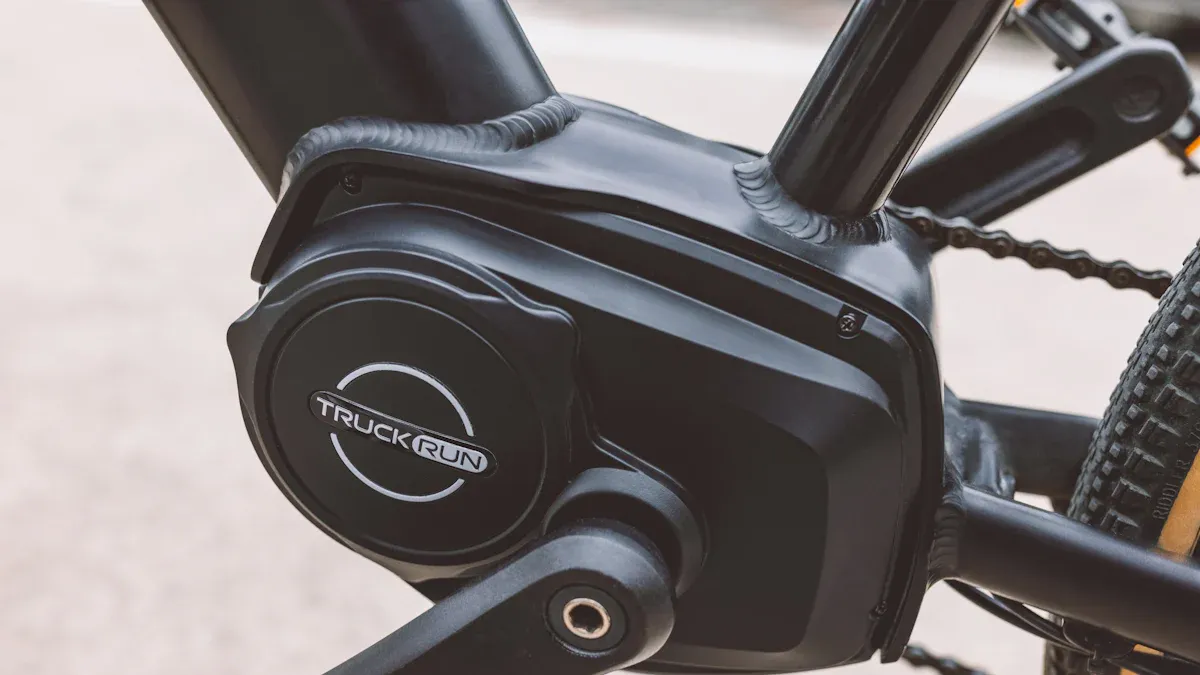
The mid-drive motor sits directly at the bottom bracket. This position ensures even weight distribution, which makes handling more stable. You feel better balance, especially when cornering or on uneven terrain. The central placement of the motor improves stability and makes the e-bike suitable for various applications.
High power and torque, ideal for mountains and steep climbs
With a mid-drive motor, you can master steep climbs effortlessly. The motor generates high torque that is transferred directly to the chain. This power transmission makes it particularly powerful. Studies show that mid-drive motors can reach speeds of up to 45 km/h, making them ideal for mountainous routes.
Natural acceleration and sporty ride feel
The direct power transmission of the mid-drive motor ensures harmonious acceleration. You experience a sporty ride feel that feels like riding a normal bicycle. The motor support adapts to your pedaling impulse, making the ride feel dynamic and natural.
Compatibility with most bike types and gear systems
The mid-drive motor is versatile. You can combine it with most bicycle types and gear systems. Whether you ride a mountain bike or a trekking bike, the mid-drive motor offers you flexibility and adaptability.
Efficient energy use and longer battery life
The direct power transmission of the mid-drive motor optimizes energy efficiency. You benefit from a longer battery life because the energy is used more effectively. Reports indicate that mid-drive motors offer up to 10% more battery capacity in road traffic.
Disadvantages of the Mid-Drive Motor
Higher wear on chain and sprockets
The mid-drive motor puts more strain on the drivetrain. The chain and sprockets wear out faster because the motor acts directly on these components. A worn chain can additionally strain other parts, leading to further repairs.
More expensive and difficult to retrofit
Retrofitting a mid-drive motor is complex. You need special components that increase the price. Compared to front or rear motors, the mid-drive motor is a more expensive option.
Louder than hub motors
A mid-drive motor generates more noise than a hub motor. The direct power transmission and the position at the bottom bracket lead to an audible operating noise. This can be disturbing to some riders.
No energy recovery possible
Unlike rear motors, the mid-drive motor offers no possibility for energy recovery. Braking energy is not converted into electrical energy, which limits efficiency in this area.
Rear Motor – Characteristics, Pros, and Cons
Advantages of the Rear Motor
Good traction and stability on flat and wet surfaces
A rear motor offers excellent traction, especially on wet or slippery surfaces. The additional weight on the rear wheel stabilizes your e-bike and ensures safe handling.
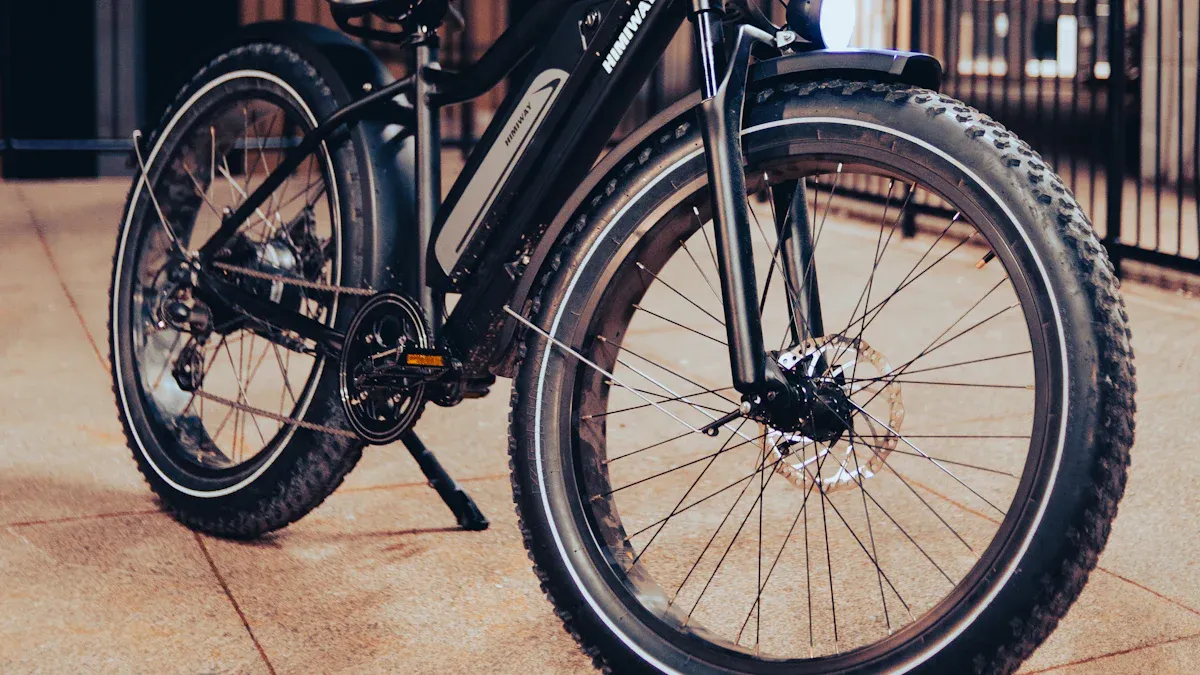
Rear drives with hub motors improve traction on slippery ground.
The rear wheel remains stable due to the weight distribution, which gives you more control.
Quiet and powerful with energy recovery
Rear motors operate quietly and offer you harmonious support. Additionally, you can benefit from energy recovery.
The recuperation converts braking energy into electrical energy and stores it in the battery.
Studies show that this feature can increase battery capacity by up to 10%.
Starting at a speed of 25 km/h, the movement of the hub is used for energy generation.
Natural ride feel and harmonious support
With a rear motor, you experience a natural ride feel. The support is consistent and adapts to your riding style. This makes the ride feel harmonious and pleasant.
Compact design and aesthetic integration
The compact design of the rear motor integrates unobtrusively into the design of your e-bike. This motor position is visually appealing and does not disrupt the overall aesthetics.
Disadvantages of the Rear Motor
Center of gravity shifted to the rear, which influences handling
The rear motor shifts the center of gravity of your e-bike to the rear. This can make handling more difficult, especially on technical trails.
The front wheel can lift on steep climbs.
The shift in the center of gravity affects balance and requires more control.
Less suitable for steep climbs
Rear motors are less powerful on steep climbs. The power transmission is often insufficient to master challenging mountains.
More complex repairs and retrofitting
Repairing a rear motor is more complicated. Changing a tire is made more difficult by the wiring.
Removing the wheel is more involved and takes more time.
Higher maintenance effort can cause additional costs.
Limited compatibility with coaster brakes and hub gears
A rear motor is not always compatible with coaster brakes or hub gears. This limitation can influence the choice of your e-bike.
The rear motor position offers you a quiet and efficient solution for flat routes. It is particularly suitable for riders who value a harmonious ride feel. However, be aware of the disadvantages, such as the shift in the center of gravity and limited off-road capability.
Comparison Table of Motor Positions
Overview of Pros and Cons
Front motor: Cost-effective, but limited off-road capability
A front motor offers an affordable way to upgrade your e-bike. It impresses with low maintenance effort and the possibility of an all-wheel drive effect. This motor position is particularly suitable for city traffic and flat routes. However, the front motor also has disadvantages. Limited off-road capability and heavier handling can restrict the riding experience.
Mid-drive motor: Powerful, but more expensive and maintenance-intensive
The mid-drive motor is considered the best choice for challenging routes. Its central position ensures optimal weight distribution and a natural ride feel. You benefit from high power and good compatibility with various gear systems. But the mid-drive motor also has weaknesses. Wear on the chain and sprockets is higher, and retrofitting requires more effort and cost.
Rear motor: Quiet and efficient, but harder to access
A rear motor scores with quiet operation and good propulsion. It offers you a harmonious ride feel and is suitable for long distances. Furthermore, wear is lower than with a mid-drive motor. Nevertheless, you should note the disadvantages. The more complex design and higher costs can make maintenance and repair more difficult.
Motor Position |
Pros |
Cons |
|---|---|---|
Front Motor |
- Relatively affordable |
- Rear-heavy |
Mid-drive Motor |
- Best motor position |
- Faster wear of chain and sprockets |
Rear Motor |
- Good propulsion |
- Higher costs |
The table shows the most important pros and cons of the three e-bike motor positions. It helps you find the right option for your needs. Whether you value cost, power, or efficiency depends on your area of use.
Recommendations for Different Areas of Use
City traffic and flat routes
Front motor or rear motor for easy handling and efficiency
Front and rear motors are particularly well-suited for city traffic and flat routes. Both motor positions offer a pleasant riding experience tailored to the demands of the urban environment.
Front motors impress with their easy handling and good price-performance ratio. They are low-maintenance and durable, making them ideal for short distances in the city.
Rear motors offer a quiet and consistent ride feel. On straight routes, they work efficiently and ensure a natural riding experience.
Statistics show that rear motors cause less wear on level terrain and enable direct power transmission. Front motors, on the other hand, are compatible with all types of gear systems, which offers you additional flexibility.
Mountainous and challenging terrain
Mid-motor for high performance and balance
In mountainous terrain and on challenging routes, the mid-motor is the best choice. Its central position at the bottom bracket ensures optimal weight distribution and improves the balance of your e-bike.
The mid-motor generates high torque, which benefits you on steep climbs.
Direct power transmission to the chain increases efficiency and performance.
Studies confirm that mid-motors offer better balance and efficiency in hilly terrain than other motor positions. These features make them ideal for mountain bikes and trekking bikes.
Long distances and tours
Rear motor for quiet operation and energy efficiency
The rear motor is particularly suitable for long distances and tours. It operates quietly and offers you harmonic assistance that adapts to your riding style.
Energy recuperation in rear motors increases the range of your e-bike.
On level routes, the rear motor ensures an efficient and pleasant riding experience.
The range of an e-bike depends on factors such as temperature, surface conditions, and the selected assistance level. Stiftung Warentest has shown that rear motors can yield different results in various models. Nevertheless, their efficiency on long distances remains unsurpassed.
Choosing the right e-bike motor position depends heavily on your individual requirements. Each motor position has its own strengths and weaknesses. The front motor is cost-effective and ideal for city traffic. The mid-motor offers you high performance and balance, especially in mountainous terrain. The rear motor impresses with quiet operation and efficiency on long distances.
A test ride will help you experience the handling and performance of the different motors. This way, you will find the best option for your needs. Remember that your riding style and area of use play the most important role.
FAQ
What is the difference between a mid-motor and a rear motor?
A mid-motor is positioned centrally at the bottom bracket and offers you better balance as well as high performance for steep climbs. The rear motor is located on the rear wheel. It operates quietly, offers a harmonic riding feel, and is particularly suitable for long, flat routes.
Can I retrofit an e-bike motor?
Yes, you can retrofit a motor. Front motors are the easiest and most cost-effective to retrofit. Mid-motors and rear motors require more effort and special components. Professional advice will help you find the best option for your bicycle.
Which motor is best suited for mountainous routes?
A mid-motor is ideal for mountainous routes. It offers you high torque and direct power transmission, which makes steep climbs easier. The central weight distribution also ensures stability on uneven terrain.
How does the motor position affect the riding feel?
The motor position determines how your e-bike feels. A front motor can make steering heavier. A mid-motor ensures a natural and sporty riding feel. A rear motor offers you harmonic assistance, but can make handling more difficult on steep climbs.
Are there e-bike motors with energy recuperation?
Yes, rear motors often offer energy recuperation. When braking, energy is fed back into the battery. This function increases the range of your e-bike and makes the rear motor particularly efficient for long distances.