
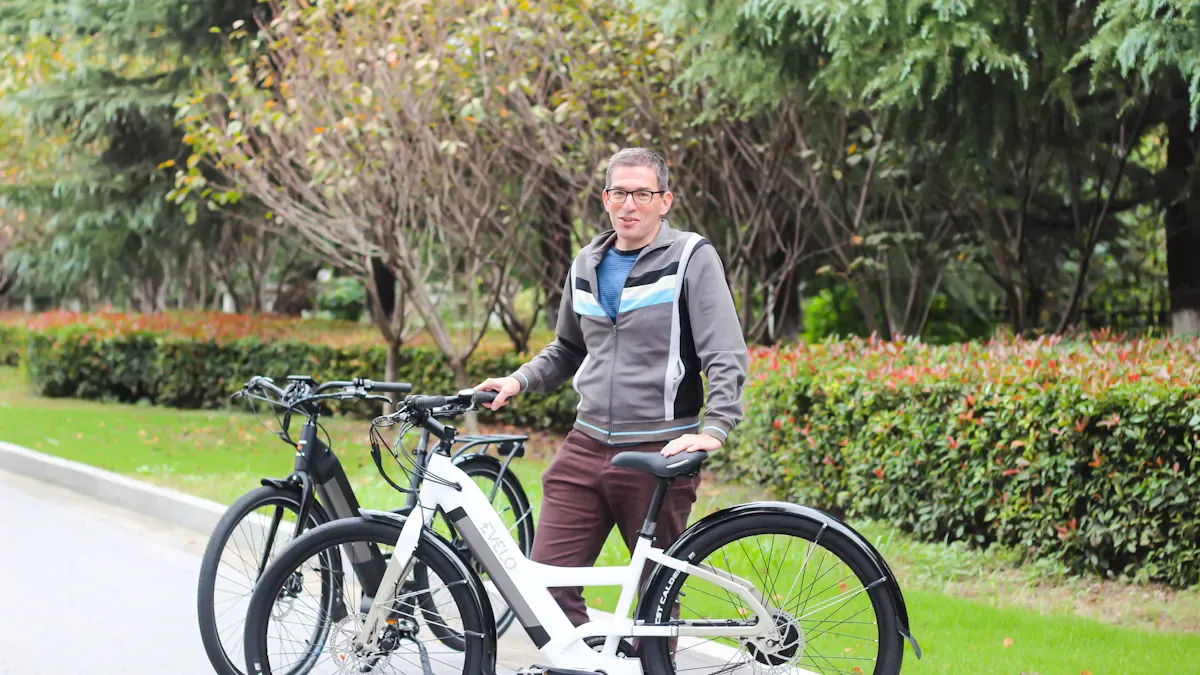
Are you wondering whether an e-bike or a conventional bicycle is worth it for you? Your decision should be based on your individual needs, your route profile, and your riding habits. Also consider the differences in usage among different age groups and genders:
|
Age group |
E-bike usage |
Regular bicycle usage |
|---|---|---|
|
45 to under 65 years |
No data |
|
|
Younger age groups |
No data |
Higher accident rates in Berlin |
|
Men (regardless of age) |
Higher accident rates |
No data |
Here you will find a neutral and factual guide to help you decide, taking into account the basics of e-bikes.
Key takeaways
-
E-bikes offer electric assistance that makes riding on hilly terrain and against the wind easier. This makes longer distances more pleasant and less exhausting.
-
Regular bicycles are lighter, easier to maintain, and more affordable to purchase. They offer a direct riding experience and promote fitness through muscle power.
-
The choice between an e-bike and a regular bicycle depends on your individual needs. Consider factors such as route length, comfort, and budget to make the best decision.
E-bike basics & differences
Technology and equipment
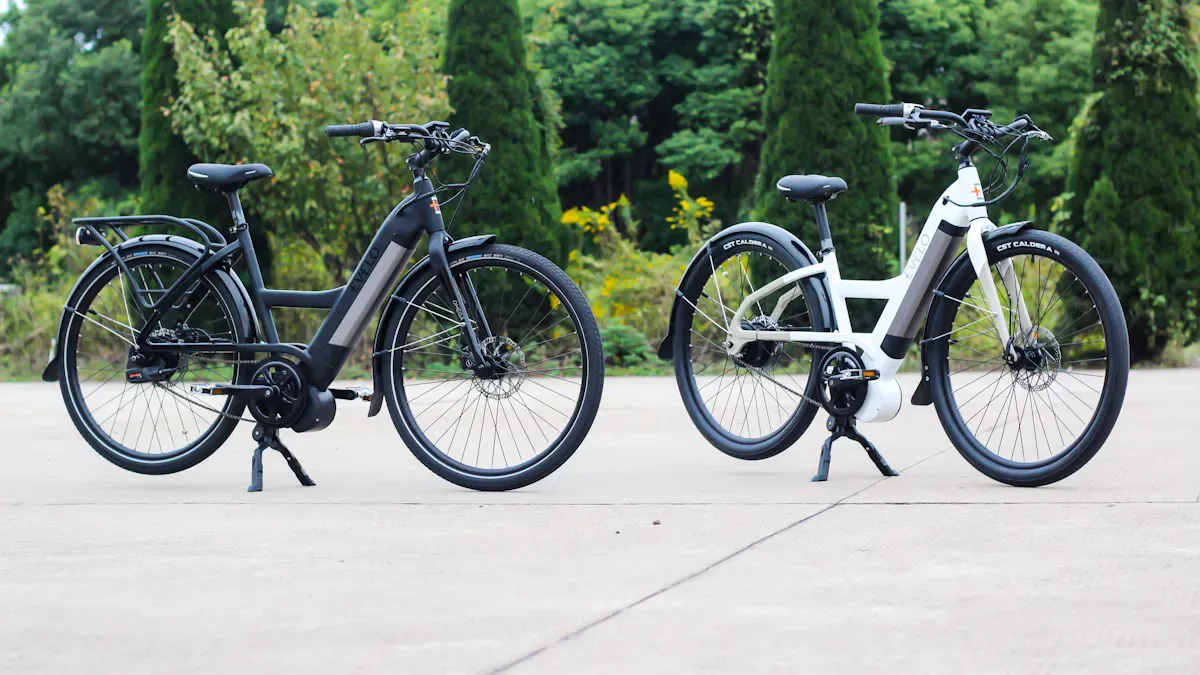
Do you want to understand the basics of e-bikes? Then take a look at the most important differences between e-bikes and classic bicycles. E-bikes have an electric motor, a battery, and a control system. These components make the bike heavier and result in more complex maintenance. Regular bicycles rely on muscle power and have fewer technical parts. The equipment of an e-bike often includes integrated lighting, stronger braking systems, and modern sensors. Many models offer suspension for more comfort. An onboard computer shows you important data such as speed and battery level. Regular bicycles are lighter and easier to repair.
|
Criterion |
E-bike |
Classic bicycle |
|---|---|---|
|
Drive type |
Electrically assisted |
Muscle power |
|
Weight |
Heavier (motor and battery) |
Lighter |
|
Cost |
Higher purchase costs |
Lower purchase costs |
|
Maintenance |
More complex (electrical components) |
Simpler |
|
Fitness |
Lower (motor assistance) |
Higher (pure muscle power) |
|
Riding experience |
Relaxed, less strenuous |
Direct, unadulterated |
An e-bike has additional components that you will not find on a regular bicycle:
|
Component |
E-bikes |
Regular bicycles |
|---|---|---|
|
Electric motor |
Yes |
No |
|
Control system (display) |
Yes |
No |
|
Battery |
Yes |
No |
|
Integrated lighting |
Yes |
Rarely |
|
Stronger braking systems |
Yes (hydraulic discs) |
Standard brakes |
|
Suspension |
Yes (fork/seat post) |
Rarely |
|
Modern sensors |
Yes |
No |
|
Onboard computer |
Yes |
No |
|
Larger tires |
Yes (balloon tires) |
Standard size |
|
Sturdier frame |
Yes |
Standard frame |
|
Higher payload |
Yes |
Limited |
Affordable e-bikes often use hub motors and smaller batteries. High-quality models offer mid-motors and larger battery capacities. Batteries from 400 Wh are standard for city and trekking bikes. Modern lithium-ion batteries provide up to 750 Wh. A 400 Wh battery can provide 400 watts for one hour. Higher capacity means longer range.
Riding experience
The riding experience differs significantly. You feel the electric assistance on an e-bike. This makes riding on hilly terrain or against the wind easier. You can cover longer distances without getting tired. You benefit from the motor assistance, especially in mountainous regions. The classic bicycle requires your muscle power. You experience a direct and unadulterated riding feeling. A normal bicycle is often sufficient for short distances. You have more control over speed and physical exertion.
Tip: If you value comfort, the e-bike offers basics such as suspension and stronger brakes. This ensures a pleasant riding experience, especially on longer tours.
Range & areas of use
The range of an e-bike depends on the battery capacity, the terrain, and your riding style. Typical e-bikes achieve between 32 and 130 kilometers per battery charge. The actual range varies depending on the level of assistance, rider weight, and route. For daily distances of 30 to 70 kilometers, a battery with at least 625 Wh is recommended. In the case of frequent inclines, motor assistance of 70 to 90 Nm is sensible.
|
Category |
E-bikes |
Regular bicycles |
|---|---|---|
|
Distance and range |
32–130 km per battery charge |
Depends on fitness, no charging time |
E-bikes are particularly suitable for city riding, longer tours, and transporting luggage or children. Trekking e-bikes are ideal for everyday errands and excursions. Cross bikes offer you athletic options, even off-road. Cargo e-bikes transport large quantities or children safely. E-mountain bikes take you into the terrain and enable adventures off paved paths.
-
Less exhaust and noise
-
Faster travel in city traffic
-
No parking worries
-
Exercise in the fresh air
You benefit from the basics of e-bikes if you want to master long distances, inclines, or headwinds. The classic bicycle remains a good choice for short journeys and athletic challenges.
Pros and cons
E-bike advantages
You benefit from many advantages if you choose an e-bike. The electric assistance helps you to master inclines and long distances more easily. You have to exert less force and can still ride quickly. Especially in everyday life, for example on the way to work, you save time and arrive less sweaty.
-
Motor assistance makes pedaling easier. You can cover longer distances and master inclines more easily without overexerting yourself.
-
A good e-bike makes hills and mountains appear "flatter." Your average speed increases.
-
You get moving more often and for longer because the electric assistance increases motivation. This is an advantage, especially for untrained riders.
-
E-bikes are suitable for transporting luggage or children. You can move loads more easily.
-
The equipment is often of high quality. Many models offer suspension, strong brakes, and modern sensors.
Tip: With an e-bike, you can ride comfortably even against the wind or on long stretches. This makes everyday life easier and ensures more flexibility.
E-bike disadvantages
An e-bike also brings with it some disadvantages. The technology is more complex than that of a normal bicycle. You must expect higher costs and more maintenance effort.
-
E-bikes contain motors, batteries, and controllers. These parts require regular maintenance.
-
The complexity can affect riding safety. You should familiarize yourself with the functions.
-
The purchase costs are higher than for classic bicycles.
-
A battery replacement costs between 400 and 900 euros every three to five years.
-
The annual inspection is around 80 to 150 euros. Wear parts are more expensive than on normal bikes.
-
The higher weight makes carrying or stowing it more difficult.
|
Category |
E-bike costs |
Regular bicycle costs |
|---|---|---|
|
Battery replacement (3–5 years) |
400–900 € |
Not applicable |
|
Motor maintenance |
50–200 € periodically |
Not applicable |
|
Wear parts |
Higher costs |
50–200 €/year |
|
Annual check |
80–150 € |
50–120 € |
Note: The basics of e-bikes show that you have more technology to maintain. Plan time and money for maintenance and repair.
Bicycle advantages
A normal bicycle offers you many advantages if you value simplicity and independence. You do not depend on electronics or charging times. The bike is built to be lighter and more robust.
-
You are independent of electricity and can set off at any time.
-
The lightweight design makes it easier to carry and stow.
-
You train your fitness and strengthen your muscles.
-
The riding experience is direct and unadulterated.
-
Maintenance is simple and affordable. Spare parts are inexpensive.
-
The initial purchase costs are lower than those for e-bikes.
Tip: A standard bicycle is ideal for athletic activities and short trips. You can be flexible and spontaneous.
Bicycle Disadvantages
Even the classic bicycle has some drawbacks. Without motor assistance, you have to exert more effort on inclines or against headwinds. This can be exhausting, especially on long routes.
-
In bad weather such as snow or ice, the physical effort increases. Usage becomes more difficult.
-
Road conditions change when wet or slippery. The risk of falling increases.
-
You can transport less luggage than with an e-bike.
-
For longer distances or daily commuting, a standard bicycle is often less comfortable.
Note: With the right tires and an adapted riding style, you can increase safety. Stay alert, especially during difficult weather conditions.
Costs & Maintenance
Purchase costs
When buying a bicycle or e-bike, price plays a major role. E-bikes generally cost more than standard bicycles. The following table shows you typical price ranges:
|
Type |
Price range |
|---|---|
|
E-bikes |
€1,500–€6,000+ |
|
Standard bicycles |
€500–€5,000+ |
There is no nationwide purchase subsidy for private individuals for e-bikes. However, many cities and municipalities offer local subsidy programs, especially for cargo e-bikes. Grants can range from several hundred to over a thousand euros. You should specifically look for subsidies in your region.
Operating costs
The operating costs of an e-bike are made up of several factors:
-
Purchase costs
-
Maintenance
-
Wear parts
-
Electricity costs
-
Insurance
The battery is the most expensive wear part. You often have to replace it after a few years. A new battery usually costs between 500 and 900 euros. The annual inspection costs about 80 to 150 euros. You only pay a few euros a year to charge the battery. Insurance is recommended for e-bikes, but it is not mandatory.
Annual inspection: You should take your e-bike to a professional workshop at least once a year. There, they check the brakes, electronics, and drivetrain.
Maintenance & Repair
E-bikes require more maintenance than standard bicycles. They have additional electrical parts. You should have your e-bike serviced every 2,000 kilometers. Standard bicycles often go 3,000 to 4,000 kilometers without inspection. Maintenance costs are higher for e-bikes (approx. €90) than for standard bicycles (approx. €50).
-
E-bikes have higher repair costs due to the technology.
-
Replacing motors can affect the warranty.
-
Manufacturer repairs are more expensive than those at certified workshops.
Regular maintenance ensures that your bike lasts a long time and remains safe.
Fitness & Health
E-bike training effect
Do you want to know how an e-bike affects your fitness? E-bike riding offers you many health benefits. You exercise regularly in the fresh air and train your heart and circulation. Studies show that you achieve a moderate workout with an e-bike. Your pulse is on average at 75% of your maximum heart rate. Many e-bike riders cover longer distances daily than classic cyclists. You use your bike more often and thus improve your stamina.
Tip: Motor assistance makes it easier for you to get started with exercise, especially if you are less fit.
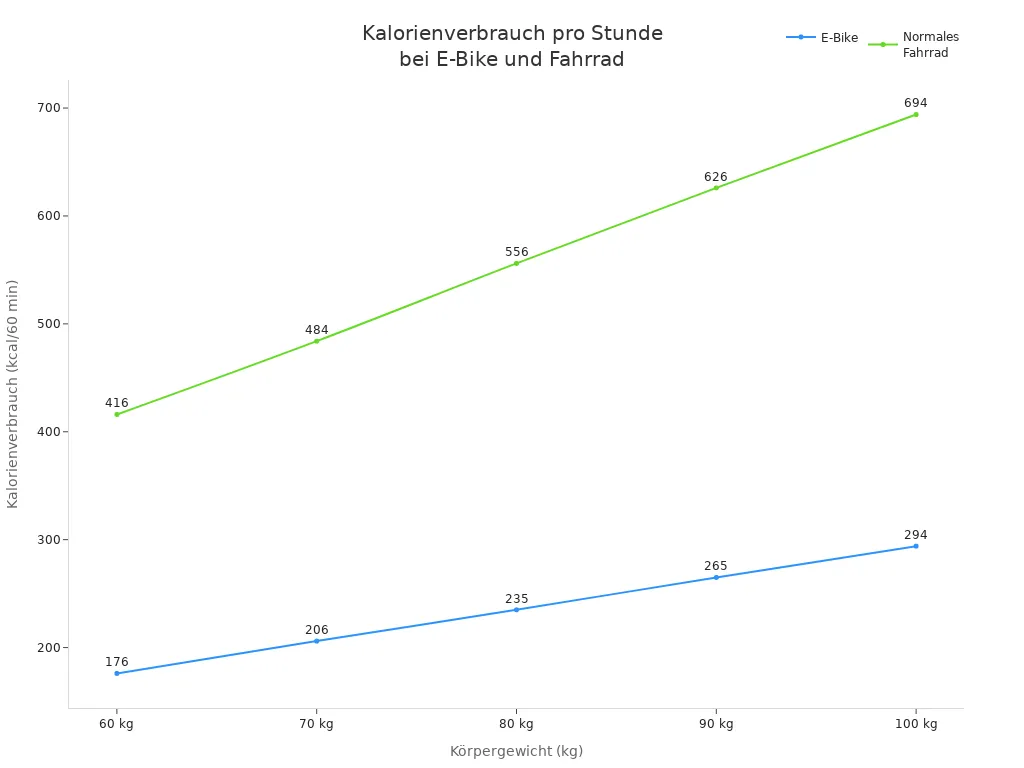
Regular e-bike riding can reduce the risk of heart attack or stroke by up to 50%. You burn up to 300 calories per hour while doing so. The following table shows your calorie consumption in comparison:
|
Body weight |
Calorie consumption e-bike (60 min) |
Calorie consumption standard bike (60 min) |
|---|---|---|
|
60 kg |
176 kcal |
416 kcal |
|
70 kg |
206 kcal |
484 kcal |
|
80 kg |
235 kcal |
556 kcal |
|
90 kg |
265 kcal |
626 kcal |
|
100 kg |
294 kcal |
694 kcal |
Bicycle training effect
With a standard bicycle, you train your stamina and muscles particularly intensively. You use your own strength and activate large muscle groups in your legs and buttocks. Classic cycling is considered effective endurance training. Studies show that regular cycling significantly reduces the risk of cardiovascular disease. You can increase your physical performance and strengthen your heart.
-
You burn more calories than on an e-bike.
-
You strengthen your muscles and promote fat burning.
-
You reduce the risk of heart disease by up to 46%.
Note: Standard cycling challenges you more, but also provides a higher training effect for your health.
Criteria Comparison
Costs
You often pay more for an e-bike than for a standard bicycle. Purchase costs are usually between 1,500 and 6,000 euros. You can get a classic bicycle starting at 500 euros. Running costs are also higher for an e-bike. You have to factor in expenses for the battery, maintenance, and possibly insurance.
|
Criterion |
E-bike |
Standard bicycle |
|---|---|---|
|
Purchase |
High |
Low |
|
Maintenance |
More expensive |
Cheaper |
|
Insurance |
Recommended |
Rarely necessary |
Maintenance
An e-bike needs more care. You regularly check the battery and electronics. Maintenance is more complex and costs more. For a standard bicycle, a simple inspection is often sufficient. You can perform many repairs yourself.
Tip: Have your e-bike checked by a professional workshop at least once a year.
Riding feel
You ride more relaxed with an e-bike. The motor supports you, especially on inclines or against headwinds. You feel less exertion. On a standard bicycle, you use your own strength. The riding feel is more direct and sporty.
Fitness
You train more intensively with a standard bicycle. Your muscles work harder. The e-bike motivates you to ride longer distances. You exercise more often, but the training effect is lower.
Range
The range of an e-bike depends on the battery. You usually achieve 32 to 130 kilometers on one charge. A standard bicycle has no limit. Your fitness and stamina determine how far you get.
The e-bike basics help you understand the differences in range and usage.
User profiles
Commuters
Do you drive to work or school every day? An e-bike offers you many advantages. You cover greater distances with less effort. You remain independent of the car and find it easier to find a parking space. Especially in the city, you benefit from fast transportation. A comfortable e-bike with a luggage rack and mudguards protects you from moisture and dirt. The seating position remains comfortable, even on longer routes. You master steep climbs with motor assistance. You transport your bag or laptop without effort.
-
Environmentally friendly, no exhaust fumes
-
Comfortable seating position and luggage transport
-
Assistance on climbs and long routes
-
Mudguards and luggage rack for everyday suitability
Leisure riders
Do you enjoy cycling on the weekend or in your spare time? A standard bicycle is well-suited for short excursions and spontaneous trips. You move flexibly and train your fitness. An e-bike expands your possibilities. You explore new paths and reach goals that would otherwise be too far away. For family trips or longer tours, the e-bike offers comfort and safety. You decide for yourself how much support you want.
Tip: Choose the bike that suits your riding style. For relaxed tours, a classic bicycle is often enough.
Athletic riders
Are you looking for athletic challenges? The standard bicycle challenges your muscles and stamina. You train intensively and improve your performance. An e-bike is suitable for demanding terrain. You use the support to climb steep hills or travel longer distances. You can adapt the training individually and reach new goals.
Seniors & Mobility
Do you want to remain mobile in old age? A comfortable step-through or an e-bike with a low entry makes it easier for you to get on. An upright seating position is easy on the back and joints. Wide tires and reliable brakes ensure safety. Hydraulic rim brakes or disc brakes offer good deceleration with little force. Simple operation and ergonomic adjustments, such as the correct handlebar height, relieve the neck and wrists.
-
Low entry and upright seating position
-
Wide tires for comfort and safety
-
Ergonomic adjustments for greater well-being
Note: You will find more joy and safety in riding with a suitable e-bike or bicycle.
Recommendation
Summary
You have now learned the most important differences between an e-bike and a standard bicycle. Both bike types offer you advantages. The e-bike makes long routes and inclines easier for you. You ride faster and arrive relaxed. The standard bicycle challenges your muscles and improves your fitness. You save money and are independent of technology.
|
Type |
Advantages |
Disadvantages |
|---|---|---|
|
E-bike |
Comfort, range, speed |
Costs, maintenance, weight |
|
Bicycle |
Fitness, price, simplicity |
Effort, range |
Tip: Consider how often you want to ride and what distances you cover. Your decision depends on your everyday life and your goals.
Decision-making aid
Do you want to know which bicycle suits you? Ask yourself these questions:
-
How long are your daily routes?
-
Do you often ride uphill or against a headwind?
-
Is comfort more important to you than training?
-
Do you want to transport luggage or children?
-
How much money do you want to invest?
-
If you have long routes, inclines, or a lot of luggage, an e-bike is worth it. You benefit from motor assistance and comfort. For short trips, athletic rides, or a small budget, the standard bicycle is better suited.
Remember: Both types of bicycles get you to your destination. Choose the model that fits your life. 🚲
You have learned many differences. Consider what fits your daily life. Keep these key factors in mind:
-
Distance
-
Drive system
-
Battery
-
Usage profile
-
Budget
Both types of bikes offer advantages. Reflect on your needs. Choose the model that supports you best. 🚲
FAQ
How long does an e-bike battery last?
An e-bike battery usually lasts three to five years. You can extend its lifespan by charging it regularly and storing the battery correctly.
Do I have to insure an e-bike?
You do not have to insure an e-bike. Insurance protects you against theft and damage. Many users recommend insurance for expensive models.
Can I ride an e-bike in the rain?
You can ride an e-bike in the rain. The electronics are protected. You should dry the bike after the ride and check the battery.