
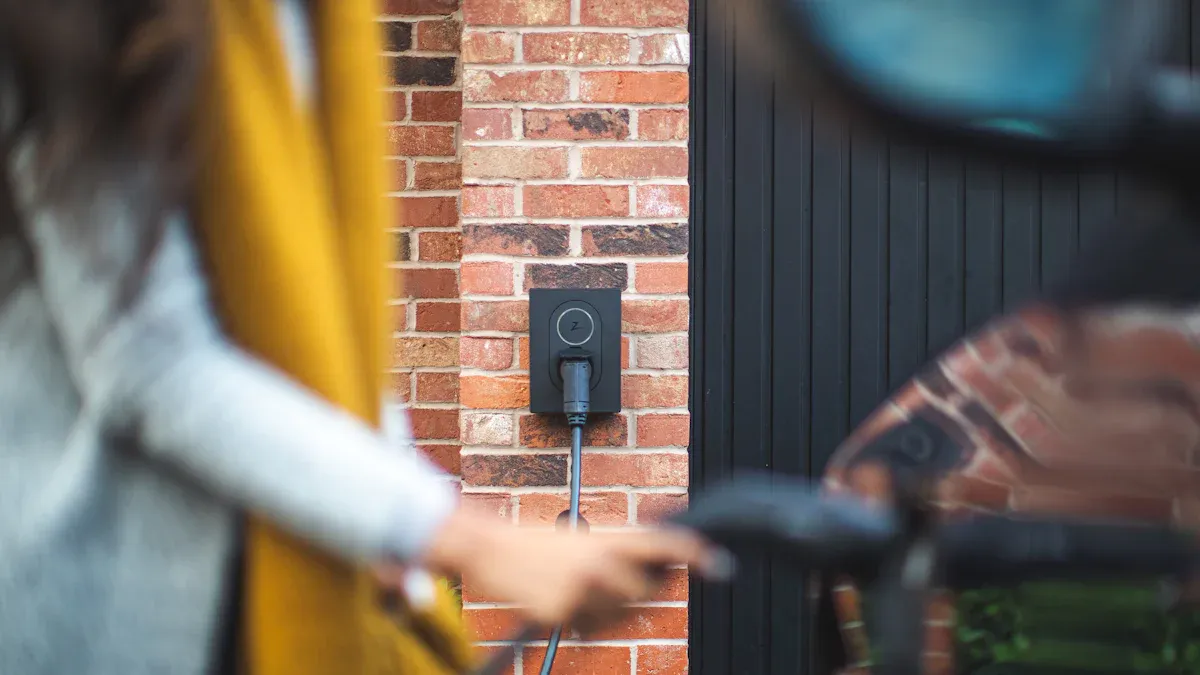
E-bikes are revolutionizing mobility and gaining popularity worldwide. Studies show that the global e-bike market is growing by 15–20% annually and could reach a value of over 60 billion euros by 2030. In Germany, e-bikes already account for 40% of the bicycle market, with an annual increase of over one million bikes. A reliable e-bike charging station is therefore indispensable. It not only secures your mobility but also promotes sustainable transportation and reduces CO₂ emissions. With the right infrastructure, you can experience a stress-free and environmentally friendly ride.
Key Findings
E-bikes are becoming increasingly popular, accounting for 40% of the German bicycle market. A good charging station is essential for their use.
Public charging stations are easy to find. They are located in key areas and often feature extras like secure lockers.
Private charging stations are convenient. You can charge your e-bike at home and improve your bicycle infrastructure.
Portable chargers are perfect for travel. They are small and lightweight so you can charge your e-bike anywhere.
Solar charging stations are eco-friendly. They lower CO₂ emissions and are particularly useful in rural areas.
Types of Charging Stations
Public Charging Stations
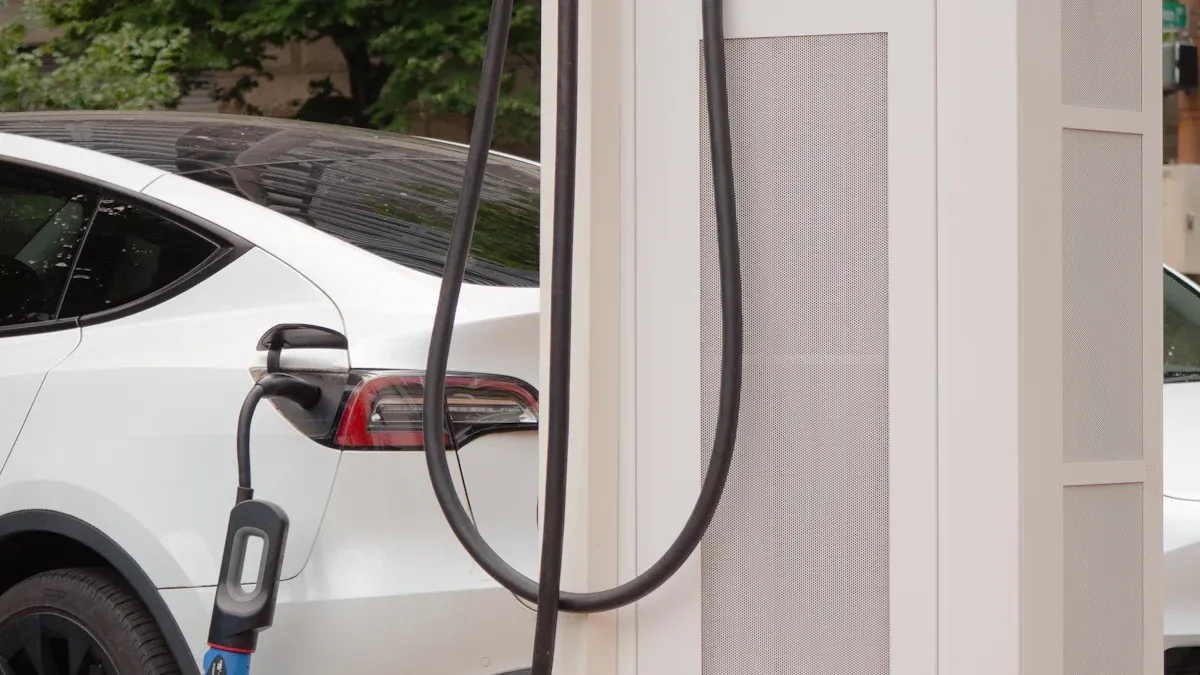
You can often find public charging stations at central locations such as train stations, shopping centers, or tourist attractions. These stations offer you a simple way to charge your e-bike while on the go. Many are equipped with universal connections, making them compatible with most e-bike models. Some stations offer additional features like lockers, where you can park your bike securely while it charges.
One advantage of public charging stations is their accessibility. You can easily find them using apps or maps. These apps also show you the status of the station, whether it is available or currently in use. Public charging stations promote electromobility and make traveling by e-bike even more comfortable.
Private Charging Stations
Private charging stations offer you maximum flexibility and security. You can install them directly at home, allowing you to charge your e-bike at any time. Studies such as the National Cycling Plan 2030 show that private charging stations create secure infrastructure and facilitate e-bike usage.
They improve bicycle infrastructure by complying with regulations.
They promote safety through active and passive protection systems.
They support you in improving your riding technique by providing a reliable charging source.
With a private charging station, you can optimize charging times and ensure your e-bike is always ready to go. You do not have to rely on public stations and can charge your bike in a protected environment.
Portable Chargers
Portable chargers are ideal if you are on the move a lot. They are lightweight, compact, and easy to transport. Models like the Ampler Nova and Ampler Nova Pro use a USB-C connection, allowing you to charge with common cables. With a 140-watt charger, you can fully charge the battery in about 3.5 hours.
The USB-C connection reduces the number of chargers and cables needed.
The charger can also be used as a power bank to charge other devices.
The Lion Smart Charger is compatible with all 36-volt battery systems and offers an app to monitor the charging status.
Portable chargers are particularly practical for travel. You can easily store them in your backpack and charge your e-bike anywhere. They offer you the freedom of not being dependent on fixed charging stations.
Solar-Powered Charging Stations and Innovative Solutions
Solar-powered charging stations offer you an eco-friendly way to charge your e-bike. These stations use solar energy to generate electricity and store it in batteries that can later be used to charge your e-bike. They are particularly useful in rural areas or places where no direct power supply is available.
Benefits of Solar-Powered Charging Stations
Sustainability: You can charge your e-bike with renewable energy, reducing your carbon footprint.
Independence: These stations operate independently of the power grid. This makes them ideal for remote locations or outdoor activities.
Cost-efficiency: After installation, there are no ongoing electricity costs because the energy comes directly from the sun.
Tip: If you are often out in nature, look for solar-powered charging stations. They offer you a reliable and environmentally friendly solution.
Innovative Solutions for the Future
Technology is constantly evolving. Some charging stations combine solar energy with other renewable energy sources like wind power. Others offer additional features such as integrated weather stations or the ability to charge multiple devices simultaneously.
Some manufacturers are working on portable solar panels that you can attach directly to your e-bike. These panels charge the battery while you ride. Such innovations could revolutionize the way you use your e-bike.
Challenges and Solutions
Solar-powered charging stations also face challenges. They are weather-dependent and function less efficiently on cloudy days or at night. To solve this problem, modern systems store excess energy in batteries that you can use later.
Another point is installation. Such stations require sufficient space and good orientation toward the sun. However, municipalities and companies are increasingly investing in this technology to improve infrastructure for e-bikes.
With solar-powered charging stations and innovative solutions, using your e-bike becomes even more sustainable and practical. They are an important step toward a greener future of mobility. A well-placed e-bike charging station that uses solar energy can not only provide you with convenience but also contribute to climate protection.
Functions of Charging Stations
Charging Speed and Efficiency
Charging speed plays a crucial role if you want your e-bike to be ready to ride again quickly. Modern charging stations offer you different charging options that depend on your battery capacity and the station's power output. Fast-charging stations can charge your battery in less than an hour, whereas conventional stations often take several hours.
Efficiency is another important factor. High-quality charging stations minimize energy loss during the charging process. This not only saves electricity but also preserves your battery's lifespan. Some models feature intelligent systems that automatically adapt the charging process to your battery's condition, preventing overcharging and maximizing efficiency.
Tip: When choosing an e-bike charging station, ensure it offers a fast-charging function if you are often on the go.
Compatibility with Various Battery Types
Not all e-bike batteries are the same. There are differences in size, voltage, and capacity. A good charging station should be compatible with the most common battery types. Lithium-ion batteries are the most widely used today, but older models like nickel-metal hydride batteries are still in use.
Some charging stations offer universal connections that work with various brands and models. Others are specifically developed for certain systems like Bosch, Shimano, or Yamaha. Before selecting a charging station, check if it is compatible with your battery.
Note: Universal charging stations are ideal if you own multiple e-bikes with different batteries.
Additional Features such as Anti-theft Protection and Locker Solutions
Security is a central topic for charging stations. Many stations offer additional features to protect your e-bike during the charging process, including lockable lockers where you can park your bike securely. You will often find these at train stations or in monitored bicycle parking garages.
Some stations rely on high-strength, alarm-secured locks that prevent theft. Others integrate GPS systems that allow you to track your e-bike in the event of a theft. Municipalities and companies are increasingly investing in such solutions to improve security.
Monitored bicycle parking garages increase security.
Lockable storage garages at transport hubs offer additional protection.
Extensive options for locking up high-quality bikes promote e-bike usage.
Tip: Choose a charging station with anti-theft protection if you often charge your e-bike in public places.
App Control and Remote Monitoring
Modern e-bike charging stations increasingly offer digital functions that make the charging process simpler and more efficient. One of the most important innovations is the integration of app control and remote monitoring. With these technologies, you can easily control your e-bike's charging process from your smartphone or tablet.
Benefits of App Control
Charging station apps offer you numerous practical functions:
Real-time monitoring: You can check your battery's current charge status at any time. The app shows you how much energy has already been charged and how long the process will take.
Notifications: You receive a push notification as soon as your battery is fully charged. This way, you do not have to keep checking if your e-bike is ready.
Location finder: Many apps help you find the nearest e-bike charging station in your area. They also show you whether the station is available or currently in use.
Tip: Download the app from your charging station's manufacturer. It often offers the best features and is specifically tailored to your model.
Remote Monitoring for Greater Control
Remote monitoring allows you to control the charging process from afar. This is particularly useful when charging your e-bike at a public station. You can:
Start or stop the charging process without being on-site.
Activate security features, such as locking the charging station.
Monitor energy consumption to keep an eye on costs.
Some apps even offer the ability to manage multiple e-bikes simultaneously. This is ideal if you are a family with several bikes or run a business that utilizes e-bikes.
The Future of App Control
Technology is constantly evolving. In the future, apps for charging stations could offer even more functions, such as integration with smart home systems. You could then control your e-bike's charging process with voice commands or have it start automatically when electricity rates are low.
Note: Ensure that the app is updated regularly. This allows you to benefit from new functions and increased security.
With app control and remote monitoring, charging your e-bike becomes not only more comfortable but also safer. These technologies turn the use of an e-bike charging station into a modern and efficient experience.
How Charging Stations Work

Power Supply and Energy Transfer
An e-bike charging station requires a reliable power source to charge your bike's battery. Most stations are connected to the public power grid. They convert alternating current (AC) from the outlet into direct current (DC), which is suitable for the batteries. This process happens via an integrated charger or an external charger that you bring with you.
Some modern charging stations use renewable energy sources like solar or wind power. These systems store the generated energy in batteries, which are later used for charging. This makes the usage more sustainable and eco-friendly.
Tip: Ensure that the e-bike charging station you use has a stable power supply to avoid interruptions during charging.
Charging Protocols and Communication Between Battery and Station
During the charging process, the charging station communicates with your e-bike's battery. This communication occurs via standardized charging protocols like CAN-bus or SMBus. They allow the station to monitor the battery's charge state and adjust the power flow accordingly.
An intelligent charging protocol protects your battery from overcharging. It detects when the battery is fully charged and automatically stops the power flow. Some systems also offer the ability to optimize the charging process by adapting the charging speed to the battery's capacity.
Note: Charging protocols are crucial for the safety and efficiency of the charging process. They extend the lifespan of your battery.
Safety Mechanisms During the Charging Process
Safety mechanisms play a central role when charging your e-bike. High-quality charging stations feature protection systems that prevent overheating, short circuits, and overvoltage. These mechanisms minimize the risk of fire and other hazards.
Use only original parts and approved chargers to ensure safety.
Keep flammable materials away from the charging station.
Do not leave your battery charging unattended, so you can react quickly in an emergency.
Mechanical damage or technical defects can also lead to problems. Therefore, avoid using cheap, off-brand chargers. Protect your battery from extreme temperatures to ensure its safety.
Tip: Install your private charging station in a well-ventilated area to prevent overheating.
Maintenance and Troubleshooting
Regular maintenance of your charging station is crucial for ensuring its functionality and safety. With a few simple steps, you can extend the station's lifespan and detect potential problems early.
Maintenance Tips for Charging Stations
Cleaning: Keep the connections and cables clean. Dust and dirt can impair energy transfer. Use a dry cloth to clean the surfaces.
Cable inspection: Check cables regularly for damage. Cracks or breaks can lead to short circuits. Replace defective cables immediately.
Software updates: Update your station's software if it has digital features. Manufacturers often offer updates that improve performance and close security gaps.
Mechanical parts: Check moving parts such as lockers or locks. Lubricants can help maintain functionality.
Tip: Schedule monthly maintenance for your charging station. This way, you can ensure it is always ready for use.
Common faults and troubleshooting
Sometimes problems occur that you can solve yourself. Here are some common faults and simple solutions:
-
The station is not charging:
Check the power supply. Make sure the station is connected correctly.
Check your e-bike battery. A defective battery can prevent the charging process.
-
Slow charging:
Check the cable connections. Loose connections can reduce charging speed.
Use a fast charger if your model supports it.
-
Error messages on the app:
Restart or update the app.
Reset the station if the error message persists.
When professional help is necessary
You cannot solve every problem yourself. If the station makes unusual noises or overheats, you should contact a professional. Professional support is also advisable for repeated error messages or mechanical damage.
Note: Do not ignore warning signs. Early repair prevents greater damage and costs.
With good maintenance and quick troubleshooting, your charging station remains reliable and safe. This allows you to take full advantage of electromobility.
Practical tips for selection and use
Criteria for choosing the right charging station
Choosing the right charging station depends on your individual needs. First, consider where you want to charge your e-bike most often. For home use, a private charging station that you can conveniently install in your garage or basement is suitable. Make sure the station is compatible with your battery type. Universal models are ideal if you own multiple e-bikes.
If you are often on the go, you should rely on mobile chargers. These are light and easy to transport. For environmentally conscious users, solar-powered charging stations offer a sustainable alternative. Also check if the station offers additional features such as anti-theft protection or app control. These features increase comfort and security.
Tip: Choose an e-bike charging station that meets your requirements and is also future-proof.
Tips for optimal use and maintenance
Regular maintenance of your charging station extends its service life. Keep the connections clean and free of dust. Check cables for damage and replace defective parts immediately. Charge your battery in a well-ventilated room to avoid overheating.
Always use your e-bike's original charger. Cheap alternatives can compromise safety and damage the battery. Schedule regular maintenance intervals to ensure the functionality of the station.
Note: Do not let your battery drain completely before recharging it. This protects the battery and increases its lifespan.
Avoiding common mistakes
Many users make mistakes that can shorten the lifespan of their charging station and battery. The following table shows the most common problems and how you can avoid them:
Mistakes when using e-bike charging stations |
Description |
|---|---|
Improper storage |
Incorrect storage of the battery can lead to damage. |
Use of cheap chargers |
Cheap devices can pose safety risks. |
Overheating |
High temperatures can lead to fires. |
Mechanical damage |
Physical damage to the battery can be dangerous. |
Recharging completely empty batteries |
Completely discharged batteries should not be recharged immediately. |
Avoid these mistakes by using the right equipment and taking safety precautions. Careful handling protects not only your battery but also your charging station.
Sustainable use of charging stations
Sustainable use of charging stations helps to protect the environment and extend the life of your devices. You can make a big difference with simple measures.
Energy-efficient charging
Only charge your e-bike when necessary. Avoid constantly charging the battery to full capacity if you do not need it immediately. This saves energy and protects the battery. Use charging stations that use renewable energy such as solar or wind power. These options reduce CO₂ emissions and promote eco-friendly mobility.
Tip: Choose a solar-powered charging station if you have the option. It is not only sustainable but also cost-efficient.
Extending battery life
Proper battery care is crucial. Do not let it drain completely before recharging. Keep it at moderate temperatures, as extreme heat or cold can impair performance. Always use the original charger to avoid damage.
Recycling and disposal
When your battery reaches the end of its life, do not just throw it in the household trash. Many manufacturers offer recycling programs where materials can be reused. Find out about local collection points for old batteries.
-
Benefits of recycling:
Reduction of environmental pollution.
Reuse of valuable raw materials.
Promoting conscious behavior
Share charging stations with other users, especially in public places. This avoids unnecessary waiting times and promotes communal use. Find out about the best times to charge your e-bike and avoid peak times.
Note: Sustainability starts with small steps. Every conscious decision counts.
With these measures, you can not only protect the environment but also improve the efficiency and safety of your charging station. Sustainability is a win for everyone.
E-bike charging stations play a central role in electromobility. You have learned that there are different types, from public stations to mobile chargers. Functions such as app control, anti-theft protection, and compatibility with different batteries make use safe and efficient. Sustainability and regular maintenance extend the life of your e-bike charging station and your battery.
There are exciting developments for the future. Some cities are planning to convert old phone booths into charging stations. In Turin, a solar-powered prototype was installed that charges e-bikes and scooters. Restaurant chains and hotels are also integrating charging stations to offer eco-friendly options. The following table shows further innovations:
Approach |
Description |
|---|---|
Phone booths into power stations |
Conversion of unused telephone boxes into charging stations for electric vehicles, as planned by the telecommunications provider A1 in Austria. |
Solar-powered Smart Booth |
Installation of a solar-powered prototype in Turin, which enables the charging of e-bikes and electric scooters while offering other functions. |
Restaurant chain as an energy supplier |
The restaurant chain Skylark in Japan plans to equip a third of its restaurants with public charging stations to promote the use of electric cars. |
Valet Parking 2.0 |
Hotels like Radisson Blu offer charging stations for electric cars to promote environmentally conscious services and offer guests a convenient charging option. |
Smart Grid and Vehicle-to-Grid |
The energy transition in Germany promotes the expansion of a smart grid, which makes electric cars important energy storage devices and advances the integration of renewable energies. |
These innovations show how versatile and future-oriented electromobility is. With the right charging station, you can not only make your everyday life easier but also contribute to climate protection.
FAQ
1. 🛠️ How do you install a private charging station for your e-bike?
Installing a private charging station is simple. You need a power connection and a suitable wall mount. Follow the manufacturer's instructions. If you are unsure, contact an electrician for professional help.
2. ⚡ Can you charge your e-bike at a standard socket?
Yes, you can charge your e-bike at a standard wall outlet. Use your e-bike's original charger. Make sure the outlet is stable and does not cause overload.
3. 🌞 Do solar-powered charging stations work in bad weather?
Solar-powered charging stations store energy in batteries. In bad weather, they use the stored energy. However, efficiency may be lower. Plan for longer charging times when the sun is not shining.
4. 🔒 How do you protect your e-bike during the charging process?
Use charging stations with anti-theft protection such as lockers or GPS tracking. Additionally, secure your bike with a high-quality lock. Choose monitored locations for charging.
5. 📱 What advantages does app control offer for charging stations?
Apps allow you real-time monitoring, location search, and notifications. You can control the charging process remotely. Some apps offer additional features such as managing multiple e-bikes.