
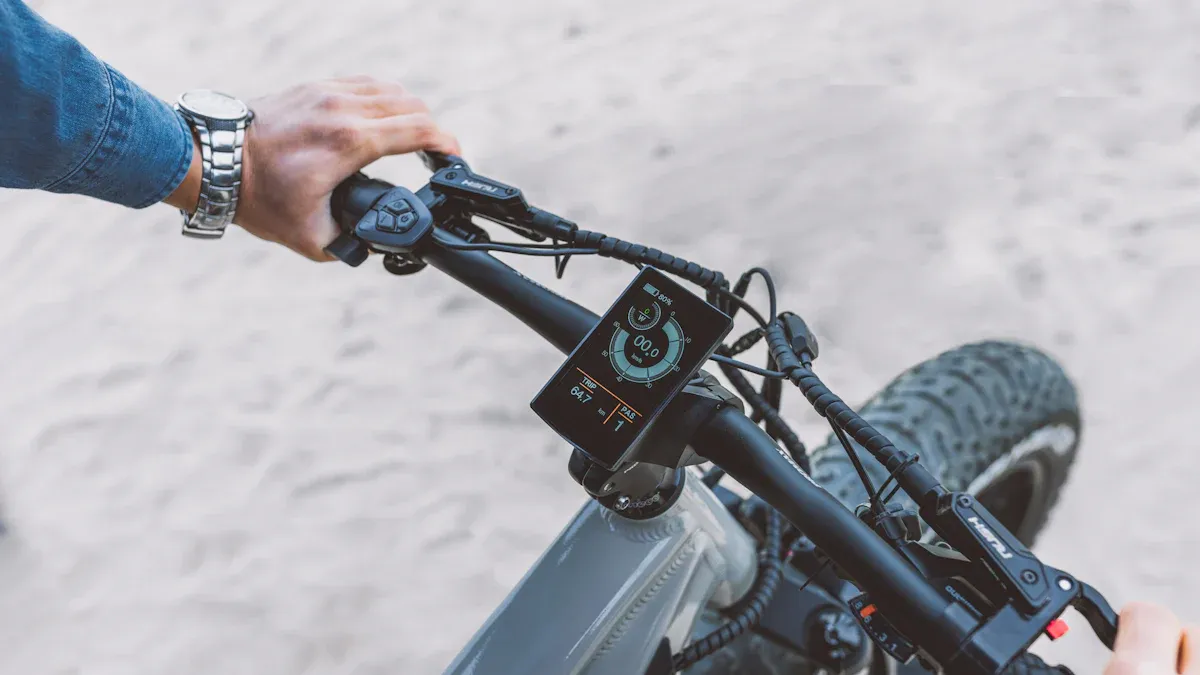
The battery is the heart of your electric bike. Without it, your e-bike won't go anywhere. Its performance determines how far, how fast, and how long you can ride. A typical e-bike battery has a nominal voltage of 36V, 48V, or 52V. Higher voltage delivers more speed. Capacity, measured in amp-hours (Ah), affects range. A 10 Ah battery supplies 10 amps of current for one hour. Watt-hours (Wh) indicate how much energy is stored. A 360 Wh battery can supply 360 watts for one hour. With a powerful e-bike battery, you can enjoy maximum freedom.
Key Takeaways
The battery is essential to your e-bike's power. Check the voltage, capacity, and watt-hours to make the right choice.
Charge the battery between 20% and 80%. This helps it last longer. Avoid letting it run completely flat or charging it fully.
Wipe the battery down regularly with a soft cloth. Keep it dry to prevent damage.
Choose a battery that suits your riding style. A small battery is enough for city riding. For long distances, you need a large one.
Don't throw old batteries in the trash. Take them to a collection point to protect the environment.
E-Bike Battery Basics
What is an e-bike battery and how does it work?
An e-bike battery is the power source for your electric bike. It stores electrical energy and supplies it to the motor, giving you assistance as you pedal. Most modern batteries are based on lithium-ion technology. This technology offers high energy density, meaning it can store a lot of energy without being too heavy.
The battery works by converting chemical energy into electrical energy. When you charge your e-bike, electricity flows into the battery and charges its cells. When you ride, the battery releases this energy to power the motor. A properly functioning battery delivers consistent, reliable performance.
Voltage, capacity, and watt-hours: What do these terms mean?
The technical specifications of an e-bike battery may seem confusing, but they are crucial to your bike's performance. Here are the most important terms:
Voltage (V): This affects the energy the battery can deliver. Higher voltage means more energy and often greater range.
Capacity (Ah): This indicates how much energy the battery can store. A higher capacity means longer rides.
Watt-hours (Wh): This unit shows how much energy is stored. A battery with more watt-hours allows for higher speeds and longer distances.
For example, a battery with 36 volts and 10 amp-hours has 360 watt-hours (36V x 10Ah). That means it can supply 360 watts for one hour.
Cell chemistry and battery types: Lithium-ion and alternatives
Lithium-ion technology dominates the e-bike battery market. It offers high energy density, a long lifespan, and fast charging times. However, there are also promising alternatives in development:
A cobalt-free lithium-ion battery combines lithium, nickel, manganese, silicon, and oxygen. It has demonstrated high stability over 1,000 charge cycles and could store 60% more energy than conventional models.
Other technologies, such as metal-air or solid-state batteries, offer benefits like reduced use of raw materials or greater safety. However, they are often still in the early stages of development.
Technology |
Advantages |
Disadvantages |
|---|---|---|
Metal-air battery |
Uses fewer critical raw materials |
Lower energy density |
Solid-state batteries |
Greater safety, better performance |
Low technological maturity |
Sodium-ion battery |
Higher charging power, fewer charge cycles |
The right cell chemistry depends on your needs. However, lithium-ion batteries remain the top choice for most e-bike riders.
Choosing the Right E-Bike Battery
Selection criteria: Range, weight, and price
Choosing the right e-bike battery depends on several factors. Consider range, weight, and price to make sure the battery meets your needs.
Range: A battery's capacity, measured in watt-hours (Wh), determines how far you can ride. Batteries with 250 to 500 Wh are enough for urban rides. If you want to cover longer distances, models with up to 800 Wh are ideal. A 300 to 400 Wh battery provides a range of up to 55 or 70 km, while an 800 Wh battery can cover up to 130 km.
Weight: A lightweight battery makes your e-bike easier to handle, especially in the city. Heavier batteries often offer more capacity but are less practical for everyday use.
Price: Batteries with higher capacity and advanced technology cost more. Find a balance between performance and your budget.
A well-chosen battery lets you enjoy your rides without worrying about having to recharge frequently.
Difference between integrated and removable batteries
An e-bike battery's design affects not only the look of your bike but also how easy it is to use. You can choose between integrated and removable batteries.
Integrated batteries: These models are built into the e-bike frame. They offer a sleek design and are better protected against theft. However, charging is less convenient because you have to bring the entire bike to the charging station.
Removable batteries: These batteries are easy to remove and charge separately. They are ideal if you don't have access to a charging station or want to store the battery indoors.
The choice depends on your lifestyle. If flexibility matters to you, a removable battery is the better option. An integrated battery is a good choice if you prefer a sleek design and added security.
Which battery suits my riding style? City, off-road, or long-distance riding
Your riding style plays a crucial role in choosing the right battery. Different needs call for different battery sizes and performance features.
Battery size |
Suitable riding style |
|---|---|
Small |
Sporty riders |
Large |
City riding: A small battery with moderate capacity is enough for short trips with frequent stops and starts. Constant acceleration and braking increase energy consumption, so choose an efficient battery.
Off-road riding: A large battery with high capacity is ideal for challenging routes. It provides enough energy to tackle steep climbs and rough terrain.
Long-distance riding: If you want to cover long distances, you need a high-capacity battery and a powerful motor. This lets you ride without frequent recharging and enjoy your trips.
An e-bike with a large battery gives you the freedom to ride even in challenging environments. Your fitness level affects energy efficiency, so choose a battery that suits your riding style and physical condition.
E-Bike Battery Maintenance and Care
Optimal charging habits for maximum lifespan
The way you charge your battery has a significant impact on its lifespan. You shouldn't always fully discharge the battery before recharging it. Lithium-ion batteries, which are used in most e-bikes, work best when kept between 20% and 80% charged.
Here are some tips for optimal charging habits:
Avoid deep discharges: Charge the battery before it runs completely flat. This protects the cells from damage.
Charge regularly: Even if you don't use your e-bike every day, charge the battery every few weeks to keep its voltage stable.
Use the original charger: Chargers not designed for your battery can damage the cells or cause overheating.
Tip: Charge your battery at room temperature. Extreme temperatures, such as direct sunlight or freezing conditions, can affect your battery's performance and lifespan.
Cleaning and protection from the elements
A clean battery works more efficiently and lasts longer. You should clean your battery regularly, especially after riding in the rain or on muddy paths.
Here's how to clean your battery properly:
Remove the battery from the e-bike if it is removable.
Wipe the surface with a soft, slightly damp cloth. Avoid using a pressure washer, as water could get into the electronics.
Dry the battery thoroughly before reinstalling it.
Protect your battery from the elements:
Rain and moisture: Use a protective cover to keep water away from the battery.
Cold: Store the battery at temperatures between 10 and 20 degrees Celsius when not in use.
Heat: Don't leave the battery in direct sunlight to prevent overheating.
Note: A well-protected battery stays powerful for longer and saves you repair or replacement costs in the long run.
Storing the battery during extended breaks: How to keep it in good condition
If you won't be using your e-bike for an extended period, store the battery properly to preserve its lifespan.
Follow these steps for storage:
Charge level: Charge the battery to about 50–70% before storing it. A fully charged or discharged battery loses capacity more quickly.
Temperature: Store the battery in a cool, dry place. Temperatures between 10 and 15 degrees Celsius are ideal.
Regular checks: Check the charge level every two to three months and top it up if needed.
Important: Avoid leaving the battery in your e-bike for extended periods, especially if the bike is kept outdoors. Moisture and temperature fluctuations can damage the electronics.
Careful storage ensures your e-bike battery works reliably even after a break. That way, you can get back on the road without worrying about reduced performance.
Common mistakes and how to avoid them
Mistakes in using and caring for an e-bike battery can significantly shorten its lifespan and even pose safety risks. You can avoid these mistakes by recognizing the most common problems and taking steps to prevent them.
Charging mistakes
Many users charge their batteries incorrectly, which affects performance. You shouldn't fully discharge the battery before recharging it. Deep discharges damage the cells and shorten the battery's lifespan. It's also important to use the original charger. Third-party chargers can cause overheating and damage the electronics.
Tip: Charge your battery at room temperature and keep it between 20% and 80% charged. This helps it maintain its performance for longer.
Storage mistakes
Storing an e-bike battery requires special care. Many users leave the battery fully charged or discharged for extended periods. Both states lead to capacity loss. Storage temperature is also crucial. Extreme temperatures, hot or cold, damage the cells.
Here's how to avoid storage mistakes:
Charge the battery to about 50–70% before storing it.
Store it in a cool, dry place at temperatures between 10 and 15 degrees Celsius.
Check the charge level every two to three months and top it up if needed.
Safety risks from improper handling
Improper handling can lead to dangerous situations. If used incorrectly, a battery can overheat and, in the worst case, catch fire. Never store the battery near easily combustible materials. Special safety boxes for charging indoors are available from various manufacturers.
Here are some important safety measures:
Keep the battery away from escape routes and flammable materials.
Use safety boxes for indoor charging.
Keep a fire extinguisher on hand so you can put out fires quickly.
Note: Larger batteries require extra caution. Consider how you handle them while charging and storing to minimize risks.
Cleaning mistakes
A common mistake is cleaning the battery with a pressure washer. Water can get into the electronics and cause damage. Instead, use a soft, slightly damp cloth. After cleaning, the battery must be dried thoroughly before you reinstall it.
Tip: Clean your battery regularly, especially after riding in the rain or mud. This helps it stay efficient and last longer.
Summary
By avoiding these common mistakes, you can extend your e-bike battery's lifespan and minimize safety risks. Make sure you charge, store, handle, and clean it properly. This will keep your battery reliable and powerful.
Sustainability and Lifespan
Tips for extending the lifespan of an e-bike battery
Your battery's lifespan depends largely on proper care. A few simple steps can help preserve its performance over the long term:
Battery care: Don't leave your battery charging for too long, and avoid keeping it constantly at 100% or 0%. Ideally, charge it when it reaches a remaining charge of 20–30%.
Regular discharge: Occasionally discharge the battery to around 20% to activate the cells and stabilize performance.
Avoid overcharging: Charging for too long accelerates cell aging. Use the original charger to prevent damage.
Tip: Healthy charging habits extend the life of your e-bike battery and save you replacement costs in the long run.
Eco-Friendly Disposal and Recycling
Proper battery disposal is essential to protecting the environment. Lithium-ion batteries contain valuable raw materials such as cobalt and nickel, which can be recovered through recycling.
Category |
Details |
|---|---|
Minimum collection rate |
Since 2021, a minimum collection rate of 50 percent has applied to take-back systems. |
Current data |
Annual publication of data on battery and waste battery volumes, collection rates, etc. |
Recyclable materials in waste batteries |
Waste batteries contain recyclable materials such as zinc, nickel, and lithium, and may contain heavy metals. |
Note: Take your old battery to a certified collection point. This is an active way to help reduce electronic waste.
Sustainable Materials and Their Importance
Sustainable materials play an important role in the development of modern batteries. They reduce the environmental footprint and promote more environmentally friendly production.
The use of natural resources and recyclable materials in battery research is showing promising results.
Renewable energy in battery production reduces dependence on fossil fuels.
Innovative approaches such as modular designs enable longer use and make repairs easier.
Conclusion: Sustainable materials and recycling methods are key to a greener future. Your contribution starts with proper battery care and disposal.
Choosing the right battery, caring for it, and using it sustainably are essential for an optimal e-bike experience. Keep the charge level between 20% and 80%, avoid extreme temperatures, and clean the battery regularly. A high-quality e-bike battery is a long-term investment. With proper care, it lasts five years or longer and withstands up to 1,000 charge cycles. The initial cost pays for itself through lower operating costs and a better carbon footprint compared with cars. Your contribution to sustainability starts with proper handling and disposal.
FAQ
How long does an e-bike battery last?
An e-bike battery typically lasts 3 to 5 years. With proper care and optimal charging habits, you can achieve up to 1,000 charge cycles. Avoid deep discharges and extreme temperatures to extend its lifespan.
Can I use my battery in the rain?
Yes, e-bike batteries are splash-proof. You can use them in the rain. However, be sure to dry the battery after your ride. Avoid pressure washers, as water could penetrate the electronics.
How can I tell if my battery needs replacing?
A battery that has lost a significant amount of capacity or only allows for short rides should be replaced. Visible damage or unusual behavior, such as overheating, are also signs that it needs replacing.
Can I charge my battery while riding?
No, it is not possible to charge the battery while riding. Always charge your battery using a suitable outlet and the original charger. This helps prevent damage and extends its lifespan.
What should I do if my battery no longer charges?
First, check the charger and the connections. If everything is working, the battery may be defective. Contact the manufacturer or a specialist repair shop for a diagnosis.
Tip: Regular maintenance and using original accessories help prevent problems and maximize your battery's lifespan.