
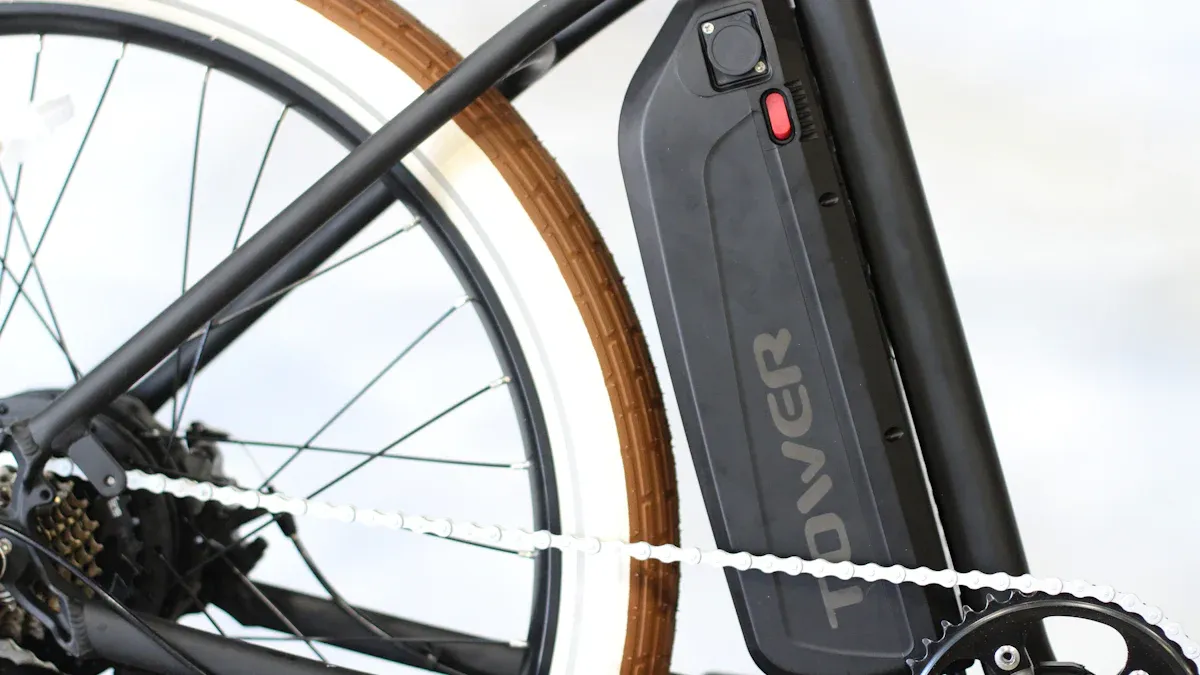
Are you wondering how to optimally care for your e-bike battery? Sales figures show that more and more people are switching to e-bikes. Take a look at the current numbers:
Year |
E-Bike Sales Figures |
Average Battery Life |
|---|---|---|
2024 |
8-9 years |
Experts recommend simple measures for a long lifespan:
Charge your battery according to the 20-80 rule.
Maintain the correct storage temperature.
Do not leave the battery on the charger unnecessarily.
Protect it from extreme weather conditions.
A clean battery lasts longer and ensures more riding enjoyment.
Key Takeaways
Regularly charge your e-bike battery between 20% and 80%. This keeps the battery efficient and slows down aging.
Always use the original charger. This protects your battery from damage and ensures safety.
Store the battery at 30-70% capacity in a cool, dry place. This maintains performance and extends the lifespan.
The Most Important Tips for Your E-Bike Battery
Charging and Discharging the Battery Regularly
Do you want to extend the lifespan of your battery? Charge your battery regularly and do not discharge it completely. Scientific studies and practical experience show that lithium-ion cells last longest if you avoid extreme conditions. Keep the charging range between 20% and 80%. This way, you slow down cell aging and ensure stable performance. Manufacturers recommend performing smaller charging sessions more frequently rather than rarely charging the battery completely. This applies to every e-bike, regardless of the model.
Tip: Charge your battery after every ride if the charge level is below 80%. This keeps the battery in shape and ensures you are always ready to go.
Using the Original Charger
Always use the original charger that comes with the battery. Manufacturers calibrate the charger precisely to the battery. If you use a different charger, you risk damaging the battery and jeopardizing your safety. Counterfeit batteries without CE markings can pose a serious safety risk. Have damaged batteries checked by a specialist dealer before continuing to use them.
Charge your battery exclusively with the original charger.
Use only original batteries or certified replacement batteries.
Check the battery for visible damage such as cracks or dents.
These instructions apply to all e-bike users and ensure safe operation.
Avoiding Deep Discharge
A deep discharge can permanently damage your battery. Never discharge the battery below 20%. Deep discharges make handling difficult and reduce capacity. Lithium batteries can oxidize during a deep discharge, which negatively impacts the lifespan. Statistically, deep discharges often lead to irreparable damage. E-bike batteries should never be discharged until the voltage drops completely.
Do not let the battery drop to 0%.
Recharge it in a timely manner to prevent deep discharge.
Note: A battery that is regularly maintained remains powerful and safe for longer.
These tips are relevant for all e-bike users. You can implement them easily and benefit from a longer battery life. No matter which model you ride – proper care protects your battery and ensures more fun on the road.
Charging Your E-Bike Battery Correctly
Charging at Room Temperature
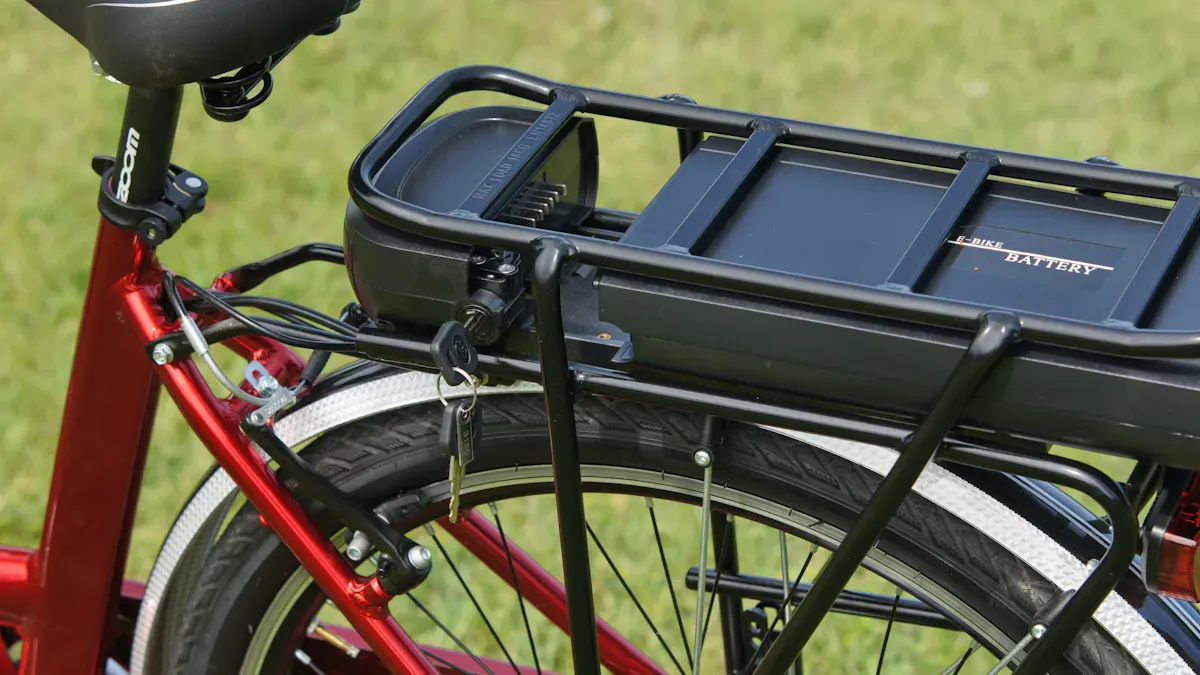
You should always charge your battery at room temperature. You achieve the best results when the temperature is between 15 and 25 degrees Celsius. Extreme temperatures damage the battery and reduce its lifespan. If your battery was outside and is very cold, let it get used to room temperature first. Do not charge the battery at outdoor charging stations if it is below 10 degrees Celsius outside. Manufacturers recommend storing and charging the battery indoors. This keeps performance consistent and prevents damage.
Charge the battery at room temperature (15–25 °C).
Avoid charging in freezing temperatures or extreme heat.
Tip: A battery that is charged at an optimal temperature lasts longer and delivers more energy.
Partial Charges Instead of Full Charges
You can extend the lifespan of your battery if you do not always fully charge it. Modern lithium-ion batteries have no memory effect. Partial charges between 20% and 80% are ideal. Small charging intervals minimize wear and ensure better performance. Charge your battery after every ride if the charge level is below 80%. This keeps your e-bike always ready for use and the battery ages more slowly.
Preventing Overcharging
Overcharging can severely damage the battery. Improper charging is dangerous and can lead to accidents or even fires. Do not leave the battery on the charger unnecessarily. Modern chargers stop the charging process automatically, but you should still check regularly. Reports show that overcharging and deep discharge can lead to irreparable damage.
Hazard |
Potential Consequences |
|---|---|
Overcharging |
Fire, capacity loss |
Deep discharge |
Oxidation, defect |
Note: Check the battery regularly and use the original charger to avoid risks.
Protection Against Heat, Cold, and Moisture

Battery Protection in Cold and Wet Conditions
You protect your battery best when you keep it away from cold and moisture. Modern batteries have a battery management system that reduces damage from low temperatures. Store the battery at room temperature and only insert it shortly before the ride. When riding in winter, a thermal protective cover helps to keep the battery warm. Experts recommend storing the battery at temperatures between 10 and 20 degrees Celsius. Moisture can damage the contacts and reduce performance. Dry the battery carefully after riding in the rain.
Store the battery at 10–20 °C.
Use a thermal cover in winter.
Do not insert the battery when it is ice-cold.
Dry the battery after contact with water.
Tip: A battery remains powerful if you protect it from cold and humidity.
Parking the E-Bike in the Shade
Always park your e-bike in the shade. High temperatures accelerate the battery's aging process and shorten its lifespan. Shade regulates the temperature and prevents heat damage. You will often find a suitable spot under trees or near buildings. This keeps the battery cool and operating efficiently.
Find a shady spot for your e-bike.
Avoid direct sunlight.
Note: A cool battery lasts longer and delivers more energy.
Do Not Store the Battery in Direct Sunlight
Never store the battery in direct sunlight. Manufacturers warn of damage caused by extreme temperatures. The recommended storage temperature is between 10 and 20 degrees Celsius. In summer, you should remove the battery from the e-bike and keep it in the shade. Direct sun can overload the battery cells and permanently reduce performance.
Store the battery in the shade or in cool rooms.
Avoid blazing sun, especially in summer.
Caution: Heat damages the battery and shortens its lifespan.
Storing the E-Bike Battery Correctly
Storage at 30-70% Capacity
You should always store your battery with a charge level between 30 and 70 percent. This range protects the cells and prevents damage from overcharging or deep discharge. If you store the battery with this charge level, performance is maintained. Experts recommend not keeping the battery for longer than six months without recharging. This way, you can avoid performance losses and extend the lifespan.
Tip: Check the charge level regularly, especially during longer breaks.
Storage Status |
Impact |
|---|---|
Fully discharged |
Can lead to deep discharge, which permanently reduces capacity or makes the battery defective. |
Fully charged |
Accelerates the aging of electrode materials due to constant electrochemical pressure. |
Optimal charge level (40-60%) |
Creates optimal conditions for cell preservation and extends the battery's lifespan. |
Cool, Dry Place
Choose a cool and dry place for storage. This protects the battery from moisture and temperature fluctuations. Many experts recommend the following locations:
Dry, frost-proof garage
Basement
Insulated garden shed
Bedroom closet (16-19°C, dry, dark)
Hallway storage room (15-18°C, well-ventilated)
Under the bed (constant temperature, dust-protected)
Wine cellar (12-15°C)
These locations offer stable temperatures and low humidity. You can preserve the safety and capacity of your battery this way.
Removing the Battery During Longer Breaks
If you are not using your e-bike for an extended period, you should remove the battery from the bike. Store it at about 60 percent charge level. Manufacturers recommend not leaving the battery on the charger permanently. A charge level that is too low increases the risk of deep discharge. A fully charged battery puts unnecessary strain on the cells. You extend the lifespan if you store the battery correctly and check it regularly.
Note: Improper storage can reduce capacity and compromise safety. Pay attention to the optimal charge level and a suitable storage location.
Cleaning and Transport
Keeping Contacts Clean
You should clean your battery contacts regularly. Clean contacts ensure a secure connection and prevent performance loss. Professionals recommend cleaning the contacts carefully. Always remove the battery before washing your e-bike. Wipe the contacts only with a slightly damp cloth. Avoid aggressive cleaning agents and do not use a high-pressure cleaner. This protects sensitive parts from damage.
Clean the contacts gently.
Remove the battery before washing.
Use a damp cloth.
Avoid high-pressure cleaners.
Tip: Check the contacts regularly for dirt or corrosion. Clean contacts extend the life of your battery.
Transporting the Battery Safely
Special rules apply when transporting your battery. In Germany, e-bike batteries are considered Class 9 hazardous goods. Lithium-ion batteries are subject to strict hazardous goods regulations. Improper transport can cause fires. You must comply with special safety precautions and labeling requirements. For small quantities, there is a regulation for tradespeople under the ADR. Always follow the manufacturer's instructions.
Transport the battery in a shockproof box.
Avoid strong vibrations.
Pay attention to legal requirements such as UN, ADR, and the Battery Act.
Label the battery correctly for shipping.
Caution: Safe transport protects you and others. Inform yourself about the current regulations before long trips.
Avoiding Errors and Recognizing Warning Signs
Common Mistakes in Battery Care
Many users make typical mistakes when caring for their battery. You can easily avoid these if you know what to watch out for. Common mistakes are:
Improper handling, for example through impacts or dropping it.
Failed DIY repairs, which often cause more harm than good.
Lack of maintenance, such as never checking or cleaning the battery.
Some errors occur particularly often. The following table shows you which these are and why they are problematic:
Care Error
Description
Improper charging
Incorrect charging significantly shortens your battery's lifespan.
Improper storage
Poor storage conditions lead to capacity loss and faster wear.
Leaving the battery in direct sunlight.
Letting the contacts become dirty or damp.
Always fully discharging the battery.
Charging in freezing temperatures or using the battery when it is ice-cold.
Storing the battery fully charged or empty during a long break.
Experts recommend charging the battery regularly in small intervals, using the original charger, and keeping the contacts clean.
Warning signs of battery problems
Watch out for warning signals that indicate a defect or wear in your battery. Typical warning signs are:
The battery no longer charges fully or discharges very quickly.
You notice unusual heat development during charging or riding.
The capacity drops sharply all of a sudden.
Visible damage such as cracks, dents, or deformations occurs.
The battery displays error messages on your e-bike’s display.
Tip: React immediately to such warning signs. Have the battery checked by a specialist dealer before continuing to ride. This will protect you and extend the service life of your battery.
You can significantly extend the life of your e-bike battery by following these tips regularly. Many manufacturers state that a well-maintained battery can last for up to 1,000 charge cycles and more than 50,000 km. Pay attention to warning signals and check your battery from time to time.
FAQ
How often should you charge your e-bike battery?
You should charge the battery after every ride if the charge level is below 80%. This keeps the performance stable and helps the battery last longer.
Can you leave an e-bike battery outside in winter?
You should always bring the battery indoors in winter. The cold damages the cells and reduces the range of your e-bike.
What to do if the battery no longer charges?
Tip: First check the charger and the contacts. If the battery still does not charge, have it checked by a specialist dealer.