
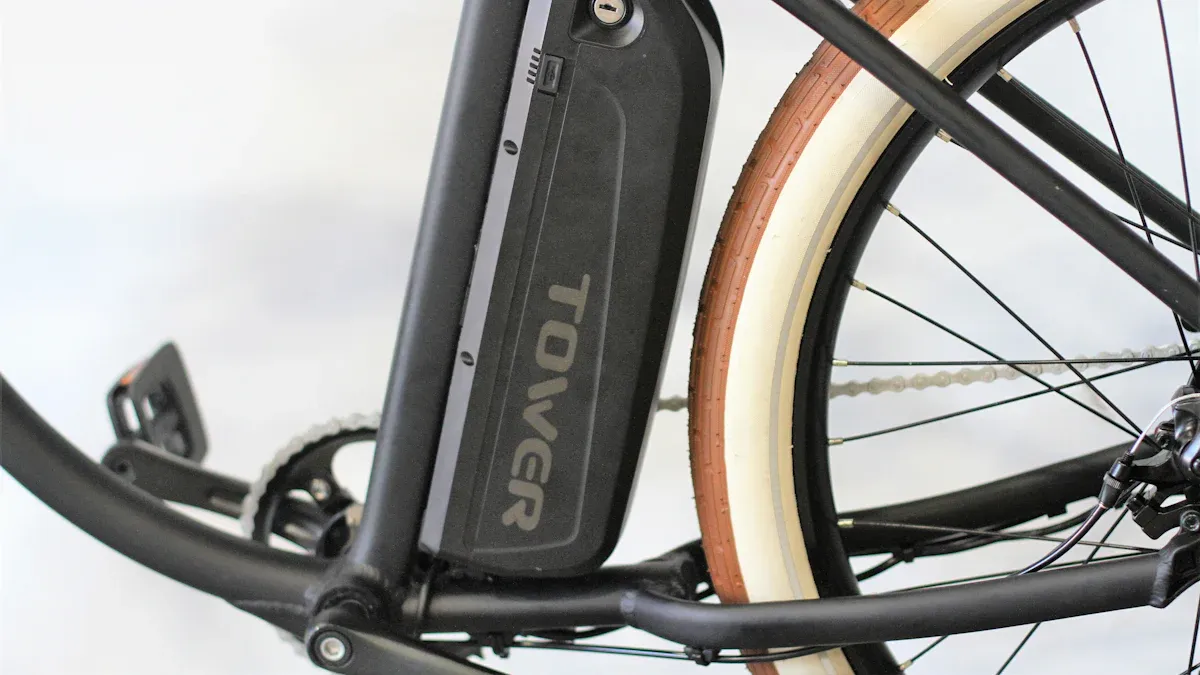
With proper battery maintenance, you can significantly extend the lifespan of your e-bike battery. A new battery often costs between 500 and 800 euros. After 500 to 1,000 charging cycles, the capacity decreases significantly due to a lack of maintenance.
By following simple battery maintenance tips, you save money and maintain your battery's full performance.
Key Insights
-
Charge your e-bike battery to between 30% and 70% to extend its lifespan. Avoid full discharge or overcharging.
-
Store the battery at room temperature between 10 and 20 °C. Check the charge level every 4 to 6 weeks and recharge if necessary.
-
Protect the battery from moisture and direct sunlight. Store it in a dry, cool place to prevent damage.
Battery maintenance while charging
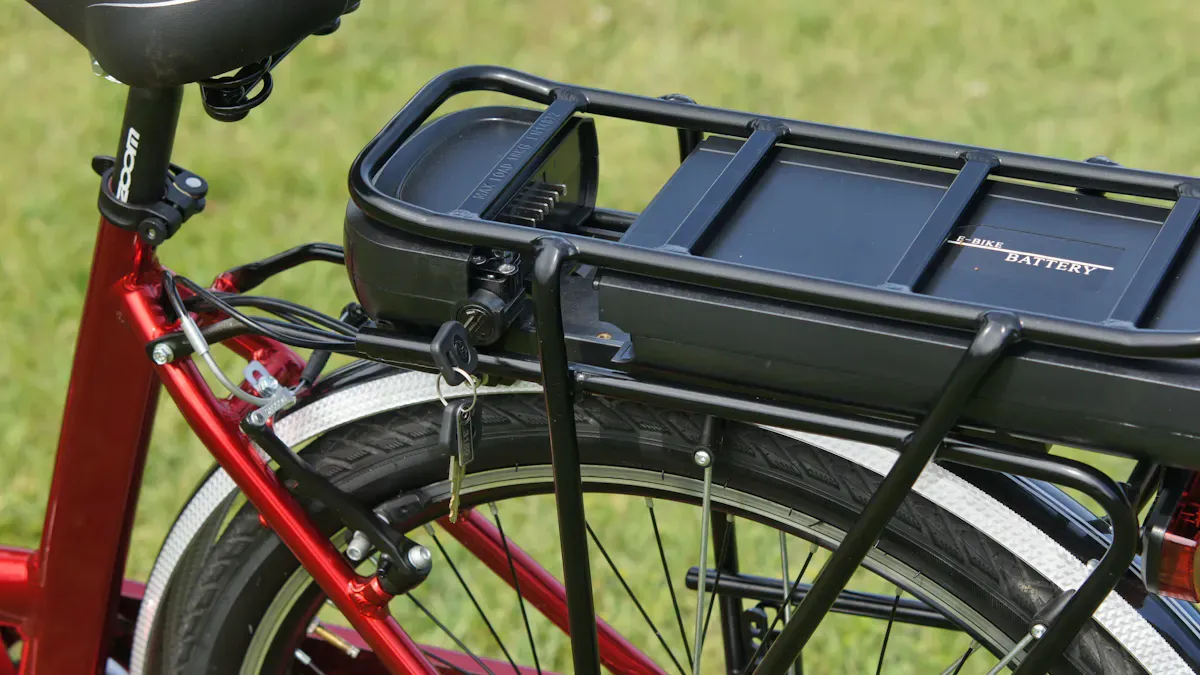
Charging correctly
You can significantly extend the life of your e-bike battery by following a few important rules when charging. Charge your battery as slowly and gently as possible. Many manufacturers recommend not always fully charging or fully discharging the battery. It is best to keep the charge level between 30% and 70%. This keeps the capacity stable for longer and avoids unnecessary wear.
Tip: Always use your e-bike's original charger. Other chargers can cause damage.
Scientific studies also show that daily usage and charging habits influence lifespan. Batteries that are regularly used between 20% and 80% last longer. You should avoid extreme charge states.
|
Manufacturer recommendation |
Description |
|---|---|
|
Canyon |
500 - 1000 charging cycles with optimal care |
|
Fitstore24 |
400 - 500 charging cycles |
|
Anyhelpnow |
500 - 1000 charging cycles |
If you follow these guidelines, you can often reach 500 to 1,000 charging cycles with good battery maintenance.
Optimal charging temperature
Temperature plays a major role when charging. It is best to charge your battery at temperatures between 15 °C and 20 °C. In this range, the cells work most efficiently and do not sustain damage. Temperatures below 10 °C slow down the charging process and reduce capacity. In heat above 30 °C, the cells age faster.
-
Charging outside the recommended temperature range can lead to permanent damage.
-
In freezing conditions, deposits can form in the battery, shortening its lifespan.
-
High temperatures above 45 °C increase the risk of overheating and defects.
Note: Never charge your battery in direct sunlight or in freezing conditions. Bring it indoors to warm up before charging if it has been out in the cold.
Avoiding charging errors
Many charging errors are easily avoided. Do not overcharge your battery. Constant full charging or charging too quickly can significantly reduce performance. Chemical processes inside the battery are activated by overcharging and damage the capacity. In the worst case, the risk of spontaneous combustion increases.
-
Overheating during charging can severely reduce the lifespan.
-
Do not charge the battery below 10% remaining charge to avoid deep discharge.
-
Chargers with a balancing function help to charge the cells evenly.
Warning: Sudden power failures or strong fluctuations after only a few charging cycles indicate defects. In this case, you should have the battery checked.
With these simple tips for battery maintenance while charging, you protect your battery from damage and maintain full performance for many years.
Storing the battery

Storage when not in use
Do you plan on not using your e-bike battery for a while? Then you should pay attention to proper storage. The best temperature for storage is between 10 and 20 °C. Room temperature is ideal. Extreme cold or heat harms the battery. Find a dry, well-ventilated room. Avoid basements with high humidity or locations with direct sunlight.
-
Avoid direct sunlight.
-
Avoid extreme cold.
-
Store the battery in a dry room.
-
Keep the temperature between 10 and 20 °C.
Check the charge level every 4 to 6 weeks, especially in winter. Recharge the battery if necessary. This maintains performance and extends its lifespan.
Tip: If you are not using your e-bike in winter, remove the battery and store it separately. This protects against frost and moisture.
Ideal charge level
The charge level plays an important role in battery maintenance. Manufacturers recommend storing the battery neither completely full nor completely empty. A charge level between 30% and 60% is optimal. This prevents damage from deep discharge or overcharging.
|
Battery type |
Additional notes |
|
|---|---|---|
|
NiMH |
Fully charged |
Charge every 12 months |
|
Li-Ion |
Charged (30-60%) |
Recharge after 12 months to avoid destruction |
-
Store the battery at a charge level of 30-60%.
-
Avoid storing the battery when completely empty or fully charged.
-
Check the charge level every 4-6 weeks and charge if necessary.
Following this procedure keeps your battery fit for the next season.
Protection from moisture and sun
Moisture and direct sun are your battery's greatest enemies. Moisture can penetrate the housing and lead to damage. Even though many batteries are splash-proof, you should never store them in damp basements or outdoors. Water can enter during heavy rain or improper cleaning and damage the electronics.
|
Measure |
Description |
|---|---|
|
Storage location |
Store in a cool, dry place away from direct sunlight. |
|
Protection |
Protect from moisture and dust. |
-
Moisture can penetrate the battery and lead to damage.
-
Batteries are splash-proof, but moisture can penetrate during heavy rain or improper cleaning.
-
It is recommended to remove the battery for cleaning, clean it separately, and store it dry.
High temperatures shorten the lifespan. Always store the battery in the shade and protect it from direct sun. This preserves full capacity so you can enjoy your e-bike for longer.
Note: Proper battery maintenance during storage protects your battery from expensive damage and maintains performance for many years.
Handling and cleaning
Protection against impacts
You protect your e-bike battery best by handling it with care. A battery is sensitive. Even small bumps or falls can cause damage. Mechanical damage often leads to technical defects. In some cases, the battery loses capacity or overheats. Improper handling can even cause short circuits. The risk of fire increases if you drop the battery or use unsuitable chargers.
-
Almost one in five e-bike defects arises from technical issues with the battery.
-
Mechanical damage and overheating are common causes of fires.
-
There have been fires caused by improper handling of batteries and chargers in the past.
You should always transport the battery securely. Use a padded bag. Avoid strong vibrations. Do not expose the battery to extreme temperatures. This keeps your battery powerful and safe for a long time.
Tip: Check the battery regularly for cracks or dents. If damaged, you should visit a professional.
Cleaning the battery
A clean battery functions better and lasts longer. You can easily clean your battery. Manufacturers recommend using a slightly damp cloth. Always remove the battery when it is switched off. Clean it separately and keep the contacts dry. High-pressure cleaners or harsh water jets are unsuitable. They can force water into the housing and cause damage.
-
Wipe the battery with a damp cloth.
-
Always keep the contacts dry.
-
Do not use a high-pressure cleaner.
-
Carefully remove coarse dirt by hand.
-
With these simple steps, your battery remains clean and safe. You extend its lifespan and prevent technical problems.
Note: A well-maintained battery ensures more riding fun and fewer repairs.
Battery maintenance and temperatures
Tips for summer
In summer, high temperatures put extra stress on your e-bike battery. You should never leave the battery in direct sunlight. Heat can severely reduce performance and lifespan. The following table shows how high temperatures have an impact:
|
Factor |
Description |
|---|---|
|
High temperatures increase internal resistance. The battery discharges faster and range decreases. |
|
|
Reduced lifespan |
Extreme heat accelerates cell wear. Capacity decreases faster. |
|
Risk of overheating |
Extreme temperatures can weaken overheating protection. The risk of defects increases. |
It is best to store your battery at 15 to 20 degrees Celsius in the summer. According to manufacturers, this is the ideal range:
|
Temperature range |
Recommendation |
|---|---|
|
15 - 20 degrees Celsius |
Ideal for storing e-bike batteries in summer |
Tip: Never charge the battery immediately after riding in the sun. Let it cool down first.
Tips for winter
In winter, your battery needs special protection from the cold. Never charge the battery when it is frozen. Temperatures below 0 °C can lead to damage:
|
Outside temperature |
What to do with the e-bike battery? |
Why? |
|---|---|---|
|
Below 0 °C |
Do not charge or store while cold |
High risk of damage and deep discharge |
For storage in winter, follow these points:
-
Keep the charge level between 30% and 70%.
-
Store the battery at 10 to 20 degrees Celsius.
-
Check the charge level every 1-2 months.
With these battery care tips, you protect your battery from heat and cold. This keeps it efficient and safe.
Inspection and Maintenance
Visual inspection
You can regularly check your e-bike battery yourself. A visual inspection helps you detect damage early. Look at the battery carefully. Check whether cracks, dents, or deformations are visible. Pay attention to loose contacts or unusual dirt. A clean battery often shows no problems.
You should also monitor the charge level. If the battery suddenly offers less range, this can be a warning sign.
Regular maintenance offers many advantages. Studies show that through inspection and care, you improve the safety and functionality of your e-bike:
|
Benefit |
Description |
|---|---|
|
Safety |
You identify damage early and can avoid accidents. |
|
Functionality |
Wear parts remain in good condition, and the e-bike functions better. |
|
Warranty claims |
An annual inspection helps with warranty issues. |
Tip: Check the battery at least once a month. This keeps your e-bike reliable and safe.
When to see a professional?
There are some problems you cannot solve yourself. You should visit a professional if you notice the following signs:
-
Sudden battery shutdown after impacts or vibrations
-
Erratic capacity drops
-
Sudden power loss
-
Uneven discharging
These symptoms indicate potential defects or damaged cells. A professional checks the battery with specialized equipment. You receive an accurate diagnosis and avoid major damage.
If you continue to use the battery when these signs appear, you risk safety and service life.
Attention: In case of erratic capacity drops, you should no longer use the battery. Have it checked professionally.
You can significantly extend the life of your e-bike battery. Experts recommend simple routines:
-
Use the recommended charger.
-
Keep the battery level at 40%.
-
Recharge regularly.
-
Avoid deep discharge.
Most batteries last four to five years. Small routines ensure you more riding enjoyment and lower costs. Feel free to share your experiences!
FAQ
How often should you charge your e-bike battery?
You should charge the battery regularly. Do not wait until it is completely empty. It is best to keep the charge level between 30% and 70%.
Can you use your battery in the rain?
Yes, you can use the battery in the rain. Make sure the casing remains closed. Dry the battery with a cloth after the ride.
What to do if the battery loses performance?
First check the charge level and the contacts. Charge the battery fully. If the problem persists, see a professional.