
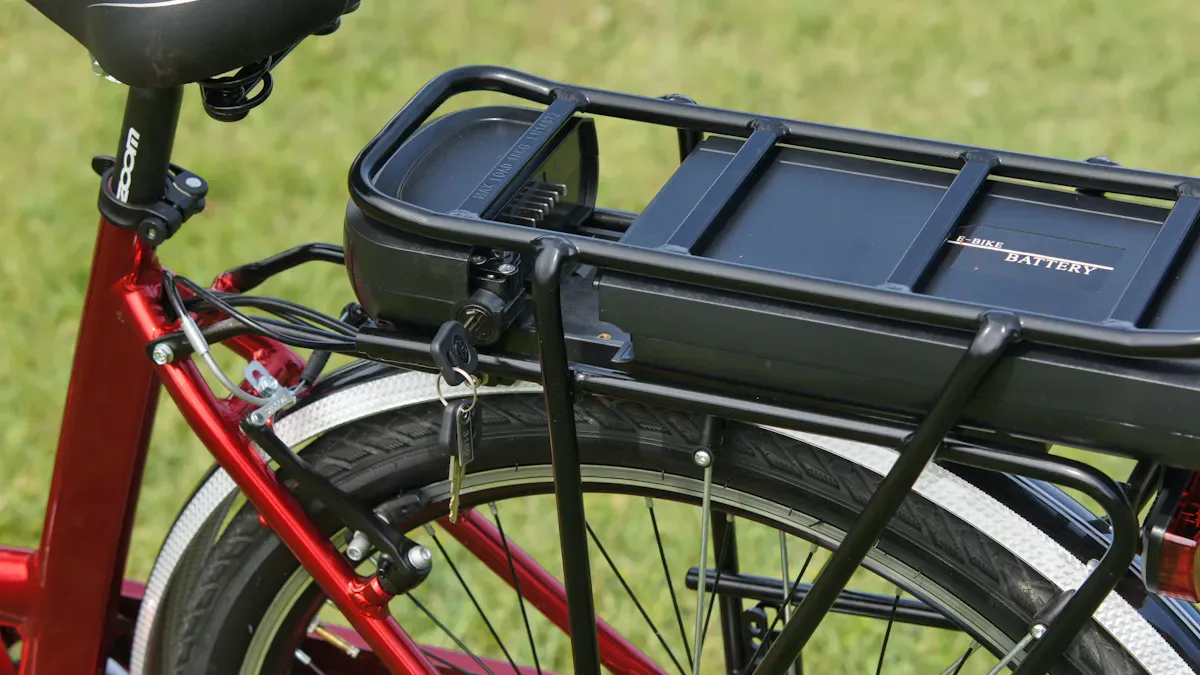
You can significantly extend the lifespan of your e-bike battery by paying attention to proper care. Even small changes in your daily routine make a big difference. Always charge the battery with the recommended charger and ensure an ambient temperature between 15 and 20 degrees Celsius. After a ride, you should let the battery cool down before charging it.
Tip: Only charge the battery under supervision in a cool, dry room. Avoid overcharging and regularly check the condition of the battery.
With these simple steps, you protect your battery and ensure greater safety and reliability.
Important Takeaways
Always charge your e-bike battery with the original charger to avoid damage and maintain your warranty.
Keep your battery's charge level between 20% and 80% to extend its lifespan and maintain capacity.
Store the battery in a cool, dry place at a 50–60% charge level to prevent damage from extreme temperatures.
Clean the contacts regularly with a soft cloth to prevent corrosion and ensure performance.
Watch for warning signs like reduced range or long charging times to act in time and ensure safety.
Why E-Bike Battery Care is Important
Costs and the Environment
You save a lot of money when you maintain your battery properly. A new battery often costs several hundred euros. With good care, your battery will last significantly longer. You won't have to buy a new one as often. This saves your wallet. If you always charge the battery correctly and watch the temperature, you can even double its lifespan. This makes the small extra effort in daily life pay off quickly.
The environment also benefits from your actions. Every battery that lasts longer doesn't need to be replaced as quickly. This means:
The lifespan of batteries is extended.
Production consumes fewer raw materials and less energy.
Environmental impact decreases.
By taking proper care, you make an important contribution to environmental protection. Less waste and lower energy consumption help to conserve nature.
Safety and Reliability
A well-maintained battery is safer. You avoid many risks if you follow the manufacturer's instructions. Improper care can be dangerous. There are several risks:
Damaged batteries can cause short circuits.
Extreme heat, for example over 60 degrees Celsius, can overheat the battery.
Faulty batteries or poor insulation increase the risk of overcharging and spontaneous combustion.
Trying to recharge deep-discharged batteries increases the risk.
Charging near flammable materials or using old, damaged batteries is also dangerous. You should always pay attention to the condition of your battery. This keeps your e-bike reliable and ensures you are safe on the road.
Charging Your E-Bike Battery Correctly
Partial Discharge Instead of Full or Deep Discharge
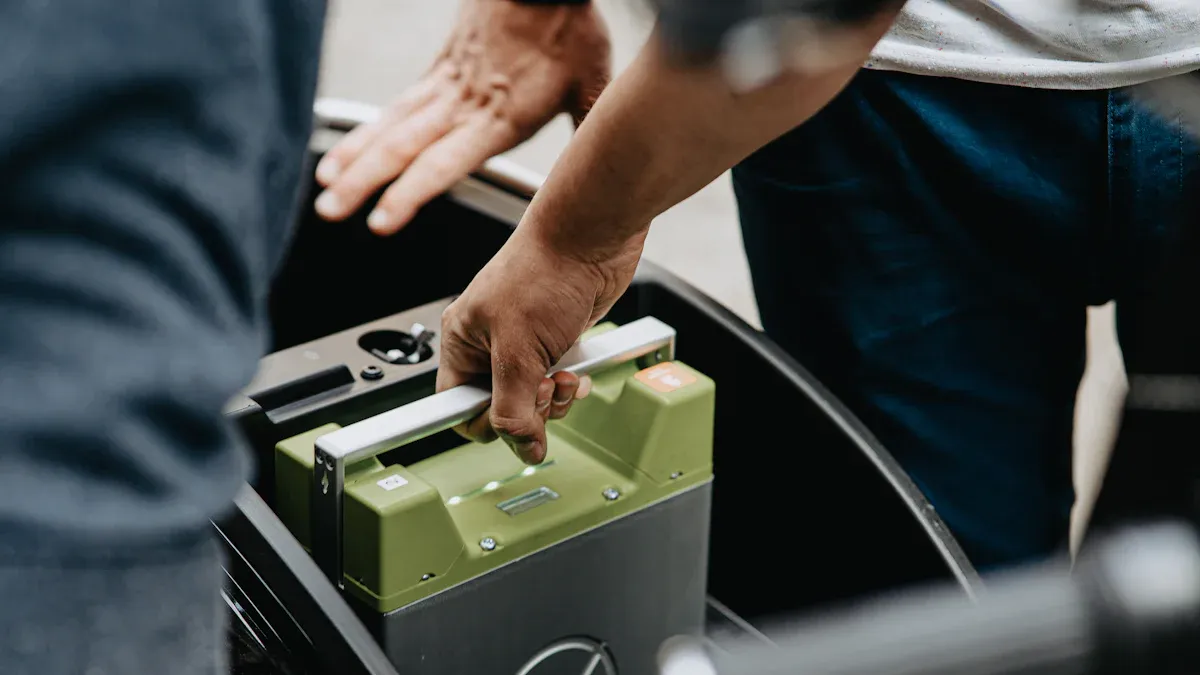
You extend the life of your battery if you don't always ride until it is completely full or completely empty. Experts recommend keeping the charge level between 20% and 80%. Charge your battery as soon as it reaches about 20%. Avoid completely discharging the battery or keeping it charged to 100% all the time. This keeps the capacity intact for longer, allowing you to use your battery for many years.
Tip: Unplug the charger as soon as the battery is full. This protects it from overcharging and increases safety.
Use the Original Charger
Always use the original charger that came with your e-bike. Manufacturers point out that only the matching charger is optimally tuned to the battery. Cheap or incorrect chargers can lead to overheating and damage the battery. Furthermore, the warranty remains valid if you use the original device.
The original charger protects the battery from damage.
Third-party chargers can cause defects.
The warranty is only valid when using the original charger.
Charging Cycles and Charging Times
Each charging cycle consists of a full discharge and recharge. Modern lithium-ion batteries manage between 500 and 1,000 charging cycles. After about 1,000 cycles, the capacity drops to 70 to 80 percent. The service life is usually 3 to 5 years. The more gently you charge, the longer your battery will last. Avoid continuous overnight charging and charge at room temperature whenever possible.
One charging cycle is equivalent to a full charge from 0 to 100 percent.
Actual usage influences the lifespan.
Gentle charging extends the service life.
Charging Checklist
Charge the battery at 20–80% capacity.
Always use the original charger.
Unplug the charger after charging.
Avoid charging in heat or cold.
Do not charge the battery overnight.
With these tips, you ensure that your e-bike battery remains powerful for a long time.
Storing Your E-Bike Battery
Cool, Dry Environment
You should always store your battery in a cool and dry place. The best temperature is between 10 and 30 degrees Celsius. The humidity should be around 50 percent. A basement room or a well-ventilated storage room works well. Direct sunlight is harmful to the battery. The cells can otherwise heat up significantly and become damaged. Frost is also unfavorable, as low temperatures reduce efficiency and range.
Tip: Never store the battery in closed, hot rooms or in direct sunlight.
Humidity |
|
|---|---|
+10°C to +30°C |
50% |
Maintain 50–60% Charge Level
Make sure the battery is neither full nor empty during storage. A charge level between 50 and 60 percent protects the battery chemistry. This prevents deep discharge and helps avoid damage. A half-full battery ages the slowest. This maintains the lifespan of your battery.
Regular Recharging
You should check and recharge the battery about every six months. If the charge level drops below 50 percent, charge it back up to 60 percent. This keeps the battery in good shape and avoids harmful deep discharge. An overly full battery is also not good. Stick to the recommended values.
Remove Battery from the Bike
Always remove the battery from the e-bike if you are not going to use it for an extended period. This prevents small power consumers in the system from slowly draining the battery. The contacts remain clean and dry. This protects the battery from corrosion and moisture.
Storage Checklist
Store the battery in a cool, dry place.
Avoid direct sunlight and frost.
Keep the charge level at 50–60 percent.
Recharge the battery every six months.
Detach the battery from the bike.
Do not store damaged batteries inside the house.
With these tips, you ensure that your battery lasts a long time and remains safe.
Pay Attention to Temperature
Avoid Heat and Cold
Extreme temperatures damage your battery. Heat and cold affect performance and lifespan. You get the best results if you use the battery between 10 and 25 degrees Celsius. At temperatures below 0 degrees, the chemical reaction in the battery slows down. Above 30 degrees, the cells age faster. You should never leave the battery in a hot car or in direct sunlight. Frost also damages the battery and reduces the range of your e-bike.
Extreme heat or cold impair battery performance.
Optimal operating temperatures: 10–25 °C.
Below 0 °C: Reaction slows down.
Above 30 °C: Cells age faster.
Let the Battery Cool Down After a Ride
After a long or fast ride, the battery is often warm. Do not charge it immediately. Wait until it has cooled down to room temperature. Especially after rides in the cold, you should let the battery sit indoors for 2–3 hours. This avoids damage from so-called lithium plating. This problem occurs when you charge a cold battery. It leads to permanent capacity loss and can compromise safety.
Let it warm up for 2–3 hours after a cold ride.
Best to charge at 10–20 °C.
Charging at Moderate Temperatures
Always charge your battery at moderate temperatures. Manufacturers recommend a range of 15 to 25 degrees Celsius. Avoid charging in freezing conditions or extreme heat. Do not charge the battery in direct sunlight or in a cold cellar. This maintains capacity and protects the technology.
Temperature Range |
Storage |
Charging |
Riding |
Expected Range |
|---|---|---|---|---|
Above 10°C |
✓ Ideal |
✓ Optimal |
✓ Normal |
100% |
0°C to 10°C |
✓ Good |
✓ Safe (warm up first) |
✓ Good |
75-90% |
-10°C to 0°C |
✓ Acceptable |
❌ Never |
✓ Possible |
50-75% |
-20°C to -10°C |
✓ Short-term |
❌ Never |
⚠️ Not recommended |
30-50% |
Below -20°C |
❌ Avoid |
❌ Never |
❌ Dangerous |
Unpredictable |
Temperature Checklist
Never leave the battery in the sun or a hot car.
Always charge at 10–25 °C.
Let the battery warm up after a cold ride.
Do not charge when freezing.
Check the battery for damage before charging.
With these tips, you protect your battery and ensure a long lifespan for your e-bike.
Cleaning and Maintaining Your E-Bike Battery
Cleaning the Contacts
You should clean your battery contacts regularly. Dust, moisture, and road salt can soil the contacts and impair performance. Keep the contacts dry to avoid corrosion. Carefully remove impurities so that the connection to the bike remains stable. Regular cleaning ensures reliable power transmission and extends the lifespan of the battery.
Use a Soft or Damp Cloth
Use a soft or slightly damp cloth to clean the battery. Large amounts of water are harmful to the electronics. Gently wipe the battery and make sure no water enters the openings. A slightly damp cloth removes dirt without endangering the technology. Avoid aggressive cleaning agents. This keeps the casing intact and the contacts functioning perfectly.
No Pressure Washers
Never clean your bike with a pressure washer. Water can penetrate the motor cover and the plug connections. This leads to damage to the electronics and, in the worst case, a short circuit. Bearings and the drive can also be damaged by the powerful water jet. While a pressure washer removes dirt, it destroys important components.
Visual Inspection for Damage
Check the battery regularly for visible damage. Inspect the casing, contacts, and seals. Cracks, deformations, or loose parts indicate problems. Watch for traces of moisture and corrosion. A visual inspection helps you detect faults early and prevent major damage.
Maintenance Checklist
Check the battery for damage and inspect the casing, contacts, and seals.
Clean the contacts with a soft cloth.
Keep the charge level between 40–70%.
Gently charge the battery to 100% at room temperature.
Test the battery on a gentle ride.
Regularly check for firmware updates from the manufacturer.
With these simple maintenance steps, you extend the lifespan of your battery and ensure safe operation.
Riding Style and Usage
Gentle Starting
Starting off gently is easy on the battery and ensures consistent energy consumption. You should step onto the pedals briskly to avoid putting unnecessary strain on the motor. Interestingly, occasional powerful acceleration can actually help extend the battery's lifespan. It stabilizes the protective layer on the anode and prevents material fatigue. Conversely, a riding style that is too consistent can accelerate the aging process of the cells. Therefore, it is worth starting off consciously and with a little force, without overtaxing the battery.
Use support levels selectively
Choosing the right support level has a major impact on battery life. Use the lowest level that provides you with sufficient assistance. This relieves the battery and increases your range. Here is an overview of the common modes and their benefits:
Support Level |
Description |
Benefit for battery life |
|---|---|---|
Eco mode |
For relaxed rides on flat terrain |
Reduces motor output, increases range |
Tour mode |
Balanced support for longer distances |
Provides support without overloading the battery |
Sport mode |
For sporty rides and fitness |
Enables challenging routes |
Turbo mode |
Maximum support for steep climbs |
Faster discharge, use sparingly |
Predictive riding
A predictive riding style helps to avoid stop-and-go. You should shift gears in good time and maintain a consistent cadence of 60 to 80 revolutions per minute. This allows you to use energy efficiently and preserve the battery. Check the air pressure regularly and keep mechanical parts clean. These measures improve performance and extend the life of your battery.
Tip: Use the pedal assistance only when you really need it. This avoids unnecessary energy consumption.
Riding style checklist
Start pedaling briskly, but without overloading the battery.
Choose the lowest support level that helps you.
Ride predictively and avoid stop-and-go.
Maintain a cadence of 60–80 revolutions per minute.
Shift gears in good time to relieve the motor.
Check the air pressure regularly.
Clean mechanical parts regularly.
With these tips, you not only ride more efficiently, but also ensure that your battery lasts longer and your e-bike remains reliable.
Warning signs for battery replacement
Decreasing range
If the range of your battery drops significantly, you should pay attention. A loss of capacity can have various causes, such as cell aging, cold temperatures, or high energy consumption due to riding style or motor usage. Check your riding conditions carefully. If the range decreases sharply despite proper care, it makes sense to have the battery tested. Sometimes the problem lies with the drive or the electronics. An early diagnosis helps to avoid major damage.
Long charging times
If your battery suddenly takes much longer to charge or charges unusually quickly, this may indicate cell aging or a problem with the charger. Electronic faults can also affect charging time. In such cases, you should have the charger and battery checked by a specialist. Excessive charging time puts a strain on the battery and shortens its lifespan. Ensure that you always use the original charger and monitor charging times.
Visible damage
Check your battery regularly for visible damage. Cracks in the casing, signs of a fall, or moisture are warning signs. Water ingress can destroy the electronics and lead to short circuits. A swollen battery also indicates a serious safety risk. In such cases, you should immediately stop charging or using the battery. Keep away from flammable materials and seek professional help. Safety first!
Safety instructions
Symptom |
Possible cause |
What you should do |
|---|---|---|
Capacity loss, cold, high consumption |
Check riding conditions, have battery tested, maintain drive |
|
Charging time unusually long or short |
Cell aging, charger, electronic problem |
Have charger and battery professionally checked |
Battery becomes very hot |
Possible defect or overload |
Do not use further, store safely, contact a specialist |
Cracks, impact damage, moisture |
Casing damage, water ingress |
Do not charge or continue riding with the battery |
Battery appears swollen |
Serious safety risk |
Keep away from flammable materials and seek professional help |
Monitor these warning signs closely. If you notice any of them, act quickly. A defective battery can be dangerous. Avoid risks and have the battery checked or replaced by experts if problems arise. This way, you stay safe while out and about and protect your vehicle.
With consistent care, you can significantly extend the lifespan of your battery. You benefit from regular cleaning, inspection, and maintenance. Experts recommend:
Save energy through good maintenance.
Keep the air pressure in the tires optimal.
Check the brakes regularly.
Lubricate the chain for smoother operation.
Remove dirt from the contacts.
Use the checklists as a routine. This keeps your battery performing well and ensures you enjoy your e-bike for longer.
FAQ
How often should I charge my e-bike battery?
You should charge the battery when the charge level is at about 20–30%. Do not always charge it to full capacity. This will extend its lifespan. Regular recharging keeps the battery in good shape.
Can I leave my battery outside in the winter?
Never leave the battery outside in the winter. Cold temperatures damage the cells. Always store it at room temperature. This preserves performance and makes the battery last longer.
What do I do if the battery is damaged?
Check the battery for cracks or deformations. Stop charging it and do not use it anymore. Visit a specialist workshop. A damaged battery can become dangerous.
How do I know if my battery needs replacing?
Sign |
Meaning |
|---|---|
Less range |
Battery is aging |
Long charging times |
Cells are wearing out |
Visible damage |
Risk to safety |
If any of these signs occur, you should have the battery checked.