
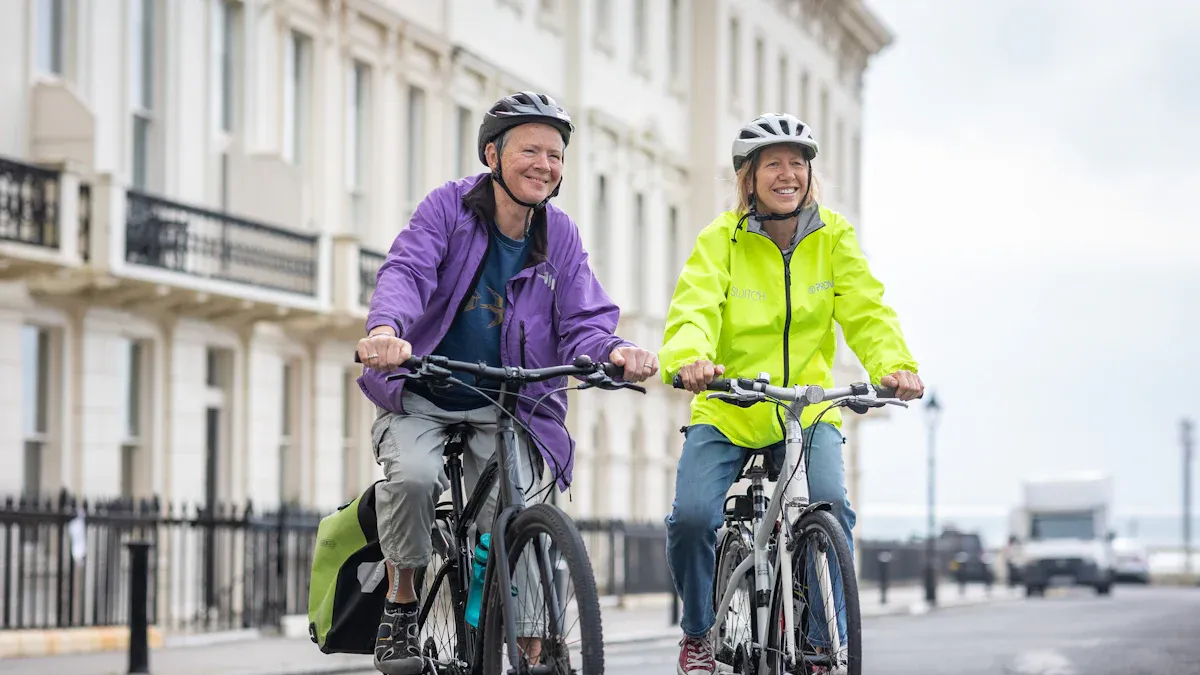
Do you want to get around faster in city traffic? A cross bike makes your everyday life easier. Its low weight ensures effortless riding. You enjoy a sporty riding style and remain flexible, whether you're commuting to work or spontaneously heading out into the countryside on the weekend. With this bike, you can master various paths and benefit from a versatility you can feel immediately.
Key Takeaways
A cross bike is lightweight and allows for fast riding in the city and on unpaved paths.
The sporty seating position and multiple gears help you ride faster and more efficiently.
Cross bikes offer comfort through wider tires and suspension that absorb shocks.
With a cross bike, you are flexible and can use different paths without worrying about the terrain.
Safety in city traffic is high, as the straight handlebars and wide tires give you control and stability.
Comparison of Bicycle Types
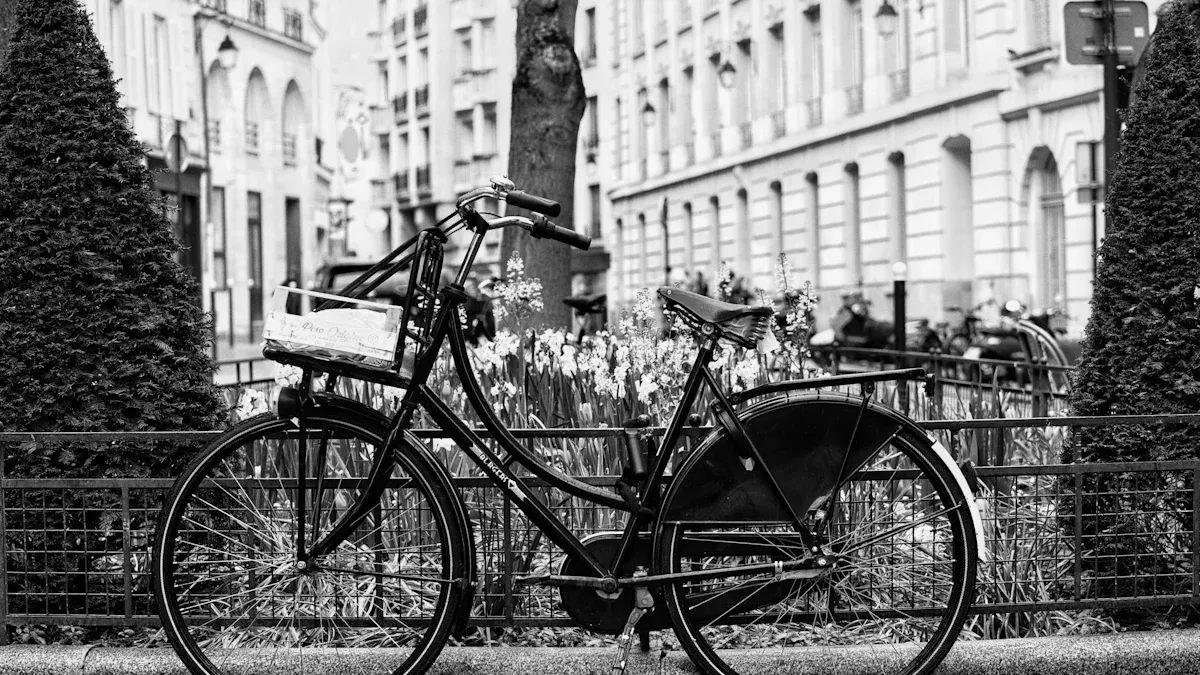
Traditional bicycle explained
You are likely already familiar with the classic bicycle. It stands for reliability and simple technology. You will usually find it with curved handlebars, narrow tires, and a rather upright seating position. Many people use this bike for commuting to school, work, or running small errands. The features are often simple: mudguards, a luggage rack, and sometimes a front basket. The traditional bicycle is particularly suitable for short distances on flat roads. It is comfortable to ride, but remains more leisurely and less sporty.
What is a cross bike?
A cross bike brings a breath of fresh air into your everyday life. It combines the best of a mountain bike and a road bike. You get straight handlebars that give you more control. The tires are wider than those on a road bike but narrower than those on a mountain bike. This allows you to roll easily over asphalt, but also over gravel or forest paths. The derailleur system often has at least 21 gears, allowing you to master steep climbs and fast descents. Many cross bikes have a suspension fork that absorbs shocks. The frame geometry is shorter and the wheelbase is more compact, which ensures a sporty ride and makes you more agile in city traffic.
Tip: With a cross bike, you feel safe and flexible on various paths. You can decide spontaneously whether you want to take the fast route through the city or take a detour into nature.
Differences at a glance:
-
Traditional bicycle:
Curved handlebars
Narrow tires
Upright seating position
Simple equipment
For short, flat routes
-
Cross bike:
Straight handlebars for better handling
Treaded tires, suitable for various terrains
Shorter frame geometry, compact wheelbase
At least 21 gears
Suspension fork for more comfort
Versatile – suitable for city and nature
Differences in detail
Weight and equipment
You can feel the difference just by lifting it. A cross bike often weighs less than a traditional bicycle. This makes it easier if you ever have to carry it, for example into the basement or up to your apartment. The equipment provides many advantages:
The geometry ensures more agility and better tracking.
33-millimeter-wide tires roll safely on asphalt and offer you good grip off-road as well.
A stiff head tube gives you control, even when things get bumpy.
The frame construction and the tires dampen bumps and vibrations.
You usually get a suspension fork that absorbs shocks.
With these extras, you are well-equipped for many situations in the city and beyond.
Seating position and comfort
You sit more sportily on a cross bike than on a classic bike. The seating position is slightly tilted forward, which gives you more momentum and control, especially when riding fast. Nevertheless, comfort does not fall by the wayside. The ergonomic design ensures that you can also master longer distances in a relaxed way. The wider tires and the suspension absorb many shocks, so you feel comfortable even on cobblestones or uneven paths.
Versatility and area of use
A cross bike adapts to your everyday life. Whether you are riding to work, taking an excursion into the countryside, or trying out a forest path – you are always flexible. Take a look at the areas of use at a glance:
Area of use |
Description |
|---|---|
Commuting |
Perfect for the daily ride to school or work. |
Leisure activities |
Great for trips, shopping, or meeting friends. |
Off-road adventure |
You can also ride off-road, for example on forest paths or gravel. |
Asphalt roads |
Developed for the city, but robust enough for more. |
Unpaved paths |
No problem if the path isn't paved. |
With a cross bike, you are not limited to one type of terrain. You decide spontaneously where the journey goes.
Advantages of a cross bike in the city
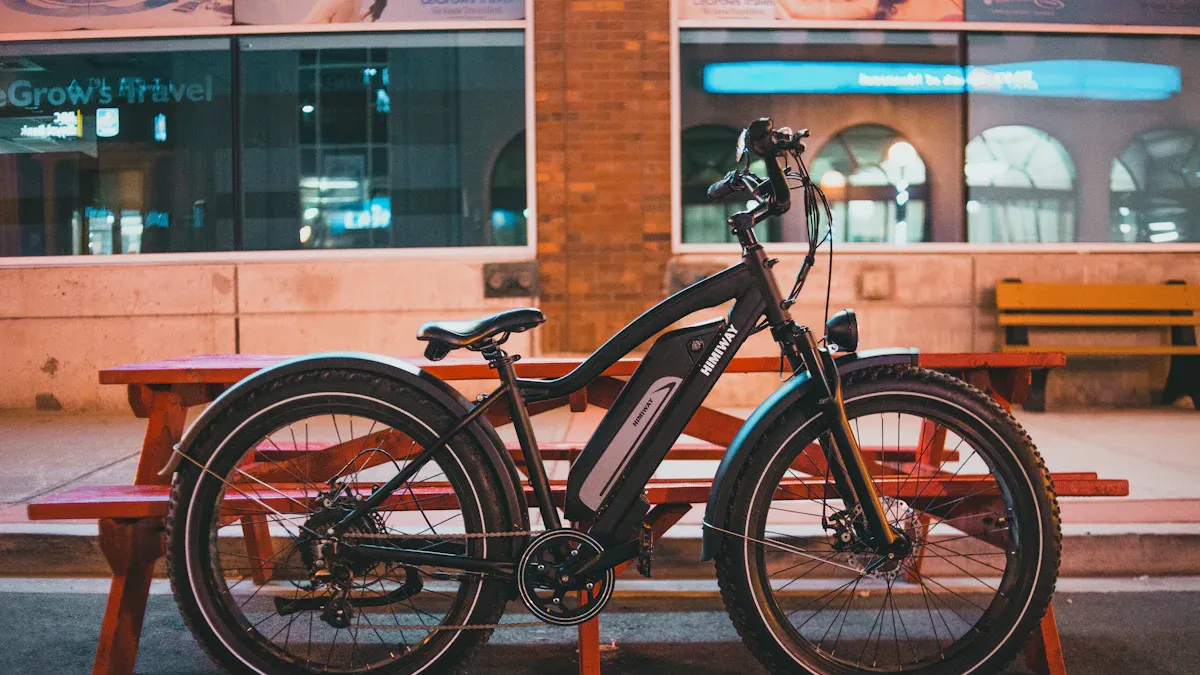
Flexibility in everyday life
With a cross bike, you remain flexible in everyday life. You can ride quickly to work in the morning and spontaneously take a detour to the park in the afternoon. The bike adapts to your daily routine. You don't have to worry about whether the path is paved or a bit bumpy; the cross bike simply rolls on. Many people also use it for shopping or short errands. You can easily carry the bike if you have to climb stairs. This keeps you mobile and independent in the city.
Tip: You decide where you go. The cross bike doesn't take a break when the terrain changes.
Speed and sportiness
Do you want to get through the city quickly? You can do it easily with a cross bike. The sporty seating position gives you more momentum. You pedal hard and feel how the bike reacts immediately. The efficient gear shifting helps you maintain speed even against headwind or on inclines. You don't need more effort, but you ride faster than with a classic bike. At the same time, the cross bike remains robust and withstands potholes or curbs. This allows you to reach your destination quickly and safely.
The sporty seating position and many gears get you moving faster.
The bike remains stable, even if the road is uneven.
You can reach high speeds with little effort.
Comfort on various paths
There are many different paths in the city. Sometimes you ride on smooth asphalt, then again on cobblestones or gravel. With a cross bike, you don't have to worry. The wide tires and suspension ensure that you remain relaxed. You don't have to constantly watch the road surface; the bike simply compensates for small bumps. This allows you to enjoy every ride, no matter where you want to go.
You feel safe, even if the path is slippery or bumpy.
The bike rides smoothly and in a relaxed manner without you having to think about it much.
You can concentrate on traffic and don't have to constantly look at the ground.
Safety in city traffic
Safety plays a major role in city traffic. The cross bike gives you a good feeling because you always remain in control. The straight handlebars ensure that you can react quickly. The wide tires provide a firm grip even in wet conditions or on gravel. You sit a bit more sportily but still have a good overview of the road. Many models have strong brakes that won't let you down even during sudden stops.
Note: With a cross bike, you are well-prepared for many situations in city traffic. You feel safe, whether you are riding to school, work, or sports.
Who is which bike suitable for?
Cross bike user profile
Do you enjoy riding fast and love variety? Then a cross bike is a perfect match for you. This bike is suitable for you if you often ride in the city but also like to head out into the countryside spontaneously. You don't want to be dependent on a fixed surface. Perhaps you commute to work, ride longer distances on weekends, or like to try out new paths. A cross bike gives you the freedom to explore asphalt, gravel, and forest paths. You value sporty riding and want to remain flexible. Even if you sometimes have to carry your bike, for example into your apartment, its low weight will help you.
Tip: A cross bike is ideal if you don't want to be tied down and enjoy trying out new things.
Traditional bicycle user profile
Do you prefer it more leisurely and mostly ride short distances? Then you will feel comfortable on a traditional bicycle. This bike suits you if you are mainly riding in the city and value comfort. You use your bike for the trip to the supermarket, school, or for small errands. The upright seating position is easy on your back. You don't need sporty equipment and want a bike that is easy to operate. A traditional bicycle is often cheaper and low-maintenance.
Note: If reliability and daily suitability are more important to you than speed, the classic bike is a good choice.
Decision-making aid
Unsure which bike fits you? Then a look at these points will help:
Think about what you mainly want to use the bicycle for. Do you often ride longer distances, or do you mostly stay in the city?
Look at the price. Cross bikes often cost a little more, but offer more versatility in return.
Think about your own wishes. Do you like sporty riding or rather relaxed cruising?
Try out different models. That's the only way to find out which bike feels best for you.
Criterion |
Cross bike |
Traditional bicycle |
|---|---|---|
Versatility |
Very high |
Rather low |
Comfort |
Good, sporty |
Very comfortable, upright |
Price |
Medium to higher |
Inexpensive to medium |
Area of use |
City, nature, mixed paths |
City, short distances |
In the end, what counts is that you feel comfortable on your bike and that it suits your everyday life. Try it out and find your favorite! 🚲
Price-performance comparison
Entry-level and mid-range
You don't want to spend a fortune right away? Then you will find many good options in the entry-level and mid-range models. These bikes usually cost between 400 and 1,000 euros. They offer you solid quality for everyday use. Most models have an aluminum or steel frame, which makes them robust without being too heavy. You often get a simple derailleur system with 21 to 24 gears. The brakes are usually rim brakes, which are completely sufficient for the city. Mudguards and luggage racks are sometimes present, but not always. This is perfectly adequate for the daily commute to work or school. You can rely on a good price-performance ratio.
Premium models
Do you want more comfort and equipment? Then take a look at the premium models. You will pay more here, but you will also get many extras. Prices often start at 1,000 euros and go up to 2,500 euros or more. Premium cross bikes offer you:
Luggage rack – practical for longer tours or if you want to transport a lot.
Suspension fork – it absorbs shocks and protects you on bumpy paths.
Mudguards – ideal in bad weather to keep you clean.
Many premium models have disc brakes, which bring you to a safe stop even in wet conditions. The shifting system is often higher quality and offers you more gears. The weight remains low, often under 13 kg. You will feel the difference on every ride.
What to look for when buying?
When buying, you should pay attention to a few important things so that you can find the perfect cross bike for you:
The weight should be between 10 and 18 kg. This keeps the bike light and manageable.
The frame size must match your height. Try out different models.
Disc brakes offer you more safety, especially in the rain.
Consider whether you want a derailleur system (up to 30 gears) or an internal gear hub (2 to 14 gears).
Wide, straight handlebars give you more control.
Non-slip pedals ensure a secure hold. Clipless pedals give you more power transmission.
Aluminum and steel are most common in mid-range bikes. They are stable and not too expensive.
Tip: When buying online, look for a clearly labeled order button. Check if there is a real phone number for questions. Be careful with shops that have unusual web addresses to protect yourself from unpleasant surprises.
You have now seen how versatile a cross bike is. It brings you more flexibility, sporty riding, and comfort in everyday life. Many riders report that with electric assistance, they can cover longer distances and need less effort. You will feel these advantages immediately, especially in the city:
You ride more easily over various paths.
You adapt the assistance to your needs.
You feel safe, even on unpaved roads.
Aspect |
Benefit for you |
|---|---|
Innovation |
|
Demand |
|
Versatility |
You use it all year round, not just in summer. |
If you love variety and modern technology, the switch is worth it. The cross bike simply makes your everyday life better! 🚲
FAQ
How does a cross bike differ from a trekking bike?
With a cross bike, you get fewer accessories like mudguards or luggage racks. The bike is lighter and sportier. You can ride through the city faster and more flexibly with it. A trekking bike is better suited for long tours with lots of luggage.
Can I use a cross bike in winter?
Yes, you can ride your cross bike all year round. The tires offer you good grip even in wet or snowy conditions. With suitable mudguards, you stay clean. Pay attention to regular maintenance so that your bike lasts a long time.
Is a cross bike suitable for beginners?
Of course! You will find many models that are easy to operate. The seating position is comfortable. You will quickly learn how to shift gears and brake. A cross bike makes getting into cycling easy for you.
Do I need special clothing for the cross bike?
No, you can wear normal everyday clothing. For longer distances or sporty rides, we recommend comfortable pants and sturdy shoes. A helmet ensures greater safety. With gloves, you have a better grip on the handlebars. 🚴