
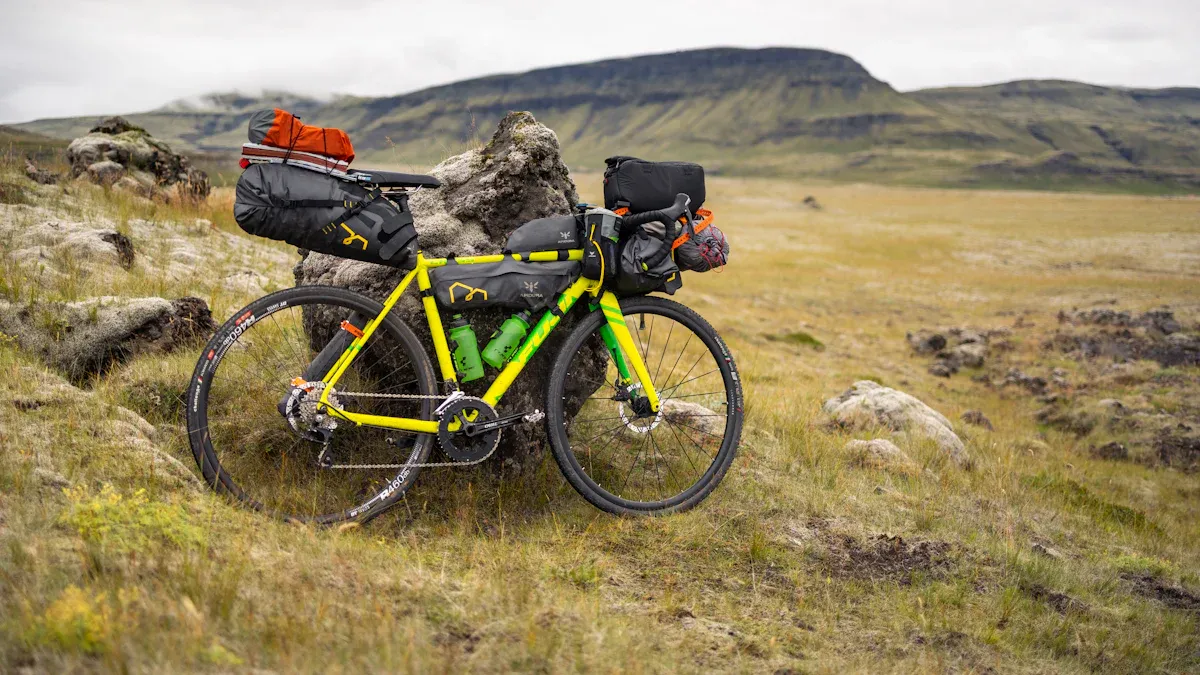
A gravel bike is a versatile bicycle specifically designed for riding on a wide variety of surfaces. It combines the speed of a road bike with the stability of a mountain bike. Wider tires (40–47 mm) provide comfort and optimal grip, even on loose surfaces. Thanks to modern technologies such as innovative suspension components and adapted geometry, you can ride safely and efficiently on both asphalt and gravel roads with a gravel bike.
Among the individual model groups, gravel bikes and road bikes are particularly popular.
The growing popularity is also reflected in the numbers:
The share of performance-oriented bicycles, which include gravel bikes, rose from 11% in 2022 to 14% in 2023.
The market share of road bikes, gravel bikes, fitness bikes, and mountain bikes rose by 2 percentage points to a total of 9%.
With a gravel bike, you can not only experience new adventures but also discover the versatility and performance of a next-generation bicycle.
Key Takeaways
Gravel bikes are as fast as road bikes and as stable as mountain bikes. They perform well on many types of terrain.
Tire choice matters. Wider tires are less likely to slip on gravel. Narrow tires are faster on roads.
The bike’s shape matters. An upright riding position makes long rides more comfortable.
Maintain your bike regularly. Wash it after muddy rides and check the tire pressure.
Plan your rides carefully. Choose routes you can handle and bring the essentials.
Origins and Development
The Origins of the Gravel Bike
The gravel bike emerged from the desire for a bicycle that performs equally well on different surfaces. In the early 2000s, cyclists in the United States began adapting their road bikes for gravel roads. They wanted a way to ride off paved roads without sacrificing speed and efficiency. These modifications led to wider tires, sturdier frames, and more comfortable geometry. Manufacturers quickly recognized the potential and developed dedicated models to meet the demands of gravel riding.
Over time, gravel bikes became increasingly popular. They offered an alternative to road bikes and mountain bikes, which are often limited to specific types of terrain. Today, they are considered among the most versatile bicycles on the market. They combine the lightness of a road bike with the ruggedness of a mountain bike.
The Purpose and Target Audience of Gravel Bikes
A gravel bike is for anyone seeking freedom and adventure. It is ideal for cyclists who don’t want to ride only on asphalt. With a gravel bike, you can explore gravel roads, forest paths, and even easy trails. It is perfect for commuters who want to ride away from main roads, or for touring cyclists covering long distances on mixed terrain.
Beginners also benefit from the versatility of a gravel bike. Its stable geometry and wide tires provide safety and comfort. At the same time, it appeals to experienced riders who want to test their limits on demanding routes. Whether you’re riding for sport or simply enjoying nature, a gravel bike adapts to your needs.
Features and Differences
Geometry and Frame Construction
The geometry of a gravel bike is specifically designed to provide stability and comfort over long distances. You’ll notice that the head tube angle is slacker (around 70°–71°), giving you more control on uneven terrain. A longer head tube creates a more upright riding position that relieves strain on your back and neck. These features make the gravel bike ideal for ultramarathons and long tours.
Frame materials also play an important role. Aluminum frames are lightweight and affordable, while carbon frames stand out for their high stiffness and vibration damping. Steel frames offer noticeable compliance, which is especially pleasant on gravel roads. Titanium frames combine lightness with durability, but are more expensive. The following table summarizes the key technical details:
Category |
Details |
|---|---|
Materials |
Aluminum, steel, carbon, titanium |
Frame geometry |
Slacker head tube angle (70°–71°) for stability, longer head tube for comfort |
Wheel sizes |
28" and 27.5"; wider rims (internal width: 23 mm) for better traction |
Tire widths |
35–40 mm for 28", 47–50 mm for 27.5"; various tread patterns for different riding conditions |
Comfort and damping |
Carbon for stiffness and damping, steel for compliance |
Intended use |
Suitable for bikepacking, sporty rides, and challenging descents |
Tires and Their Importance
Your tire choice has a significant impact on how your gravel bike performs on different surfaces. Narrow tires (e.g., 35 mm) offer less rolling resistance and higher speeds on asphalt. Wider tires (up to 50 mm), on the other hand, provide more traction and stability on loose surfaces. Medium-width tires offer a good compromise if you ride on both roads and gravel.
The following table shows the advantages and disadvantages of different tire widths:
Tire width |
Advantages |
Disadvantages |
|---|---|---|
Narrow tires |
Lower rolling resistance, higher speed |
Less traction on loose surfaces, less comfort |
Medium-width tires |
Good balance between speed and off-road capability |
Somewhat higher rolling resistance than narrow tires |
Wide tires |
Best traction and stability on challenging terrain |
Higher rolling resistance on smooth roads, heavier |
Tire tread is another important factor. Smooth tread patterns are suitable for asphalt, while aggressive tread patterns provide better grip on gravel and trails. Make sure the tire width and tread pattern suit your preferred terrain.
Handlebar Shapes and Ergonomics
A gravel bike’s handlebars differ significantly from those of a road bike. They are wider and often flare outward, giving you more control on uneven terrain. This shape, also known as “flare,” improves ergonomics and helps you stay comfortable even on long rides. Wider handlebars also provide more stability, especially on descents or loose surfaces.
Hand position also plays an important role. Many gravel bikes offer additional hand positions for variety and comfort. You can switch between an upright posture for relaxed rides and an aerodynamic position for greater speed. This versatility makes the handlebars a key factor in your riding experience.
Tip: Try different handlebar widths and shapes to find the ergonomics that work best for you. Properly fitted handlebars can reduce fatigue and improve your performance.
Comparison with Road Bikes, Mountain Bikes, and Cyclocross Bikes
If you’re looking for a new bike, you may be wondering how a gravel bike differs from other types of bicycles. The differences between gravel bikes, road bikes, mountain bikes, and cyclocross bikes lie in their geometry, tires, comfort, and intended use. Each type of bike was developed for specific needs, and the right choice depends on what you’re looking for.
Geometry and Tire Clearance
Gravel bikes have slacker head tube angles, giving you more stability on uneven terrain. Their tire clearance is greater than that of road and cyclocross bikes. You can use tires up to 55 mm wide, providing more traction and comfort on gravel and trails. Road and cyclocross bikes are limited to narrower tires (up to 33 mm), making them suitable for smooth roads or short, muddy courses. Mountain bikes offer the greatest tire clearance and are suitable for wide, knobby tires essential on technical trails.
Bike type |
Geometry |
Tire clearance |
Comfort |
Weight |
Intended use |
|---|---|---|---|---|---|
Gravel bike |
Slacker head tube angles for stability |
Up to 700 x 55C |
High comfort, upright riding position |
Lower weight |
Tours, adventures, everyday use |
Road bike |
Similar to cyclocross |
Max. 700 x 33C |
Sporty, aggressive |
Higher weight |
Competitions, road races |
Mountain bike |
Sturdy geometry |
Variable, often wider tires |
High suspension travel |
Higher weight |
Off-road, technical trails |
Cyclocross bike |
Aggressive, compact |
Max. 700 x 33C |
Sporty, less comfortable |
Higher weight |
Short races, muddy courses |
Comfort and Intended Use
Gravel bikes offer an upright riding position that relieves strain on your back during long rides. They are suitable for tours, adventures, and everyday use. Road and cyclocross bikes have sportier geometry, which gives you an advantage on short, fast rides. Mountain bikes, on the other hand, are designed for off-road adventures. Their suspension and sturdy construction make them ideal for technical trails.
Note: If you’re looking for a versatile bike that performs well on both roads and gravel paths, a gravel bike is the best choice. It combines stability, comfort, and performance.
Differences in Performance
The materials and geometry affect the performance of each type of bike. Gravel bikes are lighter than mountain bikes but more stable than road bikes. They offer a perfect balance of speed and control. Mountain bikes are heavier but more rugged, while road bikes are optimized for speed. Cyclocross bikes are similar to road bikes, but designed for short, intense races on muddy courses.
Mountain bikes offer more suspension and durability for off-road riding.
Road and cyclocross bikes are sportier but less comfortable.
If you’re looking for a bike that adapts to your needs, consider the differences in geometry, tire clearance, and comfort. A gravel bike gives you the versatility you need for different types of terrain.
Types of Gravel Bikes
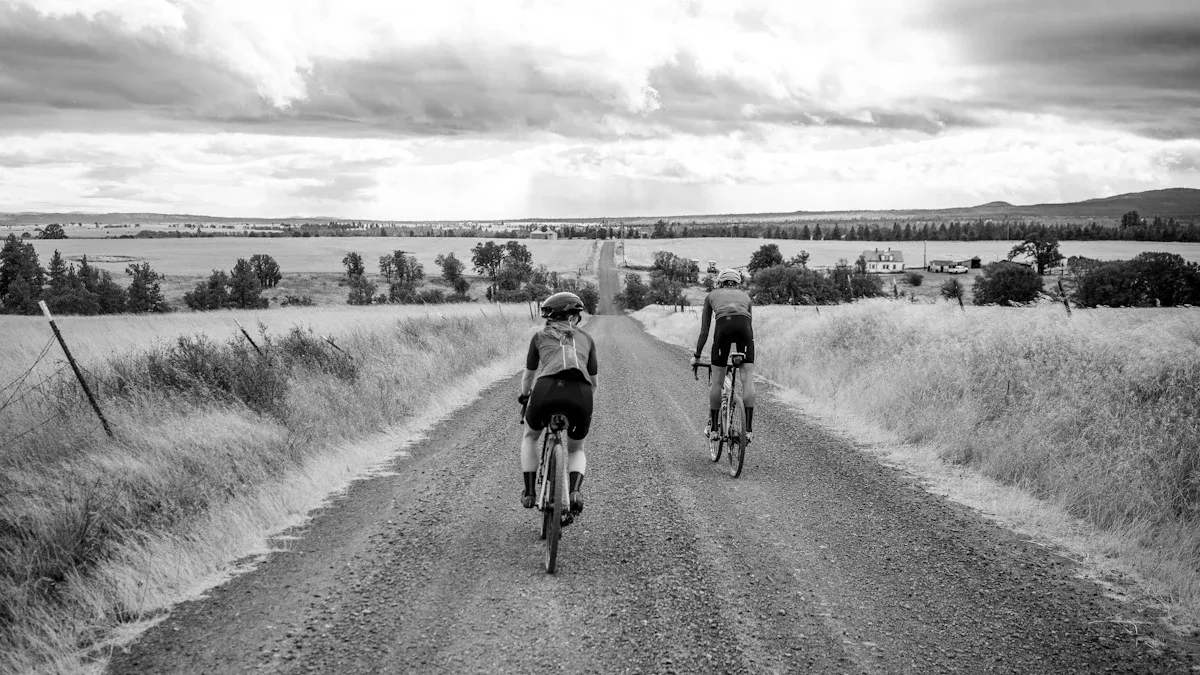
Carbon Gravel Bikes
Carbon gravel bikes offer a perfect combination of lightness, stiffness, and comfort. These models are especially suitable for riders who value speed and efficiency. The frame and fork are made of carbon fiber, which reduces weight while increasing stability. Manufacturers often use Toray T800 and T500 fibers to achieve an optimal balance between stiffness and flexibility. As a result, the material absorbs vibrations and provides a comfortable ride, even on uneven terrain.
Another advantage of carbon gravel bikes is their versatility. Many models let you mount racks or bags, making them ideal for bikepacking adventures. The following table lists some technical specifications:
Specification |
Details |
|---|---|
Tire clearance |
|
Frame |
Made of carbon fiber, ideal for off-road adventures |
Groupset |
Electronic Shimano GRX Di2 with a hidden battery in the seatpost |
Fork |
Made of carbon fiber, providing low weight and high stiffness |
Brakes |
Disc brakes with 160 mm rotors for powerful braking and precise modulation |
Tip: If you’re looking for a lightweight, high-performance gravel bike, a carbon model is the right choice.