
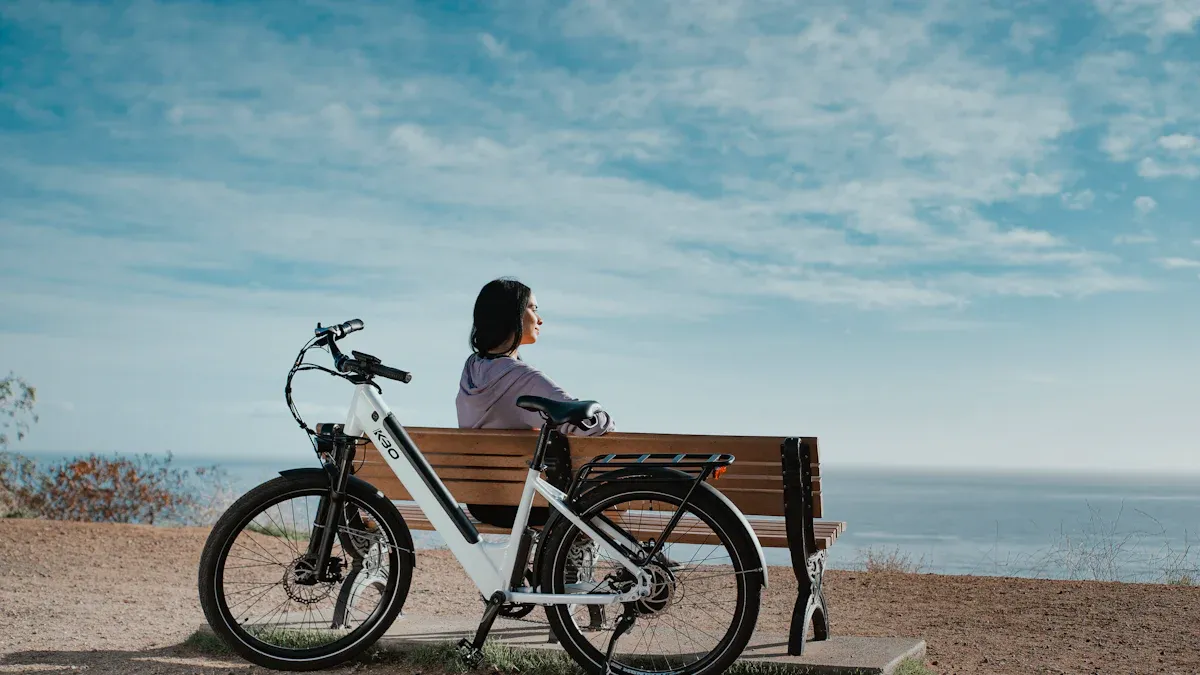
In 2025, e-bikes are changing the way you get around. Cities are becoming increasingly crowded, and you’re probably looking for a practical, eco-friendly alternative. That’s where the e-bike comes in. It combines efficiency with sustainability and is a perfect fit for the needs of modern commuters. You can not only save time but also actively contribute to climate protection. With an e-bike, you can reach your destination faster, healthier, and greener.
Key Takeaways
E-bikes are good for the environment. They produce less CO2 and help keep the air cleaner in cities.
Batteries are better now. They charge faster and last longer, so you can ride farther.
E-bikes are good for your health. You can ride longer distances while staying active.
E-bike prices vary. Look for incentives to spend less.
Safety matters. Wear a helmet and follow e-bike regulations.
What Is an E-Bike?
Definition of an E-Bike
An e-bike is a bicycle equipped with an electric motor. This motor assists you as you pedal and makes riding easier, especially over long distances or uphill. Most e-bikes have a battery that powers the motor. Modern models offer different levels of assistance that you can adjust to suit your needs.
Here are some technical features of a typical e-bike:
Feature |
Specification |
|---|---|
Motor |
|
Rated voltage |
36V |
Battery |
Lithium-ion, 504 Wh |
Brakes |
160 mm Tektro disc brakes |
Gears |
7-speed Shimano |
Tires |
Kenda 20*2.125 |
Weight |
20 kg |
Payload capacity |
130 kg |
These features make the e-bike a versatile and powerful mode of transportation. It is ideal for everyday use and offers you an eco-friendly alternative to cars.
Types of E-Bikes
E-bikes come in different styles to suit different needs. Here are the three main types:
City E-Bikes
City e-bikes are perfect for everyday life in the city. They offer an upright riding position and come with comfortable saddles. These models are ideal for short trips, such as commuting to work or going shopping. Thanks to their lightweight design and easy operation, you can navigate city traffic with ease.
Mountain E-Bikes
Mountain e-bikes are built for adventures in nature. They feature sturdy frames, wide tires, and powerful motors. These features help you tackle steep climbs and rough terrain. If you enjoy riding off-road, a mountain e-bike is the right choice.
Cargo E-Bikes
Cargo e-bikes are designed to carry loads. They have sturdy frames and large cargo areas or baskets. With these e-bikes, you can transport heavy groceries, children, or even small pieces of furniture. They are a practical solution for families and eco-conscious commuters.
Latest Technologies in 2025
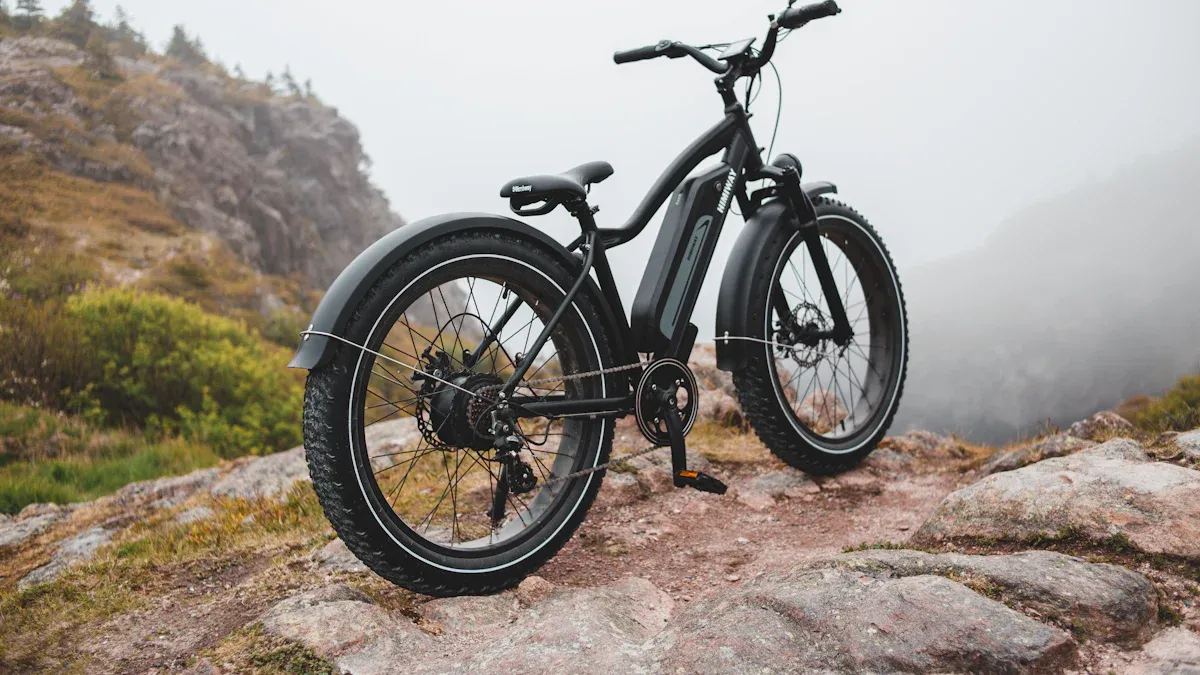
Improved Battery Technology
Battery technology has advanced significantly in 2025. You benefit from batteries that are not only lighter but also more powerful. Lithium-ion batteries continue to dominate the market, but with improved energy density. This means you can cover longer distances on your e-bike without having to recharge often.
Another breakthrough is fast charging. You can charge your e-bike battery to up to 80% in just 30 minutes. This saves you time and makes riding even more convenient. Many batteries are also modular now. You can easily replace or upgrade them if you need more range.
Some manufacturers are embracing sustainable solutions. They use recyclable materials in their batteries, reducing their environmental footprint. These innovations make your e-bike not only more efficient but also more environmentally friendly.
Smart Features and Connectivity
E-bikes in 2025 are smarter than ever. Many models come equipped with smart features that enhance your riding experience. You can connect your e-bike to your smartphone to access important information such as speed, battery level, or navigation data in real time.
One standout feature is GPS tracking. This helps you quickly locate your e-bike if it is stolen. You can also use smart apps to analyze and optimize your rides. Some apps even offer personalized training sessions to help you reach your fitness goals.
Another useful feature is automatic motor adjustment. Your e-bike detects the terrain and adjusts the assistance accordingly. This ensures a comfortable and efficient riding experience, whether you’re riding in the city or in the countryside.
Sustainable Materials and Production
Sustainability plays a central role in e-bike manufacturing. Manufacturers use innovative materials and environmentally friendly production methods. Here are a few examples:
Sustainable Materials |
Production Methods |
|---|---|
Recyclable, durable plastic |
Injection molding for lightweight, sturdy parts |
High-performance plastic |
Maintenance-free “Ride-By-Wire” system |
No metal used in the frame |
Innovative manufacturing processes |
68% reduction in CO2 emissions |
These approaches make your e-bike not only durable but also environmentally friendly. Eliminating metal from the frame reduces its weight and makes recycling easier. At the same time, modern production methods significantly reduce energy consumption and CO2 emissions.
By choosing an e-bike made from sustainable materials, you actively contribute to protecting the environment. You can be sure that your mode of transportation is not only practical but also designed with the future in mind.
Benefits of E-Bikes
Health Benefits
An e-bike does more than assist you while riding—it also benefits your health. Electric assistance lets you cover longer distances while still staying active. Regular pedaling strengthens your muscles and improves your endurance. Studies show that people who use e-bikes cycle more often and for longer than they do on conventional bicycles.
Tip: Use your e-bike to commute to work. It’s an easy way to fit exercise into your daily routine while reducing stress.
Another benefit is that you can adjust the intensity of your rides. If you want a more challenging workout, reduce the motor assistance. This makes the e-bike an ideal companion for fitness and health.
Eco-Friendliness
With an e-bike, you make an important contribution to protecting the environment. It produces no direct emissions and requires significantly less energy than a car. In particular, e-bikes help improve air quality and reduce traffic noise in cities.
Many manufacturers use sustainable materials and environmentally friendly production methods. This further reduces your e-bike’s environmental footprint. If you leave your car at home more often and use your e-bike instead, you can significantly lower your CO₂ emissions.
Did you know? An e-bike uses an average of only about 1 kWh of electricity per 100 kilometers. That costs less than 30 cents!
Cost Savings Compared to Cars
An e-bike is not only environmentally friendly but also cost-effective. Although it costs more to buy than a conventional bicycle, it is significantly cheaper than a car. On top of that, running costs are low. You need neither gasoline nor expensive maintenance such as oil changes or vehicle inspections.
You also avoid parking costs. You can park your e-bike almost anywhere. Many cities also offer free charging stations. If you use incentive programs or leasing options, you can reduce the purchase cost even further.
Bottom line: An e-bike saves you money in the long run while allowing you to invest in a sustainable future.
Costs and Financing
E-Bike Price Range in 2025
E-bike prices vary widely depending on the model and features. Basic city e-bikes start at around 1,500 euros. High-end mountain or cargo e-bikes can cost up to 8,000 euros. For everyday use, you’ll find many models in the 2,500 to 4,000 euro range. This price range offers a good balance between quality and functionality.
Technology is an important factor. Smart features and powerful batteries increase the price but also offer greater comfort and range. If you prefer an e-bike made with sustainable materials, expect to pay more. However, this investment is worthwhile, as these models are more durable and environmentally friendly.
Incentive Programs and Subsidies
In 2025, many cities and municipalities are supporting e-bike purchases through incentive programs. You may be eligible for grants of up to 500 euros when you buy a new e-bike. Some programs also encourage people to switch from cars to e-bikes to reduce traffic and environmental impact.
Check with your local government for current subsidies. Many programs are easy to apply for and help lower the purchase cost. Families and commuters especially benefit from these offers. With the right incentives, an e-bike can be not only a sustainable but also an affordable choice.
Leasing and Financing Options
Leasing and financing make buying an e-bike even easier. Many companies offer leasing options to their employees. Through salary conversion, you can save up to 35% compared to buying outright. This option is especially attractive if you plan to use your e-bike for commuting to work.
Digital financing solutions are available for private customers. You can quickly and easily apply for loans ranging from 500 to 10,000 euros. Many retailers offer additional services such as theft protection and maintenance packages. In Germany, more than 3,000 retailers offer leasing plans, and around 600 retailers support financing solutions.
These options let you afford an e-bike without straining your budget. At the same time, you benefit from comprehensive protection and flexible payment plans.
E-Bike Regulations in 2025
Helmet Requirements and Safety Regulations
Safety is the top priority when riding an e-bike. In 2025, stricter regulations apply in many countries to prevent accidents and ensure the safety of all road users. One of the most important rules concerns helmet requirements. For pedelecs that provide assistance up to 25 km/h, wearing a helmet remains voluntary in most regions. However, helmets are legally required for S-pedelecs and e-bikes with speeds of up to 45 km/h.
Research shows that helmets significantly reduce the risk of serious head injuries. Various studies have supported the need for e-bike safety regulations:
Research Aspect |
Description |
|---|---|
Impact tests |
Study of the biomechanics of accidents |
Accident case studies |
Analysis of accident causes and consequences |
Survey studies |
Collection of data on rider behavior |
Statistical analyses |
Identification of at-risk groups |
Focus groups |
Older adults and young riders as vulnerable groups |
Risk behavior |
Driver distraction as a significant risk |
Long-term safety research has shown that combining helmet requirements with other safety measures can significantly reduce the number of accidents. You should therefore always wear a helmet, even when it is not mandatory. Your safety comes first.
Speed Limits
Speed limits for e-bikes vary depending on the type. Pedelecs that assist you up to 25 km/h are classified as bicycles and can be ridden without a driver’s license. S-pedelecs and e-bikes that reach speeds of up to 45 km/h are subject to stricter regulations. Here is an overview:
Type of E-Bike |
Maximum Speed |
Driver’s License Required? |
|---|---|---|
Pedelec |
25 km/h |
No |
S-Pedelec |
45 km/h |
Yes (Class AM) |
E-Bike |
25 km/h or 45 km/h |
Yes (moped license) |
Following these speed limits is essential for your safety and that of other road users. Exceeding the permitted speed can lead not only to fines but also to serious accidents. Always make sure your e-bike complies with legal requirements.
Driver’s License Requirements and Age Limits
The licensing requirements also depend on the type of e-bike. You don't need a license for pedelecs, as they are legally classified as bicycles. However, S-pedelecs and fast e-bikes require at least a Class AM license. This is generally available from the age of 16.
There are special age limits for younger riders. Children under 14 are not allowed to ride motorized e-bikes. This regulation protects young road users who may not yet have the necessary experience in traffic. If you want to buy an e-bike for your child, you should find out about the applicable age limits beforehand.
Tip: Before buying an e-bike, check that you meet the legal requirements. This will help you avoid legal problems and use your e-bike safely.
E-Bike Buying Guide
What to Look for When Buying
When buying an e-bike, you should consider several important factors. First, check the quality of the frame. A sturdy frame ensures safety and durability. Also pay attention to the brakes. Hydraulic disc brakes offer the best performance, especially in wet conditions.
The size of the e-bike also matters. Choose a model that suits your height. A bike that is the wrong size can cause discomfort and make it harder to control. Test the e-bike before buying it to make sure it meets your needs.
Tip: Ask the dealer about warranty terms and service options. Good customer service makes maintaining and repairing your e-bike easier.
Range and Battery Performance
An e-bike's range depends on its battery capacity. Think about how far you want to ride. A 300 Wh battery is enough for short trips around town. For longer rides or hilly terrain, you'll need at least 500 Wh.
Some models let you swap out the battery. This is convenient when you're on the go and don't have time to recharge it. Make sure the battery is easy to access and remove.
Battery capacity |
Range (approx.) |
Use |
|---|---|---|
300 Wh |
50-70 km |
City riding |
500 Wh |
70-120 km |
Long rides |
700 Wh |
120-180 km |
Hilly routes |
Note: Charge your battery regularly and avoid extreme temperatures. This extends its lifespan and preserves its performance.
Motor Power and Quality
The motor's power determines how much assistance you get while riding. A 250-watt motor is sufficient for most uses. For steep climbs or heavy loads, choose a more powerful motor.
The motor's position affects the ride feel. Mid-drive motors provide balanced weight distribution and are ideal for challenging routes. Rear hub motors suit sporty riders, while front hub motors are generally intended for city riding.
Pay attention to the motor's brand. Well-known manufacturers such as Bosch and Shimano offer high quality and reliability. A high-quality motor makes for a comfortable ride and reduces maintenance needs.
Tip: Find out how much noise the motor makes. A quiet motor increases comfort, especially on longer rides.
E-Bike Maintenance and Care
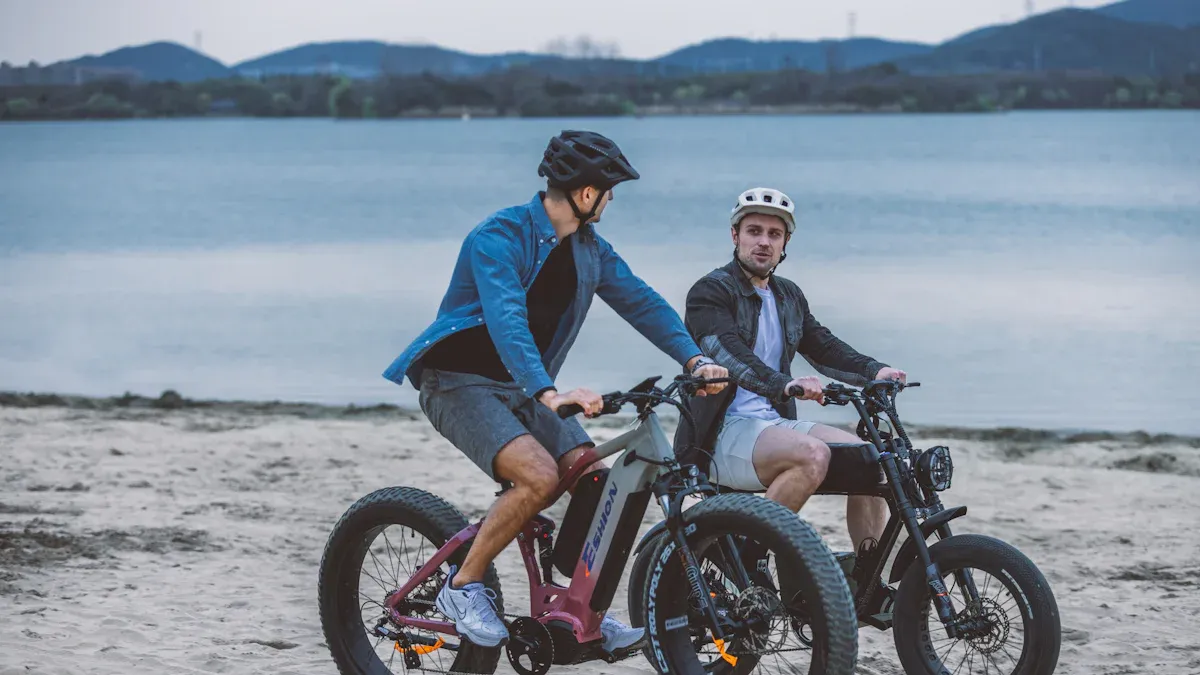
Regular Maintenance Tips
Regular maintenance helps your e-bike last longer and ensures a safe ride. Start by cleaning it. Use a damp cloth and mild cleaning products to remove dirt. Avoid pressure washers, as they can damage sensitive parts such as the motor or battery. Check the brakes regularly. Hydraulic disc brakes occasionally need adjusting to work properly.
Check the tires for damage and make sure they are inflated to the correct pressure. Optimal tire pressure improves safety and saves energy. Lubricate the chain every few weeks with a suitable chain oil. This reduces wear and ensures smooth operation.
Tip: Have your e-bike inspected by a specialist dealer at least once a year. This helps you spot potential problems early.
Battery Care and Storage
The battery is the heart of your e-bike. Taking good care of it extends its lifespan. Charge it at room temperature and avoid extreme temperatures. If you won't be using it for a while, store it at half charge, ideally between 30% and 60%. Remove the battery when cleaning your e-bike and keep it dry.
Here are some important tips from technical manuals:
Never clean the battery, display, or motor with a pressure washer.
Follow your manufacturer's battery guide for specific care instructions.
Note: A well-maintained battery can last for up to 1,000 charge cycles before its performance begins to decline.
Extending Your E-Bike's Lifespan
A well-maintained e-bike stays in good working order for longer. Protect it from the elements by parking it in a garage or under a cover. Avoid prolonged exposure to direct sunlight, as it can damage plastic parts and the battery.
Ride your e-bike regularly, even in winter. This keeps the mechanics moving and helps prevent corrosion. Check that bolts and connections are secure. A loose handlebar or saddle can be dangerous.
Tip: Invest in high-quality replacement parts. They improve reliability and save money in the long run.
In 2025, e-bikes have become central to mobility. Advances in technology and sustainable production make them an attractive choice. Here are the key takeaways:
Key takeaway |
Description |
|---|---|
Pedelec market share |
Market share is increasing thanks to advances in motor efficiency and battery technology. |
E-mobility policies |
Positive effects on the acceptance and uptake of e-bikes. |
Innovation strategies |
Analysis of the current positions and strategies of drive system manufacturers. |
The future of e-bikes looks promising. Transport studies show that they will play a key role in corporate mobility:
Year |
Forecast |
Area |
|---|---|---|
2023 |
Corporate mobility |
With an e-bike, you actively contribute to sustainable mobility. It's not just a means of transportation, but a step toward a greener future.
FAQ
1. How long does an e-bike battery last?
A battery's lifespan depends on how well it is cared for and how it is used. A well-maintained battery lasts for up to 1,000 charge cycles. With regular use, that is about 3 to 5 years. Charge it at room temperature and avoid extreme temperatures.
2. Can I ride an e-bike in the rain?
Yes, e-bikes are suitable for riding in the rain. Their electronic components are waterproof. Clean your e-bike after riding to prevent rust and damage.
3. How far can I ride on an e-bike?
The range depends on the battery and assistance level. With a 500 Wh battery, you can ride about 70 to 120 kilometers. For longer distances, a higher-capacity battery is recommended.
4. Do I need insurance for my e-bike?
No insurance is required for pedelecs with a maximum speed of 25 km/h. S-pedelecs and fast e-bikes need third-party liability insurance. Check with your insurer for the costs and terms.
5. Can I repair an e-bike myself?
You can do minor repairs yourself, such as changing tires or lubricating the chain. For complex problems, such as motor or battery damage, you should consult a specialist dealer.