

The e-bike battery is the heart of an electric bicycle. Its performance determines how far and efficiently you can ride. A battery with a high capacity, measured in watt-hours (Wh), gives you greater range. The voltage, measured in volts (V), directly affects motor power. For example, an e-bike battery with 324 Wh stores more energy than one with 264 Wh, even if its amp-hours are lower.
An e-bike battery’s lifespan is impressive, too. Lithium-ion batteries last about 500 to 1,000 charge cycles. After this time, they often retain more than half of their original capacity. Manufacturers such as Bosch have shown that their batteries can even last for over 1,500 charge cycles. In theory, that adds up to as much as 57,000 kilometers of riding.
Your riding style, the temperature, and tire pressure also affect range. The right e-bike battery can significantly improve your mobility.
Key Takeaways
E-bike battery capacity is measured in watt-hours (Wh). Greater capacity means you can ride farther.
Charge the battery properly to extend its lifespan. Keep the charge level between 20% and 80%. Avoid very hot or cold temperatures.
You can choose between an integrated and a removable battery. Removable batteries are convenient, while integrated batteries look more modern.
Maintain and clean the battery regularly. Carefully wipe away dirt and store it at a suitable temperature to prevent damage.
Dispose of old batteries responsibly and recycle them. Find collection points to help protect the environment.
E-Bike Battery Basics
Voltage, Capacity, and Cell Chemistry
A battery’s voltage, capacity, and cell chemistry determine its performance and efficiency. A higher voltage, such as 48 volts, provides stronger motor assistance. Capacity, measured in watt-hours (Wh), affects range. A 500 Wh battery allows for longer rides than a 300 Wh one. Cell chemistry, usually lithium-ion or lithium polymer, provides high energy density and low weight.
Lithium-ion batteries are especially efficient. They offer a long lifespan and low self-discharge. This technology is also used in portable devices such as smartphones and laptops. The chemical composition of the cells, including the purity of the electrolyte, affects their electrical properties and overall performance.
Impact on Range and Performance
A battery’s specifications directly affect your e-bike’s range and performance. A higher capacity means more energy for longer distances. At the same time, external factors such as headwinds, hills, and total weight affect energy consumption. Your riding style also plays a role. A steady pedaling cadence can improve efficiency.
A battery’s nominal voltage affects current flow and motor power. Modern e-bikes often use 36- or 48-volt batteries to provide optimal assistance. The right combination of voltage and capacity ensures a balanced riding experience.
Different Battery Types and Their Features
E-bike batteries come in various designs. Removable batteries are flexible and easy to charge. They are particularly suitable for longer rides, as you can bring a spare battery. Hidden batteries, on the other hand, look more attractive and offer better theft protection.
Battery Type |
Advantages |
Disadvantages |
|---|---|---|
Removable batteries |
Flexible, easy to charge, spare battery available for longer rides |
Less attractive, potentially easier to steal |
Hidden batteries |
Attractive design, better theft protection, even weight distribution |
Can be more complicated to charge, harder to replace |
Choosing the right battery depends on your needs. A removable battery is convenient for commuters. For city riding, a hidden battery offers greater security and style.
Performance and Choosing the Right E-Bike Battery
Integrated vs. Removable Batteries
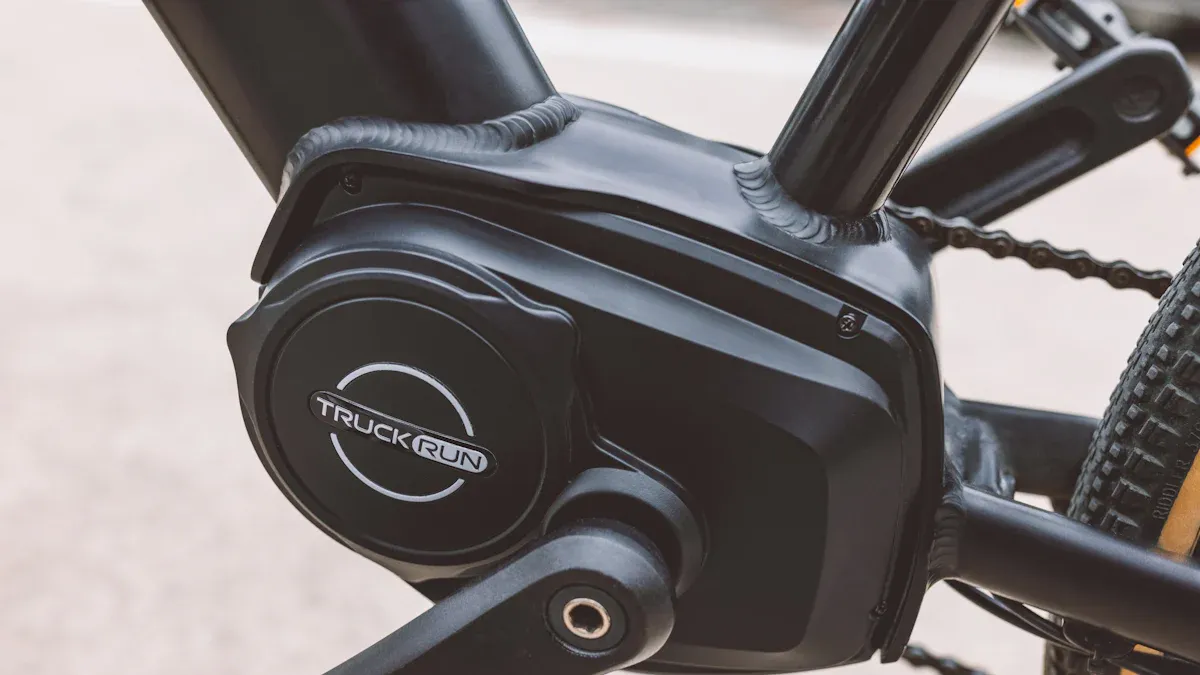
Choosing between an integrated and a removable battery depends on your individual needs. An integrated battery is built into the e-bike’s frame. It offers a sleek design and even weight distribution. These batteries are ideal if you value aesthetics and stability. However, charging can be more complicated, as you have to bring the entire e-bike to the outlet.
A removable battery, on the other hand, is more flexible. You can easily take it off and charge it at any outlet. This is especially convenient if you live in an apartment without direct access to a garage or storage area. You can also bring a spare battery on longer rides to increase your range.
Tip: Consider how often you’ll need to charge your battery and whether you have access to a charging station. This will help you make the right choice.
Understanding Technical Specifications
A battery’s technical specifications can seem confusing at first. But knowing the key terms makes it easier to choose one. A battery’s capacity is measured in watt-hours (Wh). It determines how much energy the battery can store. A 500 Wh battery is suitable for longer distances, while a 300 Wh model is better suited to shorter rides.
Voltage, measured in volts (V), affects motor power. Higher voltages, such as 48 volts, provide more power and are suitable for steep climbs or heavy loads. Lower voltages, such as 36 volts, are more efficient and ideal for flat routes.
Another important factor is charging time. Modern batteries often take 3 to 6 hours to charge fully. Fast chargers can shorten this time, but they are not always compatible with every battery.
Note: Make sure the battery is compatible with your e-bike model. Manufacturers such as Bosch and Shimano often offer batteries specifically designed for their systems.
The Right Battery for Commuting, Touring, and City Riding
Your riding style and typical routes influence your choice of battery. For commuters who ride to work every day, a removable battery with high capacity is ideal. It lets you cover longer distances and conveniently charge the battery at the office.
If you enjoy going on tours, you’ll need a battery with a long range. A model with at least 500 Wh is recommended. You can also bring a spare battery to make sure you don’t run out of power along the way.
For city riding, a smaller 300 to 400 Wh battery is often enough. These models are lighter and easier to handle. A hidden battery has the advantage of being less conspicuous and better protected against theft.
Tip: Plan your routes in advance and take your battery’s range into account. This will help you avoid unpleasant surprises.
E-Bike Battery Maintenance and Care
Optimal Charging Habits
Proper charging habits are essential to maximizing your battery’s lifespan. Ideally, charge the battery at room temperature. Extreme temperatures, whether hot or cold, can affect performance. Avoid completely discharging the battery or keeping it at 100% for extended periods. A charge level between 20% and 80% is optimal.
Use the charger recommended by the manufacturer. Fast chargers can save time, but they put more strain on the battery. Gentle charging extends its lifespan. Your riding style also affects battery use. Maintaining a steady speed and adjusting the assistance level to the route help save energy.
Tip: Charge the battery after each ride if you plan to use it again the next day. This keeps your e-bike ready to go.
Cleaning and Daily Care
Regular cleaning protects your battery from damage. Remove the battery before cleaning the e-bike. Use a soft cloth, water, and a mild cleaning product to remove dirt and dust. Avoid pressure washers, as water could get into the electronics.
Don’t leave your e-bike unprotected in bad weather. Moisture and extreme temperatures can damage the electronics. A Wertgarantie study shows that regular care and inspections significantly extend a battery’s lifespan.
Note: Check the battery contacts regularly. Carefully clean them as needed to ensure optimal power transfer.
Storage During Extended Breaks
If you won’t be using your e-bike for an extended period, you should store the battery properly. Remove the battery and charge it to about 50%. Store it in a dry place at a temperature between 10° and 15°C. Avoid storing the battery for weeks at a charge level below 20% or above 80%.
Improper storage can permanently affect your battery’s performance. Proper storage will keep your e-bike battery ready to use, even after a long break.
Tip: Check the battery’s charge level every few months. Top it up as needed to maintain optimal capacity.
Common Problems and Their Solutions
Even the best e-bike battery can occasionally cause problems. With the right knowledge, however, you can solve many of these issues yourself. Here are the most common problems and how to fix them:
1. The battery no longer charges properly
A battery that won’t charge may have several causes. It’s often due to a faulty charger or dirty contacts.
Solution:
First, check the charger. Plug it into another outlet to make sure it works.
Carefully clean the battery and charger contacts with a dry cloth.
If possible, test the battery with another compatible charger.
Tip: Store your charger in a dry place to prevent moisture damage.
2. The battery runs out too quickly
If your battery runs out faster than usual, it may be due to improper use or a technical problem.
Solution:
Lower your e-bike’s assistance level to save energy.
Check the tire pressure. Low pressure increases energy consumption.
Fully charge the battery and see whether the range improves.
Note: An old battery loses capacity over time. If this happens, consider replacing it.
3. The battery gets too hot or too cold
Extreme temperatures can affect your battery’s performance. An overheated battery can even become dangerous.
Solution:
Avoid storing the battery in direct sunlight or near heat sources.
Charge the battery at room temperature (between 10° and 25°C).
In winter, protect the battery from the cold with a specially designed cover.
Warning: Never charge an overheated battery right away. Let it cool down first.
4. The battery’s charge indicator doesn’t work
Sometimes the battery indicator doesn’t work correctly. This may be due to a software bug or an electronics problem.
Solution:
Turn the battery off and back on. A restart may help.
Update your e-bike’s software, if possible.
Contact the manufacturer or a specialist dealer if the problem persists.
5. Mechanical damage to the battery
A fall or accident can damage the battery. Visible cracks or deformation are a serious problem.
Solution:
Stop using the battery if it is damaged. It could be dangerous.
Take the battery to a specialist dealer or repair shop. They can check whether it can be repaired.
Important: Never try to open or repair a damaged battery yourself.
6. The battery loses capacity after extended storage
If you don’t use your e-bike for a long time, the battery may lose performance.
Solution:
Charge the battery to about 50% before storing it.
Store it in a cool, dry place.
Check the charge level every few months and top it up as needed.
Tip: Avoid storing the battery fully discharged. This can permanently damage the cells.
7. The battery no longer fits properly in its mount
Over time, the battery contacts or mount can wear out.
Solution:
Carefully clean the mount and contacts.
Check whether the mount is bent and carefully straighten it if necessary.
Contact a specialist dealer if the problem persists.
With these tips, you can solve many problems yourself and extend your e-bike battery’s lifespan. Regular care and careful handling are key to a reliable battery.
Sustainability and the Lifespan of E-Bike Batteries
Extending Battery Life Through Proper Use
An e-bike battery’s lifespan depends largely on how you use it. A Stanford-SLAC study shows that real-world riding conditions, such as frequent acceleration and braking, put less strain on batteries than laboratory tests. This means that stop-and-go riding can extend battery life.
A longer battery lifespan reduces the environmental impact per kilometer ridden. You can extend its life further by using the battery in stationary energy storage applications after it is no longer used in your e-bike.
-
Tips for extending battery life:
Avoid extreme temperatures.
Do not fully charge or completely discharge the battery.
Use the battery regularly to keep the cells active.
Environmentally Friendly Disposal and Recycling
Disposing of e-bike batteries properly is an important step toward sustainability. Lithium-ion batteries contain valuable raw materials such as cobalt and nickel, which can be recycled. Proper recycling prevents harmful substances from entering the environment.
Many manufacturers offer take-back programs for used batteries. You can drop off your old battery at a specialist retailer or collection point. These batteries are dismantled, and the raw materials are reused.
Tip: Check with your e-bike manufacturer about recycling programs. This is a way to actively help protect the environment.
Costs and Long-Term Investments
A high-quality e-bike battery is a long-term investment. The purchase price may seem high, but its service life and the savings on operating costs make it an economically attractive option.
A life cycle analysis shows that electric vehicles such as e-bikes have a better carbon footprint than diesel or gasoline vehicles. The following table illustrates the benefits:
Type of propulsion |
Years of operation until benefit |
|
|---|---|---|
Electric car |
127.500 |
8,5 |
Diesel |
219.000 |
14,6 |
The table shows that electric vehicles achieve an environmental benefit sooner. E-bikes, with their lower energy consumption, are even more efficient.
Note: Invest in a high-quality battery. It will last longer and save you money in the long run.
Choosing the right e-bike battery affects your riding performance and range. Regular maintenance extends its service life and saves you money in the long term. Charge the battery at room temperature and clean it regularly to prevent damage.
Tip: Plan your routes and keep an eye on your battery’s range. This helps you stay mobile and avoid surprises.
A high-quality battery is a sustainable investment. It reduces your environmental footprint and provides reliable performance for many years.
FAQ
How long does an e-bike battery last?
An e-bike battery lasts approximately 500 to 1,000 charge cycles. With proper care, you can maintain its capacity for years. Manufacturers such as Bosch often guarantee a service life of more than 1,500 charge cycles.
Can I use my battery in the rain?
Yes, e-bike batteries are weather-resistant. You can use them in the rain as long as the contacts stay dry. However, avoid immersing the battery in water or leaving it unprotected in heavy rain.
How can I tell if my battery needs replacing?
A battery that drains quickly or no longer provides adequate range should be replaced. Check its capacity with a diagnostic device or contact a specialist retailer to be sure.
Is it worth having a spare battery?
A spare battery is worthwhile if you are planning long rides or have no way to charge while on the go. It gives you more flexibility and increases your e-bike’s range.
Can I repair my battery myself?
You should not attempt to repair the battery yourself. Damaged batteries can be dangerous. Contact a specialist retailer or the manufacturer for professional help.