
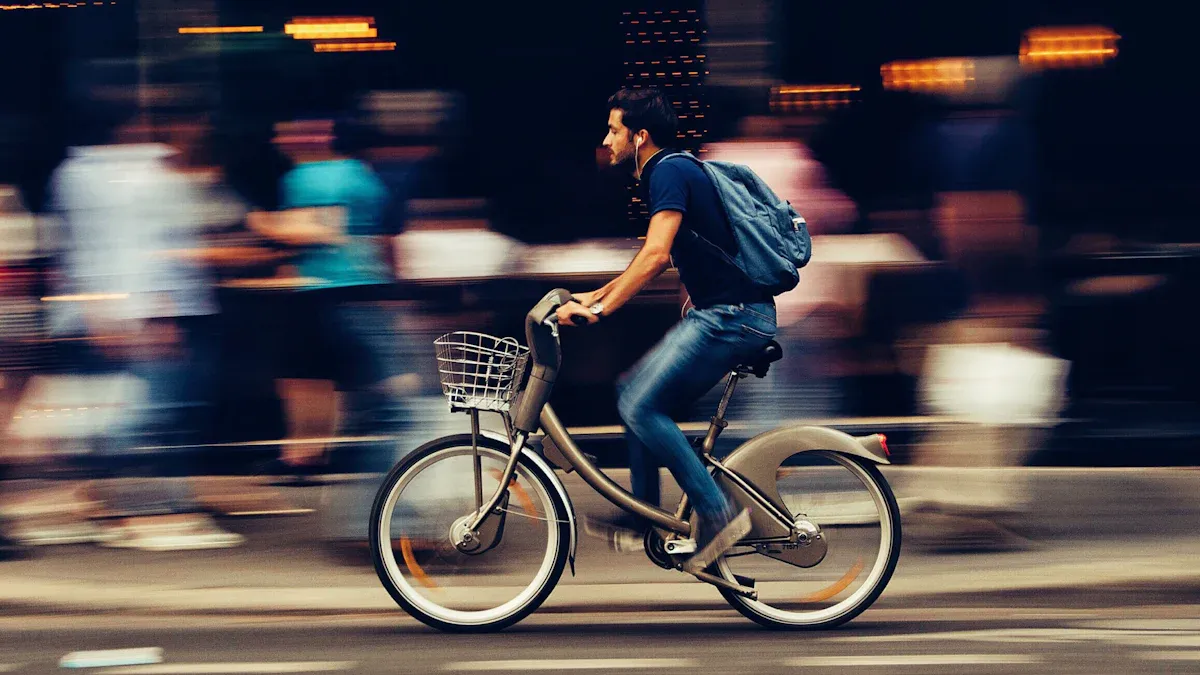
A commuter bike helps you get around the city quickly and flexibly. Urban cycling means using a bicycle for daily trips, such as going to work or school. In major German cities, the number of people choosing to commute by bike is on the rise.
Country |
|
|---|---|
Germany |
10% |
Netherlands |
25% |
As you can see, the bicycle is more than just a means of transport. It represents sustainability and a modern lifestyle. Many people experience the bicycle as part of their identity. New trends like fixies or SUV e-bikes are shaping the scene.
Bicycle culture is increasingly perceived as a lifestyle and a means of distinction.
Subcultures like the bicycle courier scene have become part of pop culture.
There is an aestheticization and stylization of the bicycle in various scenes.
You are surely asking yourself many questions: How do you choose the right bike? How do you protect yourself and your bike? What equipment do you need? If you explore these topics, you will discover many advantages of urban cycling.
Key takeaways
A commuter bike offers flexibility and sustainability for everyday urban life. It is an eco-friendly alternative to the car.
When buying, look for a lightweight frame and reliable brakes. These features increase comfort and safety while riding.
Choose the right tires for your riding style. Wider tires offer more grip and comfort, while narrower tires roll faster.
Good lighting is crucial for safety in traffic. Pay attention to legal requirements and invest in high-quality lights.
Regular maintenance and care extend the life of your bike. Clean the chain and check wear parts regularly.
What makes a good commuter bike?

A good commuter bike reliably accompanies you through everyday life. You benefit from clever technical features that provide comfort and safety. Below, you will find out what you should pay attention to.
Frame & weight
The frame is the heart of your bike. It is best to choose a stable and lightweight frame. Aluminum is particularly popular because it is lightweight yet remains robust. A lightweight frame helps you carry your commuter bike easily, for example into your apartment or office. The geometry of the frame ensures a comfortable riding position. You sit upright and have a good overview of traffic.
Tip: A step-through frame makes mounting and dismounting easier, especially if you stop at traffic lights often.
Gears & brakes
You decide on a gear system that suits your riding style. An internal gear hub is low-maintenance and suitable for city traffic. Derailleur gears offer more speeds and are ideal if you also ride longer distances or inclines. Brakes play an important role in your safety. Disc brakes function reliably in any weather. Rim brakes are lighter and easy to maintain.
Internal gear hub: Low maintenance, ideal for short distances.
Derailleur gears: Many gears, good for longer rides.
Disc brakes: Strong braking power, even in rain.
Rim brakes: Low weight, simple maintenance.
Tires & comfort
The tires influence how comfortably and safely you travel. It is best to choose all-season tires for your commuter bike. They offer you grip on wet and dry roads. The tread ensures that you ride safely in any weather.
All-season tires are ideal for commuter bikes, as they offer a compromise between winter and summer tires.
They have a tread that provides sufficient grip on both wet and dry roads.
These tires are particularly popular for city use and commuting.
Wider tires give you more comfort and safety. They offer a larger contact patch and more grip. Narrow tires roll faster but are less stable on uneven paths. The tire tread influences traction. Smooth tires are suitable for asphalt, while treaded tires offer more hold off-road. You should adapt your tire choice to your riding style and road conditions.
Wider tires offer a larger contact patch, grip, and comfort, which increases safety in urban areas.
Narrow tires roll faster and easier but are less stable on uneven surfaces.
The tire tread influences traction: smooth tires are better for asphalt, while treaded tires offer more grip off-road.
The choice of tire tread should be adapted to the riding style and road conditions to ensure safety and riding comfort.
Lighting & safety
You need good lighting to be seen in traffic. In Germany, there are clear regulations for the lighting of your commuter bike. The following table shows you what is mandatory:
Lighting system |
Requirement |
|---|---|
White headlight |
Mandatory at the front |
Red taillight |
Mandatory at the rear |
Reflectors |
Passive lighting required |
Yellow pedal reflectors |
Mandatory |
Reflective strips on wheels |
Mandatory or alternatives allowed |
You increase your safety with high-quality bicycle lights. Tests show that good lights make you more visible. Studies confirm that better lighting significantly lowers the accident rate. Doubling road surface luminance reduces nighttime accidents by 28 percent. In accidents involving cyclists and pedestrians, the number even drops by 68 percent. In the Netherlands, better lighting led to 60 percent fewer fatal accidents.
Note: You protect yourself and others when you ensure your lighting is working. That way, you get through the city safely.
A commuter bike impresses with its suitability for daily use and safety. You benefit from a lightweight frame, reliable brakes, comfortable tires, and good lighting. This makes every ride a pleasant experience.
Comparison of bicycle types
You will find many different types of bicycles for everyday city life. Each type has its own advantages and suits different needs. The following table shows you the most important differences in equipment and comfort:
Bicycle type |
Equipment and comfort |
|---|---|
Urban bike |
Designed for city traffic, low-maintenance internal gear hub, stable frame, good mix of comfort and dynamics. |
Road bike |
More suitable for longer distances on well-maintained bike paths, narrow tires, not ideal for uneven roads. |
E-bike |
Motorized support, comfortable for longer distances, greater range, but expensive and heavy. |
City bike |
Fully equipped for city traffic, comfortable sitting position, good for longer distances on flat roads. |
City bike & trekking bike
City bikes and trekking bikes are among the most popular commuter bikes. You choose a city bike if you value comfort and visibility. The upright sitting position gives you a good overview in traffic. Trekking bikes offer you more sportiness and are suitable for longer distances or tours with luggage. The following table will help you compare:
Category |
City bike |
Trekking bike |
|---|---|---|
Sitting position |
Upright for optimal view |
Slightly leaned forward, sporty |
Gears |
3–7-speed internal hub, robust |
Many gears for steep climbs |
Brakes |
Disc brakes for stop-and-go |
Powerful disc brakes |
Tires |
Narrow (28–35 mm), ideal for asphalt |
Wider (32–40 mm), more comfort |
Luggage rack |
Simple system for everyday use |
More mounting points for tours |
Purpose |
Daily transport |
Longer distances, more luggage |
E-bike & SUV e-bike
E-bikes are changing commuting in the city. You get support from a motor and cover longer distances without much effort. Many commuters even replace their car with an e-bike, especially for distances between 5 and 30 kilometers. SUV e-bikes offer you even more versatility. You are equipped for almost any situation: everyday life, travel, shopping, or commuting.
Advantages of e-bikes and SUV e-bikes:
No parking search 🚲
No traffic jams
Fresh air and exercise
Lower costs than car or public transport
Sustainability in everyday life
Folding bike
You choose a folding bike if you want to remain flexible. The folding bike fits in buses, trains, or the office. It is particularly suitable for short distances and can be stowed away easily. Many Berliners use folding bikes because they often switch between different modes of transport.
Fixie & subcultures
Fixie bikes stand for a special lifestyle. In cities like Berlin, you see many people riding fixies. These bikes have only one gear and often no freewheel. You feel the direct connection to the road. Fixie riders shape the urban bicycle culture. Subcultures like the bicycle courier scene make cycling part of pop culture. The bicycle becomes a status symbol and an expression of individuality. In Berlin, it is clear how diverse and creative bicycle culture can be.
Buying guide for commuter bikes
Choosing the right commuter bike depends on many factors. You should take your time before buying and compare different models. This way, you will find the bike that best suits your daily routine.
Size & ergonomics
The right size is crucial for your riding comfort. You sit relaxed and can control the bike safely if the frame height and handlebar position match your body size. Many retailers offer size charts. You measure your inseam and compare it with the manufacturer's information. A frame that is too small feels wobbly. A frame that is too large makes mounting and dismounting difficult.
Tip: Try out different frame shapes. A low step-through makes stopping in city traffic easier.
Also pay attention to ergonomics. The saddle should match your sit-bone distance. The handlebar grips should feel comfortable in your hands. This way, you avoid pain on longer rides.
Comfort & equipment
Comfort plays a major role when you are on the bike every day. You benefit from good suspension, wide tires, and a comfortable saddle. Many commuter bikes offer practical extras like luggage racks, fenders, and lighting systems. This equipment makes cycling in any weather more pleasant.
The most important criteria for choosing a commuter bike are:
Quality of the folding mechanism (for folding bikes)
Weight of the bike
Equipment such as lights, fenders, and luggage racks
Type of bike (e.g., folding bike, e-bike, trekking bike)
Road conditions in your daily routine
Transport options, for example on buses or trains
Storage options at the workplace
Personal riding comfort
Consider what equipment you really need. Do you often ride in the rain? Then fenders are important. Do you regularly transport bags or groceries? A sturdy luggage rack will help you with that.
Price-performance ratio
When buying a commuter bike, the price-performance ratio plays a major role. You will find affordable models that are sufficient for short distances. High-quality bikes cost more but often offer longer-lasting components and more comfort. Look for robust and reliable components. A simply built bike with solid parts lasts longer and causes fewer problems.
Price range |
Characteristics |
Suitable for whom? |
|---|
Entry-level
Basic features, simple, affordable
Occasional riders
Mid-range
Better components, more comfort
Daily commuters
Premium
High-quality technology, very durable, versatile
Frequent riders, long distances
Note: A cheap bike can become more expensive in the long run if you frequently need spare parts. It is better to invest in quality if you use the bike daily.
Test Ride & Consultation
A test ride helps you get the right feel for the bike. You will immediately sense whether you like the seating position and whether you can steer the bike safely. Many specialist dealers offer the opportunity to try out various models. Take this chance to experience differences in comfort and handling.
During a consultation at a specialist shop, you will receive valuable tips. Experts pay attention to robustness and durability. They will recommend a bike that is simply constructed and features reliable components. You will learn how versatile the bike should be so that you can travel safely in any weather and with different types of luggage.
Try out different models.
Pay attention to seating position and ride feel.
Get advice on equipment and maintenance.
Tip: Ask about maintenance offers and services. A good dealer will continue to support you after the purchase.
With good advice and a test ride, you will find the commuter bike that perfectly fits your everyday life.
Essential Accessories

Helmet & Clothing
You can best protect your head with a well-fitting bicycle helmet. A helmet can prevent serious head injuries. Many models offer ventilation and are lightweight. You will feel safer in traffic with one. For clothing, it is best to choose reflective or bright colors. This makes you more visible. Special cycling jackets keep you dry and warm. In summer, breathable fabrics help prevent sweating. Gloves protect your hands in the event of a fall and offer a better grip on the handlebars.
Tip: Wear rain pants and overshoes when it rains. This way you stay dry even in bad weather.
Lock & Anti-theft Protection
Secure your bike with a sturdy lock. A U-lock offers high protection against theft. Many commuters also use a second lock for the wheels. Always lock your bike to fixed objects. There are many thieves in the city. A good lock deters them. Pay attention to weight and handling. A lock that is too heavy is impractical for everyday use.
U-lock: High security, difficult to break
Folding lock: Flexible, easy to transport
Chain lock: Versatile, but often heavier
Luggage Rack & Bags
The best way to transport your belongings is with a sturdy luggage rack or a suitable bag. A bicycle basket with an open design gives you quick access to your essentials. The robust construction ensures optimal load capacity and shape retention. You benefit from sufficient space for various items. Mounting it is quick and requires no tools. Many systems fit various bike models.
Advantage |
Description |
|---|---|
Open design allows quick access to daily essentials. |
|
Durable construction |
Robust build ensures optimal load capacity and shape retention. |
High-quality storage |
Offers enough space for various items, perfect for commuter needs. |
Time-saving installation |
Quick mounting on the handlebars without additional tools. |
Universal fit |
Developed for various models, meets all storage requirements for commuters. |
Note: Choose a bag with reflective elements. This will make you more visible in the dark.
Mudguards & Lighting
Stay clean and visible with good mudguards and reliable lighting. Mudguards prevent water and dirt from splashing onto your clothing. For the city, fixed or removable models are suitable. Regarding lighting, you should look for bright, certified lamps. IKZI bicycle lighting increases your visibility on lit paths. For unlit routes, you need lamps that illuminate the road well. The rear light must glow red and must not blink.
Solution |
Description |
|---|---|
IKZI bicycle lighting |
Increases visibility on urban paths. |
Strong front light |
Ensures good visibility on unlit paths. |
Rear light |
Must glow red and shine straight back without blinking. |
Tip: Check regularly to ensure your lights are working. This is the only way to stay safe on the road.
Cycling Safely in the City
Traffic Rules & Behavior
You must follow clear rules in city traffic. Always stop at red lights. Ride with foresight so you recognize dangers early. Many accidents happen especially at intersections and traffic light crossings. The police regularly check whether cyclists are following traffic rules. This keeps road traffic safe for everyone.
Stop at red lights.
Ride with foresight.
Watch out at intersections and traffic lights.
Tip: Learn the most important traffic signs for cyclists. This will allow you to move safely in traffic.
Visibility & Safety
You will be seen better if you wear bright or reflective clothing. Good lighting on the bike is mandatory. Reflectors on pedals and wheels increase your visibility. Many accidents happen because drivers see cyclists too late. Check regularly to ensure your lights are functioning.
Measure |
Effect |
|---|---|
Bright clothing |
Better visibility |
Reflectors |
Increase awareness |
Working lights |
Safety in the dark |
Route Planning
It is best to plan your route in advance. Choose paths with bike lanes or little traffic. Many cities offer special cycling maps or apps. These show you safe and fast routes. You save time and ride more relaxed if you avoid traffic jams and roadworks.
Tip: Test different routes to work. This way you will find the best path for your commuter bike.
Handling Traffic Situations
Stay calm when traffic becomes hectic. Keep a distance from parked cars so that a suddenly opening door does not hit you. Signal your intended direction with hand gestures. This lets drivers and other cyclists know where you are going. In narrow sections, it is better to wait for a moment instead of pushing through.
Keep a distance from parked cars.
Use hand signals.
Wait in narrow areas.
Remember: With consideration and clear signals, you will ride more safely through the city.
Maintenance & Protection of the Commuter Bike
Cleaning & Maintenance
Keep your commuter bike in good shape with regular cleaning. Dirt and dust quickly settle on the frame, chain, and gears. Remove coarse dirt with a damp cloth. Use a special brush and chain oil for the chain. This keeps it smooth and prevents rusting. A clean chain runs quieter and lasts longer. You benefit from better performance and more safety.
Regular maintenance of the chain extends the life of your bike.
A well-maintained chain improves overall performance.
You minimize the risk of chain breakage and increase reliability.
Tip: Oil the chain after every wash and check it for wear.
Checking Wear Parts
Check the most important wear parts regularly. Brake pads wear down and lose braking power. Tires show cracks or become bald. Check that the gears shift cleanly and make no noise. Replace defective parts in good time. This keeps you safe on the road.
Wear part |
Inspection frequency |
Signs for replacement |
|---|---|---|
Chain |
Every 2 months |
Rust, elongation, noise |
Brake pads |
Monthly |
Low profile, squeaking |
Tires |
Monthly |
Cracks, low profile |
Storage Options
Find a safe place for your bike. Covered bike racks protect against rain and sun. In many cities, you will find special bike lockers or collective garages. At home, it is best to keep the bike in the basement or garage. A dry place prevents rust and extends its service life.
Anti-theft Protection
Protect your commuter bike with a high-quality lock. A U-lock offers a lot of security. Always lock the bike to fixed objects. In busy areas, your bike is better protected. Many cities offer bicycle registration. This makes it easier to find your bike again if it is stolen.
Remember: A good lock and a secure parking space are the best protection against theft.
You have seen how versatile and practical a commuter bike is. You can use it to travel through the city quickly, safely, and in an environmentally friendly way. Try urban cycling and become part of a growing cycling culture. You are actively helping to shape the future of the city. Maintain your bike regularly and commit to sustainable mobility. This way, you benefit from more freedom and exercise every day.
FAQ
How do I find the right frame size for my commuter bike?
Measure your inseam and compare it with a sizing chart from the manufacturer. A bike shop can help you with the fitting. Try out different models. This ensures you sit comfortably and safely.
Do I have to maintain my bike differently in winter?
In winter, you should clean your bike more often. Road salt and moisture attack metal parts. Oil the chain regularly. Check the brakes and tires. A dry storage space protects against rust.
Which insurance protects my commuter bike?
Bicycle insurance replaces your bike in the event of theft. Many household insurance policies cover bicycle theft. Check the conditions. Some insurers offer extras like breakdown assistance.
Am I allowed to take my commuter bike on buses and trains?
Many transport companies allow bicycles on buses and trains. You often need an extra ticket. Folding bikes are usually considered luggage. Inform yourself about the rules in your city beforehand.
How can I protect my commuter bike from theft?
Use a sturdy lock and lock your bike to fixed objects. Choose busy places. Register your bicycle. A second lock increases security.