
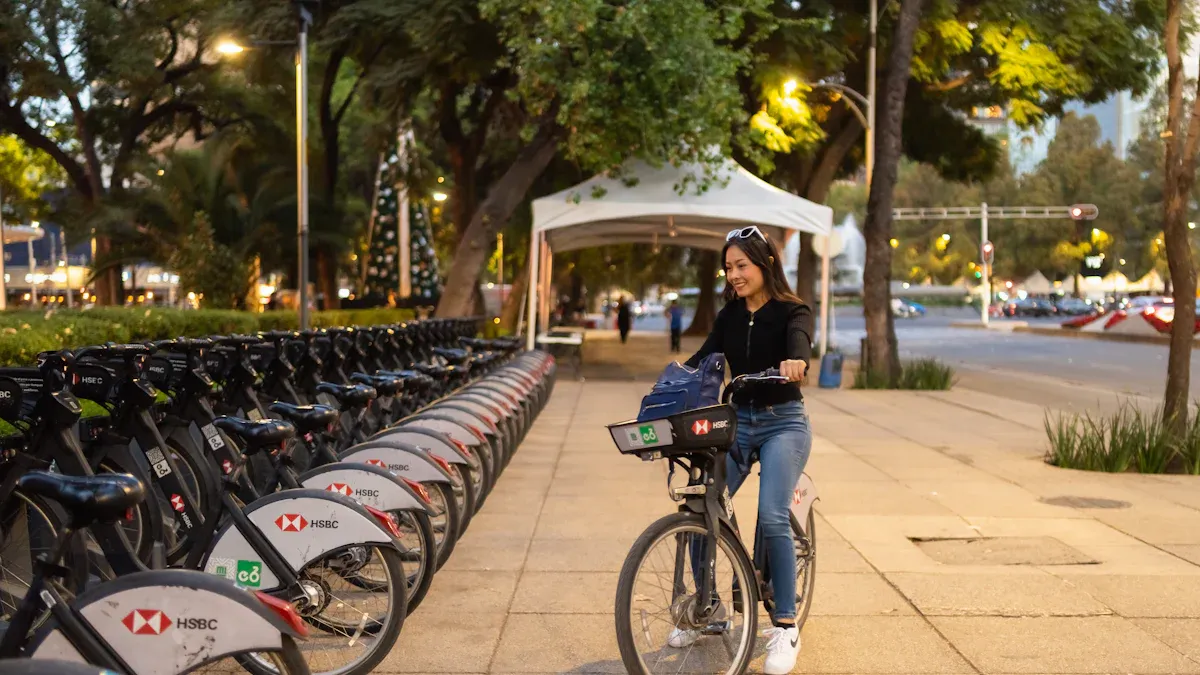
A commuter bike offers you specific advantages in city traffic. You will often find mudguards, lights, and luggage racks on this type of bike. A regular bicycle usually does not have this equipment. Your daily routes and personal requirements will determine which bike suits you better.
Reflect on your needs: Consider how often you ride, what you are transporting, and what weather you expect.
Key Takeaways
A commuter bike offers special equipment such as mudguards, lights, and luggage racks, making it ideal for daily commuting.
The seating position on a commuter bike is slightly leaned forward, which increases comfort on longer distances and prevents back pain.
Regular maintenance is important. Check the tire pressure and oil the chain to extend the lifespan of your bike.
Safety is crucial. Use a sturdy lock and park your bike in well-lit areas to prevent theft.
Consider your daily routes and needs. Choose a bike that suits your riding style and brings you joy.
Types of Bikes for Commuters
Commuter Bike
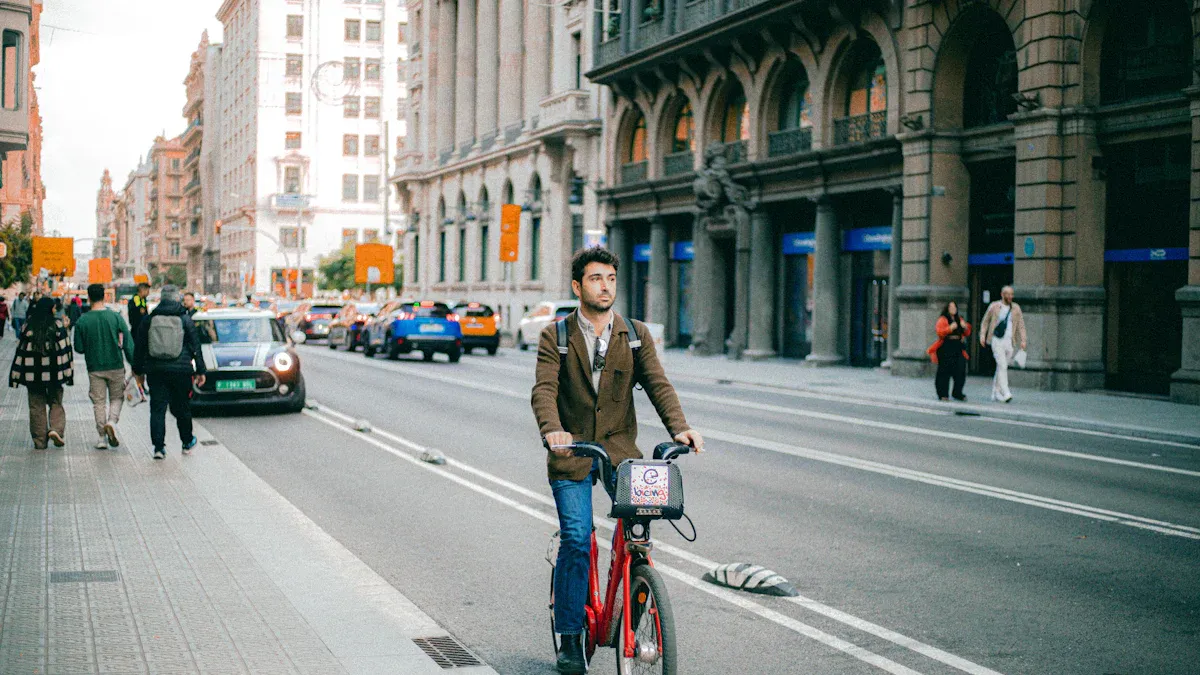
Are you looking for a bike that gets you through the city safely and comfortably? A commuter bike offers you many benefits. The tires are narrower than those on gravel bikes and usually measure between 30 and 38 millimeters. You can easily integrate mudguards and luggage racks. The bike is agile and its handling is reminiscent of a road bike. Many models feature robust equipment for everyday use, such as low-maintenance disc brakes and bright LED headlights with a hub dynamo. Wider tires help you handle curbs and potholes. You benefit from low air pressure, which reduces the susceptibility to punctures. This bike is particularly suitable for the daily commute to work, even in bad weather.
Urban Bike
Urban bikes are very popular in German cities. Many commuters use city bikes or high-quality classic city bikes, especially for distances under 5 kilometers. These bikes offer you an upright seating position and simple operation. You will often find complete everyday equipment with lights, mudguards, and a luggage rack. Urban bikes are ideal if you ride short distances and value comfort.
Road Bike & Gravel Bike
Features |
Suitability for Urban Commuting |
|
|---|---|---|
Road bike |
Lightweight frame, narrower tires, optimized for speed on roads |
Less suitable for uneven paths |
Gravel bike |
Robust, wider tires, stable frame, comfortable on various surfaces |
Better suited for different surfaces and urban use |
With a road bike, you ride fast on smooth roads. For cobblestones or gravel paths, a gravel bike is better suited. It offers you more comfort and safety on changing surfaces.
E-Bike
Mid-range electric city bikes are gaining more and more fans. You get assistance while pedaling and reach your destination relaxed, even if you have to manage longer distances or inclines. An e-bike is particularly suitable if you commute regularly or transport heavy bags.
Folding Bike
You can easily fold up a folding bike and take it anywhere.
It fits in buses and trains and is ideal for switching between cycling and public transport.
The bike is versatile: You use it for the way to work, for shopping, or in your leisure time.
Folding bikes are easy to store and help you reduce emissions.
Keep in mind, however, that folding bikes are often more expensive than standard bicycles.
Crossbike
Pro/Con |
Description |
|---|---|
Pro |
Combines features of road bikes and mountain bikes, making it versatile. |
Pro |
Sporty seating position, suitable for paved and unpaved paths. |
Con |
Lack of equipment such as lights and mudguards in the 'naked' version. |
With a crossbike, you are flexible. You ride fast on asphalt and safely on dirt roads. For everyday use, however, you often still need accessories like lights and mudguards.
Commuter Bike vs. Regular Bicycle
Equipment & Accessories
You can recognize a commuter bike immediately by its extensive equipment. Mudguards, luggage racks, and permanently installed lighting are usually part of the basic configuration. These extras protect you from dirt and wetness. You transport your bag securely on the luggage rack. Many commuter bikes have a hub dynamo that operates the light independently of the battery. A regular bicycle often offers fewer accessories. You have to retrofit mudguards or lights. This costs time and money. For the daily commute to work, a commuter bike is often more practical.
Seating Position & Comfort
On a commuter bike, you usually sit slightly leaned forward. This position relieves your back on longer distances. The handlebar shape ensures control in city traffic. Wider tires dampen shocks from curbs or potholes. A regular bicycle often offers an upright seating position. This feels comfortable when riding short distances. For longer rides or fast commuting, a commuter bike offers more comfort and efficiency.
Maintenance & Durability
Many commuter bikes are built to be low-maintenance. You will often find enclosed gear systems and robust brakes. This technology keeps dirt and water away. You have to visit the workshop less often. A regular bicycle needs more care, especially if you use it daily. The open chain gets dirty faster. The lifespan of a commuter bike is often higher if you maintain it regularly.
Weight & Transport
A commuter bike usually weighs a bit more than a simple city bike. The additional equipment adds weight. Nevertheless, the bike remains manageable. You can carry it into the basement or place it in the bike storage. A regular bicycle is often lighter but less robust. If you want to take your bike with you on the bus or train often, you should pay attention to the weight. For transport in everyday life, however, stability is what counts most.
Handling & Safety
With a commuter bike, you ride through the city safely. The tires offer good grip, even in the rain. The brakes react quickly. Reflectors and lighting systems increase your visibility. You feel safe, even in heavy traffic. A regular bicycle can have disadvantages in wet or dark conditions if the equipment is missing. Safety is especially important for urban commuting.
Everyday Suitability
Many users rate the everyday suitability of a commuter bike very positively. In surveys, they mention the following advantages:
You do something for your health.
You have little maintenance effort.
You have hardly any running costs.
A commuter bike adapts to your everyday life. You ride in any weather and transport everything you need. A regular bicycle is more suitable for occasional rides. For the daily commute, a commuter bike offers more advantages.
Selection Criteria for the Right Bike
Route Length & Riding Profile
The length of your daily route plays a major role in choosing a bike. In German cities, the average commuting distance is 6.2 kilometers. Many commuters ride even less than 25 kilometers per stretch. For short distances, a city bike or urban bike is suitable. If you ride longer distances, you benefit from an e-bike or a commuter bike. These bikes offer you more comfort and support.
Bike Type |
Suitability for Commuters |
Notes |
|---|---|---|
City bike |
Good |
Upright seating position, ideal for short distances |
E-bike |
Very good |
Perfect up to 25 km, supports on longer distances |
Trekking bike |
Medium |
Versatile, less comfortable in city traffic |
Terrain & Weather
Pay attention to the roads and paths you use daily. Well-paved paths make riding easier. For unpaved or bumpy roads, a bike with wider tires, such as a gravel bike or crossbike, is recommended. Weather also plays an important role. In rain or snow, you need good brakes and grippy tires. Visibility is especially important in bad weather.
Transport on Public Transit
Do you often have to take your bike with you on the bus or train? Then choose a lightweight and compact model. Folding bikes are easy to fold up and transport. Lightweight commuter bikes are also suitable if you have to carry them regularly.
Luggage & Everyday Needs
Many commuters transport 6 to 8 kilograms of luggage daily. This includes food, clothing, and often a laptop. A bike with a sturdy luggage rack and matching bags helps you to stow everything securely.
Budget & Price-Performance
Think about how much money you want to invest. A good bike costs more but lasts longer and offers more comfort. Compare equipment and quality before you decide.
Personal Preferences
Your own wishes influence the choice most strongly. Consider how often you ride, which riding style you prefer, and which equipment is important to you. Choose a bike that fits your everyday life and brings you joy.
Tips for Daily Commuting

Practical Use
You want to make your commute to work efficient. Experienced commuters recommend that you pay attention to the weight of your bike. A lightweight city e-bike is easier to carry, especially in the city. Adjust the saddle and handlebar height to your body size. This way, you sit comfortably and ride in a more relaxed manner. Pay attention to reliable lighting. It makes you visible in road traffic. Always wear a helmet to protect your head.
Tip: Before every ride, check if your light works and the battery is charged.
Care & Maintenance
Regular maintenance extends the lifespan of your bike. Experts advise you to follow these steps:
Check the suspension, if available.
Oil the chain regularly.
Carry out inspections to keep all parts in good condition.
With these measures, your bike will remain reliable and safe.
Safety & Theft Protection
Safety begins with good equipment. Use a sturdy bicycle lock to secure your bike. Park your bike in well-lit areas. Avoid dark corners or places that are not frequently visited. A helmet protects you in case of accidents. Reflectors and bright clothing increase your visibility in road traffic.
Note: The more conspicuous you are, the safer you are on the road.
Useful Accessories
For everyday life, you need practical accessories. Experts recommend:
A luggage rack so that you can transport bags comfortably.
A kickstand for easy parking.
Mudguards to protect yourself from dirt and water.
A good lighting set for dark days.
A secure bicycle lock.
A puncture kit with a mini tool, tire levers, spare tube, and air pump.
With this equipment, you are well-prepared for urban commuting.
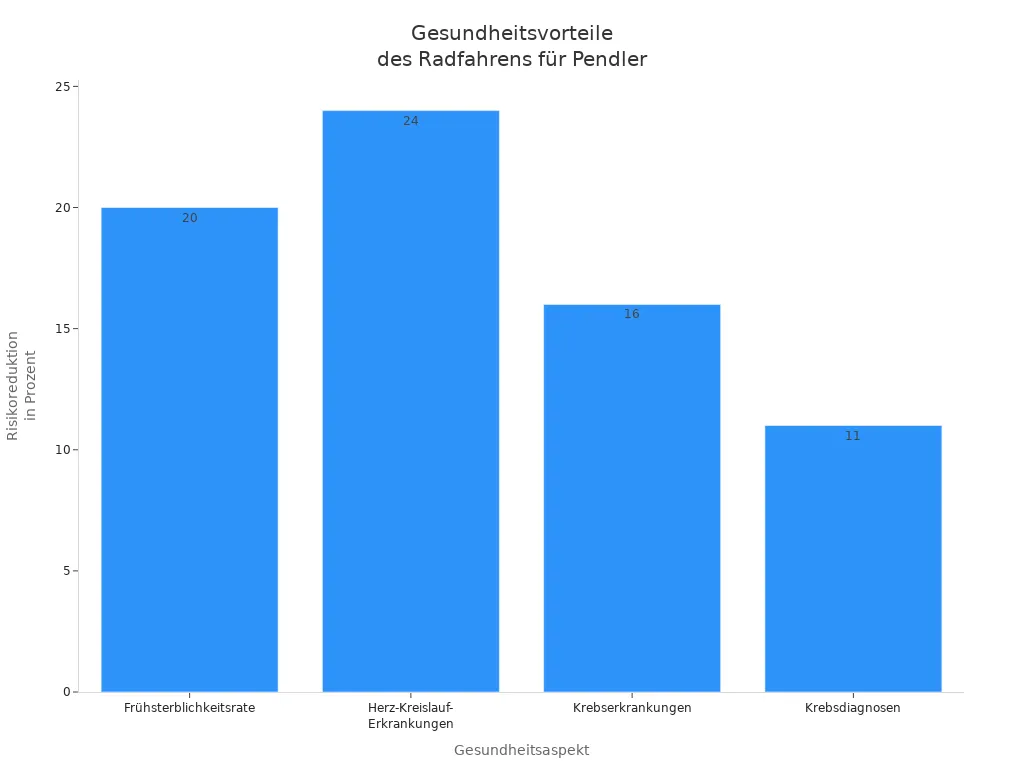
You will find the right bike if you consider your route, your everyday life, and your wishes. A commuter bike offers you more comfort, safety, and equipment for urban commuting. The choice noticeably influences your satisfaction and health.
Result |
Description |
|---|---|
Premature mortality rate |
|
Cardiovascular diseases |
24% lower risk |
Cancer diseases |
16% fewer deaths |
Satisfaction |
You save time and are more flexible.
You boost your health and protect the environment.
You experience less stress and are more productive.
Choose consciously and enjoy the benefits of an optimal bike for your commute.
FAQ
What distinguishes a commuter bike from a regular bicycle?
With a commuter bike, you usually get mudguards, lights, and a luggage rack included. A regular bicycle often lacks this equipment. A commuter bike is better suited for the daily trip to work.
Can I also use an e-bike as a commuter?
Yes, you can use an e-bike very well for your commute. It assists you while pedaling. You arrive at your destination faster and more relaxed. The motor is especially helpful for longer distances.
How do I protect my bike from theft?
You should always use a sturdy lock. Park your bike in well-lit areas. A second lock increases security.
Tip: Make a note of the frame number in case of an emergency.
What accessories do I need for everyday use?
You need at least lights, mudguards, and a good lock. A luggage rack helps you with transport.
Accessory |
Benefit |
|---|---|
Light |
Visibility |
Mudguards |
Protection from dirt |
Lock |
Theft protection |
Luggage rack |
Transporting bags |