
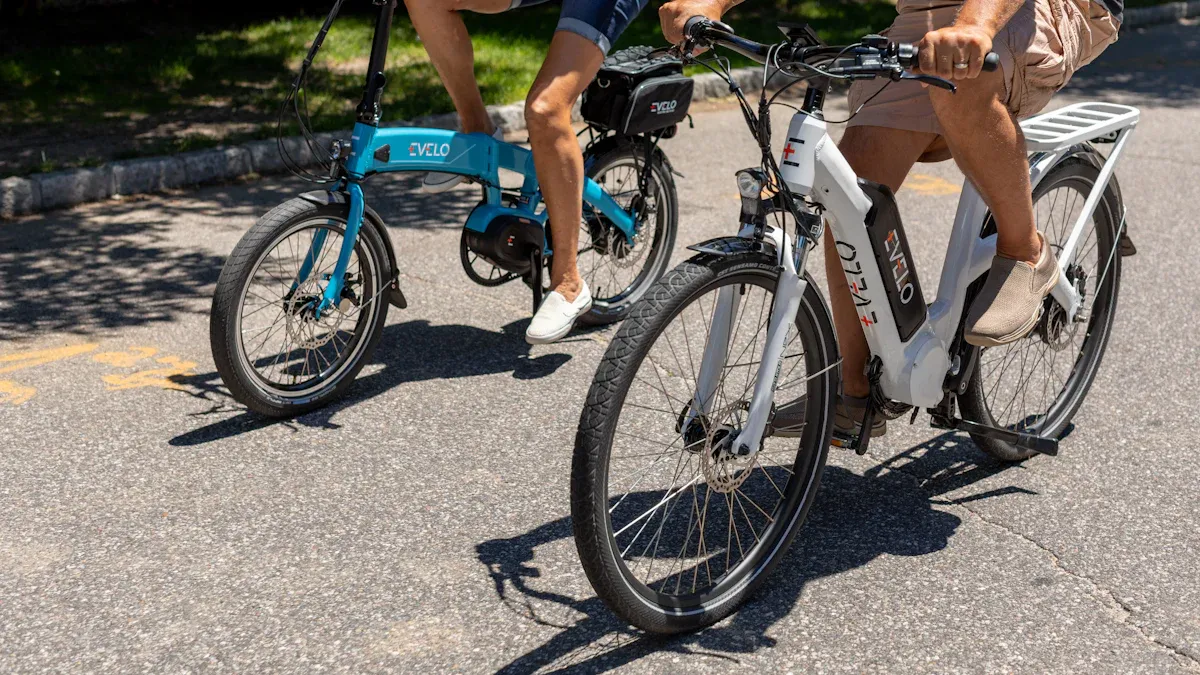
City e-bikes are revolutionizing the commute. They offer you a fast and flexible way to get through city traffic. The trend is particularly evident in large cities like Munich, where 10% of the population already bikes to work. According to surveys, 20% of Germans would like to ride an e-bike to work. In Europe as a whole, that figure is as high as 25%. With a city e-bike, you not only save time, but also get around the city in an eco-friendly and healthy way.
Key Takeaways
City e-bikes are fast and help you save time.
They are environmentally friendly and emit less CO₂ than cars.
A city e-bike keeps you fit and can help prevent illness.
Choose your city e-bike based on its motor, weight, and comfort.
Take good care of your city e-bike so it stays safe for a long time.
What makes a city e-bike?
Definition and Features
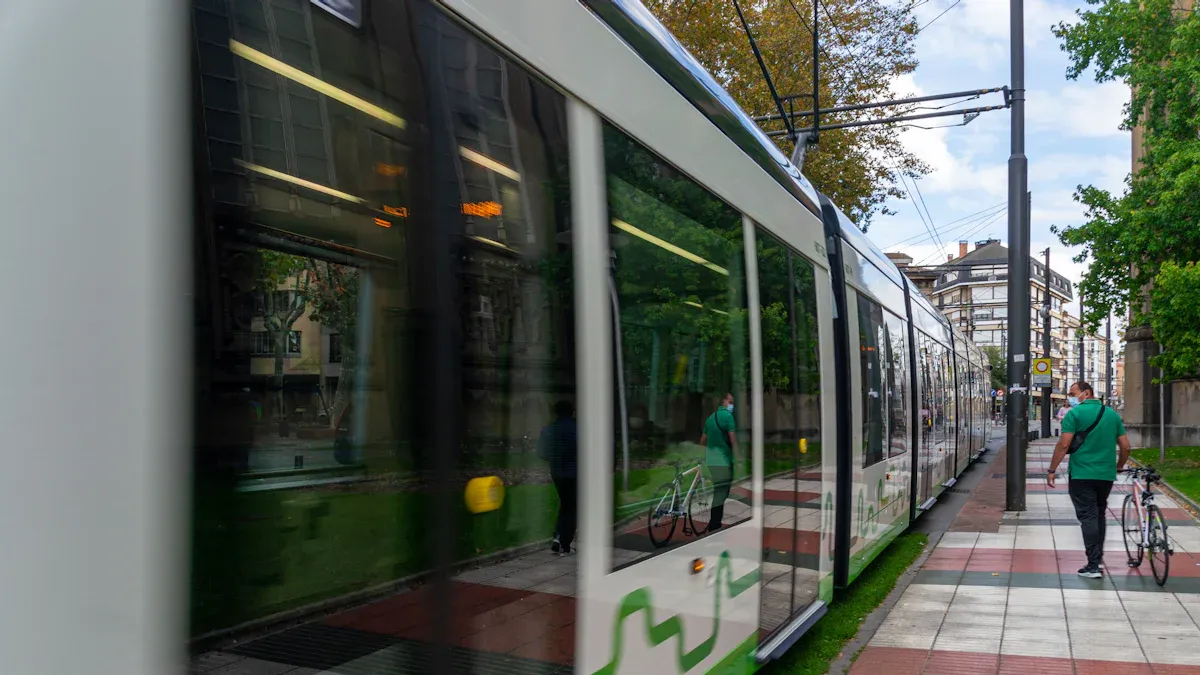
A city e-bike is designed specifically for everyday urban use. It combines comfort, ease of use, and functionality to make your city commute as enjoyable as possible. Its design focuses on short trips and everyday errands. An upright riding position ensures a relaxed ride, while low-maintenance gearing and a sturdy frame make it easier to handle.
Here are some of the key features of a city e-bike:
Feature |
Description |
|---|---|
Various options, such as diamond, trapeze, and step-through frames, offer flexibility for different needs. |
|
Motor position |
A mid-drive motor provides optimal weight distribution and a natural riding feel. |
Gearing systems |
Low-maintenance gearing from brands like Shimano or Rohloff ensures reliability. |
Comfort |
Comfortable saddles, suspension forks, and wide tires improve the ride. |
Battery placement |
The battery is often positioned beneath the luggage rack, improving stability and appearance. |
City e-bikes are ideal for daily commuting. They offer you an easy way to get around the city quickly and comfortably.
Differences from Other Types of E-Bikes
City e-bikes differ significantly from other types of e-bikes in terms of performance, design, and intended use. They are optimized specifically for city traffic and are less suited to long tours or rough terrain.
Motor power: City e-bikes have less powerful motors than e-trekking bikes or e-SUV bikes. However, this is more than enough for city traffic.
Battery capacity: The batteries are smaller because they are not designed for long distances.
Design: City e-bikes are compact and lightweight. They offer an upright riding position for comfort in urban settings.
Intended use: While e-trekking bikes are designed for long tours and e-SUV bikes for rough terrain, city e-bikes are perfect for short distances and everyday trips around town.
With a city e-bike, you can enjoy the benefits of a vehicle developed specifically for city traffic. It is the perfect choice for commuters who value comfort and efficiency.
Benefits of a City E-Bike
Time Savings and Flexibility
With a city e-bike, you can often reach your destination faster than by car or public transit. In city traffic, you can avoid congestion and use bike lanes that offer a direct route. You save valuable minutes, especially during rush hour when traffic comes to a standstill.
Another advantage is flexibility. You are not tied to schedules and can change your route on the fly. Whether you make a quick detour to the supermarket or choose an alternative route, a city e-bike adapts to your everyday life. It gives you the freedom to navigate the city independently and efficiently.
Eco-Friendliness and Emissions Reduction
A city e-bike is an eco-friendly alternative to cars and motorcycles. It produces no direct emissions, helping to improve air quality in cities. Studies show that e-bikes can reduce CO₂ emissions by up to 90% compared with cars.
By using a city e-bike, you are actively helping to protect the climate. You help reduce traffic noise and improve quality of life in urban areas. Every kilometer you travel by city e-bike instead of by car makes a difference to the environment.
Cost Savings Compared with Other Modes of Transport
A city e-bike saves you money in the long run. Operating costs are significantly lower than those of cars or public transit. You don't have to pay for gas or expensive monthly passes. Maintenance costs are also manageable, since city e-bikes have fewer wear parts.
Aspect |
E-bikes |
Public transit |
|---|---|---|
Maintenance costs |
Lower |
Higher |
Operating costs |
Lower |
Higher |
Payback period |
Shorter |
Longer |
Lifespan |
Longer |
Shorter |
The initial investment in a city e-bike pays for itself quickly. Thanks to its long lifespan and low maintenance costs, a city e-bike is an economical choice. You benefit from long-term savings and can spend your budget on other things.
Health Benefits of Exercise
Using a city e-bike is not only a practical way to get around the city, but also offers numerous health benefits. Regular exercise strengthens your body and supports your well-being. With a city e-bike, you can easily incorporate these benefits into your everyday life.
Tip: Even short rides on a city e-bike can make a big difference to your health. Use it to commute to work, go shopping, or enjoy leisure activities.
Improve Physical Health
Riding a city e-bike is an excellent way to improve your physical fitness. Studies show that regular exercise reduces the risk of heart disease and improves cardiorespiratory fitness. Participants in one study covered an average of 21 kilometers per week, reaching a heart rate of 75% of their maximum. This moderate activity strengthens your cardiovascular system and helps prevent conditions such as heart attacks, diabetes, and cancer.
Promote Mental Relaxation
In addition to its physical benefits, a city e-bike can also help you reduce stress. Getting fresh air while exercising and having the chance to clear your head promote mental relaxation. An Australian study found that even inactive or overweight people were able to significantly improve their mental well-being by riding an e-bike. You feel more balanced and can handle everyday life with greater ease.
Incorporate Exercise into Your Everyday Life
With a city e-bike, you can easily reach the WHO-recommended goal of 150 minutes of moderate activity per week. Pedelec riders are active for an average of 135 minutes per week—already two-thirds of the way to the goal. So you can improve your health without much effort while taking care of your daily errands.
Note: Every ride on a city e-bike counts. Whether you commute to work or take a short trip, you're doing your body and mind good.
The combination of physical activity and mental relaxation makes a city e-bike an ideal companion for a healthy lifestyle. It is not just a mode of transportation, but also a tool for sustainably improving your quality of life.
Choosing the Right City E-Bike
Motor Power and Range
The motor power and range of a city e-bike play a crucial role in choosing the right model. The motor determines how much assistance you get while pedaling, while the range indicates how far you can ride on a single battery charge.
Criteria |
Description |
|---|---|
Hub motor |
Robust design, low maintenance, high power transfer. |
Mid-drive motor |
Adjustable gearing, high stability, ideal for longer distances. |
Newton meters |
Motors with 50–85 Nm are ideal for a range of uses, from city riding to rough terrain. |
Battery watt-hours |
Indicates how long the e-bike can be used; 504 Wh is sufficient for flat routes. |
Leading brands |
Shimano and Bosch offer high-quality motors. |
A city e-bike with a moderate motor of around 50 Newton meters is especially suitable for less experienced riders. For more demanding routes or frequent use, you can consider models with up to 85 Newton meters. Also pay attention to the battery's watt-hours, as these affect its range. A 504-watt-hour battery is enough for most city rides.
Tip: Take a test ride to check the motor power and range. While riding, check the cadence, torque, and speed sensors. These sensors ensure precise motor assistance and a comfortable ride.
Weight and Size
The weight and size of a city e-bike affect its handling and everyday comfort. Most models weigh between 18 and 25 kilograms. This makes them easy to use, especially if the bike has a walk-assist function.
Lighter models are easier to transport, for example, if you need to carry the bike into your home. Heavier models, however, often offer more stability and greater battery capacity. Consider what you need your city e-bike to do, and choose accordingly.
Note: If you need to carry your bike often, look for a lightweight model. For longer rides or greater stability, a slightly heavier model may be a good choice.
Ride Comfort and Ergonomics
High ride comfort and good ergonomics are essential for enjoying your city e-bike. Modern models offer numerous features that improve the riding experience:
Wide, well-padded saddles provide a comfortable seat.
Height-adjustable handlebars can be tailored to your height.
Riders particularly appreciate the ergonomic riding position, which encourages an upright posture. This position makes even longer rides comfortable. The aluminum frame provides stability, while the padded saddle adds extra comfort.
Tip: Try out different models to find the best combination of comfort and ergonomics. Make sure the saddle and handlebars can be adjusted to ensure a relaxed riding position.
A city e-bike with optimal ride comfort and ergonomic features will not only make your everyday life easier, but also make riding more enjoyable.
Additional Features Such as Lighting and a Luggage Rack
Additional features make your city e-bike a versatile everyday companion. Lighting and a luggage rack are among the most important features, offering safety and comfort. They are not only practical, but also essential for an enjoyable ride.
Lighting for Safety and Visibility
High-quality lighting ensures that you are clearly visible on every ride. Modern city e-bikes are equipped with lighting systems that comply with German road traffic regulations (StVZO). These systems offer daytime running lights and high-beam functions to improve your visibility in different lighting conditions. Reliable lighting is essential, especially at dusk or in bad weather.
Tip: Make sure your city e-bike has powerful lights. They not only increase your safety, but also that of other road users.
A Luggage Rack for Everyday Use
An integrated luggage rack makes your city e-bike especially practical. It gives you space for groceries, bags, or even heavier loads. Many models can carry up to 120 kg, giving you maximum flexibility in everyday life. Whether you are commuting to work or running errands, the luggage rack makes it easier to transport your belongings.
Here is an overview of lighting and luggage rack ratings from product tests:
Feature |
Rating |
|---|---|
Lighting |
StVZO-compliant lighting with daytime running lights and a high-beam function provides good visibility. |
Luggage rack |
The integrated luggage rack with a maximum load capacity of 120 kg is practical for everyday use. |
Why these features matter
Lighting and a luggage rack are not just accessories; they are essential components of a city e-bike. They make your rides safer and more comfortable. With good lighting, you can ride with ease even in the dark or in bad weather. A luggage rack gives you the freedom to carry things without needing additional bags or backpacks.
Note: Choose a model that offers both features. This will help you get the most out of your city e-bike and manage your daily routine efficiently.
Rules and regulations for city e-bikes
Speed limits and legal requirements
The speed of your city e-bike depends on its type. Standard e-bikes can travel at up to 25 km/h. There are no age restrictions or special requirements for these. S-pedelecs, on the other hand, can reach speeds of up to 45 km/h and are subject to stricter rules. You must be at least 16 years old, wear a helmet, and hold an AM-class driving license. You also need an insurance plate and are not allowed to use cycle paths.
Type |
Maximum speed |
Minimum age |
Additional requirements |
|---|---|---|---|
E-bikes |
25 km/h |
None |
Ride like a regular cyclist; no special requirements. |
S-pedelecs |
45 km/h |
16 years |
Helmet required, insurance plate required, AM-class driving license required, must use roads, no cycle paths. |
Note: S-pedelecs are legally classified as mopeds. You must therefore follow the same traffic rules as moped riders.
Helmet requirements and safety regulations
There is no legal helmet requirement for standard e-bikes. However, wearing a helmet is strongly recommended to minimize your risk of injury in an accident. Helmets are mandatory for S-pedelecs. You must also make sure your city e-bike has working brakes, a bell, and lights. These safety features protect you and other road users.
Tip: Choose a helmet that fits well and meets safety standards. Modern helmets often offer additional features, such as integrated lights.
Traffic rules for e-bike users
As an e-bike user, you are subject to the same traffic rules as cyclists. You may use cycle paths unless they are explicitly prohibited for S-pedelecs. Note, however, that you may proceed through a red light using the green arrow if permitted. Stricter rules apply to S-pedelecs. You must ride on the road, take out third-party liability insurance, and observe the 0.5‰ alcohol limit.
-
Important rules for S-pedelecs:
Lights must be on for every ride.
Bicycle trailers are not permitted.
Violations such as riding on sidewalks may result in fines.
In summary: Find out about the specific regulations in your area. This will help you ride safely and comply with the rules.
Tips for commuting on a city e-bike
Route planning and cycle paths
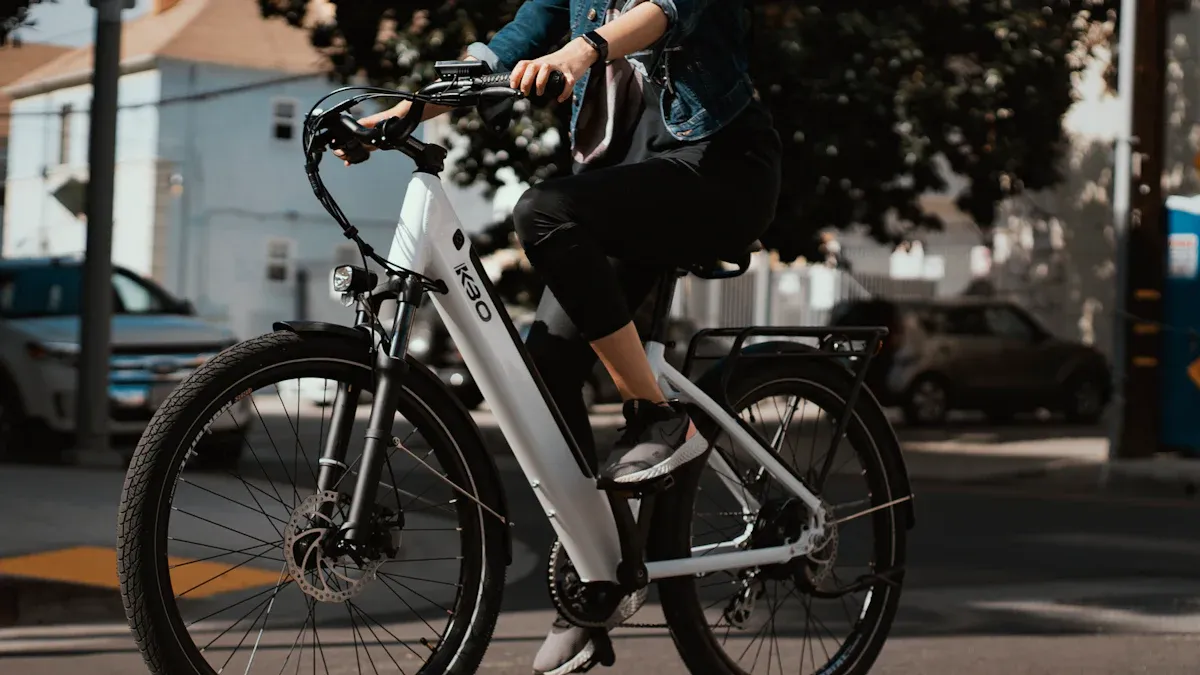
Good route planning makes commuting on your city e-bike easier. Use apps such as Komoot or Google Maps to find the best cycle paths in your city. These apps show you not only the fastest routes but also the safest. Cycle paths often have less traffic and make for a more relaxing ride.
Tip: Plan your route in advance and check for roadworks or closed paths. This will help you avoid unnecessary detours.
Many cities have designated cycling streets. Cyclists have priority there, and cars must travel slowly. These streets are ideal for your city e-bike. Also look out for shortcuts through parks or side streets. They make your ride more pleasant and safer.
Safety tips for urban traffic
Safety should always come first. Wear a properly fitting helmet to protect your head. Bright clothing or reflective accessories make you more visible to other road users.
Follow the traffic rules. Always ride on the right-hand side and use hand signals to indicate your direction. Be especially alert at intersections. Making eye contact with drivers helps avoid misunderstandings.
Note: Check the brakes and lights on your city e-bike regularly. Properly working equipment significantly increases your safety.
Practical accessories for commuters
The right accessories make your commute more comfortable. A sturdy luggage rack is ideal for bags or groceries. Waterproof panniers protect your belongings in the rain. A comfortable saddle is recommended for longer rides.
A bike lock is essential. Choose a high-quality model to protect your city e-bike from theft. A handlebar phone mount helps you keep navigation in view.
Tip: Invest in a good bike pump and a repair kit. They will help you deal with minor breakdowns.
With the right planning, safety measures, and accessories, commuting on a city e-bike is efficient and enjoyable.
Maintaining and caring for a city e-bike
Regular cleaning and inspection
Regular cleaning of your city e-bike helps keep it reliable and safe. Dirt and dust can affect performance if they build up on moving parts. Use a damp cloth and avoid harsh cleaning products to protect the paintwork and electronics.
Tip: Clean your e-bike after every ride in bad weather. This will prevent dirt from damaging the chain or brakes.
Inspecting the key components is just as important. Regularly check:
Tire pressure.
Brake wear.
Chain cleanliness and lubrication.
Battery charge and contacts.
A clean, well-maintained drivetrain extends your e-bike’s service life and improves safety.
Battery care and storage
The battery is the heart of your city e-bike. Proper care maximizes its service life. Do not charge the battery fully or let it run completely flat. A charge level between 20% and 80% is ideal. Store the battery in a dry place at room temperature. Extreme cold or heat can reduce its capacity.
Note: Remove the battery if you are not going to use your e-bike for an extended period. This helps prevent deep discharge and damage.
Clean the battery contacts regularly with a dry cloth. This improves power transfer and prevents corrosion.
When to consult a professional
Some maintenance tasks require professional assistance. An annual check by a professional can help identify hidden problems early. A professional inspection is particularly advisable for wear parts such as the brakes or chain.
Tip: Have your city e-bike checked if you hear unusual noises or its performance declines. An expert can quickly identify and fix the cause.
With proper care, your city e-bike will stay in top condition and accompany you safely through everyday life.
A city e-bike offers numerous benefits that enhance your everyday life. It combines sustainability, flexibility, and health benefits. The following overview shows how it can improve your quality of life:
Benefit |
Description |
|---|---|
Sustainability |
E-bikes are environmentally friendly and reduce your ecological footprint. |
Flexibility |
E-bikes let you bypass traffic and use cycle paths. |
Health benefits |
E-bikes encourage physical activity, particularly among older people. |
With a city e-bike, you can not only save time but also actively contribute to climate protection. Give it a try and see how it makes your daily routine easier and improves your quality of life.
FAQ
What does a city e-bike cost on average?
Prices for city e-bikes vary depending on their features and brand. An entry-level model costs around €1,500 to €2,500. High-end models with powerful motors and larger batteries can cost up to €4,000.
Tip: Compare different models and look out for special offers to find the best value for money.
How long does a city e-bike battery last?
A battery typically lasts 500 to 1,000 charge cycles. That is equivalent to around 3 to 5 years, depending on use and care.
Note: Do not charge the battery fully or let it run completely flat. This will extend its service life.
Can I use a city e-bike in winter?
Yes, city e-bikes are suitable for winter too. However, make sure you use winter tires and clean the bike regularly to remove salt and dirt.
Tip: Store the battery at room temperature when you are not using the bike. This protects it from the cold.
Do I need insurance for my city e-bike?
Standard city e-bikes with a top speed of 25 km/h do not require insurance. However, S-pedelecs, which can travel at up to 45 km/h, require third-party liability insurance and an insurance plate.
Note: Check the legal requirements in your country to ensure you ride safely.
How do I find the right frame size?
The frame size depends on your height. Many manufacturers provide size charts to help you choose. A test ride is also useful to make sure the bike is comfortable.
Tip: A frame that is too large or too small can affect riding comfort. Choose carefully.