
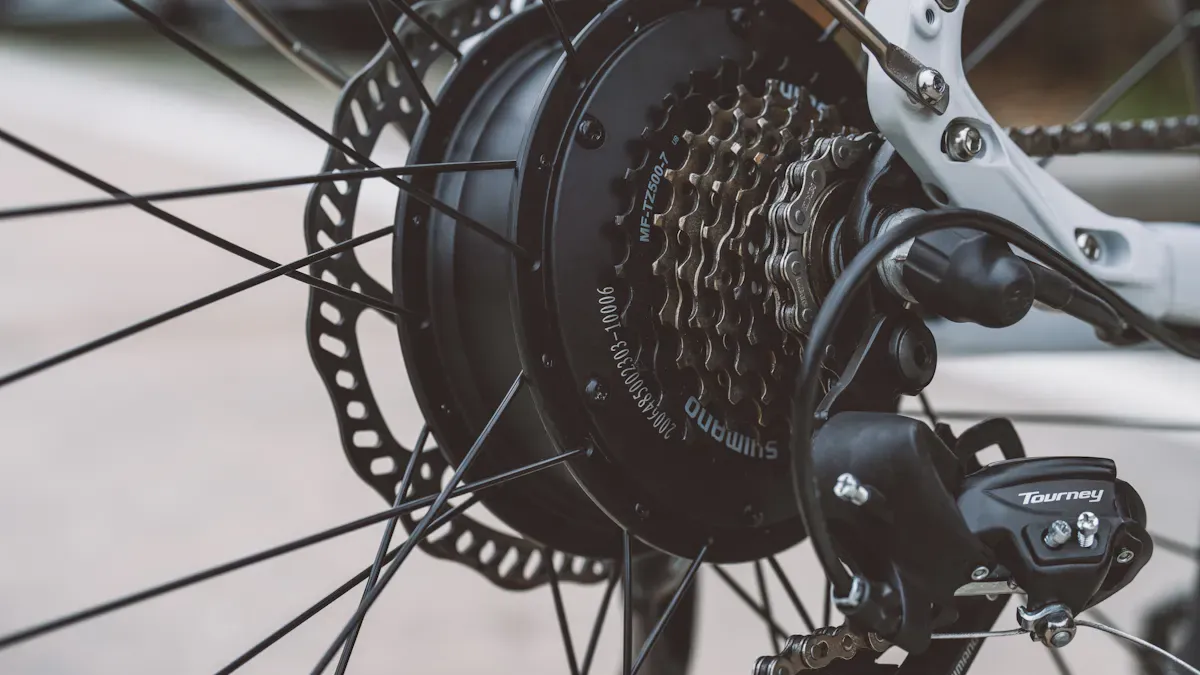
Are you wondering which motor suits your riding style? The answer depends on your daily routine. Some motors provide more torque, while others deliver more power. Look at how this affects handling. Consider whether you prefer a relaxed or sporty ride. Making the right choice ensures more riding pleasure and less stress.
Tip: The position of the motor influences noise, efficiency, and braking behavior.
Year |
Sales Figures (E-bikes) |
Market Share (%) |
|---|---|---|
2024 |
53 |
Key Insights
The mid-drive motor offers natural support and is ideal for hilly terrain.
The rear-hub motor provides a sporty riding feel and is quiet in operation.
The front-hub motor is cost-effective and well-suited for short city trips.
A test ride helps to find the right motor for your riding style.
Regular maintenance extends the life of the e-bike motor.
Motor Types in E-bike Comparison
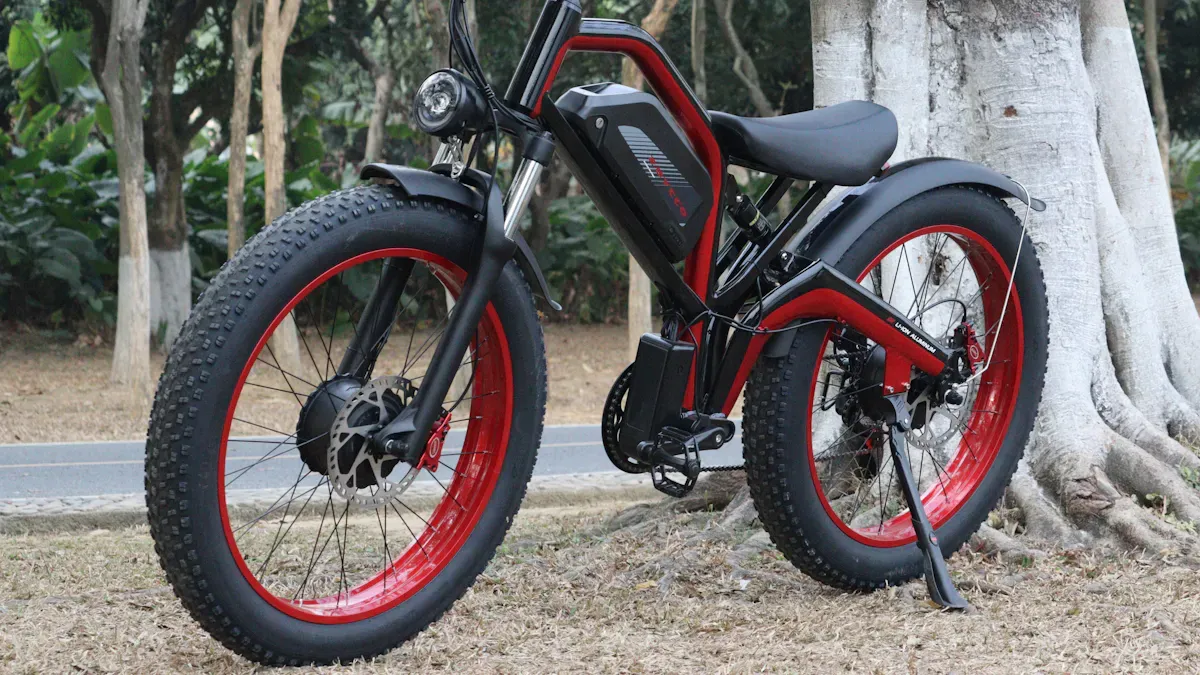
You are faced with a choice: which motor fits your e-bike? There are three main types you should know about. Each motor has its own strengths and weaknesses. Here is an overview to help you make your decision more easily.
Mid-drive Motor – Handling and Performance
The mid-drive motor is located directly in the bottom bracket. This ensures centralized weight distribution. You feel the assistance quite naturally, almost like cycling on a regular bike. Many riders report that they feel safer because the bike remains stable and is easy to steer. The mid-drive motor truly shows its strengths in daily use and on long distances. It makes optimal use of the gears and remains powerful even on climbs.
Tip: A mid-drive motor gives you plenty of power if you frequently ride in hilly terrain.
Here is a comparison of the most important features:
Feature |
Mid-drive Motor |
|---|---|
Riding feel |
Natural & intuitive |
Weight distribution |
Central, stable |
Efficiency on climbs |
Very high |
Wear |
Higher (chain, sprockets) |
Noise level |
Quiet whirring possible |
The mid-drive motor usually costs a bit more than a front-hub motor. However, in return, you get better performance and more flexibility on various routes.
Rear-hub Motor – Sporty Features
The rear-hub motor is located in the rear wheel hub. It pushes you from behind and gives you the feeling of a tailwind. Many sporty riders love this direct, dynamic riding feel. The rear-hub motor is particularly fun on flat routes. It runs very quietly and causes little wear because the force is applied directly to the wheel.
You can combine the rear-hub motor with a derailleur system. This provides advantages when you are riding sportily and changing gears frequently. The rear-hub motor is less suitable for steep climbs because it can lose power during long ascents.
Feature |
Rear-hub Motor |
|---|---|
Riding feel |
Sporty, pushing |
Weight distribution |
Rear, can affect balance |
Efficiency on climbs |
Lower |
Wear |
Low |
Noise level |
Very quiet |
Note: The rear-hub motor costs about the same as a mid-drive motor because the technology is more complex.
Front-hub Motor – Simple Solution
The front-hub motor is located in the front wheel. It is the most affordable variant and is often found in entry-level e-bikes. The design is simple, which keeps purchase costs low. If you are looking for an e-bike for short trips in the city, a front-hub motor can be sufficient.
However, the front-hub motor affects steering behavior. The front wheel can slip, especially on wet surfaces. For demanding routes or sporty rides, the front-hub motor is less suitable.
Feature |
Front-hub Motor |
|---|---|
Riding feel |
Unfamiliar, pulling from the front |
Weight distribution |
Front, less stable |
Efficiency on climbs |
Low |
Wear |
Low |
Noise level |
Quiet |
Here you can see the differences in purchase costs:
Motor Type |
Purchase Costs |
Reason for Cost Differences |
|---|---|---|
Front-hub motor |
Often cheaper |
Simpler design, lower production costs |
Mid-drive motor |
Higher |
More complex design, higher adjustments required |
Rear-hub motor |
Higher |
More complex design, higher adjustments required |
In short:
The front-hub motor is inexpensive and simple, but less suitable for demanding routes.
The mid-drive motor offers you the best mix of performance, stability, and versatility.
The rear-hub motor provides a sporty riding feel and smooth operation, but usually costs more.
Keep in mind: The choice of motor influences not only the handling but also the range of your e-bike. An efficient motor and your riding style determine how far you can go on a single battery charge.
Areas of Use and Recommendations
City and Daily Use
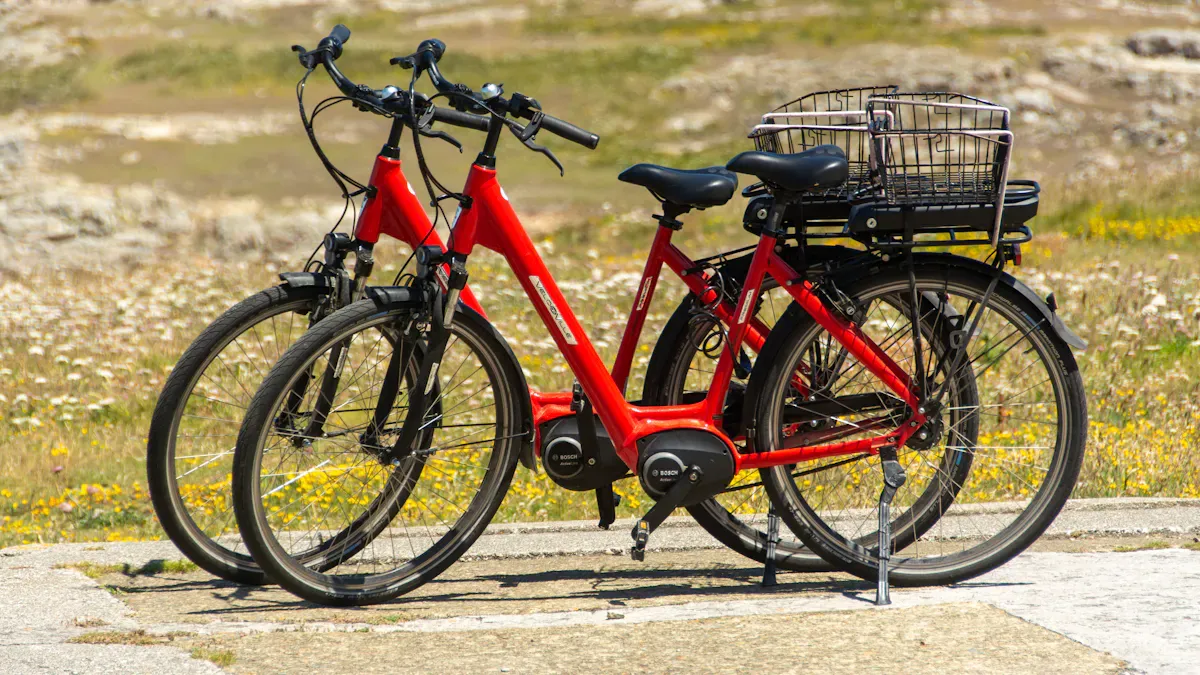
Do you often ride short distances, run errands, or commute to work? Then you need an e-bike that is light and uncomplicated. In the city, a front-hub motor is often enough. It is inexpensive and easy to operate. It fits well for flat paths and light luggage. A mid-drive motor brings you more comfort if you encounter many traffic lights or have to start pedaling frequently. It supports you evenly and makes the bike agile. A rear-hub motor is suitable if you prefer a sportier ride and like a dynamic riding feel.
Tip: Consider how often you need to carry or push your bike. A lighter motor helps in everyday life.
Tours and Long Distances
Are you planning longer excursions or want to discover new paths on the weekend? Then you need a motor that supports you reliably. Many trekking fans swear by mid-drive motors. They offer you natural support and help you save energy. Rear-hub motors are also an option for relaxed tours if you like a sporty feel.
Here you can see a comparison of popular motors for long distances:
Motor |
Features |
|---|---|
Yamaha PW-ST |
Versatile, enough power for various routes |
Bosch Active Line Plus |
Optimal for trekking, 50 Nm torque, up to 340% support |
Brose Drive T Alu |
Pleasant riding feel, ideal for longer excursions |
Bosch Performance Line CX |
At least 70 Nm torque, also for demanding routes |
Shimano EP8 |
High performance for steep climbs |
Brose Drive S |
Strong support for demanding tours |
Yamaha PW-X |
High performance for mountain rides |
Note: For long tours, not only motor power counts, but also battery capacity.
Mountains and Steep Terrain
Do you live in hilly terrain or often want to go into the mountains? Then you need a motor with high torque. Mid-drive motors are the best choice here. They deliver the power you need for steep climbs. Values between 70 and 85 Nm are ideal. For extreme inclines, you even need more than 100 Nm. This way, you can make good progress even under difficult conditions.
Mid-drive motors offer the highest torque.
Hub motors (front and rear) lose efficiency at low speeds.
During slow riding, a hub motor can overheat and waste energy.
A high cadence between 75 and 90 revolutions per minute helps you use the motor efficiently. This keeps you relaxed even on long climbs.
Tip: It is best to test your e-bike on the terrain you ride most often. This will help you quickly determine which motor suits you.
Technical Characteristics of the E-bike Motor
Performance – Wattage and Power
The motor power determines how much assistance you get while riding. In Germany, an e-bike motor may have a maximum output of 250 watts for your bike to be classified as a bicycle. This allows you to ride safely in traffic without needing a driver's license. The wattage indicates how strongly the motor pushes. However, more watts do not always mean more speed, but rather more support when starting and climbing.
Take a look at the differences in motors and batteries in various price ranges:
Motor |
Battery |
|
|---|---|---|
€800–1,500 (Entry-level) |
Bafang, Ananda, No-name |
360–460 Wh |
€1,500–3,000 (Mid-range) |
Bosch, Shimano, Brose |
500–625 Wh |
€3,000–5,000 (High-end) |
Bosch CX, Shimano EP8 |
625–750 Wh |
€5,000+ (Premium) |
TQ, Fazua, Bosch CX Race |
350–750 Wh |
Tip: For everyday use, a 250-watt motor is often sufficient. For steep mountains or heavy loads, it is worth checking the battery capacity.
Torque – Meaning and Recommendation
Torque shows how much force the motor applies to the pedals. It is measured in Newton meters (Nm). Higher torque helps you especially when starting and on inclines. For most routes, a torque of 60 to 85 Nm is sufficient. If you often ride in the mountains or with heavy luggage, you should look for a motor with at least 70 Nm.
Strong torque provides a powerful riding feel. You get ahead more easily, even when it gets steep. For relaxed rides in the city, a lower value is often enough.
Sensors – Torque Sensors in Comparison
Sensors control how the motor reacts to your movement. There are two main types: torque sensors and cadence sensors. Both significantly influence the riding feel.
Sensor type |
Functionality |
Riding feel |
|---|---|---|
Measures the force you apply to the pedals and adjusts the assistance accordingly. |
Natural and harmonious riding feel. |
|
Cadence sensor |
Measures how fast you are pedaling and controls motor output. |
Increases efficiency and is gentle on the joints. |
With a torque sensor, the riding experience feels particularly natural. The motor provides support exactly when you need more power. A cadence sensor helps you pedal consistently and saves energy.
Weight and noise levels
The weight of the motor plays a major role in handling. A heavier motor makes the bike heavier overall, which increases energy consumption. If you are carrying extra luggage or a child, your range will decrease. For every five kilos of extra weight, the range drops by approximately 2.5 kilometers.
The noise level of the motor is also important. Many recreational riders want the motor to be as quiet as possible. Manufacturers invest heavily in quiet drive systems so that you can ride in a relaxed manner.
A heavy motor increases the total load.
More weight means higher energy consumption.
Noise levels influence the riding experience and the purchasing decision.
Note: Test how loud the motor actually is before buying. What sounds quiet in the shop might sound different on the road.
Maintenance and lifespan
An e-bike motor will last for many years with good care. Most manufacturers recommend an annual inspection. Some experts even advise having it checked every 500 kilometers to keep your motor reliable and safe.
Have your bike serviced once a year.
If you use it heavily, an inspection every 500 kilometers is recommended.
Maintenance costs vary depending on the motor type. Mid-drive motors in particular require more frequent chain and sprocket changes. This costs between 80 and 200 euros. With good care, replacing them every 2,000 to 4,000 kilometers is sufficient. A rear hub motor makes changing the rear wheel slightly more complicated, but wear and tear is often lower.
Tip: Pay attention to regular maintenance. This will extend the life of your motor and you will enjoy your e-bike for longer.
Individual needs and route profile
Riding style and comfort
Your riding style determines which motor suits you best. Do you ride in a relaxed way through the city, or do you love sporty tours? Depending on how you ride, you will need more or less support. Many users say that the route profile and the length of the trips play a major role. For flat paths, a motor with less torque is often sufficient. In mountainous regions or when carrying heavy loads, you will need more power.
Here you can see which motors are recommended for different types of routes:
Route type |
Recommended motors (Nm) |
Notes |
|---|---|---|
Flat to slightly hilly |
40–60 |
Sufficient for most uses |
Mountainous or heavily loaded |
60–85 |
More support on challenging terrain |
Mixed use |
60–70 |
Good compromise between power and efficiency |
Tip: Consider how you want to use your e-bike. Your riding style determines how much comfort and support you need.
Terrain and route profile
The terrain significantly influences the choice of motor. Do you mainly ride on flat roads, or are you looking for adventures in low mountain ranges? For city and everyday use, a 250-watt motor with 40–60 Nm of torque is usually enough. For longer tours or moderate inclines, a motor with 60–75 Nm is recommended. In low mountain ranges or on steep trails, you need more power.
Route profile |
Torque (Nm) |
Description |
|
|---|---|---|---|
Flat to slightly hilly |
250 |
40–60 |
Ideal for city and everyday bikes |
Commuting and touring |
250 |
60–75 |
Reserves for headwinds and moderate inclines |
Low mountain range |
250 |
75–85 |
Standard for sporty e-mountain bikes |
Alpine passes and steep trails |
250 |
80–90 |
Strong support for heavy riders and heavy loads |
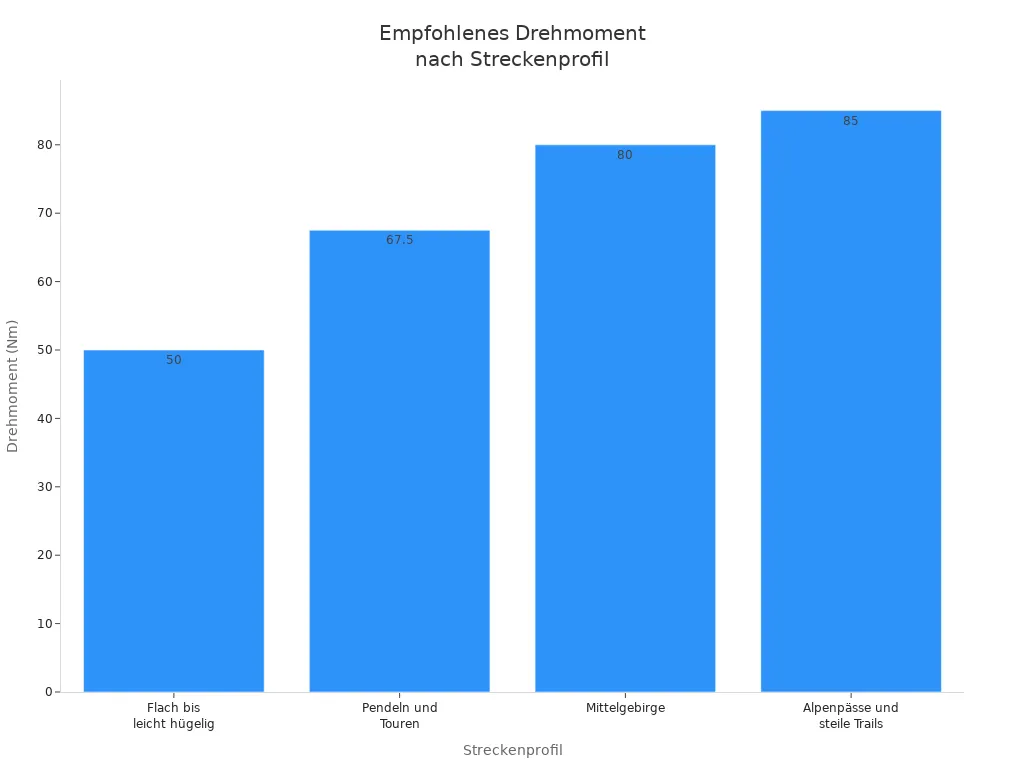
Note: Choose the motor that fits the terrain you ride on most often to maintain your riding pleasure.
Ease of use in everyday life
Ease of use makes the difference when you use your e-bike daily. Many customers look for simple controls and a display that is easy to read. An intuitive motor concept is especially helpful for beginners. The ergonomics of the motor control system ensure that you can find your way around quickly.
Ease of use affects riding behavior and enjoyment of the e-bike.
A user-friendly motor is ideal for newcomers.
Motor controls and the display should be easy to understand.
Tip: Try out different models and pay attention to how easy it is to operate the motor. A comfortable e-bike makes everyday life easier and makes riding more fun.
E-bike: Tips for choosing a motor
Test ride – Why it's important
Do you want to know how a motor really feels? Then there's only one thing to do: take a test ride! On a test ride, you'll immediately feel whether the motor suits your riding style. You will notice how strong the support is and how the e-bike reacts to your movements. Test different models on your typical route. This way you'll find out if the ride feels natural and if you find the operation easy. Many dealers offer test rides for free. Use this opportunity to avoid surprises after your purchase.
Tip: When testing, pay attention to start-up behavior, noise levels, and how the bike handles in corners.
Expert advice from a specialist retailer
Visiting a specialist dealer offers many advantages over buying online. You receive personal advice tailored to your wishes. Experts take the time to answer all your questions. In addition, you can try out different e-bikes on-site and gain access to workshop services for maintenance and repairs.
Advantage |
Description |
|---|---|
Personal attention |
Specialist dealers offer individual advice tailored to the customer's needs. |
Test rides |
Customers have the opportunity to try out e-bikes before purchasing. |
Access to workshop services |
Specialist dealers offer maintenance and repair services, which are important for e-bikes. |
Note: A good specialist dealer will remain your contact person even after the purchase.
Purchasing criteria
When buying an e-bike, there are several things you should look out for. Test reports show that the following criteria are particularly important:
Riding feel
Reliability
System integration
Hardware quality
Traction and fine-tuning
Naturalness & strength of support
Overrun behavior
Noise profile
Reaction when pedaling is interrupted
Riding enjoyment
The motor manufacturer also plays a role. Large suppliers ensure better availability of spare parts. Consider how well the motor fits the bike and whether you can easily get spare parts for your everyday use.
Tip: Don't let price be your only guide. A good overall package of motor, battery, and controller ensures long-lasting riding pleasure.
You now have an overview of the most important motor types and their advantages. Most e-bike riders are very satisfied with their choice of motor:
Satisfaction with motor performance |
Percentage |
|---|---|
Very satisfied |
|
Wishes for stronger motors |
8.8 % |
Cites mandatory insurance as a reason against more powerful e-bikes |
40 % |
If you know your needs, it's easier to find the right motor. A test ride will help you get the right feel. With the right choice, you will enjoy:
Reliable technology
High riding comfort
Strong battery performance
Safe riding behavior
Flexibility for your everyday life
Test various models and seek professional advice. That way, your e-bike will be fun for a long time! 🚲
FAQ
Which motor is the quietest?
Many e-bike riders find the rear hub motor to be the quietest. You will often only hear a faint whirring sound. Mid-drive motors are slightly louder, but modern models operate pleasantly and quietly. Test different motors to find your favorite.
How much maintenance does an e-bike motor need?
You should have your e-bike serviced once a year. For daily use, a check every 500 kilometers is recommended. This keeps your motor reliable and ensures you have a long time to enjoy your ride.
Can I retrofit or replace the motor?
Retrofitting is often possible, but not always practical. Costs are high and the conversion is complex. Seek advice from a specialist retailer before making a decision.
How does the motor's weight affect riding behavior?
A heavy motor makes your e-bike more sluggish. You will need more strength to push or carry it. When riding, you will feel the weight primarily on hills. A light motor provides more agility.
How much does a good e-bike motor cost?
Prices start at around 400 euros for simple models. High-quality mid-drive motors often cost between 700 and 1,000 euros. Pay attention to quality and service – it pays off!