
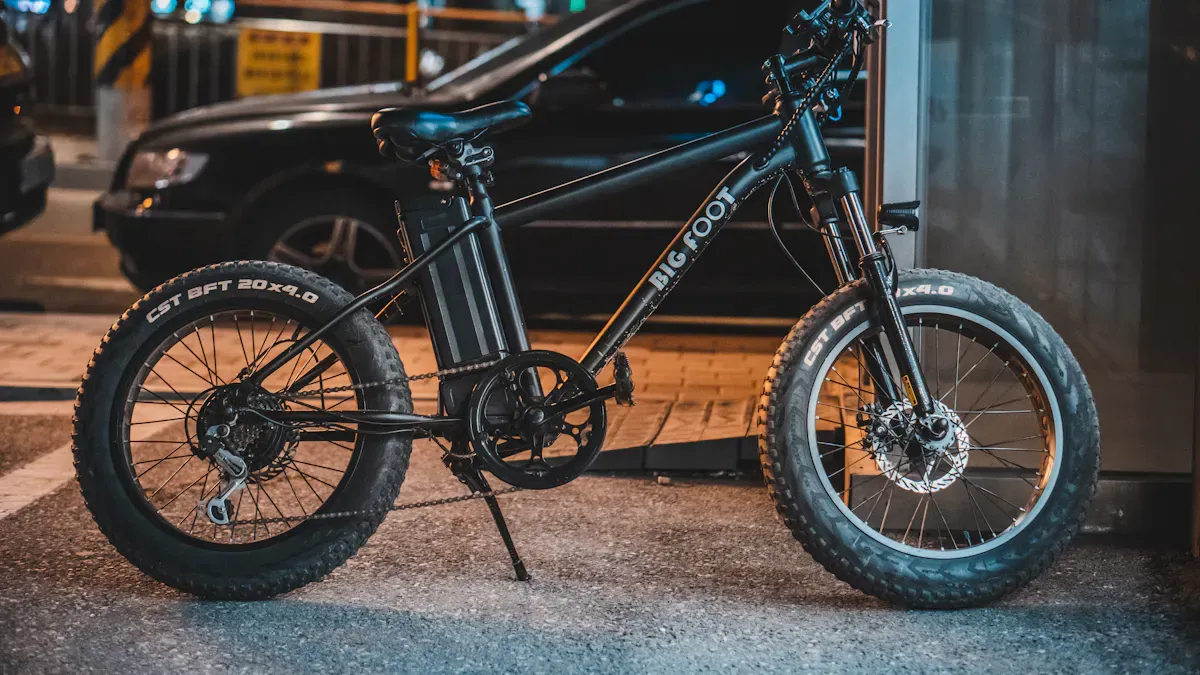
Are you wondering which e-bike motor is right for you? There are hub motors that provide even support and mid-drive motors that help you especially on inclines. Your choice depends on your riding style, the route, and your preferences. You will be surprised at how easy the decision can be!
Key takeaways
Choose the motor based on your riding style and the routes you take. Hub motors are ideal for flat city routes, while mid-drive motors are better suited for hills and longer tours.
Pay attention to your e-bike motor's power. For the city, 40 to 50 Newton meters are sufficient, while for mountainous routes you will need at least 60 Newton meters to have adequate support.
Regular maintenance extends the life of your motor. Have your e-bike checked at least once a year to ensure everything is working well.
E-bike motor types
You are facing a choice: which e-bike motor suits you? There are two main types you should know about. Each type brings its own advantages. Let's find out together which motor is best suited for your everyday life.
Hub motor – Features
The hub motor is located directly in the wheel, either at the front or the back. You will notice immediately how simply the system works. Many beginners choose this motor because it is uncomplicated and reliable. The hub motor shows its strengths especially in city traffic. It operates quietly and supports you evenly when you are traveling at a constant speed.
Here is an overview of the most important features:
Hub motors are often cheaper and easy to operate.
They are perfectly suited for flat routes and short distances.
The design is simple, which keeps maintenance requirements low.
You get consistent support, ideal for everyday travel.
The system is quiet and ensures a relaxed ride.
Tip: If you mainly travel in the city and do not have to climb steep hills, the hub motor is a good choice.
Advantage |
Description |
|---|---|
Simple design |
Less prone to defects, uncomplicated to repair |
Low maintenance |
You rarely need to visit the workshop |
Suitable for flat routes |
Perfect for urban traffic |
Cost-effective |
Ideal for entering the world of e-bikes |
Quiet |
Hardly audible while riding |
Reliable support |
Even power for daily commutes |
Mid-drive motor – Advantages
The mid-drive motor sits centrally on the frame, usually at the crank. You immediately feel how the weight is better distributed. This ensures a natural riding feel. The mid-drive motor demonstrates its power especially on hilly routes or off-road. It supports you dynamically and adapts to your riding style.
Here are the key advantages:
Mid-drive motors offer strong support on inclines.
The center of gravity remains central, which improves handling.
You get consistent power transmission, even at changing speeds.
The system is ideal for sporty riders and longer tours.
High torque values make riding in the mountains easier.
Note: If you often ride uphill or are planning longer routes, the mid-drive motor offers you more comfort and power.
Criterion |
Hub motor |
Mid-drive motor |
|---|---|---|
Efficiency |
Lower energy consumption, especially with continuously variable hub gears |
Higher performance, better power transmission, but higher energy consumption |
Maintenance |
Less maintenance, although complex wiring can cause problems |
Higher maintenance due to greater wear on drive components |
Weight |
Tends to be lighter |
Usually heavier and more complex in construction |
Selection based on intended use
Are you wondering which motor suits your route? Take a look at how the different types perform on different profiles:
Motor type |
Suitability for route profile |
|---|---|
Front motor |
Ideal for city and flat terrain |
Mid-drive motor |
Offers the most natural riding feel |
Rear motor |
Sporty and dynamic support |
If you commute to work daily and overcome many hills, a mid-drive motor is the best choice.
For short distances in the city and flat routes, a hub motor is completely sufficient.
Sporty riders who like to ride fast benefit from rear motors.
Your riding style and topography influence the range and riding feel. An e-bike motor at the crank ensures efficient power transmission. Off-road rides are more fun with a motor on the rear axle. Rear-wheel motors make riding on mountainous routes easier, while front-wheel motors offer better balance.
Tip: Think about how you want to use your e-bike. Do you want to cruise relaxed through the city or conquer steep climbs? The choice of motor determines comfort, maintenance, and riding pleasure.
E-bike motor: Power & Torque
Meaning of watts and Newton meters
You have surely heard of watts and Newton meters when dealing with e-bikes. These terms determine how strongly your e-bike motor supports you and how the riding feels. Watt measures the power of the motor. In Europe, a pedelec may have a maximum of 250 watts. That is enough for most everyday rides.
Newton meters show you the torque. This is the force you feel when pedaling. The more Newton meters, the more powerfully the motor pushes you forward. You will notice the difference especially when starting up or on steep hills. A high value, for example 50 to 85 Newton meters, makes riding on challenging terrain much easier.
Here you can see how watts and Newton meters influence the riding feel:
Watt indicates how much energy the e-bike motor can deliver.
Newton meters provide the "boost" you need when starting off or on inclines.
With more torque, every incline feels flatter.
Your cadence influences how much support you get. At a low cadence and high force, you need maximum torque.
Tip: If you often start at traffic lights or ride in hilly regions, pay particular attention to the torque of your e-bike motor.
Appropriate power for different purposes
Are you wondering how much power your e-bike motor should have? That depends on where and how you want to ride. For the city, you need less power than in the mountains. Here you will find an overview of the recommended power for different e-bike types:
E-bike type |
|
|---|---|
E-city bike |
40–50 |
E-trekking bike |
40–60 |
E-mountain bike |
60–80 |
If you ride an urban pedelec, 40 to 50 Newton meters are sufficient. That provides pleasant support for everyday life. For commuters who cover longer distances or handle slight hills, 40 to 60 Newton meters are ideal. Are you planning off-road tours or do you want to conquer steep mountains? You will need at least 60 Newton meters. This way you will always have enough power, even when it gets really steep.
Many commuters choose a mid-drive motor because it works efficiently and provides even support. A battery with a 60 to 80 kilometer range gives you security, even if you have to take a detour. For daily use, fenders, a luggage rack, and lights are practical. You can choose between hub gears and derailleur gears – one is low-maintenance, the other is efficient for long distances.
Note: Think about how you want to use your e-bike. The more inclines and challenging paths you ride, the more important a high torque value is for the e-bike motor. For the city, less is often enough, but for off-road use, you need more power.
As you can see: The right combination of power and torque makes the difference. With the right e-bike motor, you enjoy riding pleasure and feel safe – whether in everyday life or on adventure tours.
Area of use
City – Urban pedelecs
Do you often ride through the city? Then you need an e-bike that is light, agile, and reliable. Many users swear by models built specifically for daily life. They offer you comfort and safety in dense traffic. Take a look at this overview:
Model |
Features |
|---|---|
Honda CB1100 EX |
Ideal for daily life, combines riding pleasure with reliability and safety, good for the city. |
Voge 300 AC |
Affordable, low consumption, suitable for city traffic, offers good price-performance ratio. |
With a hub motor, you get even support. You arrive at work or at the store feeling relaxed. An urban pedelec makes life in the city simple.
Tip: Choose a model with a low step-through if you often have to get off the bike.
Off-road & Hills – Mid-drive motors
Do you love excursions into nature or do you live in a hilly area? Then you need an e-bike motor with real power. Mid-drive motors help you master even steep climbs with ease. They offer you high torque and good weight distribution.
Feature |
Significance for inclines |
|---|---|
Motor power |
At least 450 W; 500–600 W is ideal for constant mountain performance |
Max. incline grade |
Good models manage over 20% incline |
Tires & traction |
10-inch tires with grippy tread for grip on the mountain |
Suspension |
For comfort on uneven pavement & descents |
Battery capacity |
12–13 Ah for sustained power uphill |
Braking system |
Disc brake + EABS for safe descent |
With these features, you will feel safe no matter how steep the path gets.
All-rounder – Flexible use
Do you want to do it all? Then an all-round e-bike suits you. Many commuters choose a sporty trekking bike with a powerful motor and a large battery. Touring lovers focus on comfort and a luggage rack. Price-conscious users often start with an affordable rear motor and upgrade later.
Commuters travel 15 to 30 km daily and need a powerful motor.
Touring lovers enjoy long distances and rely on mid-drive motors.
Price-conscious users try affordable models and decide later if they want more.
You will find many models with Bosch Active Line for gentle support or Bosch Performance Line for more power on the mountain. Think about how you want to use your e-bike. This is how you will find the right motor for your everyday life.
Battery & Range
Influence of the motor on the range
Do you want to know how far you can get with one battery charge? The motor plays a big role in this. An efficient motor uses energy better and takes you further. Take a look at the differences:
Motor |
Special features |
|
|---|---|---|
maxon AIR S |
81 |
Very economical, especially at low power levels |
Average |
77 – 79 |
Applies to most motors |
A motor with high efficiency consumes less electricity. This means you can ride longer distances. However, the actual range also depends on your weight, your riding style, and the route. Manufacturers often provide average values, but these can vary in everyday life.
Tip: Ride with foresight and use the assistance selectively. This way, you get the most out of your battery.
Battery size and charging behavior
The battery size determines how far you can go. A larger battery stores more energy, but also adds more weight. There are recommendations for different route lengths:
Area of use |
|
|---|---|
Long-distance |
|
Trekking |
500 – 699 Wh |
City |
500 – 699 Wh |
E-MTB/Gravel |
500 – 699 Wh or from 700 Wh |
Charge your battery regularly, but do not let it run completely empty. Keep the charge level between 30% and 60% for longer breaks. This protects the cells and extends their lifespan. Frequent recharging is not a problem and can even help keep the battery in good shape.
Remember: Good charging behavior ensures more range and long-lasting enjoyment of your e-bike. 🚲🔋
Maintenance & Costs
Maintenance effort for motor types
Do you want to enjoy your e-bike motor for a long time? Then it is worth taking a look at the maintenance effort. Hub motors are particularly low-maintenance. They are well-protected inside the wheel and require little attention. You should regularly check tire pressure, spoke tension, and electrical connections. Wear parts such as ball bearings or connectors usually last for many kilometers, but can age due to moisture and vibration.
Mid-mounted motors require a bit more care. They transfer more power to the chain and sprocket. This often leads to faster wear of these parts. The internal gearing in the mid-motor can also wear out over time. You should check the chain, chainring, and cassette more frequently and replace them if necessary.
Tip: Have your e-bike checked at least once a year or after 1,000 to 2,000 kilometers. For frequent riders, a shorter interval is worthwhile.
Type of maintenance |
|
|---|---|
Initial inspection |
After 300–500 km or after 3 months at the latest |
Regular maintenance |
Once a year or every 1,000–2,000 km |
Costs and longevity
Prices for e-bike motors vary greatly. Inexpensive models start in the lower price segment. They are sufficient for short distances and occasional rides. Mid-range motors offer good value for money and often come from well-known European brands. Premium motors cost more, but deliver top quality and many features.
Type |
Price range |
Features |
|---|---|---|
Inexpensive |
Low |
For light use, usually hub motors |
Mid-range |
Medium |
Solid reliability, well-known brands |
Premium |
High |
Best performance, high quality, many extras |
How long your motor lasts depends on usage and care. Frequent riding and heavy strain shorten its lifespan. With good maintenance, you can significantly extend its runtime. Wear and tear is the biggest enemy of your e-bike. Regularly check all important parts and have small problems fixed immediately.
Remember: A well-maintained motor lasts longer and saves money in the long run. 🚲💡
Do you want to find the right e-bike motor? Pay attention to these points:
Type of motor
Torque
Your riding feel
Your requirements and routes
Think about how you ride. This is how you will find the motor that suits you and makes you happy! 🚲
FAQ
How do I find out which motor suits me?
You look at your routes, your riding style, and your wishes. A dealer can help you with a test ride. This way, you will quickly notice what you like.
Do I have to maintain the e-bike motor regularly?
You check the motor once a year. A specialist checks the chain, connectors, and bearings. This keeps your e-bike fit for a long time.
How long does an e-bike motor last?
Motor type |
Average lifespan |
|---|---|
Hub motor |
5–7 years |
Mid-mounted motor |
4–6 years |
If you take good care of your motor, it will last longer. 🚲