
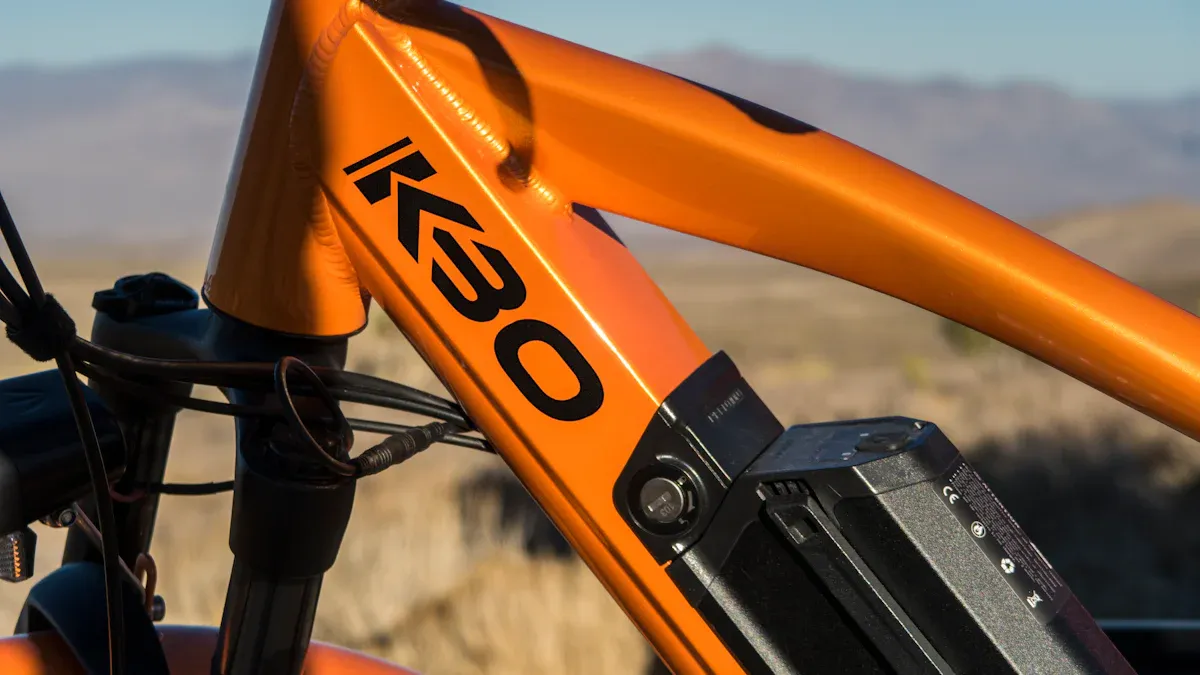
The CE marking plays a central role for e-bikes in Europe. It indicates that a product complies with legal safety requirements and can be sold throughout the EU without restrictions. In Germany, it is mandatory to ensure consumer safety. By applying the CE marking, manufacturers confirm that their products meet strict EU directives. Dealers who sell pedelecs without this marking bear legal responsibility. It is important to understand that the CE marking for e-bikes does not make a statement about quality, but rather represents a legal prerequisite for market access.
Key Takeaways
The CE marking indicates that e-bikes are safe and permitted.
Dealers must pay penalties if they sell e-bikes without a CE marking.
The DIN EN 15194 standard tests whether e-bikes are safe. Check for this when buying.
EMC tests check whether e-bikes do not interfere with other devices.
Unauthorized modifications to e-bikes can be dangerous and illegal.
Legal Requirements for the CE Marking
EU Regulations and Directives
Machinery Directive 2006/42/EC
The Machinery Directive 2006/42/EC forms the basis for the CE marking of e-bikes. It classifies pedelecs with assistance up to 25 km/h as machinery. This directive requires manufacturers to ensure that their products meet essential safety and health requirements. Additional requirements apply to fast pedelecs that provide assistance up to 45 km/h, as they are classified as mopeds.
DIN EN 15194 for EPACs
The DIN EN 15194 standard was developed specifically for electrically power-assisted cycles (EPACs). It defines the technical requirements for the electric drive and components. This standard ensures that e-bikes meet minimum requirements for safety and conformity. Only products that comply with this standard may be affixed with the CE marking for e-bikes.
Requirements for the CE Marking
Necessity of EMC Tests
A central component of the CE marking is the EMC (electromagnetic compatibility) test. This test ensures that electrical devices like e-bikes do not interfere with other devices and are not themselves affected by electromagnetic fields. Directive 2014/30/EU regulates these requirements and is binding for all e-bike manufacturers.
Mandatory Information on CE Labels
The CE marking for e-bikes must contain specific information. This includes the model name, the manufacturer's address, and weight limits. This information helps consumers verify the conformity of the product. Without this information, the CE marking is incomplete and legally invalid.
Consequences of Non-Compliance
Liability of Dealers for Missing CE Marking
Dealers bear significant responsibility when selling e-bikes without a CE marking. They are liable for damages caused by such products. The Product Safety Act stipulates that only products with a valid CE marking may be sold in Germany.
Penalties such as Sales Bans and Product Seizures
Market surveillance authorities can remove products without a CE marking from circulation. Sales bans and product seizures are common consequences. Additionally, fines of up to €30,000 may be imposed. These measures are intended to ensure that only safe products reach the market.
Safety Standards and Their Significance

Safety Inspections and Tests
Electromagnetic Compatibility (EMC)
Electromagnetic compatibility (EMC) is a crucial safety aspect for e-bikes. It ensures that electrical components do not interfere with other devices and are not impaired by external electromagnetic fields themselves. An EMC test checks whether the e-bike meets these requirements. Without this test, an e-bike cannot receive the CE marking for e-bikes. This protects not only functionality but also user safety.
Mechanical Load Capacity and Weight Limits
The mechanical load capacity of an e-bike is verified through strict tests. These tests evaluate whether the bicycle can withstand the stresses of daily use. Weight limits play a central role here. They specify how much weight the e-bike can safely carry. Exceeding these limits can lead to damage or accidents. Manufacturers must clearly state this information on the product to ensure consumer safety.
Additional Safety Markings
Significance of DIN EN 15194
The DIN EN 15194 standard sets specific requirements for electrically power-assisted cycles. It defines standards for the drive, electronics, and safety. Only e-bikes that comply with this standard may be sold in the EU. This standard supplements the CE marking and documents that the product meets the minimum legal requirements.
Role of ISO 4210 for Global Safety Standards
ISO 4210 is an international standard that regulates bicycle safety. It includes tests for stability, durability, and safety. For e-bikes, it offers additional safety as it takes global requirements into account. This standard is particularly important for manufacturers who want to distribute their products worldwide.
Practical Examples of CE-Compliant Solutions
Kickstand Adapter for Secure Side Stands
An example of a CE-compliant solution is the kickstand adapter. It ensures that an e-bike's side stand remains stable, even on uneven ground. Such adapters are developed and tested according to CE marking specifications to ensure maximum safety.
Approved Headlights like the Supernova Mini 2
Another example is the Supernova Mini 2 headlight. This headlight meets CE marking requirements and provides reliable illumination. It was developed specifically for e-bikes and contributes to road safety.
Tip: When buying an e-bike, look for the CE marking and additional standards such as DIN EN 15194 or ISO 4210. They guarantee that the product is safe and compliant with the law.
Manufacturer Responsibility and Challenges
Manufacturer Obligations
Quality Controls and Documentation
As a manufacturer, you are responsible for ensuring that your products are safe and compliant with the law. The CE marking for e-bikes requires comprehensive quality controls and seamless documentation. You must ensure that every e-bike undergoes a risk assessment before it is sold. In doing so, you check potential sources of error and consider all phases of use, such as transport, installation, and maintenance.
Complete documentation is essential. This includes technical data, safety instructions, and a user manual. Market surveillance also expects you to perform random checks and rectify any identified defects immediately.
Measure |
Description |
|---|---|
Safe products |
Only bring safe products onto the market |
Risk assessment |
Testing a product before market entry with a risk assessment |
Sources of error |
Investigation of all potential sources of error in a product |
Application |
Consideration of all phases of application: transport, installation, operation, maintenance |
Documentation |
Complete documentation, including user manual, safety instructions, technical data |
Product monitoring |
Conducting random checks on the market and rectifying defects immediately |
Provision of User Manuals in the Local Language
You are obligated to provide user manuals in the respective local language. These instructions must be clear and understandable so that users can operate the products safely. Missing or unclear manuals can lead to legal consequences.
Dealing with Modifications
Risks of Unauthorized Conversions
Unauthorized conversions to e-bikes pose a significant risk. They can jeopardize CE conformity and compromise user safety. Many insurance companies refuse to pay in the event of a claim if the e-bike has been altered by conversions. Manufacturers warn that such changes can negatively affect the durability and functionality of the product.
Examples of CE-Compliant Adjustments
If you want to make adjustments, you should use only approved components. For example, you can install accessories such as luggage racks or headlights that meet CE requirements. Such adjustments ensure that the safety and conformity of the e-bike are maintained.
Challenges and Solutions
Costs of Quality Control
Quality controls involve high costs. However, as a manufacturer, you can reduce costs through efficient processes and the use of modern technologies. Automated tests and standardized inspection procedures help increase efficiency.
Standardization of Components for Cost Reduction
The standardization of components is another approach to reducing costs. By using uniform parts, you can simplify production and optimize inventory management. This not only saves money but also makes it easier to comply with the CE marking for e-bikes.
Differences Between Pedelecs, S-Pedelecs, and E-Bikes
Pedelecs
Definition and Legal Requirements
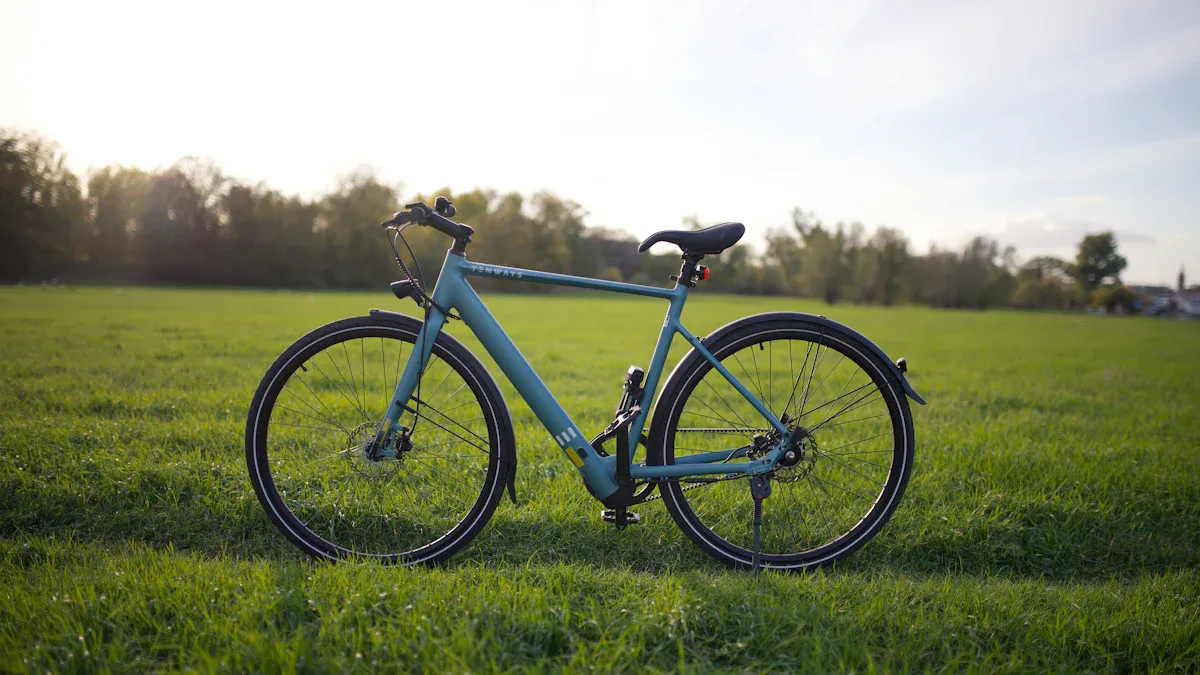
Pedelecs (Pedal Electric Cycles) are bicycles with electric assistance that is activated only when pedaling. The motor power must not exceed 250 watts, and assistance ends at a speed of 25 km/h. These characteristics ensure that pedelecs are legally classified as bicycles at the EU level. As a result, there are no registration, insurance, or driver's license requirements.
Note: Pedelecs offer an environmentally friendly alternative to conventional means of transport and promote physical activity.
Advantages such as No Registration Requirement
The legal equality with bicycles brings numerous advantages. You can use pedelecs without registration or special insurance. This freedom makes them particularly attractive for everyday use.
No registration required: You can use your pedelec immediately without bureaucratic hurdles.
Cost efficiency: There are no additional costs for insurance or license plates.
Flexibility: Pedelecs can be used on bike paths and in bicycle zones.
S-Pedelecs
Higher Speed Limits and Legal Classification as Mopeds
S-Pedelecs (Speed Pedelecs) offer electric assistance up to 45 km/h. However, this higher speed leads to classification as a moped. You therefore require registration, an insurance plate, and a class AM driver's license.
Market Studies:
The ZIV study shows that S-Pedelecs reach a market share of 10–15% in countries with user-friendly rules, such as Switzerland. In Germany, the share is only 0.5% due to restrictive regulations.
Country |
Market share of S-pedelecs |
Regulations and conditions of use |
|---|---|---|
Switzerland |
10–15 % |
User-friendly rules and good infrastructure |
Germany |
0.5 % |
Very restrictive rules |
Requirements such as Insurance and Driver's License
Using an S-pedelec requires additional measures:
Compulsory insurance: You must take out liability insurance.
Helmet obligation: A suitable protective helmet is legally required.
Driver's license: A class AM driver's license is required.
These requirements increase safety but limit the possibilities for use.
E-Bikes
Motor Assistance without Pedaling
E-bikes differ fundamentally from pedelecs and S-pedelecs. They offer motor assistance that works independently of pedaling. This characteristic makes them particularly suitable for individuals who wish to cover longer distances without physical exertion.
Necessity of Registration and Insurance
E-bikes are legally classified as mopeds. You must therefore register and insure them. In addition, strict technical requirements apply, such as compliance with the Machinery Directive and the DIN EN 15194 standard.
Important: Home-built e-bikes are subject to the same regulations. Without a CE marking, there is a risk of fines and liability issues.
Tip: Ensure that your e-bike meets all legal requirements to avoid legal consequences.
Summary: Pedelecs offer the greatest freedom, while S-pedelecs and e-bikes offer higher requirements but also more power. Choose the model that best suits your needs.
The CE marking plays a crucial role in safety and consumer protection. It ensures that products meet basic safety requirements and comply with harmonized European standards. Manufacturers are responsible for complying with these requirements and providing relevant information.
Aspect of CE marking |
Description |
|---|---|
Product safety |
Products must meet basic safety requirements to protect the health of consumers. |
Manufacturer responsibility |
The manufacturer is responsible for compliance with safety requirements and for providing relevant information. |
Harmonized European standards |
Products that comply with these standards are considered safe and fulfill EU directives. |
For you as a consumer, the CE marking offers numerous advantages:
It guarantees that e-bikes are safe and compliant with the law.
It minimizes risks by ensuring compliance with legal standards.
It enables you to choose products that may be sold without restrictions in the EU internal market.
Tip: Look for the CE marking when buying an e-bike. It provides you with transparency and protects you from unsafe products.
FAQ
What does the CE marking for e-bikes mean?
The CE marking indicates that your e-bike complies with EU safety and health requirements. It is a legal prerequisite for sale in Europe and guarantees that the product meets basic safety standards.
Is the CE marking a quality seal?
No, the CE marking is not a quality seal. It merely confirms compliance with legal regulations. The quality of an e-bike depends on additional factors such as materials, workmanship, and design.
What information must be on the CE sticker?
The CE sticker must contain the model name, the manufacturer's address, and weight limits. This information helps you check the conformity of the e-bike and ensure that it meets legal requirements.
What happens if an e-bike does not have a CE marking?
E-bikes without a CE marking may not be sold in the EU. Retailers risk sales bans, product seizures, and heavy fines. For you as a consumer, this means an increased safety risk.
Can I modify my e-bike myself?
Modifications without manufacturer approval can jeopardize the CE conformity of your e-bike. This increases the risk of accidents and can result in insurance companies refusing to pay in the event of a claim. Use only approved components to ensure safety.
Tip: Always check the CE marking and manufacturer specifications before purchasing or modifying. They protect you from legal and safety-related problems.