
The integration of electric components into carbon frames is revolutionizing the bicycle industry. This innovation not only enables a lighter and more sustainable design but also higher efficiency and functionality.
With VER-TEC technology, we offer a lightweight, sustainable, and cost-effective alternative to conventional carbon frames. This innovation is crucial for the mobility of the future and demonstrates how electric components can be integrated into carbon frames.
Design, functionality, and cost play a central role in the development of premium e-bikes. The Freygeist E-Bike combines modern retro design with advanced technology and appeals to urban buyers. It offers an affordable alternative to cars, while motors and batteries enhance comfort and efficiency.
By combining aesthetic design with technical precision, carbon bike electric models are setting new standards for urban mobility.
Key Insights
Electric parts in carbon frames make e-bikes better and more efficient.
Choose an e-bike with well-integrated motors and batteries. This ensures stability and a sleek appearance.
Sustainability is important; new e-bikes use recyclable materials and save energy during manufacturing.
Charge and maintain the battery regularly so that it lasts longer and functions well.
New carbon frame technology will soon enable lighter, more powerful, and more environmentally friendly e-bikes.
Advances in Carbon Bike Electric Technologies
Miniaturization and Increased Efficiency of Motors and Batteries
The miniaturization and increased efficiency of motors and batteries have revolutionized the development of modern e-bikes. You benefit from lighter and more powerful components that improve the riding experience. A remarkable advancement is the use of adhesive technologies that enable more stable stacks. A minimal adhesive layer thickness optimizes the stacking factor, which improves the geometric properties of the batteries.
Advancement |
Details |
|---|---|
Adhesive technology |
One-sided adhesive application leads to more stable stacks and higher efficiency. |
Layer thickness |
Minimal adhesive layer thickness improves the stacking factor and geometric properties. |
Material savings |
Thicker sheets can be used, which leads to cost savings. |
An international research team has also developed a biocompatible energy storage device that works in artificial blood vessels. This bio-supercapacitor demonstrates how far miniaturization has already advanced. With a motor weight of just 1.2 kg and a battery density of 300 Wh/kg, these technologies are setting new standards for carbon bike electric models.
Examples of Innovative Manufacturers and Their Approaches
Some manufacturers have distinguished themselves through innovative approaches. For example, you can see how brands like Specialized and Orbea seamlessly integrate motors and batteries into the frame. Specialized uses compact motors that were specially developed for use in carbon frames. These motors offer high performance with minimal weight.
Orbea, on the other hand, relies on modular battery systems. These systems allow you to extend the range of your e-bike with additional batteries. Both manufacturers combine aesthetics and functionality to offer you an optimal riding experience.
Tip: When choosing an e-bike, pay attention to the integration of the electric components. Good integration not only improves the appearance but also stability and performance.
Sustainability and Environmental Friendliness in Development
Sustainability plays an increasingly important role in the development of carbon bike electric models. Manufacturers are increasingly relying on recyclable materials and energy-efficient production methods. You can be sure that many modern e-bikes are manufactured with a smaller ecological footprint.
One example is the use of thicker sheets in battery production. These reduce material consumption and lower production costs. At the same time, manufacturers are working to extend the lifespan of batteries. This means less replacement and less waste for you.
Another aspect is the use of renewable energies in production. Some companies already operate their factories with solar or wind energy. These measures show that the bicycle industry is on the right track to becoming more environmentally friendly.
Design and Integration into Premium Carbon Frames
Seamless Integration for Aesthetics and Functionality
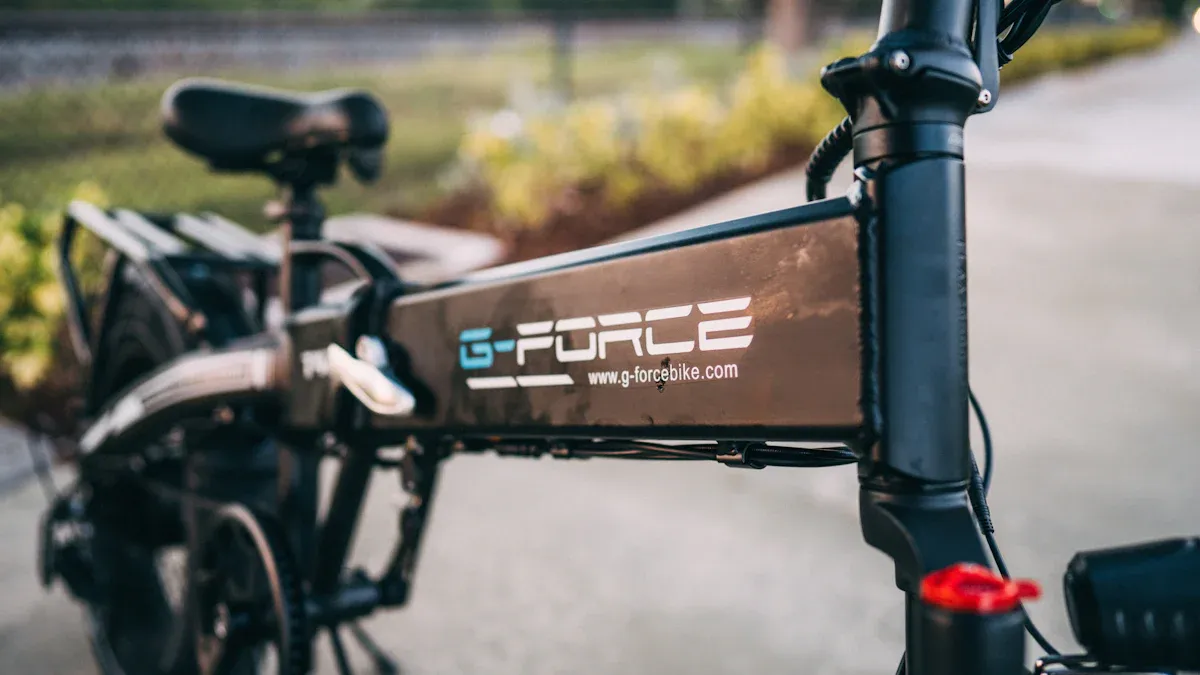
The seamless integration of motors and batteries into premium carbon frames is crucial for a modern and elegant design. In high-quality models, you can observe how manufacturers place electronics in the frame so that they become almost invisible. This technology improves not only the appearance but also functionality.
Brake lines and shift cables run through the frame, creating a clean and tidy appearance.
Invisible drives set new standards and show how important integration is for the future of carbon bike electric models.
Such a design ensures that your e-bike is not only powerful but also stylish. It offers you a harmonious overall look that fits perfectly into the urban environment.
Challenges in Stability and Weight Distribution
The integration of electric components presents technical challenges for manufacturers. You may wonder how stability and weight distribution can be ensured with such a lightweight material as carbon. The answer lies in precise construction and material selection.
Carbon frames must be designed so that they can support the additional weight of the motor and battery without losing stability. At the same time, the overall weight of the bicycle must not become too high so as not to impair the riding characteristics. Manufacturers therefore rely on:
Reinforced carbon structures: These increase stability without significantly increasing the weight.
Optimized placement of components: Batteries are often integrated into the down tube to distribute the weight evenly.
These measures ensure that you can enjoy a safe and comfortable riding experience, even on demanding routes.
Impact on Aerodynamics and Performance
The integration of motors and batteries also influences the aerodynamics and performance of your e-bike. A sleek design minimizes air resistance and improves efficiency. You will find that many carbon bike electric models were specially developed for optimal aerodynamics.
A well-integrated frame reduces turbulence and ensures a smooth airflow. This means less energy consumption and a higher range for you. At the same time, performance is maintained because the electric components are perfectly matched to the frame.
Manufacturers invest heavily in research to find the balance between aerodynamics and power. This way, you can be sure that your e-bike not only looks good but also offers first-class riding characteristics.
Advantages and Challenges for Riders and Manufacturers
Improved Riding Experience Through Optimized Technology
You will immediately notice the advantages of modern technology in carbon bike electric models. Advanced motors and batteries provide smooth and powerful assistance. Precise control allows you to start smoothly and adapt optimally to different types of terrain.
Another advantage is the improved range. Thanks to efficient energy storage, you can cover longer distances without worrying about charging. Manufacturers rely on innovative technologies to offer you a comfortable and reliable riding experience.
Maintenance and Repair: Challenges and Solutions
The integration of motors and batteries brings new challenges in maintenance. You will find that repairing electric components requires special expertise. However, many manufacturers offer training and support for specialist dealers to guarantee you seamless service.
The battery is a common maintenance point. Regular care and checking of the charge cycles extend its lifespan. Some manufacturers are developing modular systems that make the replacement of individual parts easier. This way, you can be sure that your e-bike remains reliable in the long term.
Cost Factors and Their Impact on the Market
The cost of premium e-bikes depends heavily on the integration of the electric components. High-quality designs and materials justify higher prices but also appeal to a broader target group. You benefit from durable products that make up for their price through quality and performance.
The e-bike industry is showing positive growth. The German Bicycle Industry Association (ZIV) has revised the lifespan of e-bikes upwards, which indicates stable market development. At the same time, external factors such as economic uncertainties influence pricing. The bicycle retail sector faces challenges that could affect market conditions.
Nevertheless, demand for innovative models remains high. The integration of the battery and motor into carbon bike electric models not only offers you a better riding experience but also a product that reflects the value of your investment.
Future Prospects for Carbon Bike Electric Models
Innovations and Technological Breakthroughs
The future of carbon bike electric models will be shaped by groundbreaking innovations. Manufacturers are relying on state-of-the-art technologies to improve performance, range, and sustainability. Advances in motor technology and battery capacity play a central role in this.
Category |
Details |
|---|---|
Motor technology |
New motors offer more power and efficiency while also weighing less. |
Battery capacity |
Improved batteries enable longer rides and higher energy efficiency. |
Frame material |
Lightweight carbon frames optimize handling and increase overall performance. |
Sustainability |
Environmentally friendly materials and recycling concepts reduce the ecological footprint. |
These developments show how technological breakthroughs are pushing the boundaries of what is possible. You can look forward to e-bikes that are not only more powerful but also more environmentally friendly.
Market Trends and Price Development
The market trends for carbon bike electric models show a clear direction: sustainability and smart technologies are in focus. Manufacturers like Bosch and Shimano are developing powerful systems that revolutionize the riding experience.
E-mountain bike manufacturers are relying on recycled aluminum and sustainable carbon fibers.
Innovative recycling concepts for batteries reduce environmental impact.
Smart technologies such as the Bosch Performance Line CX of the fifth generation offer more power and range.
These trends also influence price development. While premium models will remain expensive, advances in production and material selection could lower costs in the long term. You benefit from a broader selection of models that appeal to different budgets.
The Role of Carbon Frames in the Future of Cycling
Carbon frames will continue to play a key role in the future. Their lightness and stability make them ideal for integrating modern technologies. Manufacturers continuously optimize the frames to improve aerodynamics and handling.
You will find that carbon frames not only increase performance but also promote sustainability. Environmentally friendly production methods and recyclable materials set new standards. These developments show that carbon frames are not just a trend but a permanent part of the future of cycling.
The integration of battery systems and motors into carbon frames is fundamentally changing the bicycle industry. You benefit from lighter, more efficient, and sustainable designs that improve both urban mobility and performance.
The advantages are clear: carbon frames offer you optimal handling, while modern technologies such as improved suspension systems and damping technologies revolutionize the riding experience. At the same time, sustainable materials and recycling concepts ensure that environmental impact is minimized. Challenges such as maintenance and costs remain, but innovative approaches offer solutions.
The future promises exciting developments. Models like the Freygeist E-Bike, which weighs only 12 kg, are setting new standards for design and technology. The trend toward urban mobility and the increasing demand for cost-effective alternatives to cars continue to drive innovation. Carbon bike electric models will play a central role in shaping the mobility of the future.
FAQ
What makes carbon frames ideal for e-bikes?
Carbon frames are lightweight and stable. They enable the seamless integration of motors and batteries without impairing performance. You benefit from better handling and higher efficiency, especially on longer rides or demanding routes.
How do you properly care for your e-bike battery?
Charge the battery regularly, but avoid overcharging. Store it at room temperature and protect it from extreme temperatures. Carefully clean the contacts with a dry cloth. These measures extend its lifespan and ensure reliable performance.
Are carbon frames environmentally friendly?
Yes, many manufacturers use recyclable materials and energy-efficient production methods. You can be sure that modern carbon frames are often produced with a smaller ecological footprint. Some companies even use renewable energies in production.
How long does a carbon frame last?
A high-quality carbon frame can last many years with proper care. However, you should regularly check for cracks or damage, especially after falls. Manufacturers often offer warranties that give you additional peace of mind.
Can you repair a carbon e-bike yourself?
You can perform minor repairs yourself, such as changing tires or brake pads. However, for damage to the frame or electrical components, you should visit a specialist dealer. Special tools and expertise are often required.