
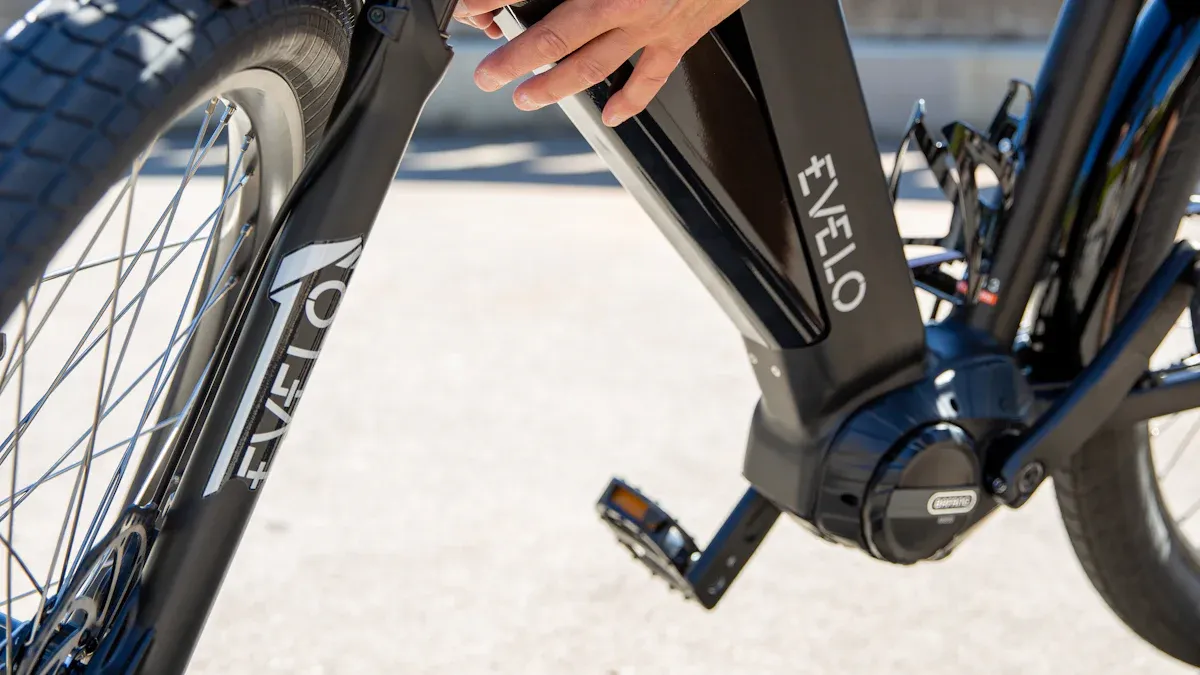
A Bosch tuning e-bike uses specialized systems to technically bypass the factory-set speed limit. These speed modification systems alter the signal processing within the drive unit. Many different solutions exist on the market. The technology, risks, and legal aspects warrant particular attention.
Key Findings
Bosch e-bike tuning uses mechanical, electronic, and software-based methods to bypass the speed limit and achieve greater performance.
Electronic modules manipulate sensor signals and control data to enable motor assistance above 25 km/h, but are detectable by Bosch's anti-tuning software.
Tuning increases motor power and speed but reduces range and can damage the motor and battery due to increased stress.
Tuned e-bikes are illegal on public roads in Germany and result in the loss of warranty, insurance coverage, and the operating permit.
Many tuning modules are easy to install and reverse, yet Bosch stores records of tampering and detects tuning even after removal.
Systems
Mechanical Methods
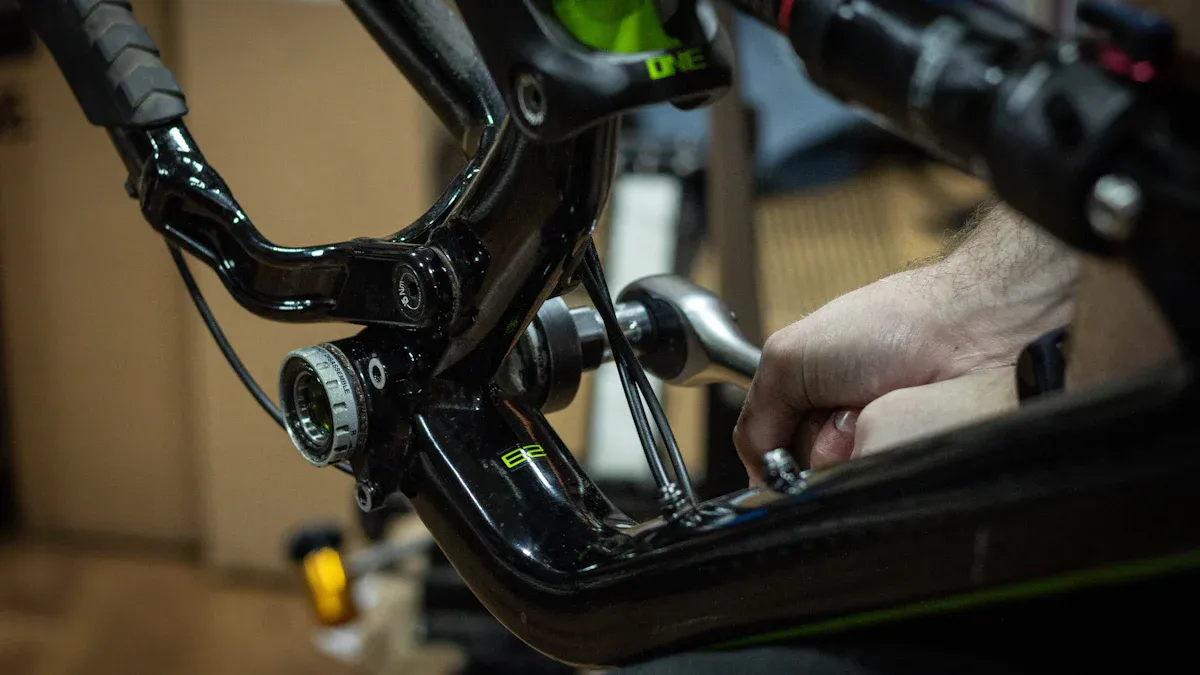
Mechanical methods are among the oldest approaches to tuning Bosch e-bikes. Users often replace the sprocket on the motor with a smaller model, for example, 14 teeth instead of 20. The rear sprocket or cassette can also be replaced with larger variants, such as from 32/34 to 40/42 teeth. These adjustments increase performance by up to 30 percent and improve climbing performance. However, the top speed remains legally limited. Special tools are required for the conversion. Mechanical methods do not interfere with the drive's electronics or software and are considered legal.
Electronic Modules
Electronic modules are the most widely used systems for Bosch e-bike tuning. They can be divided into two main groups:
Plug-in modules: These devices are plugged directly onto the speed sensor. They manipulate the sensor signal and are easy to install, but also easily detectable.
Permanently installed modules: These modules are usually hidden under covers or inside the frame. They offer more features but are more difficult to install.
Module Name |
Supported Bosch Motors |
Features and Benefits |
Price Range |
|---|---|---|---|
RedPed Module |
Performance Line, CX Line, Active Line Plus, Active |
App control, trip log, easy activation/deactivation |
€200 |
BlackPed+ |
All Bosch bikes |
Smartphone control, many settings, activation via light switch or WALK button |
€150 |
SpeedBox 2/3.0 |
Bosch motors from 2017 onwards |
Motor assistance up to 99 km/h, correct value display, easy activation |
€140-300 |
PearTune MSO |
Active Line, Performance Line, CX Line |
Complete removal of the limit, easy installation |
€129-179 |
Badass Box |
Bosch, Yamaha, Brose, Shimano |
Speed up to 50 km/h, easy installation/removal |
approx. €140 |
Modules like SpeedBox 3.0 are suitable for many Bosch motors from 2017 and offer broad compatibility.
Software Tuning
Software tuning solutions vary depending on the Bosch system. For older generations (BES2, Gen1 to Gen4), there are USB-based unlocking and app solutions. For example, users can lift the limit via software using the EBT Unlock Key. For the Smart System (BES3, Gen4 Smart System, Gen5), hardware-based solutions like the RedPed 3 chip or dongles are usually available. The technical architecture is more restrictive in newer systems, meaning only specific solutions work.
Tip: Anyone planning a Bosch tuning e-bike should check the compatibility of the chosen system with their motor and display. Not every solution fits every model.
How It Works
Sensor Manipulation
Many tuning modules for Bosch e-bikes act directly on the speed sensor. A classic speed sensor consists of a magnet on the rear wheel spoke and a sensor on the frame. With every wheel rotation, the magnet sends a signal to the sensor. The system calculates the current speed from this. Tuning modules alter this signal so that the controller detects a lower speed. This keeps motor assistance active even above 25 km/h. Users of Bosch tuning e-bikes thus benefit from a higher top speed.
Installation is usually very simple. The module is inserted between the sensor and the control unit. Modern modules use custom-fit, waterproof connectors. Assembly takes only a few minutes. From the outside, the module remains invisible. After installation, the e-bike starts as usual. The tuning is often activated via a specific power-on sequence or by moving a magnet. Some systems even offer app control or activation via the light switch.
Note: On newer Bosch systems with rim magnets, there is no longer a separate speed sensor. Tampering is significantly more difficult as a result.
Controller Intervention
Tuning modules intervene not only at the sensor but also at the controller level. They alter the data the control unit receives, tricking the system into sensing a lower speed. Motor assistance remains active, even though the e-bike is actually traveling faster. Some modules continue to show correct values on the display, while others obscure the actual speed.
The technical design of the modules is usually very compact. Many models, such as SpeedBox or ASA eSpeed, use microprocessors. They are attached directly to the bike and use original connectors, meaning users do not need to cut wires or replace control elements. The power consumption of the modules remains low. However, high-performance methods like overvolting increase voltage and RPM. Small motors are unsuitable for such methods; they can quickly overheat and take damage. Most modules can be easily removed without leaving a trace.
Anti-Tuning Software
Bosch has responded to the spread of tuning modules with special anti-tuning software. This software continuously monitors sensor signals while riding. It compares the speed estimate from the sensor with other data. If the system detects discrepancies over a longer period, it identifies tampering. The e-bike then displays an error code, such as Error 504. Simultaneously, the system switches to limp-home mode. Motor assistance is significantly reduced, and users can only continue with minimal assistance.
The anti-tuning software operates in several stages:
It checks for tampering while the bike is in operation.
If detected, it switches the e-bike to limp-home mode.
The display shows an error code.
After about 90 minutes of riding, normal operation may return.
The software continues to monitor for further tampering.
After multiple resets, only a specialist dealer with the Bosch DiagnosticTool can clear the limp-home mode.
Even after removing the tuning module, the tampering check remains active.
These measures are intended to make tampering unattractive and increase safety. Bosch tuning e-bike systems are therefore under constant observation by the software. Users must expect limitations and potential damage if they use tuning modules.
Bosch Tuning E-Bike Comparison
Effectiveness
The effectiveness of tuning modules is primarily evident in the power increase and the change in range. Many systems significantly increase motor power, leading to a higher top speed. Especially with Bosch Gen5 motors, the peak power increases to up to 750 watts and torque to 100 Nm. This power boost provides a more dynamic ride. However, range drops by up to 30% when high assistance levels are used constantly. The motor consumes the most energy in Turbo mode, while the Eco mode nearly doubles the range but offers less speed. Users must therefore weigh whether they prefer more power or longer battery life.
Note: Higher energy consumption also leads to more wear on the chain, cassette, and chainring.
Compatibility
The compatibility of tuning solutions depends heavily on the respective Bosch system. Older systems (pre-2017) can usually be upgraded without problems using modules like SpeedBox 2.0, Badass Box, or Wiesel Tuning. These modules support Bosch generations 1 to 4 and are compatible with displays like Purion, Nyon, Kiox, and Intuvia.
Tuning Module |
Compatible with Bosch systems pre-2017 |
Features |
|---|---|---|
SpeedBox 2.0 |
Yes |
Suitable for Gen 1-3 |
Badass Box |
Yes |
External mounting |
Yes |
For Gen 1-4, all standard displays |
For the Bosch Smart System, only specific modules like the Wiesel Tuning module are suitable. Well-known solutions like SpeedBox 3.0 do not work here.
Tuning Solution |
Compatible with Bosch Smart System |
Note |
|---|---|---|
SpeedBox 3.0 |
No |
Not compatible |
Wiesel Tuning Module |
Yes |
Special version for Smart System |
Effort
The installation effort remains low for most tuning solutions. Many modules, such as Wiesel Tuning, are simply plugged between the speed sensor and the motor. Assembly takes only a few minutes and requires no programming. USB dongles and tuning chips are also available as kits and are easy to install. Those without much technical know-how can hire a professional. Reverting the tuning is usually quick: many modules can be deactivated via an on/off sequence or activated only for specific rides. Removal is often unnecessary.
Quick installation without special tools
Invisible mounting possible
Quick reversion in seconds by deactivating or removing
Tip: Anyone using a Bosch tuning e-bike can revert the tuning at any time without leaving traces.
Risks & Legal

Technical Risks
Tuning a Bosch e-bike entails significant technical risks. After tuning, the motor constantly operates under higher loads. It must perform more work, similar to a long climb. As a result, power consumption increases significantly. The battery discharges faster and must be charged more frequently. The additional strain leads to higher heat generation in the motor and battery, which can shorten the lifespan of components. Users often notice damage only late, as e-bikes do not have a mandatory periodic technical inspection. Structural damage to the drive, motor, or battery occurs gradually. Especially with newer Bosch generations like Gen5, the system detects tampering faster. Error codes like 524001 switch the motor into limp-home mode. The e-bike then loses power and can suffer permanent damage. In the long run, tuning accelerates the wear of the entire drivetrain.
Caution: Anyone using a Bosch tuning e-bike risks permanent damage to the motor and battery. Manufacturers can prove tampering by reading system data.
Safety
Safety suffers significantly when users tune an e-bike. The brakes, frame, and tires are not designed for higher speeds. At faster speeds, braking distances increase, and the risk of accidents rises. E-bike technology is calibrated for a maximum speed of 25 km/h. If the bike exceeds this limit, components can wear out faster or even fail. In the worst case, serious injury may occur. System diagnostics often detect tampering only late. Users usually notice technical problems only when it is too late. Operational safety decreases with every intervention in the electronics or software.
Brakes and frames are not tested for higher speeds.
The risk of falls and accidents increases.
The service life of important components decreases.
Legal Consequences
Tuning a Bosch e-bike has far-reaching legal consequences. As soon as the e-bike travels faster than 25 km/h, it loses its status as a bicycle. It is then classified as a moped. For operation on public roads, an operating permit, an insurance license plate, and a class AM driver's license are required. Without these prerequisites, the rider commits an administrative offense or even a criminal act. The police often detect tampering quickly. During a traffic stop, you face fines, points on your license, and in the worst case, imprisonment or monetary penalties.
Tuned e-bikes require an operating permit and an insurance license plate.
Helmets are mandatory, and the use of bicycle lanes is prohibited.
Without insurance coverage, the owner is held liable without limitation in the event of an accident.
Private liability insurance does not pay for accidents involving tuned e-bikes.
The manufacturer's warranty and statutory warranty expire with any form of tuning, even if the module is removed later.
Manufacturers like Bosch can prove tampering by reading out system data. The warranty claim expires immediately, as the e-bike is no longer CE-compliant. The classification as a pedelec is also lost. Using a tuned e-bike is always at your own risk. Providers are not liable for consequential damages or legal consequences.
Note: Tuning that exceeds the maximum speed of 25 km/h is illegal on public roads in Germany. Users may only legally ride a tuned e-bike on private property.
Technical interventions |
Mode of operation / adjustment |
|
|---|---|---|
Mechanical |
Replacement of components |
Direct hardware intervention |
Electronic |
Installation of modules |
Manipulation of sensor signals |
Software-based |
Use of apps or software |
Digital adjustment of the controller |
Every method for Bosch e-bike tuning offers benefits like more speed or customization. However, it also brings high risks for safety, warranty, and legality. Users should inform themselves about the laws before tuning and accept responsibility for their actions. Manufacturers are constantly developing new protective mechanisms. In the future, smart systems and stricter regulations will make tuning even more difficult.
FAQ
How does Bosch detect tuning on an e-bike?
Bosch uses special anti-tuning software. It checks sensor signals and compares them with other data. The system detects tampering and displays an error code. Motor assistance is then significantly reduced.
Does the e-bike lose its warranty after tuning?
Yes, the e-bike loses the manufacturer's warranty. Bosch can prove tampering by reading out system data. The warranty claim expires immediately, even if the tuning is removed later.
Is it allowed to ride a tuned e-bike on public roads?
Riding a tuned e-bike is prohibited on public roads in Germany. It is classified as a moped and requires an operating permit, an insurance license plate, and a driver's license.
What are the risks for the motor and battery?
A tuned e-bike places more stress on the motor and battery. The components heat up faster. Service life decreases. Damage often occurs gradually. Users usually notice defects only too late.
Can the tuning be reversed?
Many tuning modules can be easily removed or deactivated. However, the system stores evidence of tampering. Bosch often detects tuning even after the module has been removed. The legal consequences remain in effect.