
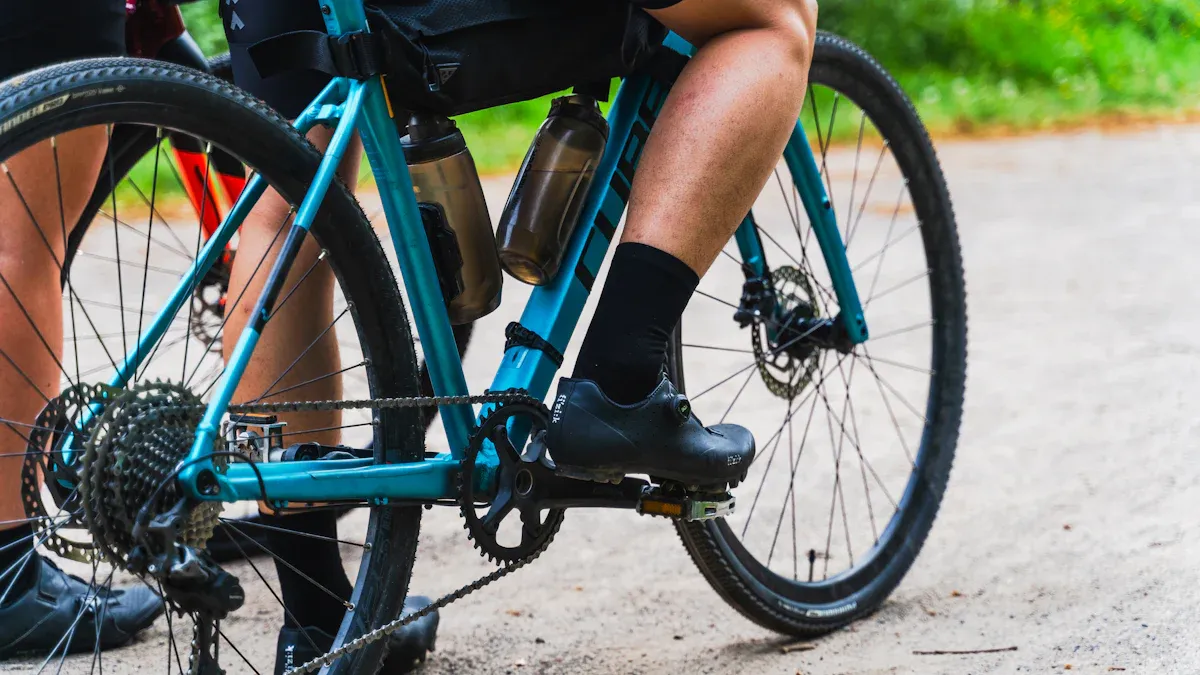
The right cycling gear is crucial to improving your safety, comfort, and performance. Hard-shell pads protect you in the event of a fall, while mountain bike gloves prevent injuries to your hands and offer better grip. Protective eyewear keeps out dirt and UV rays, allowing you to focus fully on your cycling adventure. Weatherproof bike computers help you reliably track your ride data. Specialized shoes and high-quality sportswear ensure optimal power transfer and comfort. With the right gear, you can master any route safely and efficiently.
Key Insights
The right gear makes cycling safer and more comfortable. Helmets, gloves, and pads are important.
A sturdy frame and good suspension provide more control on difficult paths.
Choose a powerful motor and battery for your e-mountain bike to ride long distances with ease.
Regular maintenance keeps your bike in better, safer condition for longer.
Suitable clothing and accessories, such as waterproof bags and GPS, make your ride more pleasant and safer.
E-Mountain Bike Gear
Helmets and Protection
Your safety comes first, especially on demanding trails. E-mountain bike helmets meet strict safety standards such as DIN EN 1078. This standard tests helmets by dropping them onto a steel plate from a height of 150 cm. Sensors measure the acceleration, which must remain below 250 g to minimize injuries. ASTM F1952 is another relevant standard for e-mountain bike helmets. Studies show that concussions can occur from 60 g. A helmet thus effectively protects you from serious head injuries. Supplement your protection with knee and elbow pads as well as gloves to avoid injuries in falls.
Bicycle Frame and Suspension
A stable frame and high-quality suspension are essential for your e-mountain bike. Different suspension systems offer different advantages. Four-bar linkages keep the angle constant during compression, which gives you more control and stability. High-pivot systems absorb impacts better as they allow for a rearward axle path. Single-pivot designs are simpler in construction but can cause brake jack. For long and demanding cycling adventures, a supported single-pivot design is recommended. This system improves damping characteristics and ensures a more comfortable riding experience.
Kinematics Type |
Description |
Advantages |
|---|---|---|
Four-bar linkage |
Constant angle during compression. |
More control and stability. |
High-pivot |
Rearward axle path. |
Effective impact absorption. |
Single-pivot |
Simple system, rotates around a fixed bearing. |
Lightweight construction, but less effective with braking forces. |
Supported single-pivot |
Uses the flexibility of the seat stay. |
Improved damping characteristics. |
Motor and Battery
The motor is the heart of your e-mountain bike. Mid-drive motors offer optimal weight distribution and power, making them ideal for difficult trails. High-capacity batteries with at least 500-600 watt-hours enable long off-road tours. Field tests show that a battery's efficiency depends on factors such as ambient temperature. High energy density ensures your battery is lighter without losing capacity. For your next cycling adventure, you should look for a combination of a powerful motor and a long-lasting battery.
Aspect |
Description |
|---|---|
Mid-drive motors |
Optimal weight distribution and power. |
Battery capacity |
At least 500-600 watt-hours for long tours. |
Battery energy density |
Lighter battery for the same capacity. |
Influencing factors |
Ambient temperature affects efficiency and range. |
Brakes and Drivetrain
The brakes and drivetrain of your e-mountain bike play a crucial role in your safety and control. Especially at high speeds and on demanding trails, brakes must be reliable and powerful. Disc brakes, especially hydraulic models, are the top choice here. They offer strong braking power and function flawlessly even in wet or muddy conditions. Tests show that these brakes were developed specifically for the demands of e-bikes to handle the additional speed and weight.
The drivetrain of your e-mountain bike should operate precisely and smoothly. Modern drivetrains, such as the Pinion MGU E1.12 motor-gearbox unit, have been praised in independent tests for their reliability. Gear shifting works exceptionally well, especially with hub motors. A well-tuned drivetrain allows you to master steep climbs effortlessly and ride efficiently on flat routes.
Tip: Check your brake pads regularly and ensure that the drivetrain is clean and well-lubricated. This keeps your bike in top shape!
Additional Accessories (e.g., bike computer, lighting, tools)
Additional accessories make your e-mountain bike adventure safer and more comfortable. A weatherproof bike computer is an indispensable tool. It records key data such as speed, distance, and ride time. Many models offer GPS functions that help with route planning and navigation. Some devices can even be paired with heart rate monitors or power meters to optimize your training.
Good lighting is also essential. LED lights with high luminosity ensure that you are clearly visible even in poor lighting conditions. For longer tours, you should carry a compact tool kit. It helps you quickly handle minor repairs on the go.
Bike computer: Durable, weatherproof, and with long battery life.
GPS functionality: Perfect for navigation and route planning.
Tool kit: Handy for emergencies and simple repairs.
With the right accessories, you are perfectly prepared to overcome any challenge. 🚴♂️
Gravel Bike Gear
Handlebars and Pedals
Choosing the right handlebars and pedals influences your comfort and control on your gravel bike. Ergonomic handlebars with a short drop make it easier to switch hand positions and promote a relaxed posture. Flared drops offer more control on uneven terrain. Backsweep improves the position of your wrists and reduces fatigue on long rides.
Pedals also play an important role. The size of the pedal influences the stiffness of your shoe and thus the efficiency of your pedaling stroke. Ergonomic insoles can further increase comfort. Ensure that the pedals and shoes are well-matched to optimize power transfer.
Tip: Adjust the alignment of the handlebars individually to improve your riding position.
Tires and Wheels
Tires and wheels are crucial for your gravel bike's performance. Wider tires, up to 28 mm, offer lower rolling resistance and more comfort on gravel roads. A high-quality rubber compound ensures optimal grip, with softer compounds providing more traction but wearing down faster.
Tire pressure that is too low increases the risk of flats, especially on uneven terrain. Tubeless tires are a great choice as they are airtight and prevent flats more effectively. Lightweight and robust wheels, such as the Hunt 30 Carbon Gravel Disc wheels, are excellent for off-road conditions and various tire widths.
Note: Check your tire pressure regularly to ensure the best performance and safety.
Clothing and Protection
The right clothing makes your cycling adventure more pleasant and safer. Shorts like the Mavic Allroad shorts offer comfort and freedom of movement. They are developed specifically for the demands of gravel enthusiasts. Breathable jerseys and windproof jackets protect you from changing weather conditions.
Don't forget to pay attention to protection as well. Gloves improve grip and protect your hands from blisters. Protective eyewear keeps out dirt and insects and ensures clear vision. With the right clothing and protection, you are well-equipped for any route.
Gravel-specific Accessories (e.g., bar tape, dropper posts, bags)
Gravel bikes require special accessories to maximize comfort and functionality on long rides. With the right tools, you can make your rides more efficient and pleasant.
Bar Tape
High-quality bar tape not only improves comfort but also reduces vibrations on uneven terrain. Models with gel or foam padding offer better damping and relieve your hands on long rides. Be sure to change the tape regularly to maintain grip. Well-wrapped bar tape also ensures secure handling of your gravel bike.
Dropper Posts
A dropper post is an adjustable seatpost mechanism that provides more control on technical sections. With the press of a button, you can adjust the saddle height. This makes it easier to maneuver on steep descents and provides better balance. Especially on trails with varied terrain, a dropper post is a real advantage.
Bags
The right selection of bags makes a difference on longer tours. Different types of bags offer practical storage space:
Handlebar bags: Perfect for light and bulky items like sleeping bags or navigation devices. They allow quick access to important items.
Saddle bags: Ideal for extra luggage and bikepacking. They offer enough space for clothing or tools.
Frame bags: These bags distribute weight evenly and create additional storage space. They are particularly useful for longer adventures.
Tip: Choose bags with waterproof material to protect your gear from rain and dirt.
With these accessories, you are well-equipped to master any gravel bike tour. 🚴♀️
Bikepacking Gear
Packing Solutions (e.g., saddle bags, frame bags, handlebar bags)
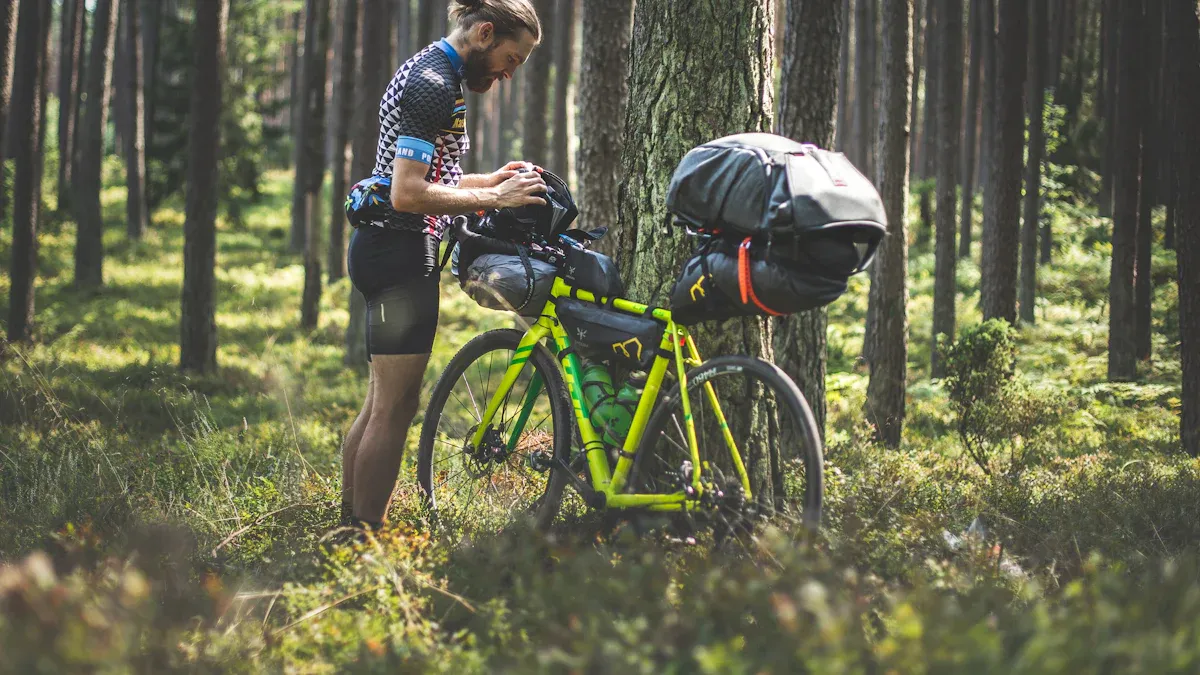
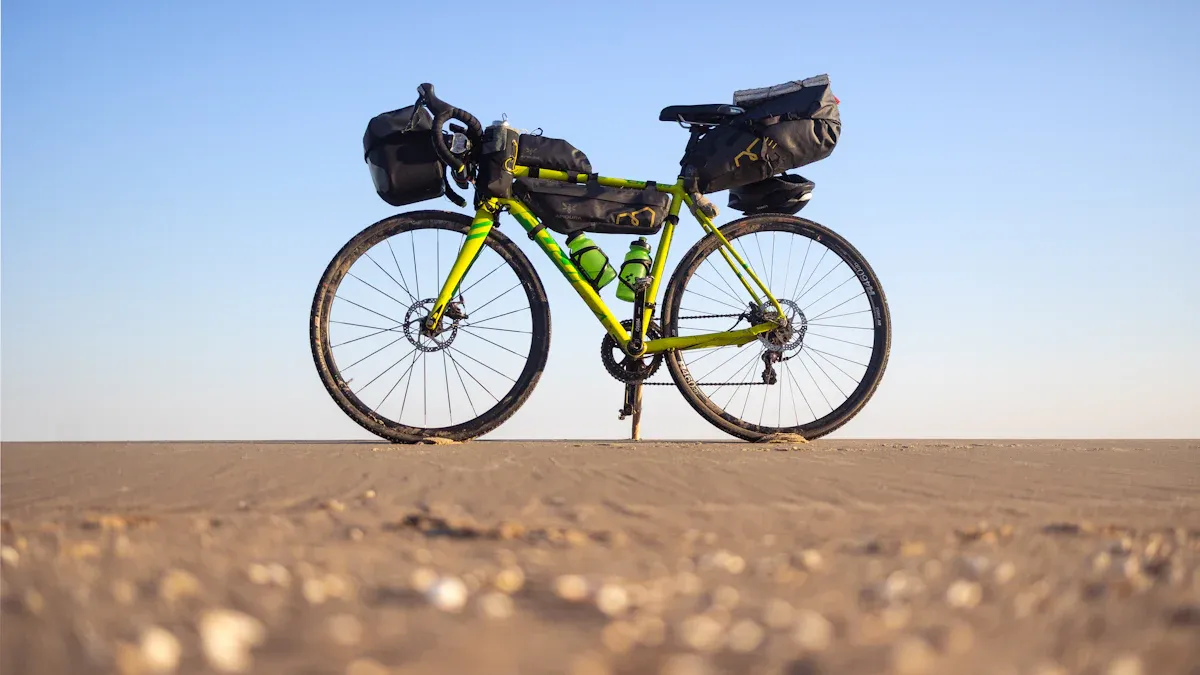
The right packing solution is crucial for your bikepacking adventure. Saddle bags offer plenty of storage space and are ideal for clothing or tools. They are easy to attach and ensure balanced weight distribution. Frame bags make optimal use of the space in the bike frame. They are excellent for heavy items like water bottles or cooking utensils. Handlebar bags are perfect for bulky and lightweight items like sleeping bags or maps. They allow quick access to important items during the ride.
Tip: Choose bags with waterproof material to protect your gear from rain and dirt.
Camping Gear (e.g., tents, sleeping bags, sleeping pads)
Camping gear makes your bikepacking comfortable and safe. A lightweight tent with a small pack size is ideal for long tours. Ensure that it is easy to set up and protects you from the wind and weather. Sleeping bags with good insulation keep you warm even at cool temperatures. Models with down fill offer maximum warmth at a low weight.
Sleeping pads are essential for a good night's sleep. Modern models combine good lying comfort with effective insulation. They protect you from the cold ground and are easy to transport. Self-inflating mats offer high comfort but are often heavy. Foldable foam mats are lighter but insulate less.
Pack size and weight affect portability.
Thermal performance is crucial for cold nights.
Navigation and Safety (e.g., GPS devices, maps, first-aid kits)
Navigation and safety are indispensable for your cycling adventure. GPS devices help you plan and track your route precisely. They function reliably even in remote areas. Maps offer you additional orientation, especially if the technology fails.
A first-aid kit belongs in every bikepacking gear set. It contains important items such as bandages, disinfectant, and painkillers. With a well-equipped kit, you can treat minor injuries quickly.
Note: Before every tour, check the functionality of your navigation devices and the contents of your first-aid kit.
Minimalist Packing Lists for Different Tours
A minimalist packing list helps you save weight and make your bikepacking tour more efficient. Less luggage means more freedom of movement and less strain on you and your bike. But what does such a packing list look like? The answer depends on the type of your tour.
Ultralight for Competitions
If you are participating in a race, every gram counts. Adam Bialek, participant in the Three Peaks Bike Race 2021, relied on an ultra-lightweight packing list with a total weight of only 10.7 kg. This list included only the essentials: a lightweight tent, a sleeping bag, minimalist clothing, and a small tool kit.
Minimalism for Long Distances
For long-distance tours like the 2024 Transcontinental, Jana Kesenheimer chose a minimalist packing list. She only took two pairs of bib shorts, one jersey, and one pair of underwear. This strategy reduced weight and made packing easier.
Athlete |
Tour/Event |
Packing List Details |
|---|---|---|
Adam Bialek |
Three Peaks Bike Race 2021 |
Ultra-lightweight packing list, total weight 10.7 kg |
Jana Kesenheimer |
Transcontinental 2024 |
Minimalist packing list with only two pairs of bibs, one jersey, and one pair of underwear |
Tips for Your Packing List
Plan according to weather and duration: For short tours, a basic setup is often enough. For longer trips, you should plan for weatherproof clothing and additional equipment.
Prioritize multifunctionality: Choose items that serve multiple purposes, such as a buff that acts as a scarf, headband, or sun protection.
Test before the tour: Pack your gear and check that everything is stowed securely.
Note: A well-thought-out packing list saves you time and energy. Less is often more, especially on long distances.
With a minimalist packing list, you are well prepared to master your next tour lightly and efficiently. 🚴♂️
Care and Maintenance
Tools and cleaning agents
Proper care of your bicycle begins with the right tools and cleaning agents. A multi-tool belongs in every basic kit. It helps you tighten screws or perform minor repairs. For the chain, you need a chain cleaning device and a special chain oil. These tools prevent dirt and rust from impairing function.
A bike stand makes maintenance easier. It keeps your bike stable while you work on it. For cleaning, you should use a soft brush and a sponge. A special bike cleaner removes stubborn dirt without damaging the paint. Avoid high-pressure cleaners, as they can force water into sensitive parts.
Tip: Use a microfiber cloth to dry your bike after cleaning. This prevents water spots and corrosion.
Tips for maintenance and regular inspections
Regular maintenance keeps your bike in top shape and ensures safety. Check the brakes before you head out. They must grip reliably to avoid accidents. Inspect the chain for wear and clean it after every off-road tour. A clean chain extends the service life of the drivetrain.
Once a year, you should have an inspection performed at a workshop. Experts will check all components, including the frame and bearings. For e-bikes, maintenance after 2,000 kilometers is particularly important. The battery and the battery management system must be checked regularly to avoid defects and fire hazards.
Maintenance prevents rapid wear and increases the lifespan of parts.
E-bikes require more frequent checks due to higher wear and tear.
Note: Schedule your maintenance appointments in advance to keep your bike ready to ride at all times. 🚴♂️
The right bicycle equipment makes the difference between a stressful and an unforgettable tour. With a well-equipped e-mountain bike, gravel bike, or bikepacking set, you are prepared for any terrain and any challenge. Plan your next cycling adventure with care. Choose equipment that combines comfort, safety, and performance. Test your equipment beforehand to make sure everything works perfectly. This way, every ride becomes an experience you can enjoy. Now it's up to you to pack your bike and ride off!
FAQ
What is the most important equipment for e-mountain bikes?
A high-quality helmet with MIPS technology protects your head during falls. Supplement it with knee and elbow pads. Powerful disc brakes and a long-lasting battery are also essential. With these components, you will be riding safely and efficiently.
How do I choose the right clothing for gravel biking?
Choose breathable jerseys and padded shorts for comfort. Windproof jackets protect you from weather changes. Gloves and safety glasses improve grip and visibility. Look for weatherproof materials to keep yourself comfortable in rain or cold.
Which bags are best suited for bikepacking?
Frame bags offer space for heavy items like water bottles. Saddlebags are suitable for clothing and tools. Handlebar bags are ideal for light, bulky things like sleeping bags. Choose waterproof materials to protect your equipment from rain.
How do I maintain my bike after a tour?
Clean your bike with a soft brush and special cleaner. Dry it with a microfiber cloth to prevent corrosion. Lubricate the chain regularly with chain oil. Check the brakes and gears to ensure functionality.
Do I need a GPS device for longer tours?
A GPS device helps you to plan and track your route precisely. It works reliably even in remote areas. Maps are a good supplement in case the technology fails. With GPS, you stay safe and on course.